5 Ways to Reduce Daily Workload Without Lowering Expectations
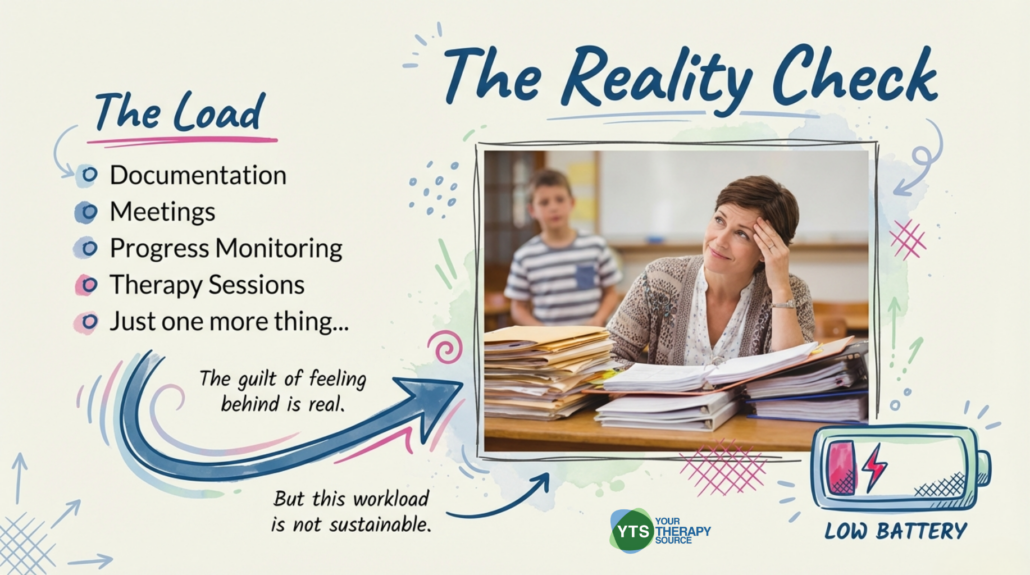
Let’s be honest: the workload in special education and related services isn’t sustainable. Between documentation, meetings, progress monitoring, therapy sessions, consultations, and the ever-growing list of “just one more thing,” it’s easy to feel like you’re constantly behind. And the guilt that comes with trying to reduce your daily workload? That’s real too.
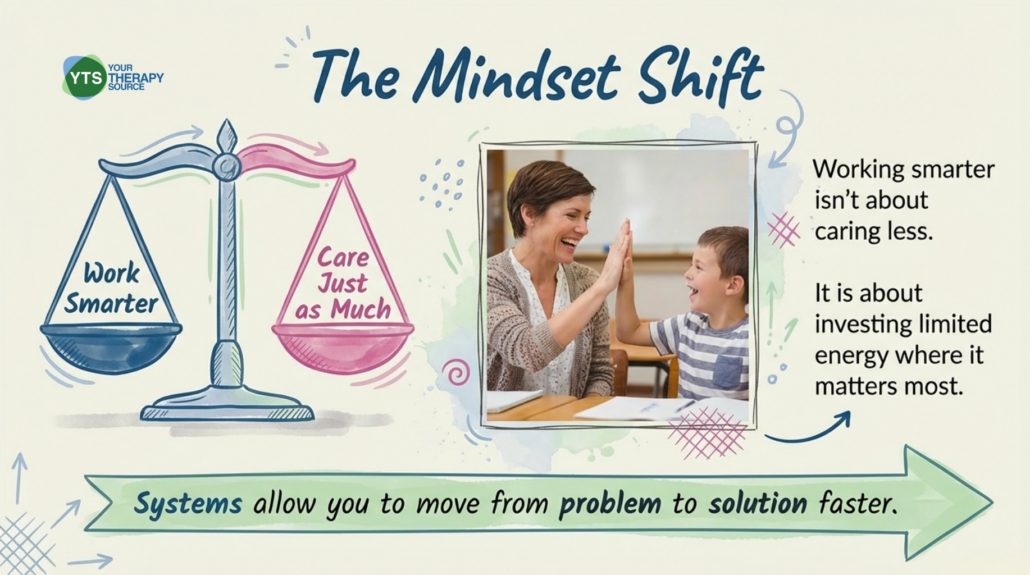
But here’s the truth: working smarter doesn’t mean caring less or expecting less from students. It means being strategic about where you invest your limited time and energy so you can actually be effective when it matters most. The secret isn’t working longer hours. It’s having systems and tools that help you move from problem to solution faster. Here are five practical ways to reduce your daily workload without compromising quality or outcomes.

Batch Similar Tasks Instead of Switching Contexts All Day
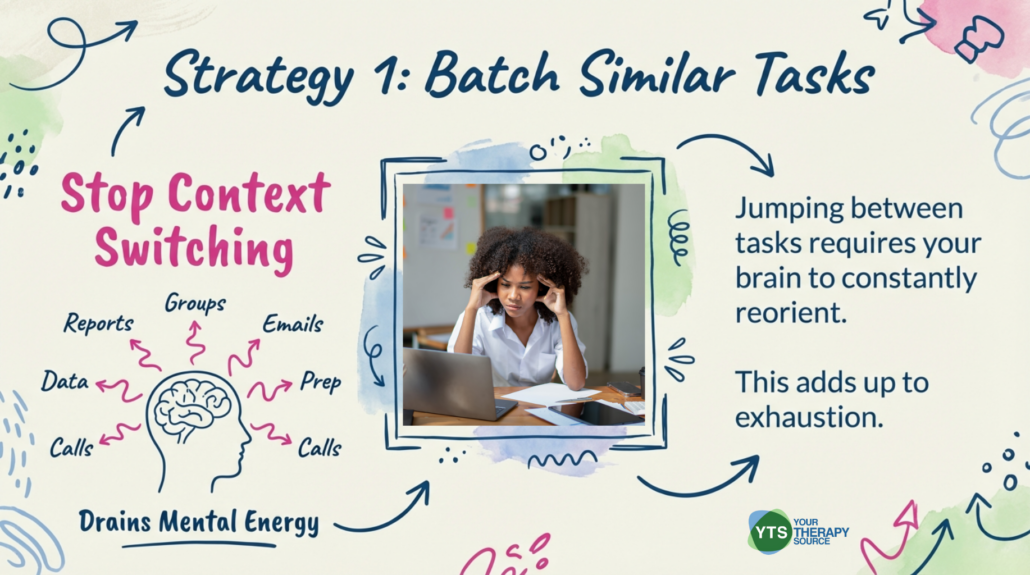
Context switching (jumping from writing a report to running a group to answering emails to prepping materials) drains mental energy faster than almost anything else. Every time you switch tasks, your brain needs time to reorient, and that adds up.
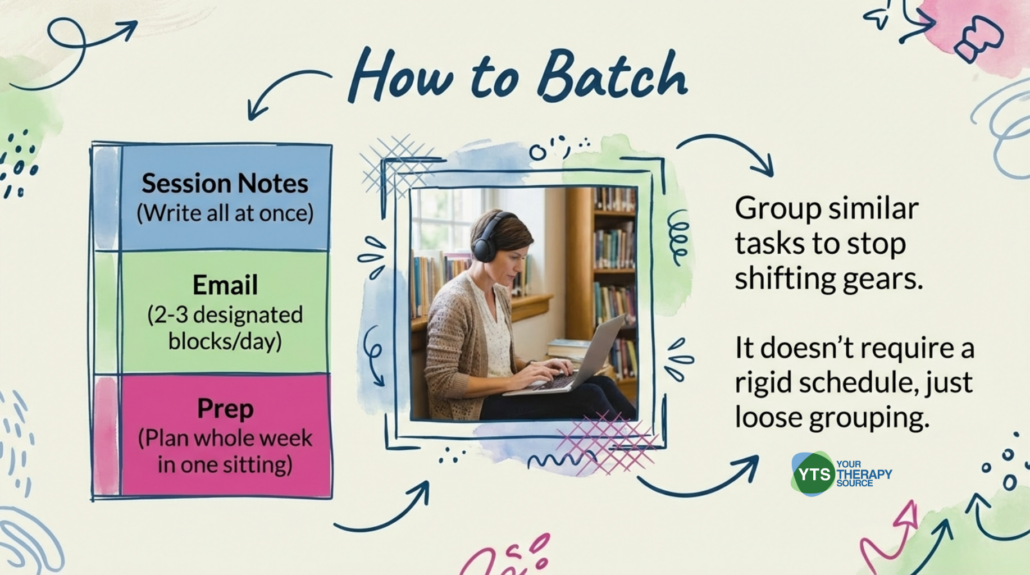
Instead, try batching similar tasks together. Designate specific times for specific types of work:
- Write all your session notes at once (end of day or during a planning period)
- Respond to emails in two or three designated blocks rather than constantly throughout the day
- Prep materials for the whole week during one planning session
- Schedule back-to-back evaluations or screenings when possible so you’re already in “assessment mode”
This doesn’t mean you need a rigid schedule. Flexibility is part of school life. But even loosely grouping similar tasks can cut down on the mental load of constantly shifting gears. You’ll get more done in less time, and with less exhaustion.
Use Tools That Turn Student Needs Into Ready-to-Use Plans to Reduce Daily Workload
One of the biggest time drains is the translation process: you assess a student, identify needs, and then spend hours figuring out how to turn those observations into goals, intervention plans, and communication materials for teachers and families.
What if you could compress that process? Instead of starting from a blank page every time, use structured frameworks that help you move from “here’s what I’m seeing” to “here’s the plan and here’s what everyone needs to know” in a fraction of the time.
Think about the last time you wrote an IEP goal or created a behavior support plan. How much time did you spend:
- Trying to word the goal correctly?
- Searching for intervention ideas that match the need?
- Creating handouts to explain the strategies to others?
- Designing a data collection system?
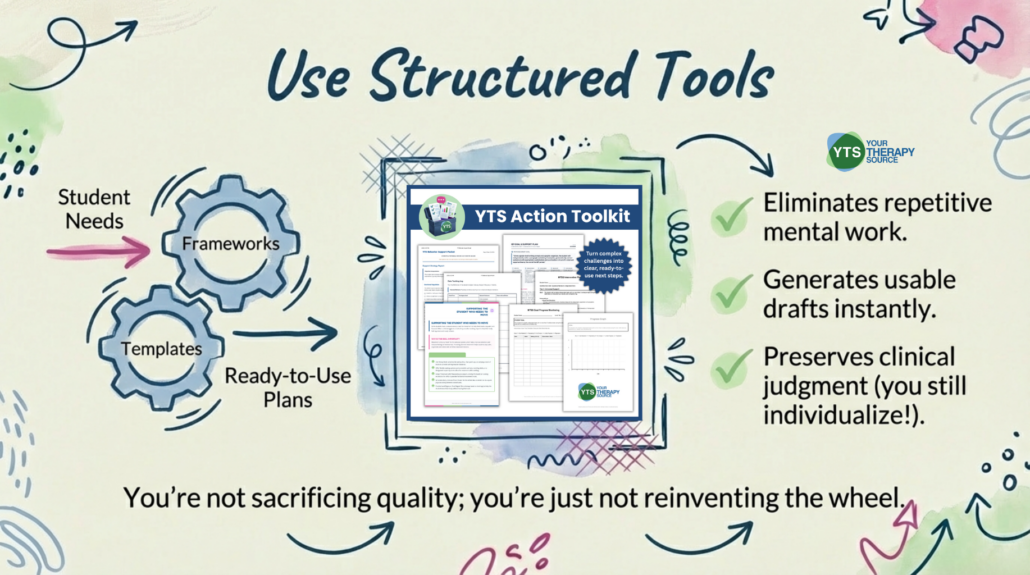
When you have tools that guide you through this process with clear prompts and generate usable drafts, you’re not sacrificing quality. You’re eliminating the repetitive mental work that bogs you down. You still bring your clinical judgment and individualize based on the student. You’re just not reinventing the wheel every single time.
Create Communication Materials Quickly and Consistently
How much time do you spend each week creating handouts for teachers and families? You know what strategies to recommend, but turning that knowledge into a clear, professional document that someone else can actually use takes time. Time you don’t have.
The solution isn’t skipping this step (communication is critical), but streamlining it. Whether you use templates, frameworks, or tools that help you generate these materials quickly, the goal is the same: get clear, usable information into the hands of the people who need it without spending 30-45 minutes formatting a document.
When you can create a professional handout in 5 minutes instead of 30, you’re more likely to actually do it. Which means teachers and families get the support they need, and you get fewer follow-up questions later.
Let Data Collection Serve You, Not Burden You
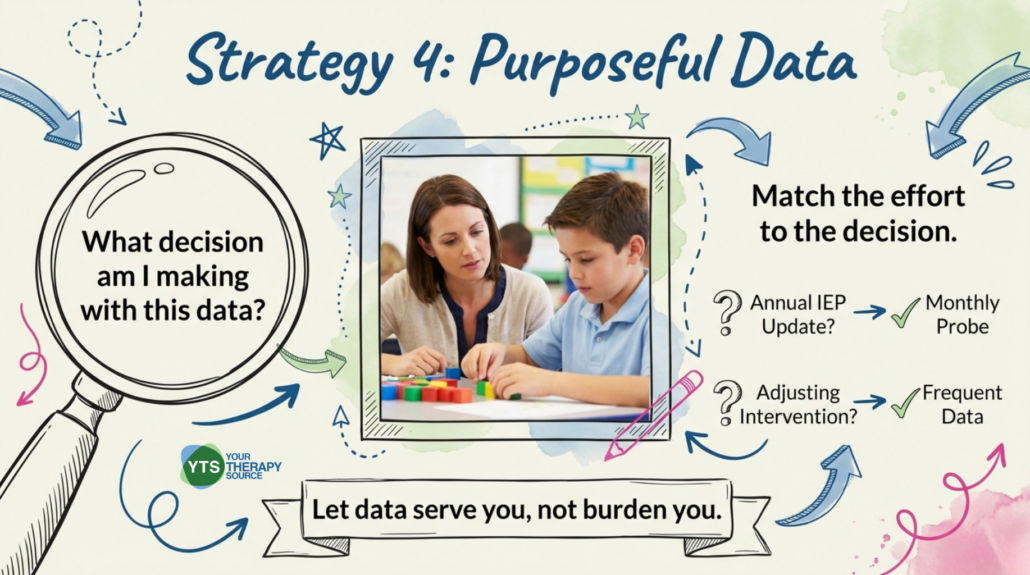
We need data to show progress and make decisions, but we don’t need perfect data for every goal at every moment. Some goals deserve rigorous, frequent data collection. Others? A well-timed probe or observational note is sufficient.
Ask yourself: What decision am I making with this data? If you’re using it to write an annual IEP update, a monthly probe might be plenty. If you’re adjusting intervention intensity, you need more frequent data. Match your data collection effort to the decision at hand.
Also consider these time-savers:
- Use + / – or a simple 1-3 scale instead of detailed rubrics for routine practice
- Take data on 2-3 representative trials instead of every single response
- Rotate which students you take detailed data on each week
- Design simple data collection tools that match your actual workflow, not idealized systems you’ll never maintain
The key is having data collection frameworks that are simple enough to use consistently but meaningful enough to inform your decisions. When data collection feels manageable, you actually do it. And that’s when it becomes useful.
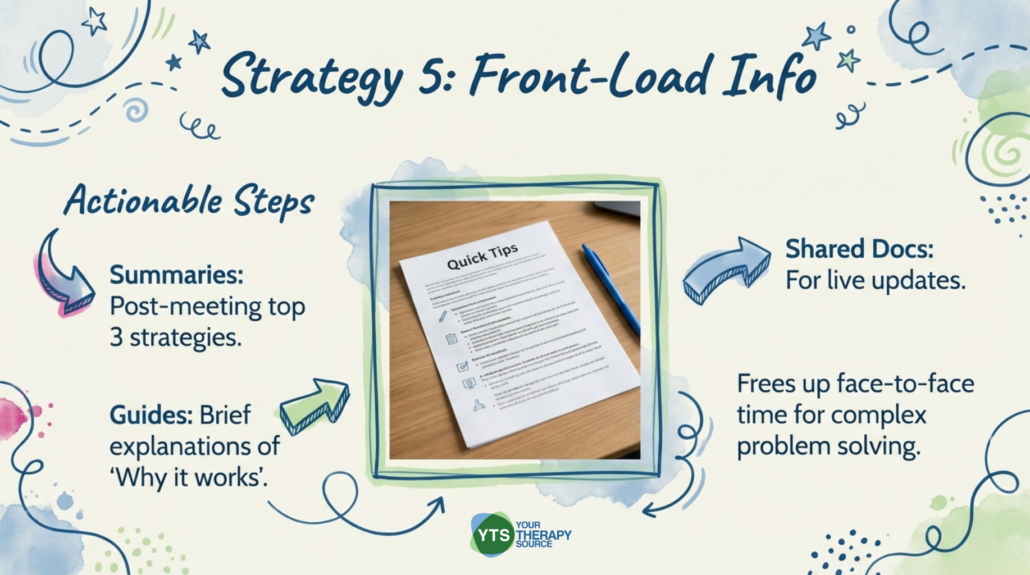
Front-Load Communication to Reduce Back-and-Forth
How much time do you spend each week answering the same questions from teachers or parents? “What should I do when he refuses?” “How can I help her practice at home?” “Is this normal?” These questions are important, but the back-and-forth can eat up hours.
Front-load information to prevent these questions before they start:
- After evaluations or IEP meetings, provide a clear summary with the top 3-5 strategies teachers/parents can use immediately
- Create brief strategy guides that explain not just what to do, but why it works and how to adjust
- Set up a shared document or communication system where you post updates everyone can access
This doesn’t eliminate communication (nor should it). But it shifts some of the routine information-sharing to clear, accessible formats that people can reference when they need it. This frees up your face-to-face time for the nuanced problem-solving conversations that actually require real-time interaction.
The Bottom Line on How To Reduce Daily Workload
Reducing your workload isn’t about cutting corners or lowering standards. It’s about eliminating the repetitive work that drains your time and energy so you can focus on what actually requires your expertise: clinical decision-making, relationship-building, and responsive problem-solving.
The providers who manage their workload best aren’t working less hard. They’re working with better tools and systems that help them move from challenge to action plan efficiently. When you can quickly turn a student concern into a clear goal, matched interventions, and usable communication materials, you spend less time on paperwork and more time on what you actually trained to do: support students.
Read more about Making School Based Therapy More Manageable in this series: