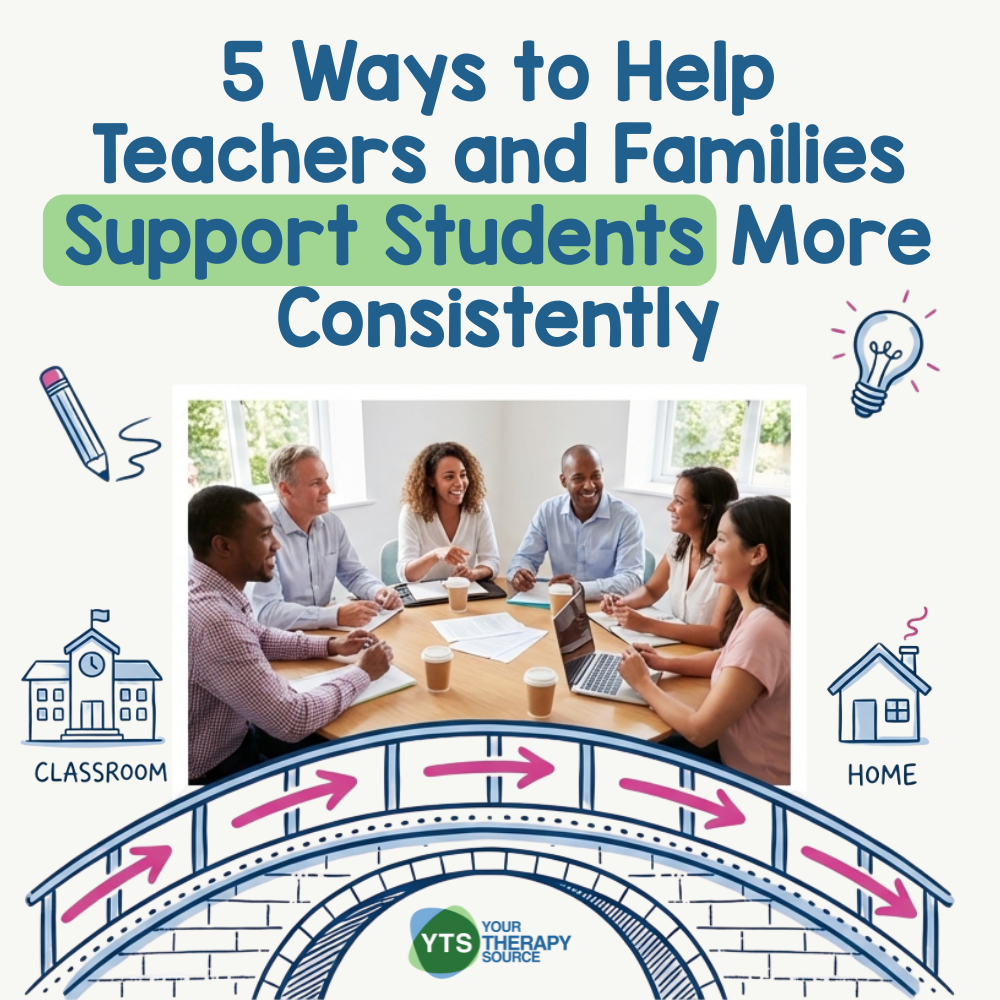
5 Ways to Help Teachers and Families Support Students More Consistently
You know what works for your students. You’ve identified effective strategies, taught the skills, and seen progress during your sessions. But then the student goes back to the classroom or home, and somehow those strategies don’t translate. The teacher forgets the visual cue. The parent isn’t sure when to use the sensory break. The strategies that worked beautifully with you aren’t happening consistently anywhere else.
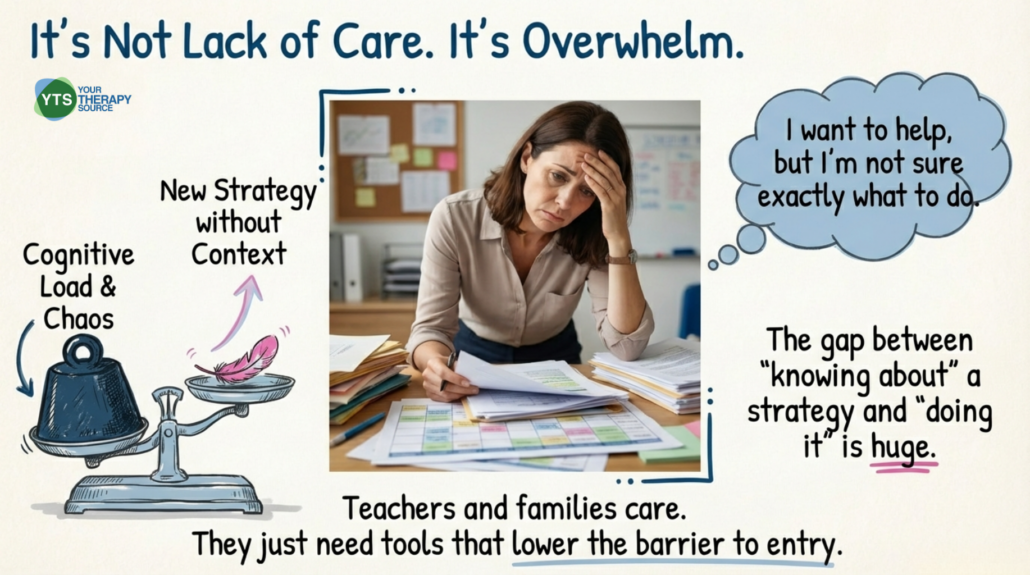
This isn’t because teachers and families don’t care. They absolutely do. It’s because they’re overwhelmed, they’re not sure exactly what to do, or they don’t understand why a particular strategy matters. The gap between “knowing about” a strategy and actually implementing it consistently is huge.
As the specialist, you can’t be in every classroom and every home. But you can make it easier for the adults in a student’s life to provide consistent support. Here are five ways to help teachers and families become effective partners in supporting student progress.
Explain the “Why” Behind the Strategy, Not Just the “What”
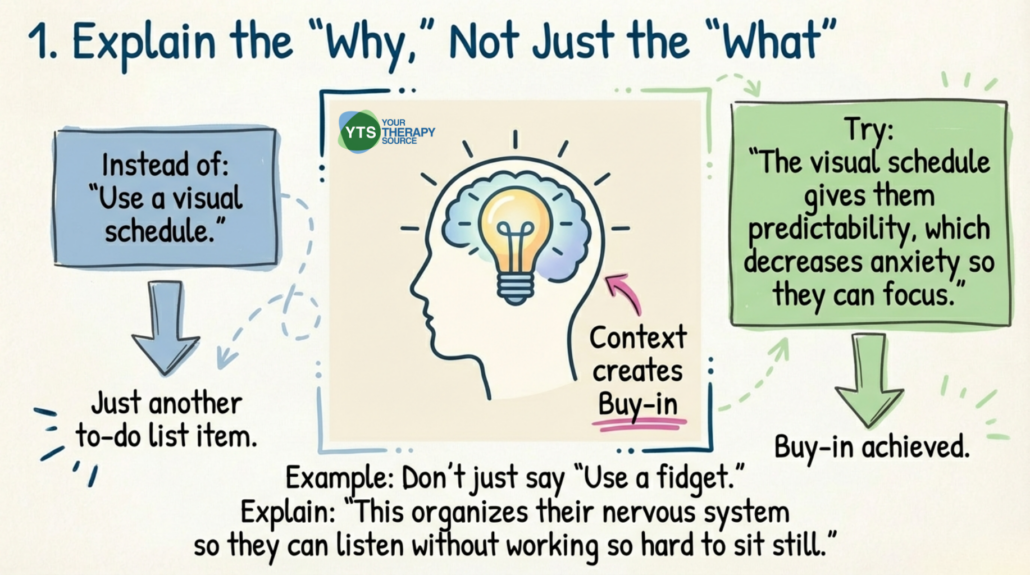
When you tell a teacher “try giving the student a movement break every 20 minutes” without context, it becomes just one more thing on their already overwhelming to-do list. But when you explain why movement breaks help this particular student access learning, it becomes a tool they understand and are more likely to use.
Instead of: “Use a visual schedule.” Try: “When this student knows what’s coming next, their anxiety decreases and they can focus on the task instead of worrying about transitions. The visual schedule gives them that predictability.”
Instead of: “Let the student use a fidget during instruction.” Try: “This student’s nervous system needs organizing input to maintain focus during seated activities. The fidget provides that input so they can listen without having to work so hard to sit still.”
When people understand the function a strategy serves (when they see how it connects to the student’s actual learning or regulation needs), they’re more likely to implement it consistently and adjust it appropriately when needed.
This means your communication materials need to do more than list strategies. They need to briefly explain why each strategy matters for this student. This doesn’t have to be lengthy. A single sentence of context can make all the difference.
Provide Clear, Visual Implementation Guides
Verbal explanations are helpful, but they’re easily forgotten. Written explanations can be dense and overwhelming. What works best? Clear, visual guides that show exactly what to do.
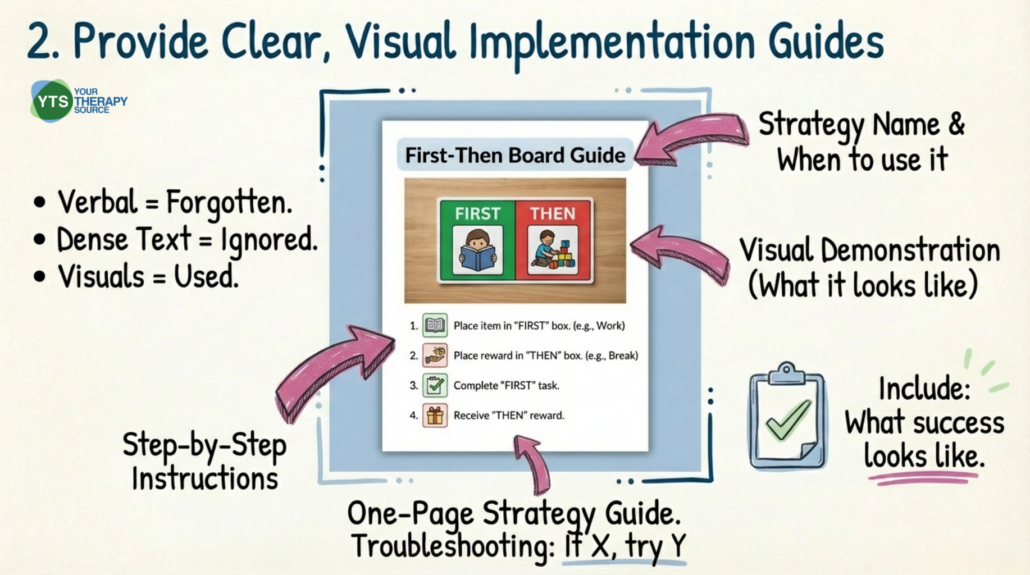
Create one-page strategy guides that include:
- The strategy name and when to use it
- Step-by-step instructions or a visual demonstration
- What it looks like when it’s working
- Simple troubleshooting tips
For example, instead of writing a paragraph about how to use a first-then board, create a visual that shows:
- Picture of the first-then board
- “Use this when: student is resistant to transitioning”
- “How to use it: Show the board, point to ‘first’ activity, then point to ‘then’ activity”
- “What success looks like: student completes first activity and transitions to preferred activity”
- “If it’s not working: make sure ‘then’ activity is truly preferred; use more frequent reinforcement”
When you can generate these kinds of clear, professional handouts quickly, you’re more likely to actually create them. Which means teachers and families actually get the guidance they need in a format they can reference and use.
Make Strategies Fit the Existing Routine, Not Create a New One
Teachers and families are more likely to implement strategies that fit naturally into what they’re already doing. The more you ask them to create new routines or add extra steps, the less likely it is to happen consistently.
Before recommending a strategy, ask: “When would this naturally fit into the existing routine?”
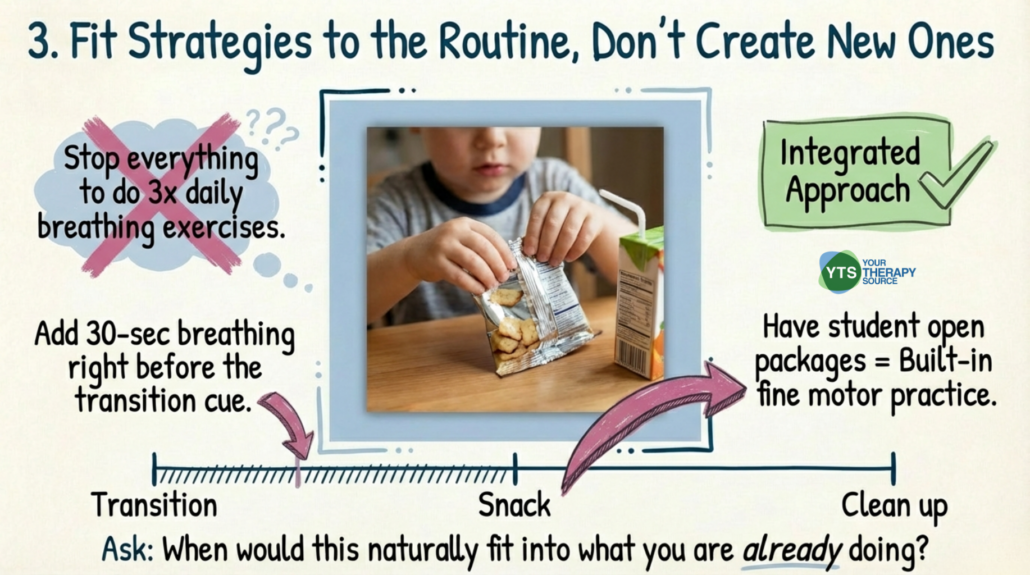
Instead of: “Do this breathing exercise with the student three times a day.” Try: “Add this 30-second breathing exercise right before transitions. You’re already cueing the transition, just add the breathing first.”
Instead of: “Practice these fine motor activities at home.” Try: “During snack time, have the student open their own packages and containers. That’s built-in fine motor practice that’s already part of your routine.”
When you position strategies as slight modifications to existing routines rather than add-ons, implementation becomes much more realistic. Think: “What are they already doing that we can enhance or adjust?” rather than “What new thing can they add?”
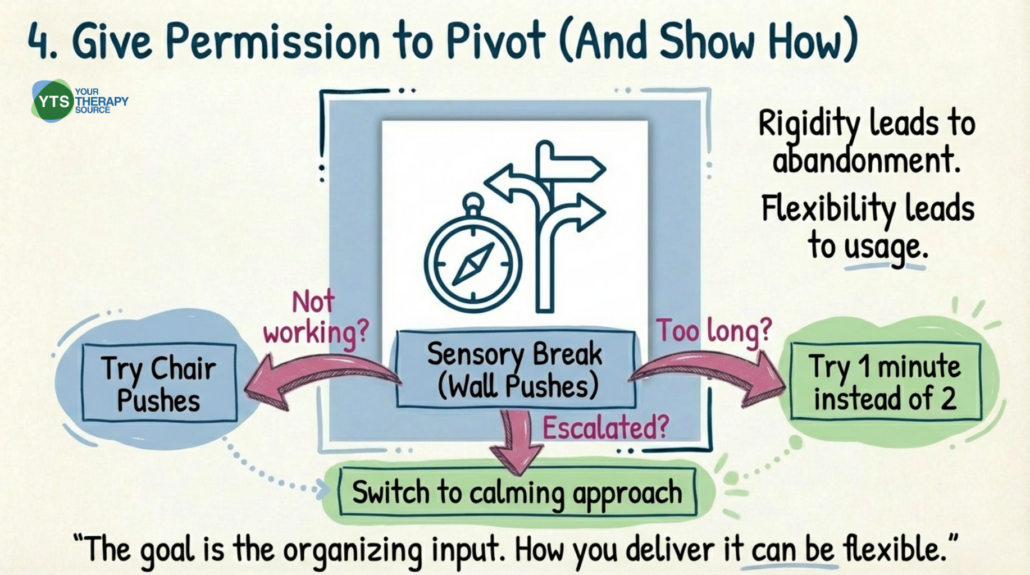
Give Teachers and Families Permission to Adjust (And Show Them How)
One reason strategies don’t get implemented consistently is that adults feel like they have to do it exactly as prescribed, and when that doesn’t work or doesn’t fit the situation, they abandon it entirely rather than adjusting it.
Change this by explicitly giving permission to modify strategies and providing guidelines for how to adjust:
“This sensory break routine is a starting point. Pay attention to what your student responds to. If the wall pushes aren’t helping, try chair pushes instead. If two minutes is too long, try one minute. The goal is organizing input. How you deliver it can be flexible.”
Provide decision-making frameworks:
- “If the student seems more escalated after this strategy, try a calming approach instead”
- “If they’re not responding, increase the frequency or intensity”
- “If it’s working well, you can gradually fade the support”
When you communicate that strategies are flexible tools rather than rigid protocols, adults feel more confident experimenting and adapting. Which means they’re more likely to find what actually works in their specific context.
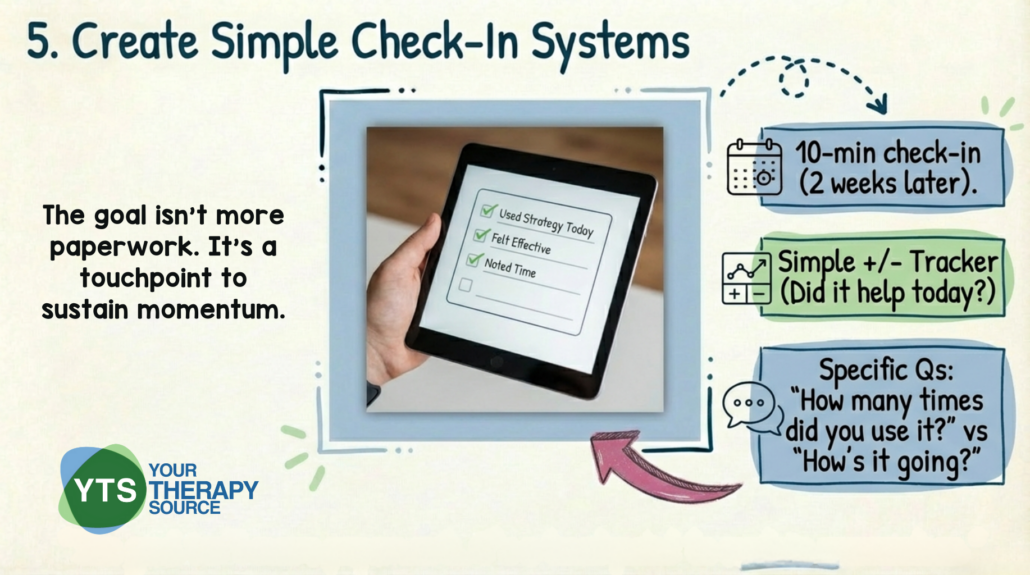
5. Create Simple Check-In Systems That Support Consistency
Consistency breaks down when there’s no follow-up. Teachers and families implement a strategy for a few days, it seems to help (or doesn’t), and then it quietly fades away because no one circled back to check in.
Build simple accountability structures:
- Schedule a brief 10-minute check-in two weeks after introducing a new strategy
- Create a simple tracker teachers or parents can use (even just a +/– for “did this help today?”)
- Use shared communication tools (Class Dojo, Google Doc, communication log) where adults can share quick updates
- Ask specific questions: “How many times were you able to use the visual schedule this week?” rather than “How’s it going?”
The goal isn’t to create more paperwork or add burden. It’s to create touchpoints that help adults stay consistent and let you know when something needs adjusting.
When you make follow-up easy and specific, strategies are more likely to stick. And when strategies stick, students make progress in all the settings where they spend their time, not just during your sessions.
The Bottom Line
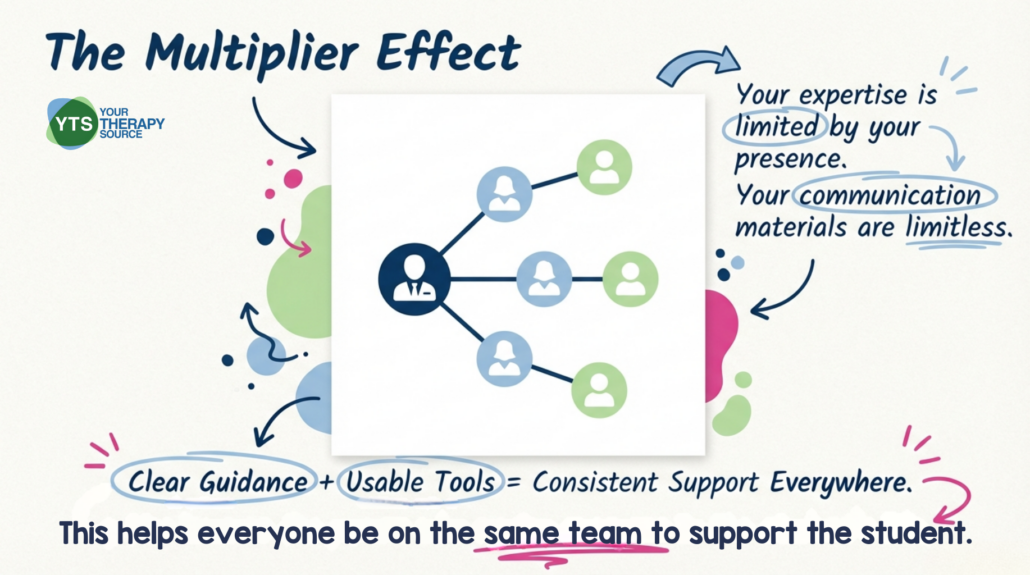
Your expertise is valuable, but it’s only as effective as the consistency with which strategies are implemented across a student’s day. Teachers and families want to support students well. They just need tools that make it clear what to do, why it matters, and how to adjust when needed.
When you can quickly create professional, clear communication materials that explain strategies in accessible ways, you multiply your impact. Instead of being the only person who knows how to support the student effectively, you become the person who equips everyone in the student’s life to provide consistent, effective support.
The students who make the most progress aren’t necessarily the ones who get the most direct services. They’re the ones who experience consistent support across all their environments. And that consistency starts with clear, usable guidance from you.