
Microbreaks in the Classroom: Supporting Student Focus
Maintaining focus throughout a full class period is a challenge many students face, and it is one that has real consequences for learning. Research on microbreaks in the classroom suggests that how educators structure rest periods during instruction may influence how consistently students can stay engaged with course material.
A 2025 study published in Frontiers in Psychology examined this question directly, comparing the effect of a single longer break with a series of short, frequent breaks on student quiz performance across 90-minute university seminars. The findings offer a useful perspective for school-based professionals who think carefully about how attention and learning connect throughout the school day.

WHAT DID THE RESEARCH SAY ABOUT MICROBREAKS?
Researchers at a university in the United Kingdom investigated whether the timing and frequency of rest periods during class influenced how well students performed on end-of-session quizzes. The study ran over ten weeks and compared two break structures within the same course.
Key study details:
- 253 undergraduate students participated across two academic years (2021 and 2022) in a 90-minute psychology seminar; each session included 12 slides of content and a quiz at the end with one question per slide
- Students rotated between two conditions: a single 10-minute break 45 minutes into the session, or a series of 90-second micro-breaks given every 10 minutes throughout the session
- Quiz accuracy at each question served as the measure of performance over time, allowing researchers to track how well students retained information from the beginning, middle, and end of each session
KEY FINDINGS FROM THE RESEARCH ON MICROBREAKS IN THE CLASSROOM
Overall, the structure of rest periods was associated with meaningful differences in how consistently students performed across a class session.
- Students in the micro-break condition scored higher on average across end-of-class quizzes than students in the traditional break condition (65.1% vs. 56.4%)
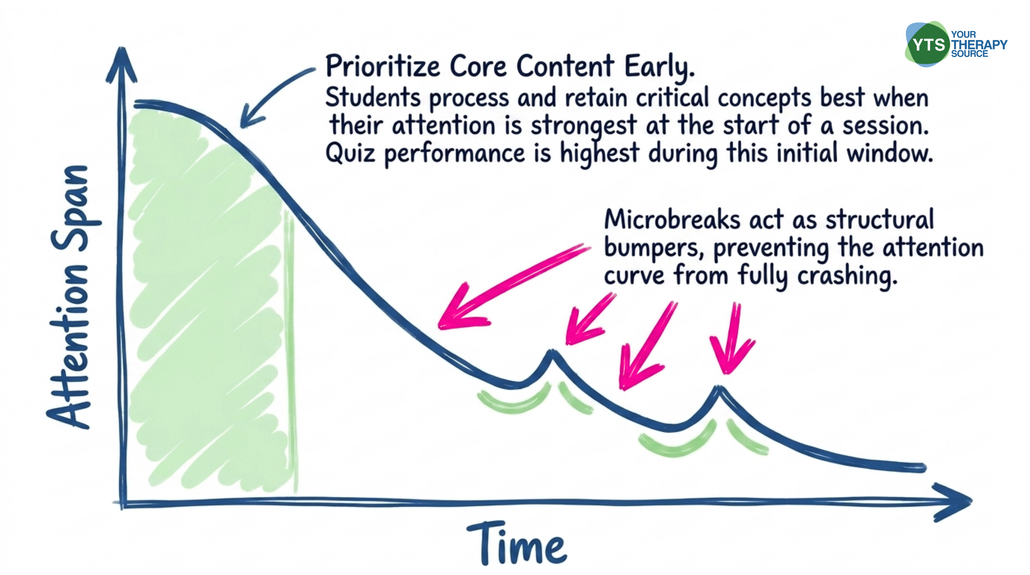
- Quiz performance declined over time in both conditions, suggesting that sustaining attention across a long session may be challenging regardless of break type
- Significant performance decline in the traditional break condition began at the third quiz question, compared to the fifth question in the micro-break condition
- The single longer break appeared to produce a brief recovery in quiz scores (rising from 39.6% to 71.2% immediately after the break), but scores dropped again right away
- Micro-breaks were associated with steadier performance during the middle portion of sessions, where the traditional break group showed its sharpest decline
- Consistent patterns were observed across both student cohorts studied one year apart, which may suggest the findings were not limited to one particular class group or academic year
WHY THESE FINDINGS MATTER FOR SCHOOL-BASED PRACTICE
Attention naturally fluctuates over time, and this study suggests that how rest periods are structured may influence how well students access and retain information across a lesson. For school-based professionals, understanding this dynamic is useful when thinking about how to plan instruction and support participation throughout the day.
- Brief, frequent pauses may help students maintain more consistent engagement across a longer session rather than relying on a single longer break
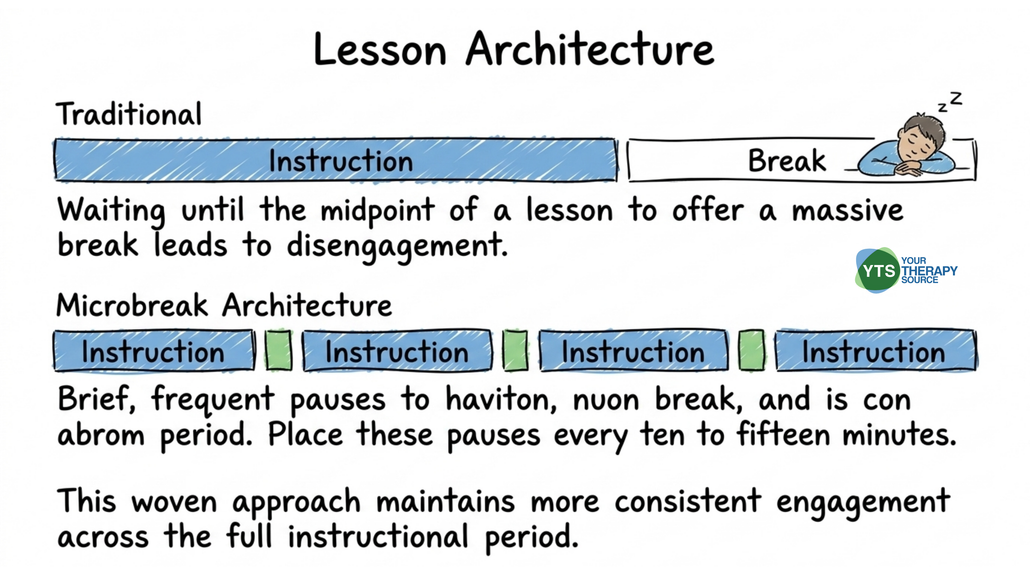
- Performance appeared to decline earlier and more steeply without micro-breaks, suggesting that waiting until the midpoint of a session to offer a break may leave a gap in support during critical learning time
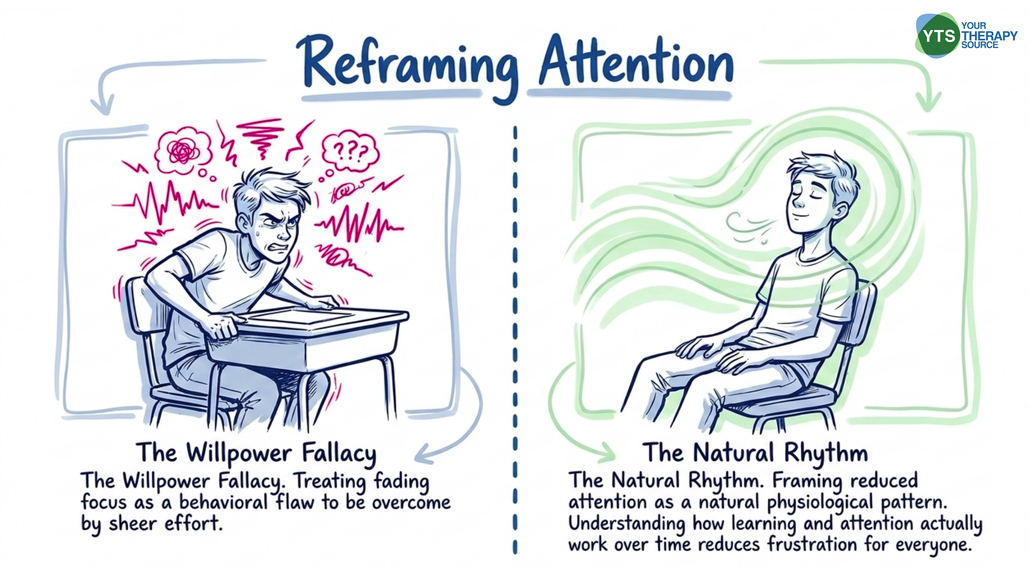
- Recognizing that attention may decline naturally over time can help staff interpret reduced focus as a cognitive pattern rather than a behavioral or motivational issue alone
Since the participants in this study were university students, school teams may want to treat these findings as informative context for thinking about lesson pacing rather than a confirmed protocol for younger learners.
IMPLICATIONS FOR SCHOOL STAFF
These findings may help school staff think differently about when and how to build pauses into instruction. Students who show signs of fading focus midway through a lesson are not necessarily disengaged by choice.
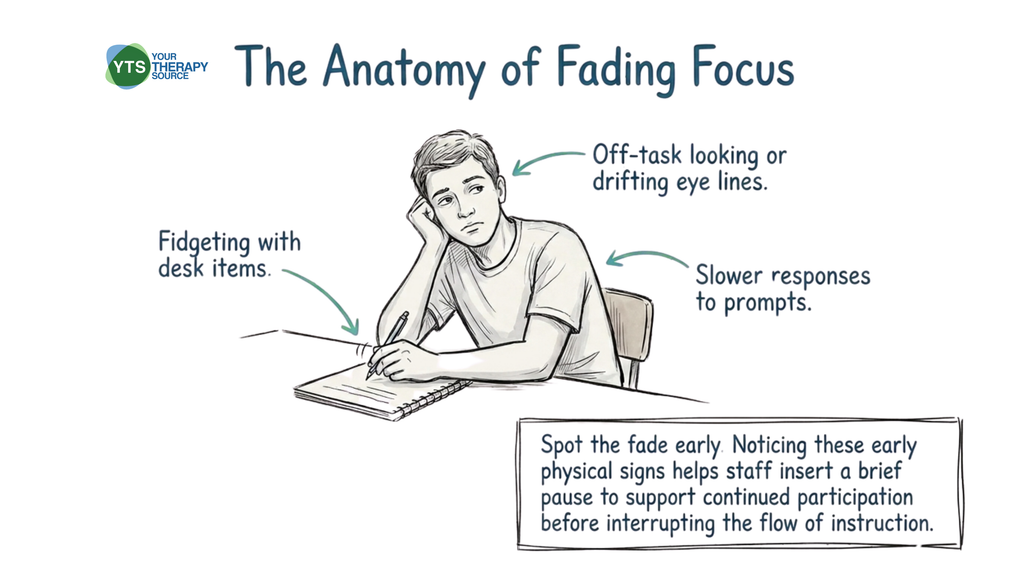
- Increased restlessness or fidgeting as a session progresses
- Slower or less accurate responses to questions in the second half of a lesson compared to the beginning
- Difficulty re-engaging after long stretches of seated, passive listening
These patterns do not point to a specific diagnosis or deficit. They may reflect the natural limits of sustained attention that many students experience across the school day. Brief, well-timed pauses are one piece of a broader, multi-modal approach to supporting student attention and participation, which may also include movement opportunities, sensory supports, flexible pacing, and active learning strategies that school teams already use.
10 PRACTICAL STRATEGIES TO ENCOURAGE MICROBREAKS IN THE CLASSROOM
- Build in brief, frequent pauses during longer lessons. Consider scheduling short pauses of 60 to 90 seconds every 10 to 15 minutes rather than waiting until the midpoint of a lesson to offer a break. This approach may help maintain more consistent engagement across the full instructional period.
- Watch for early signs of fading focus. Fidgeting, slower responses, or off-task looking may appear before a student is fully disengaged. Noticing these early signs may help staff decide when a brief pause would support continued participation without interrupting the flow of instruction.
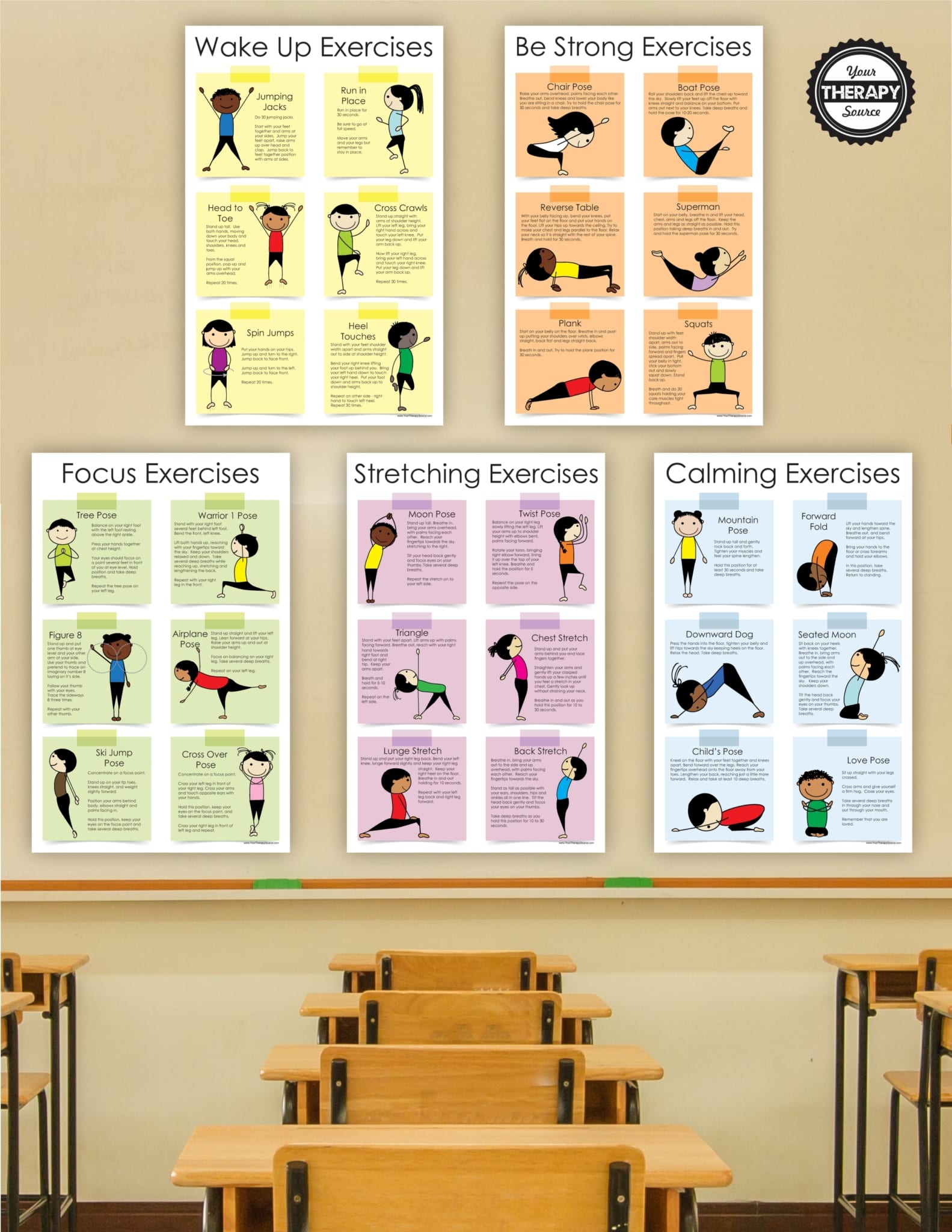
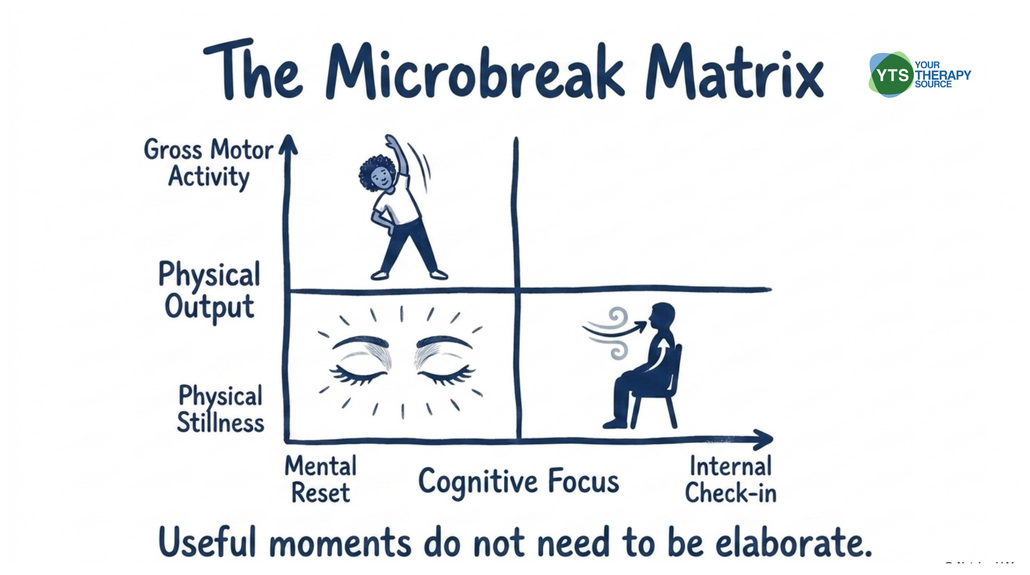
- Pair brief pauses with simple movement. A short pause that includes standing, stretching, or a simple gross motor activity may address both cognitive and physical needs at once. These moments do not need to be elaborate to be useful.
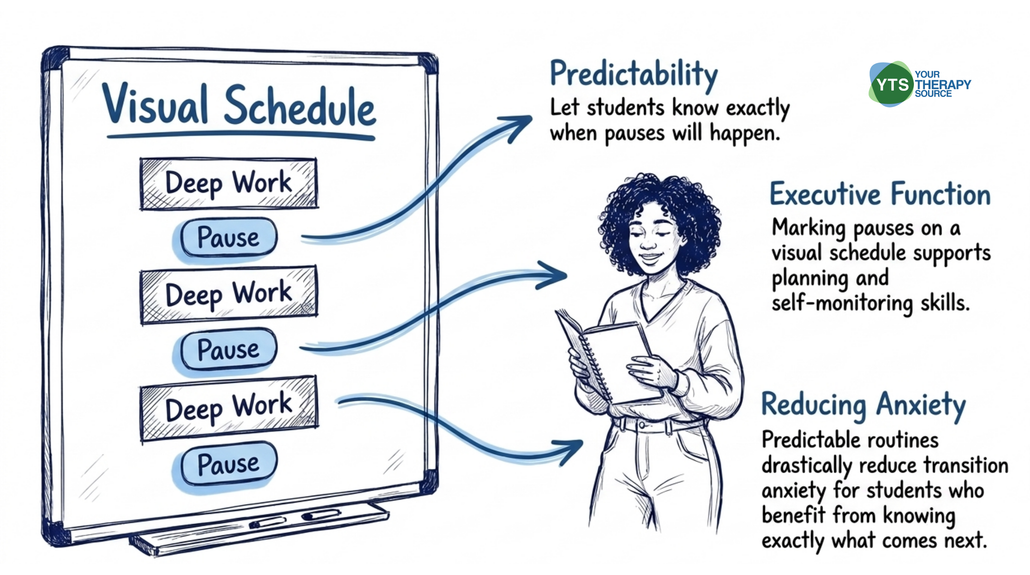
- Keep pauses predictable and low effort. Letting students know when pauses will happen, such as by marking them on a visual schedule, may support executive function skills like planning and self-monitoring. Predictable routines can also reduce transition anxiety for students who benefit from knowing what comes next.
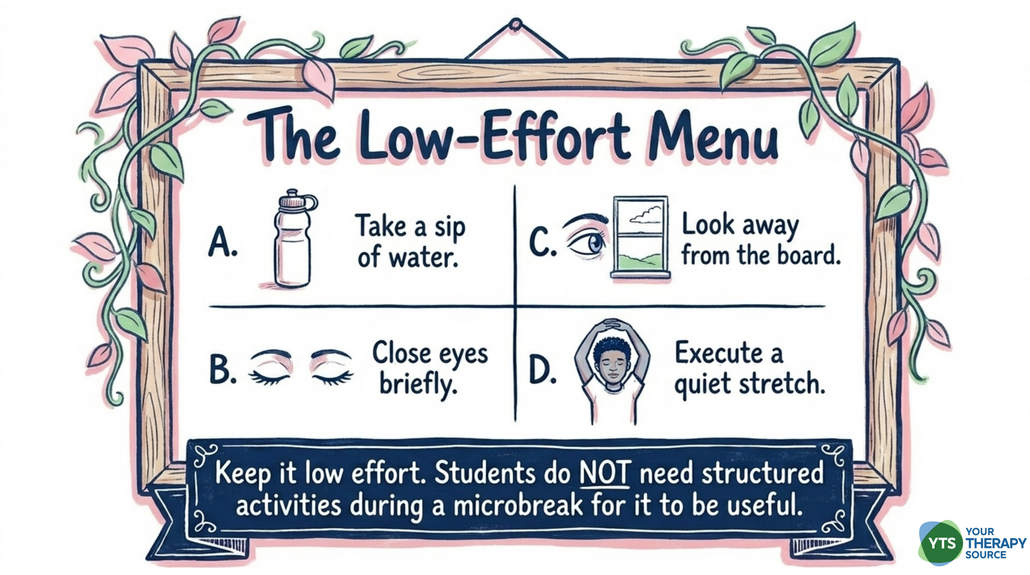
- Offer simple options during pause time. Closing eyes briefly, looking away from the board, taking a sip of water, or quietly stretching are all low-effort options that may support a brief visual and cognitive reset. Students do not need structured activities during a micro-break for it to be useful.
- Prioritize the most important content early in the session. Since quiz performance in this study was highest at the start of the session for both groups, presenting the most critical concepts early may help students process and retain core information while their attention is strongest.
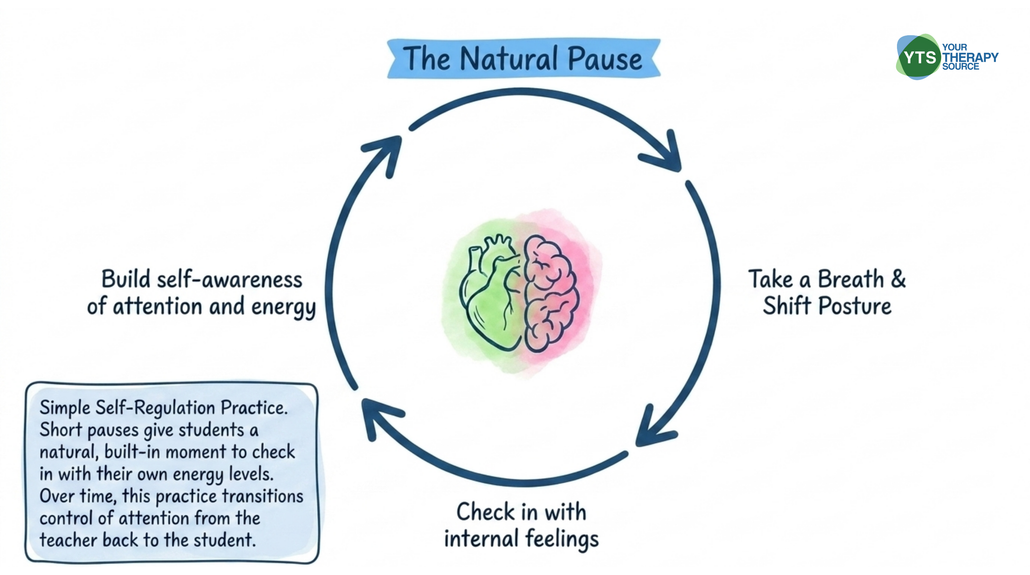
- Use brief pauses as a space for simple self-regulation practice. Short pauses can give students a natural moment to take a breath, check in with how they are feeling, or shift their posture. Over time, this practice may support students in building awareness of their own attention and energy levels.
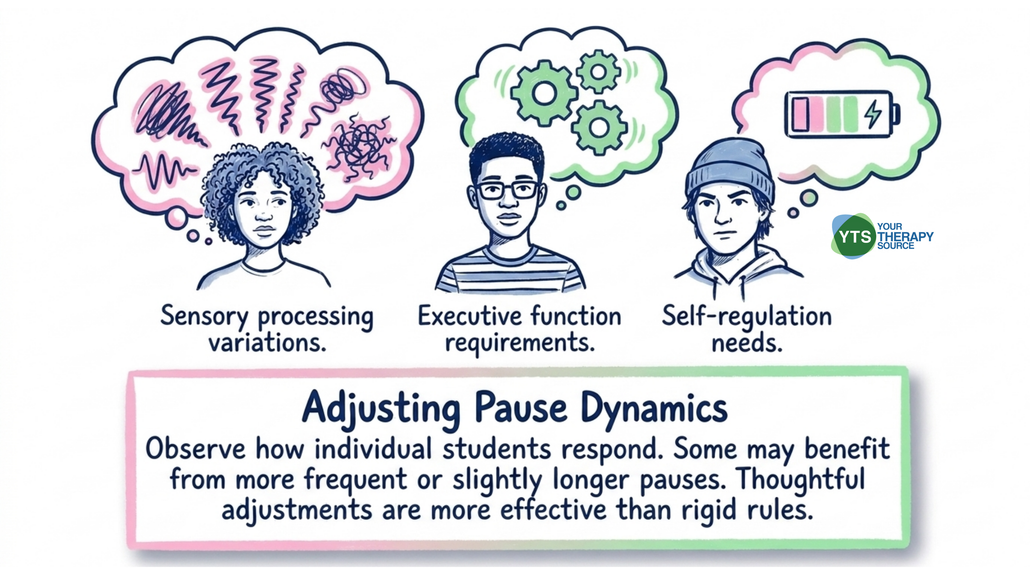
- Consider individual differences when adjusting pause length or frequency. Some students may benefit from more frequent or slightly longer pauses depending on their sensory processing, executive function, or self-regulation needs. Observing how individual students respond can help staff make thoughtful adjustments.
- Frame reduced attention as a natural pattern. Helping students understand that attention can fluctuate over time may support their self-awareness and reduce frustration. This perspective shifts the focus from effort or willpower to understanding how learning and attention work.
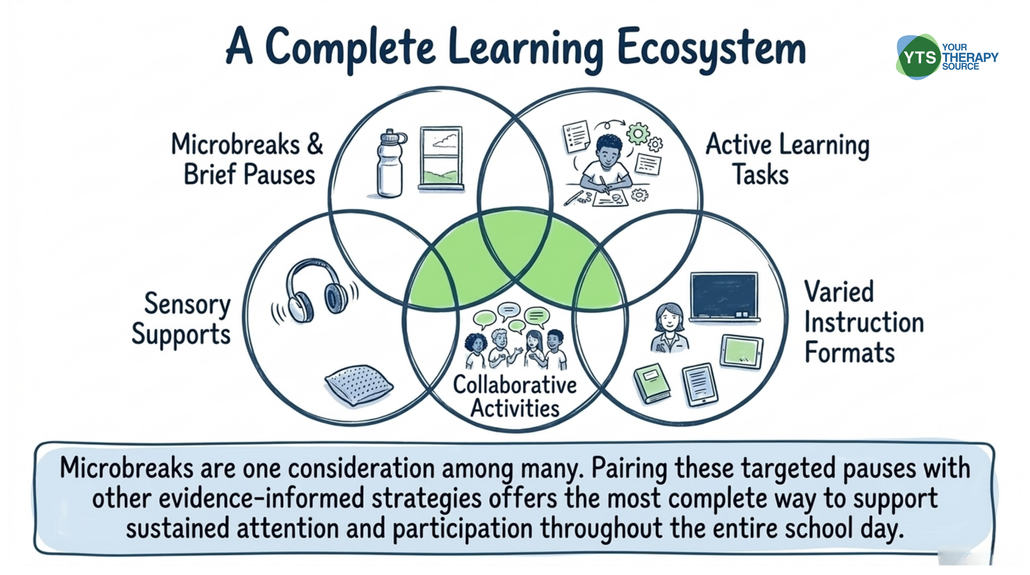
- Combine brief pauses with other evidence-informed strategies. Micro-breaks are one consideration among many. Pairing them with active learning tasks, sensory supports, varied instruction formats, or collaborative activities may offer a more complete way to support attention and participation throughout the school day.
CONCLUSION
This study found that university students who experienced brief, frequent micro-breaks during class showed more consistent quiz performance than students who experienced a single longer break. Both groups showed some decline in performance over time, suggesting that attention naturally decreases across a long session regardless of break structure. The findings were consistent across two separate groups of students studied one year apart.
For school-based professionals, these findings offer a useful reminder that how rest is structured during instruction may matter as much as whether a break is offered at all. Understanding the natural limits of sustained attention can help educators and therapists plan more thoughtfully, build in appropriate pauses, and approach reduced focus with greater context across the school day.
REFERENCES
Sharpe, B. T., Trotter, M. G., & Hale, B. J. (2025). Sustaining student concentration: The effectiveness of micro-breaks in a classroom setting. Frontiers in Psychology, 16, Article 1589411. https://doi.org/10.3389/fpsyg.2025.1589411

