
Physical Activity and Executive Function in Children
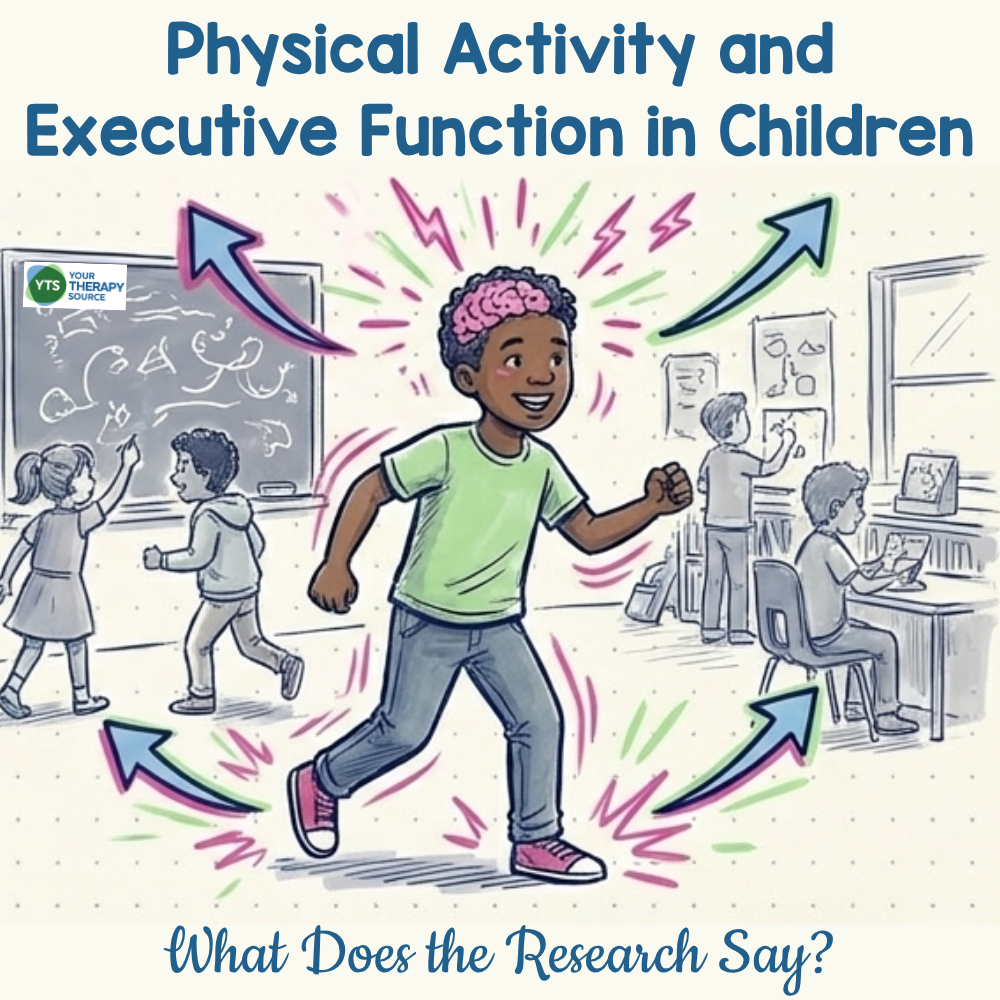
Physical activity and executive function in kids are more closely linked than many school-based professionals may realize. Executive functions, which include the ability to focus, hold information in mind, and shift between tasks, develop gradually throughout childhood and play a key role in academic success and lifelong learning.
A 2025 narrative review published in the Journal of Sport and Health Science raises a thought-provoking question: are there particular windows of time during childhood when physical activity may have an even stronger influence on how executive functions develop? Understanding this connection can help educators and therapists think more intentionally about how and when movement is built into children’s days.
WHAT THE RESEARCH EXAMINED
This paper is a narrative review that explores two related but largely separate areas of research. The first area looks at sensitive periods in brain development, and the second examines how physical activity affects executive function in children. The authors bring these two fields together to explore whether there may be specific developmental windows when physical activity has the greatest impact on children’s thinking skills. Here is more information about executive function and physical activity:
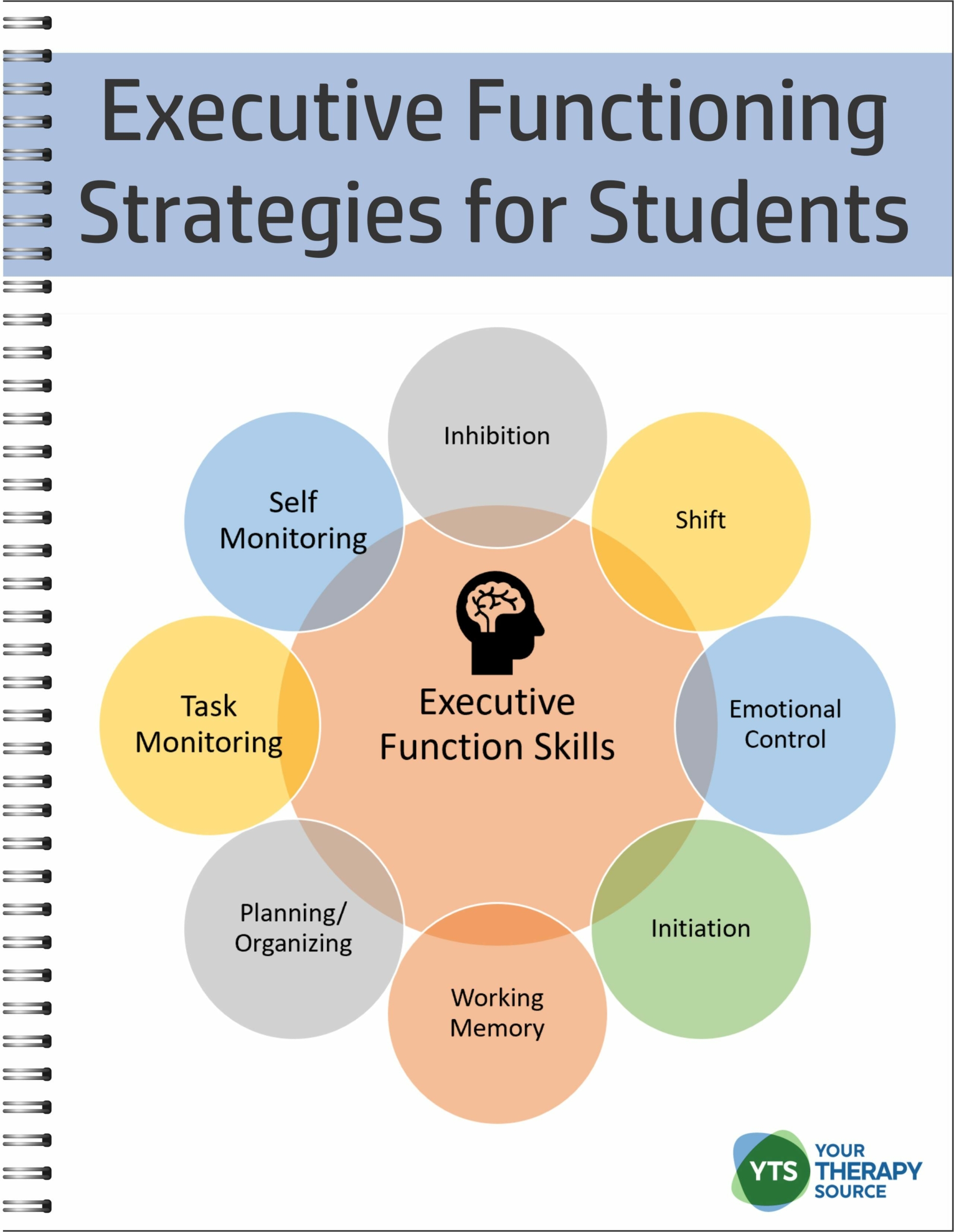
- Executive function is an umbrella term for the top-down mental processes that support goal-directed behavior. The review focuses on three core components: inhibitory control (the ability to resist distractions and competing impulses), working memory (the ability to hold and use information in mind), and cognitive flexibility (the ability to shift thinking between tasks or perspectives). These foundational skills contribute to higher-order abilities like planning, problem-solving, and reasoning. For a broader overview of these skills, see this list of executive functions from Your Therapy Source.
- Physical activity is defined in the review as any bodily movement produced by skeletal muscle contraction that results in energy expenditure. This includes structured activity, meaning planned and deliberate exercise led by an adult, as well as unstructured activity, meaning child-initiated movement and active play.
- Sensitive periods are defined as developmental windows when the brain shows heightened plasticity and is especially responsive to environmental input. During these windows, experiences such as movement may have stronger and more lasting effects on brain development than at other times.
- The review also distinguishes between experience-expectant plasticity, which involves brain development that depends on stimuli the brain is evolutionarily prepared to expect such as movement, and experience-dependent plasticity, which involves new connections formed in response to novel experiences and supports lifelong learning.
KEY FINDINGS FROM THE RESEARCH
Overall, this review suggests that physical activity is beneficial for executive function across childhood, but that the timing of that activity may matter more than previously understood. Specific findings from the review include:
- Higher levels of cardiorespiratory fitness and moderate-to-vigorous physical activity were associated with better inhibitory control in children as young as 3 to 6 years old
- In school-aged children (approximately 5 to 12 years), a large 2023 meta-analysis of 92 randomized controlled trials involving over 25,000 participants found benefits to working memory and fluid intelligence from physical activity interventions
- The same meta-analysis suggested a dose-response effect, meaning that more aerobic activity at moderate-to-vigorous intensity was associated with greater cognitive benefits
- The FITKids randomized controlled trial, a 9-month intervention with 221 children, showed meaningful effects for inhibitory control (effect size d = 0.34) and cognitive flexibility (d = 0.34), as well as working memory
- Resistance training interventions also showed benefits for cognitive, academic, and on-task performance in a review of 10 randomized controlled trials in children aged 5 to 18 years
- Early deprivation of movement or environmental stimulation may have lasting effects on executive function, while earlier enrichment exposure may produce stronger and more transferable benefits
- The review notes that most existing research on physical activity and executive function comes from middle-childhood populations, with very limited evidence from infants and preschool-aged children
- This review is theoretical in nature and does not establish that specific physical activity interventions during certain ages will guarantee improvements in executive function. It proposes that intervention timing may be an important variable and identifies this as an area that warrants further original research before broader conclusions can be drawn
WHY THESE FINDINGS MATTER FOR SCHOOL-BASED PRACTICE
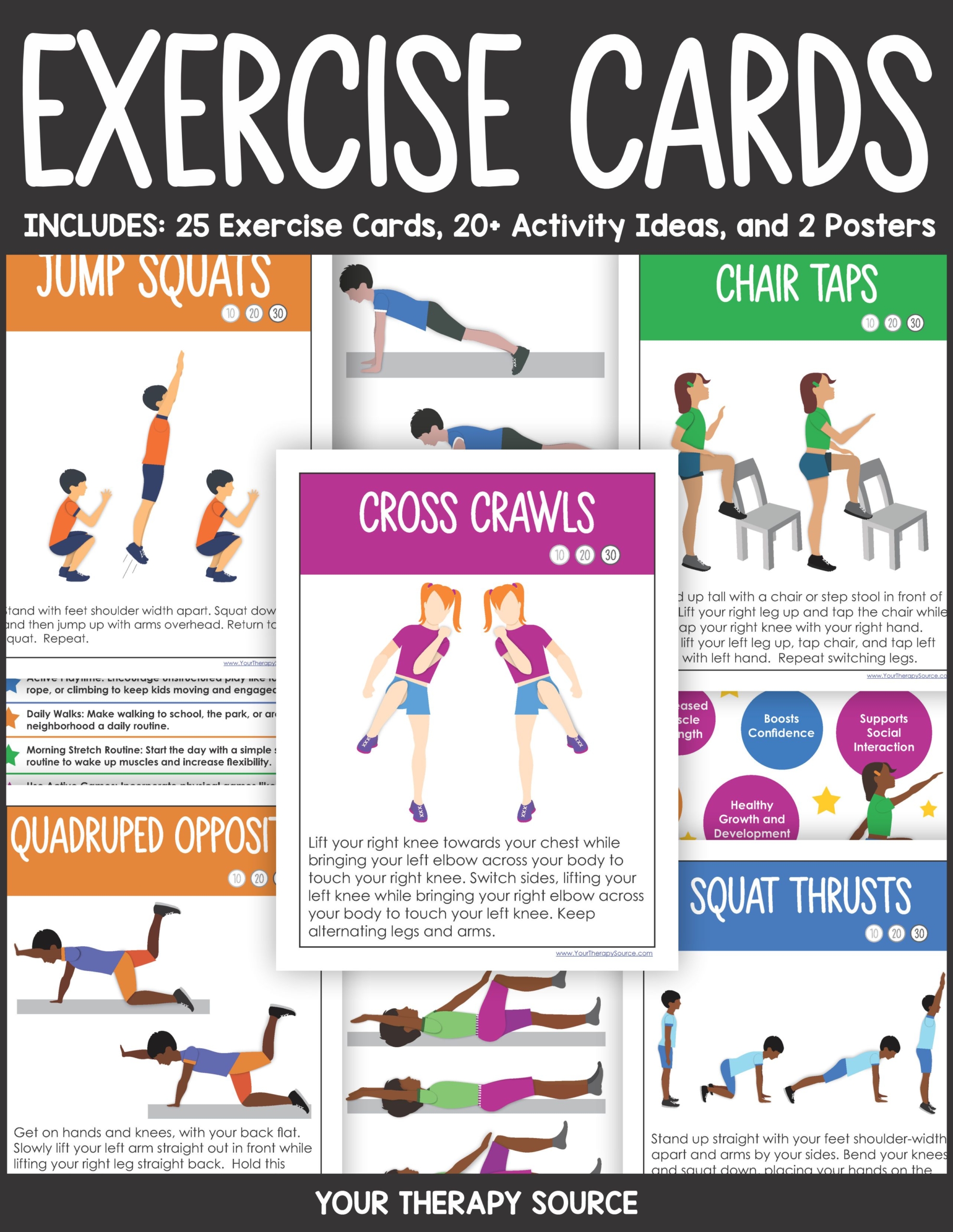
This research raises important questions about how schools schedule and prioritize physical activity, particularly during early and middle childhood. The developing brain may be especially responsive to movement during certain windows, which means that consistent access to physical activity throughout the school day could have lasting benefits beyond basic health. Here are standout points for school-based professionals:
- Executive function skills such as working memory, attention, and flexible thinking are foundational to classroom learning and participation
- The review suggests that sedentary behavior may act as a form of environmental deprivation, potentially limiting the development of these skills during key growth periods
- Children who experience high levels of sedentary time may be at greater risk for disruptions in executive function development, making access to regular movement particularly important for this group
Research on the benefits of recess for executive function aligns with these findings and reinforces the value of protecting unstructured movement time throughout the school day.
IMPLICATIONS FOR SCHOOL STAFF
This review points to the importance of consistent, well-timed physical activity as a support for cognitive development, particularly for children who may already be showing challenges with attention, working memory, or behavioral regulation. Staff across disciplines can play a meaningful role in recognizing when students may benefit from increased movement opportunities.
School staff might observe in students with limited movement opportunities:
- Difficulty sustaining attention during tasks
- Challenges with behavioral self-regulation throughout the day
- Reduced ability to shift between activities or manage competing demands
- Lower engagement in academic tasks that require planning or multi-step thinking
The relationship between movement and thinking is also supported by research on sensory processing and executive function skills, which highlights how sensory and motor experiences lay the groundwork for higher-order cognitive skills. When staff across disciplines, including teachers, occupational therapists, physical therapists, and paraprofessionals, share an understanding of why movement matters for brain development, the whole school environment becomes more intentionally designed to support children’s learning and participation.
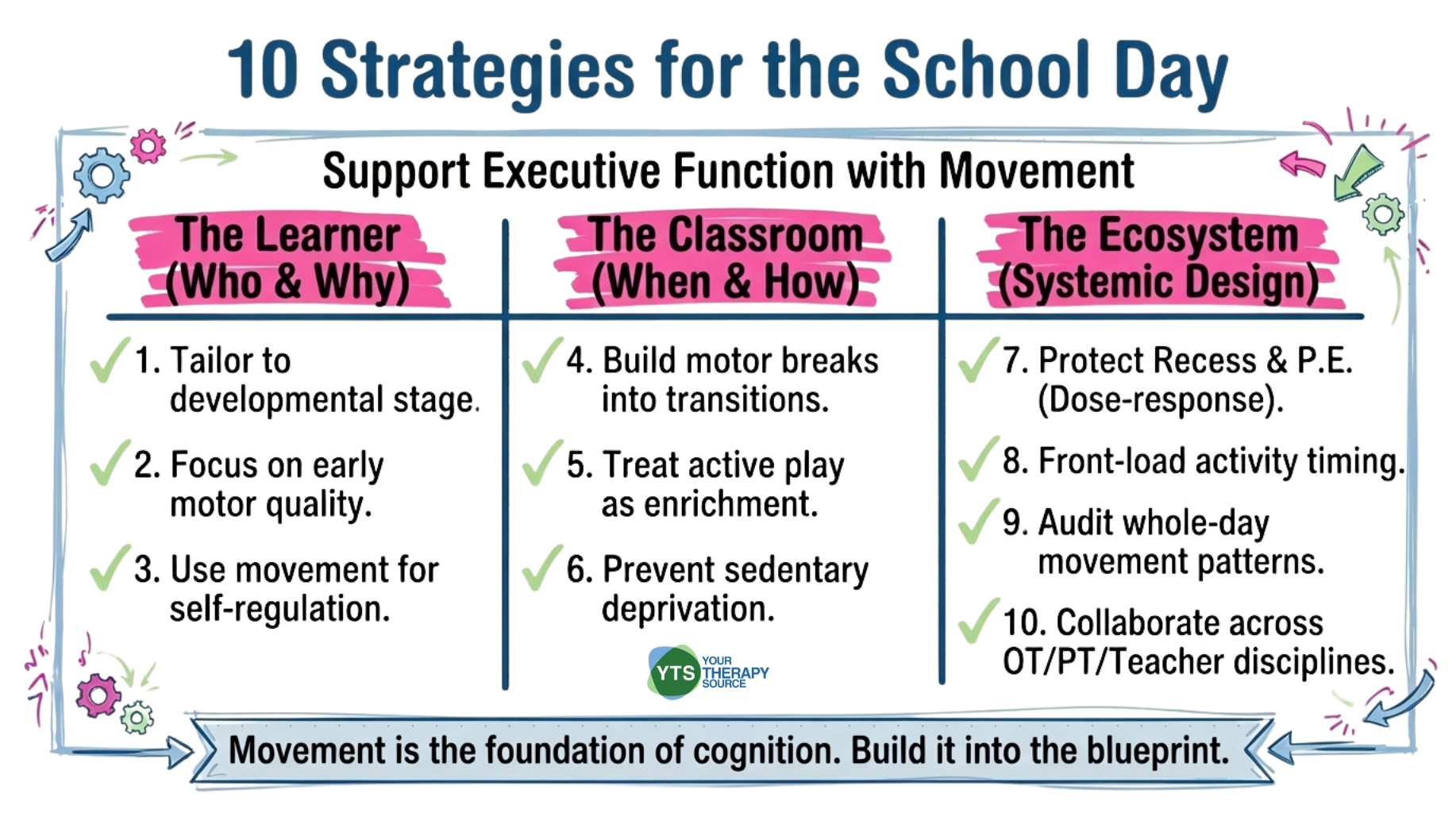
10 PRACTICAL STRATEGIES OR CONSIDERATIONS
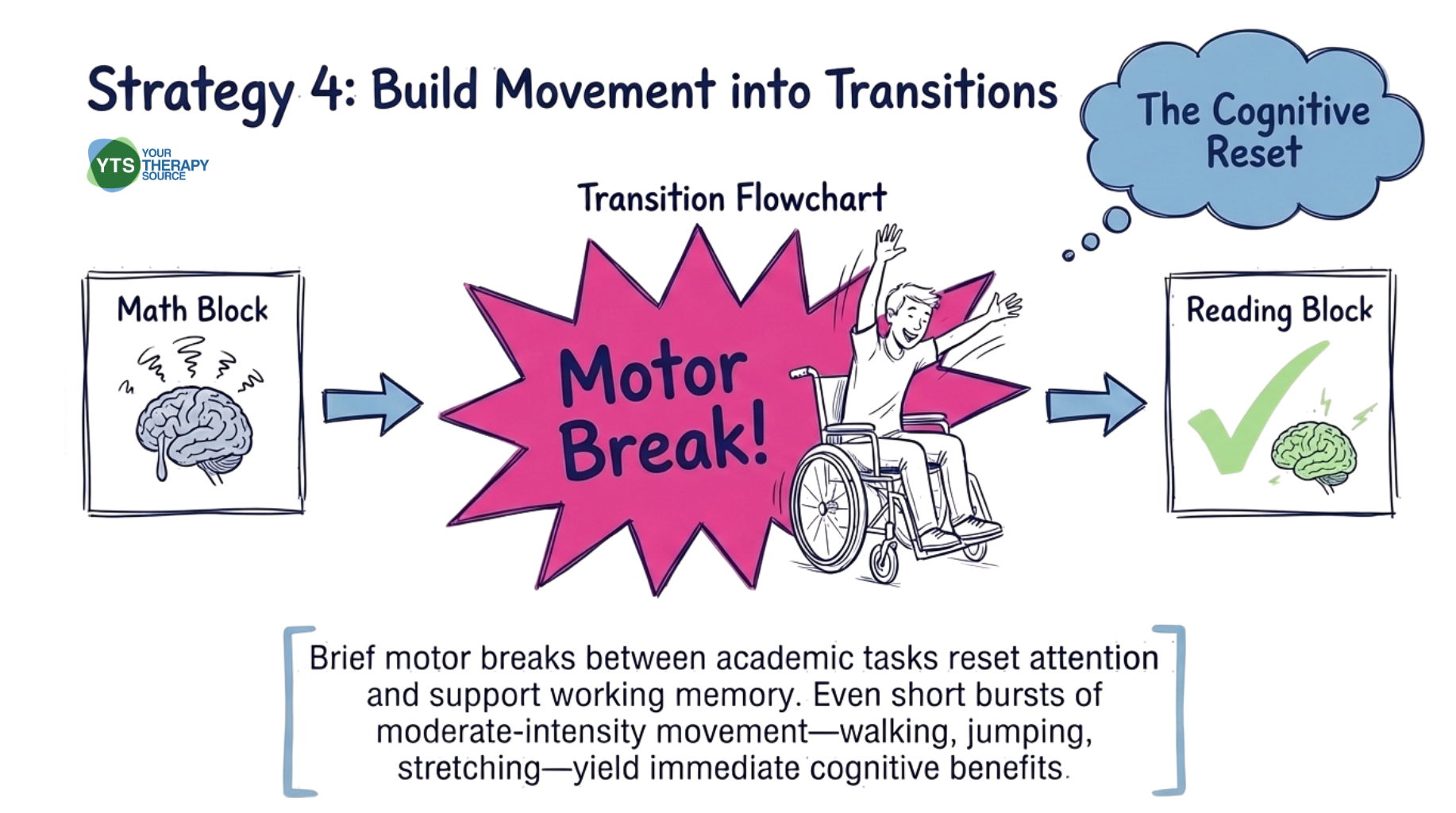
- Build movement into transitions. Brief motor breaks between academic tasks may help reset attention and support working memory. Even short periods of moderate-intensity movement, such as walking, jumping, or stretching, have been associated with cognitive benefits in school-aged children.
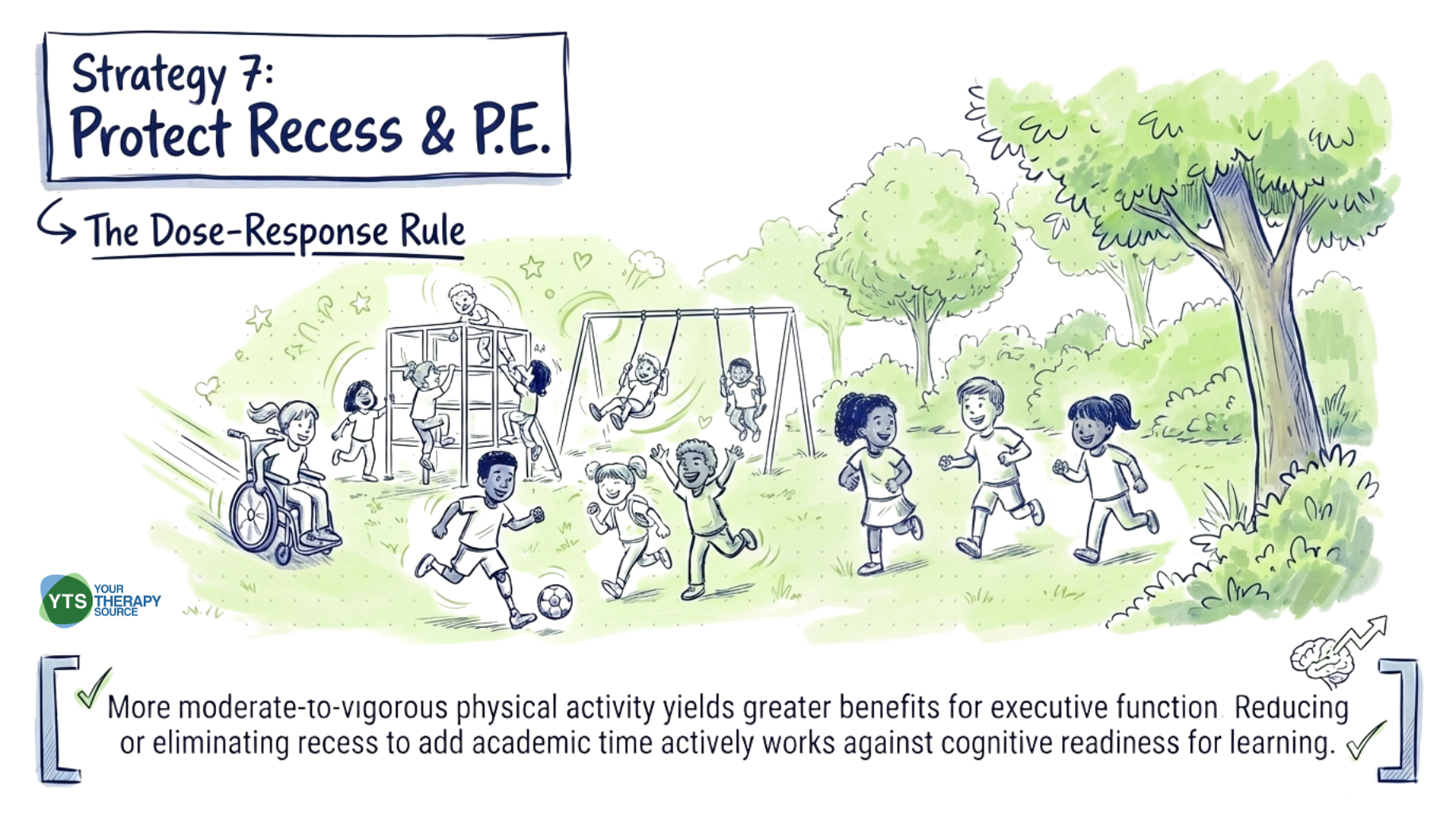
- Protect time for recess and physical education. The research suggests a dose-response relationship, meaning that more physical activity at moderate-to-vigorous intensity is associated with greater benefits for executive function. Reducing or eliminating recess to add academic time may work against cognitive readiness for learning.
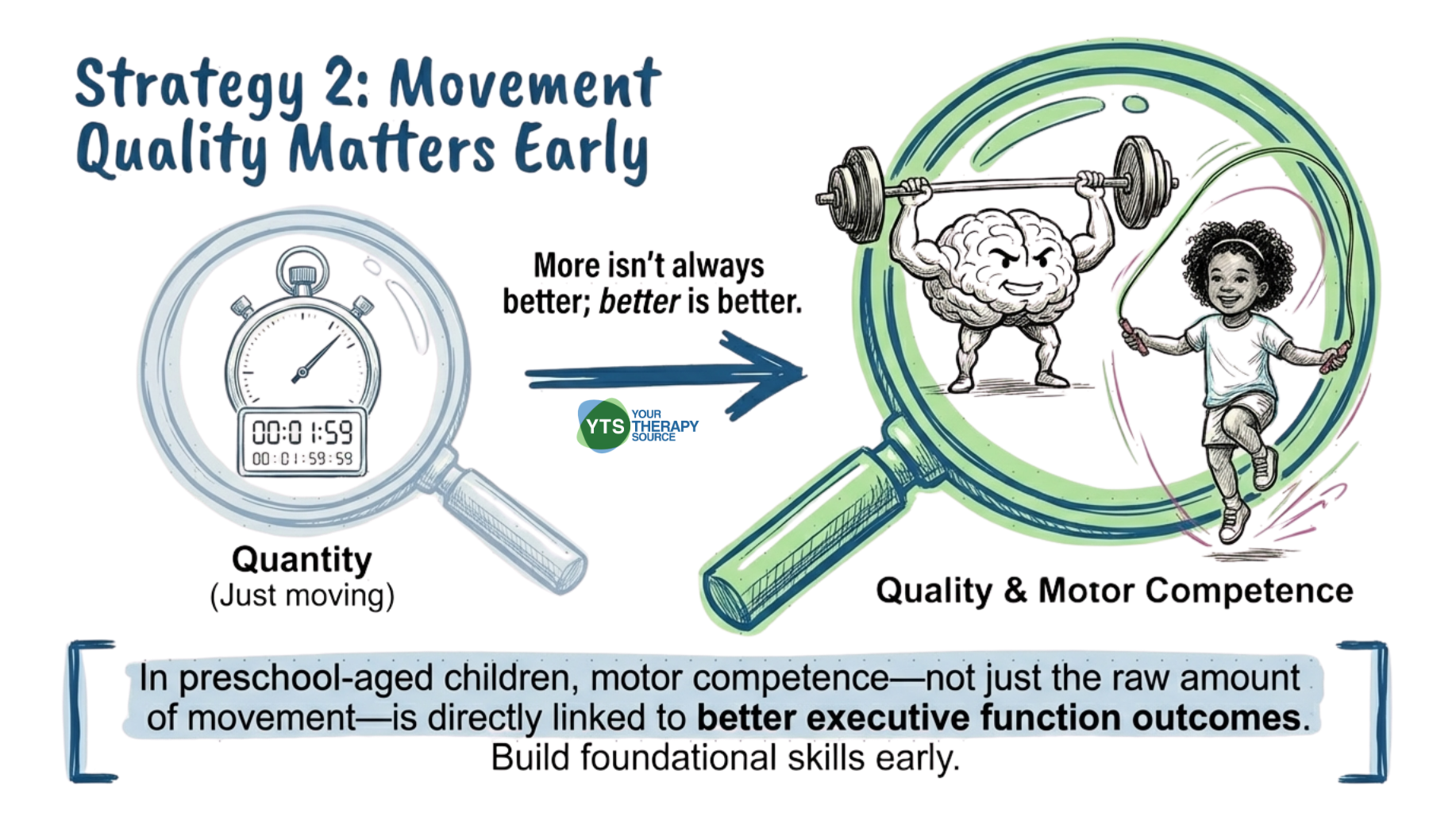
- Recognize that movement quality may matter, especially in younger children. In preschool-aged children, motor competence, not just the amount of movement, was linked to better executive function outcomes. For more on this connection, see this post on motor skills and executive function. Supporting foundational movement skills early may have broader cognitive benefits.
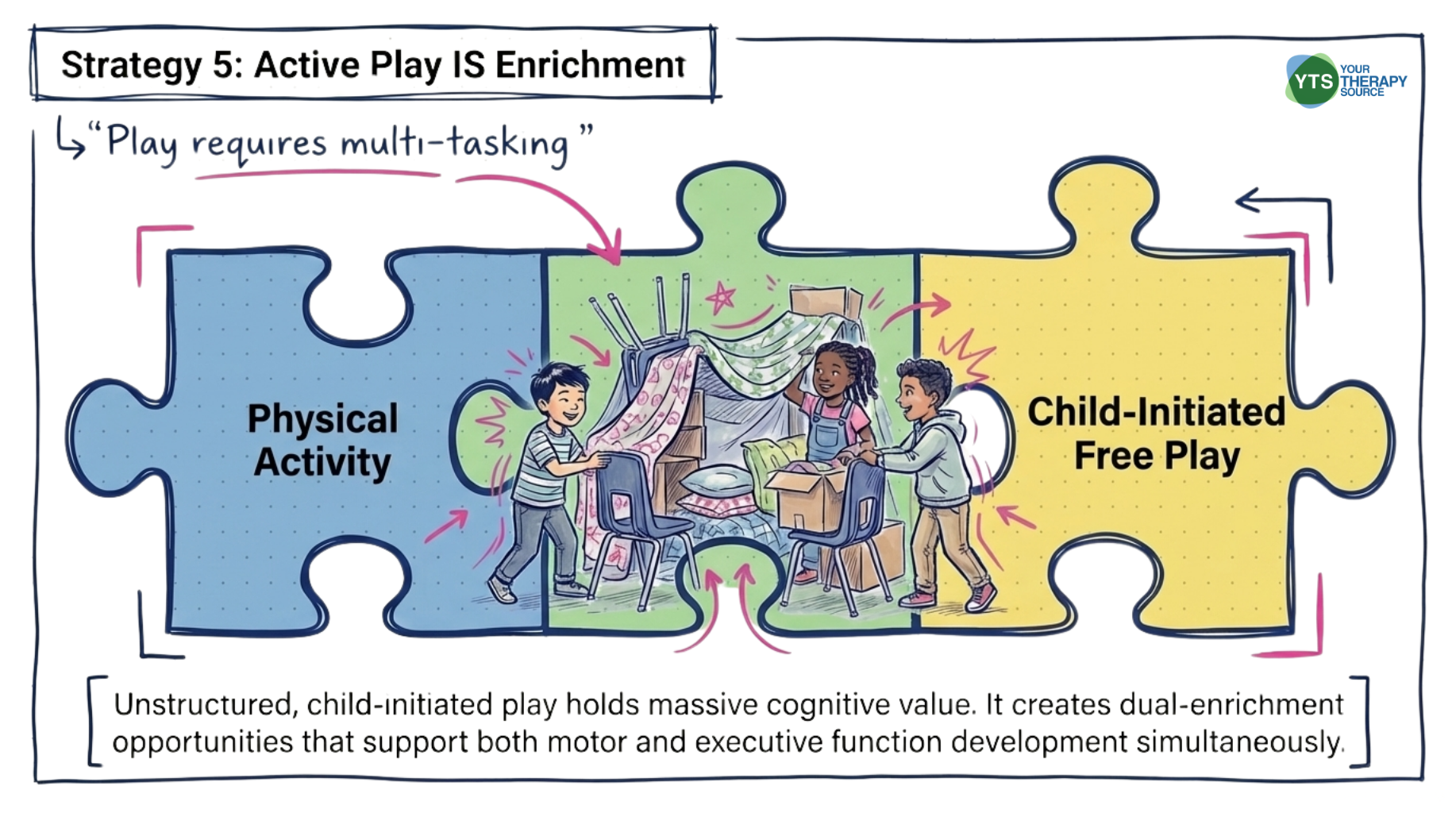
- Consider active play as a meaningful form of enrichment. Unstructured, child-initiated play that involves physical activity counts as movement with cognitive value. Creating opportunities for active free play during the school day supports both motor and executive function development.
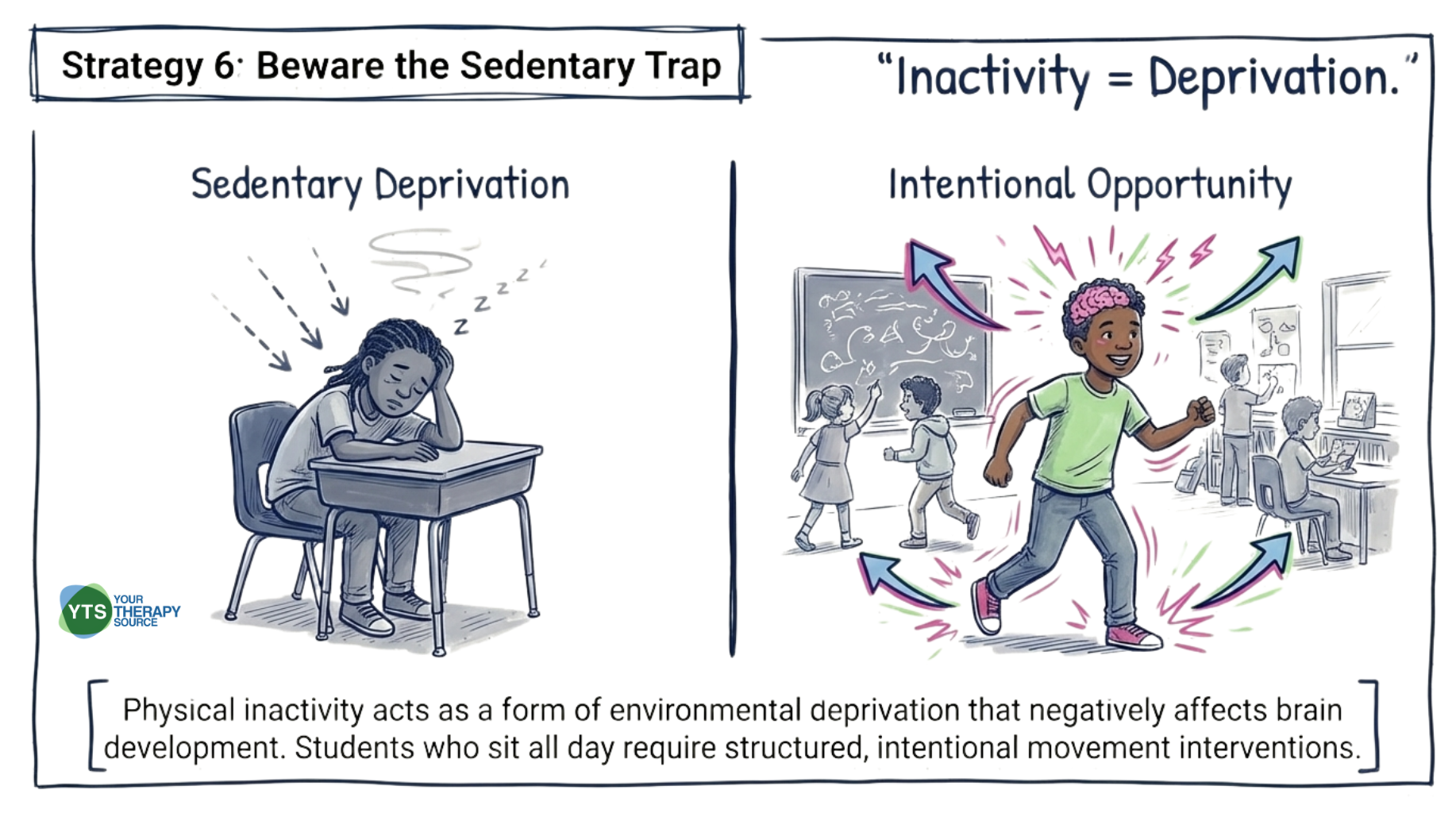
- Be aware of students who are predominantly sedentary. The review frames physical inactivity as a form of environmental deprivation that may affect brain development. Students who spend most of the school day seated may benefit from intentional, structured opportunities to move throughout the day.
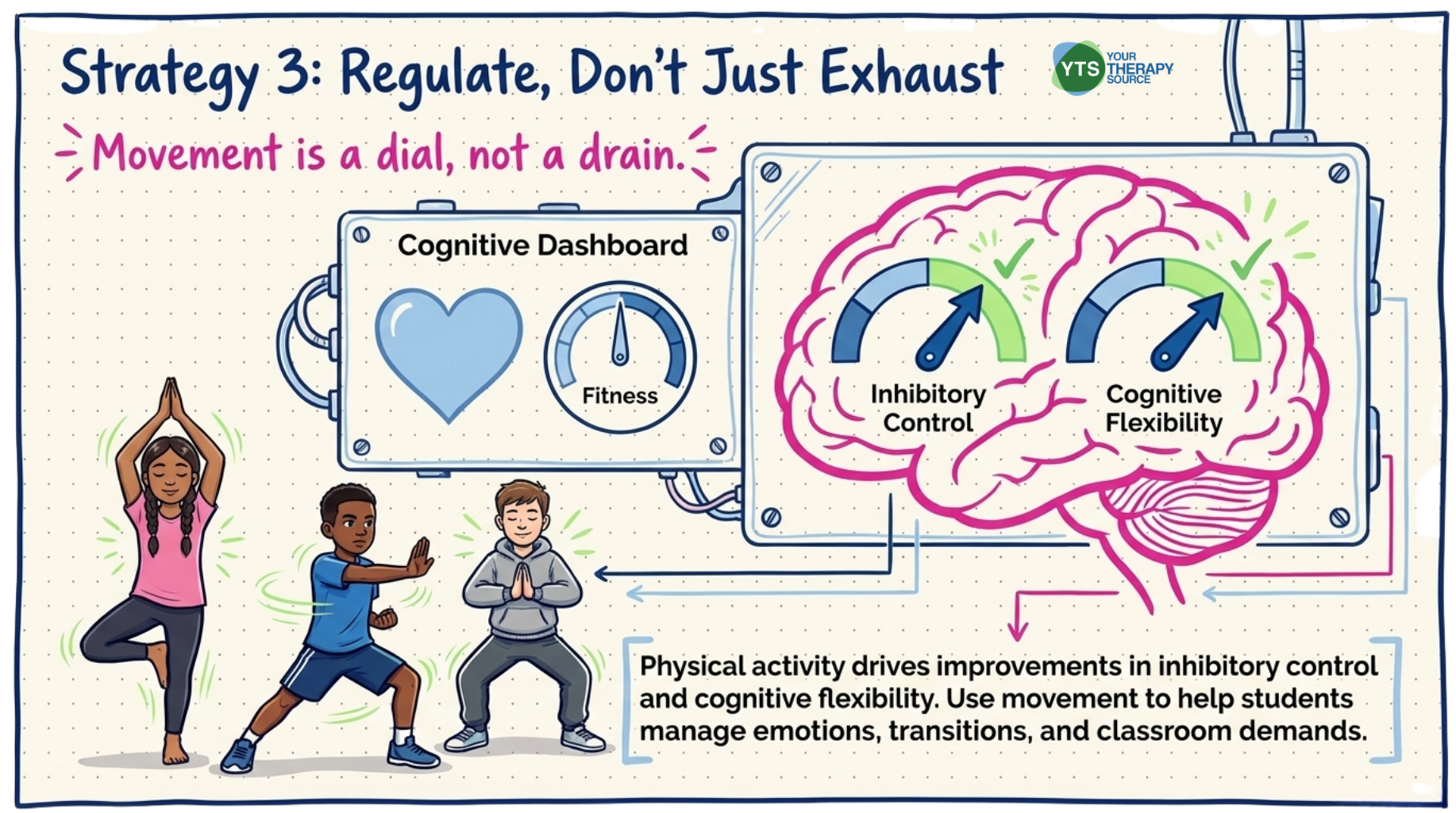
- Use movement to support self-regulation, not just fitness. Physical activity is associated with improvements in inhibitory control and cognitive flexibility, two components of self-regulation that affect how students manage emotions, transitions, and classroom demands. Research on exercise and executive function in children offers additional context for understanding this relationship.
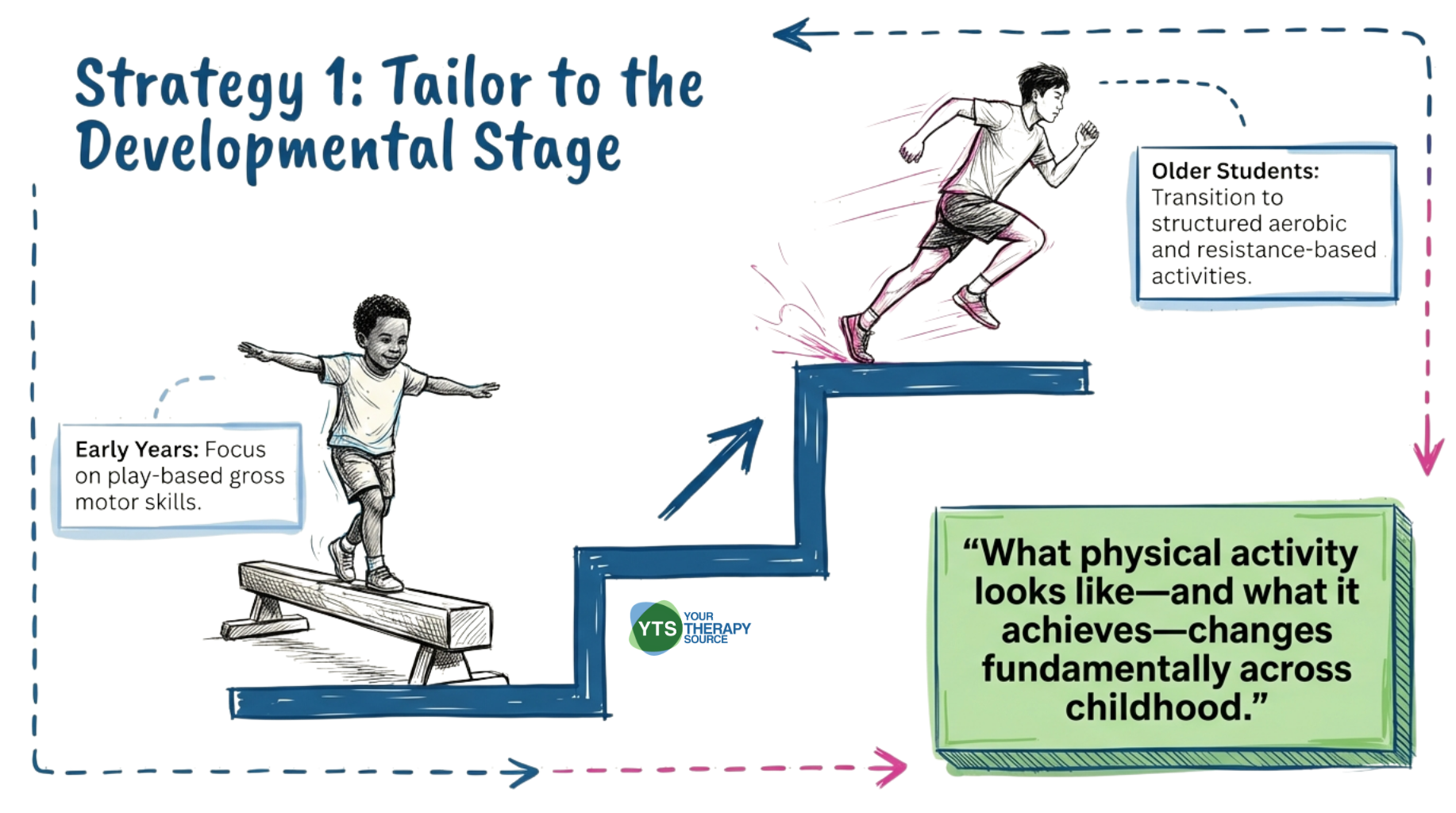
- Tailor movement activities to developmental stage. What physical activity looks like, and what it achieves, changes across childhood. Play-based gross motor activities are appropriate for younger children, while more structured aerobic or resistance-based activities may be better suited for older school-aged students.
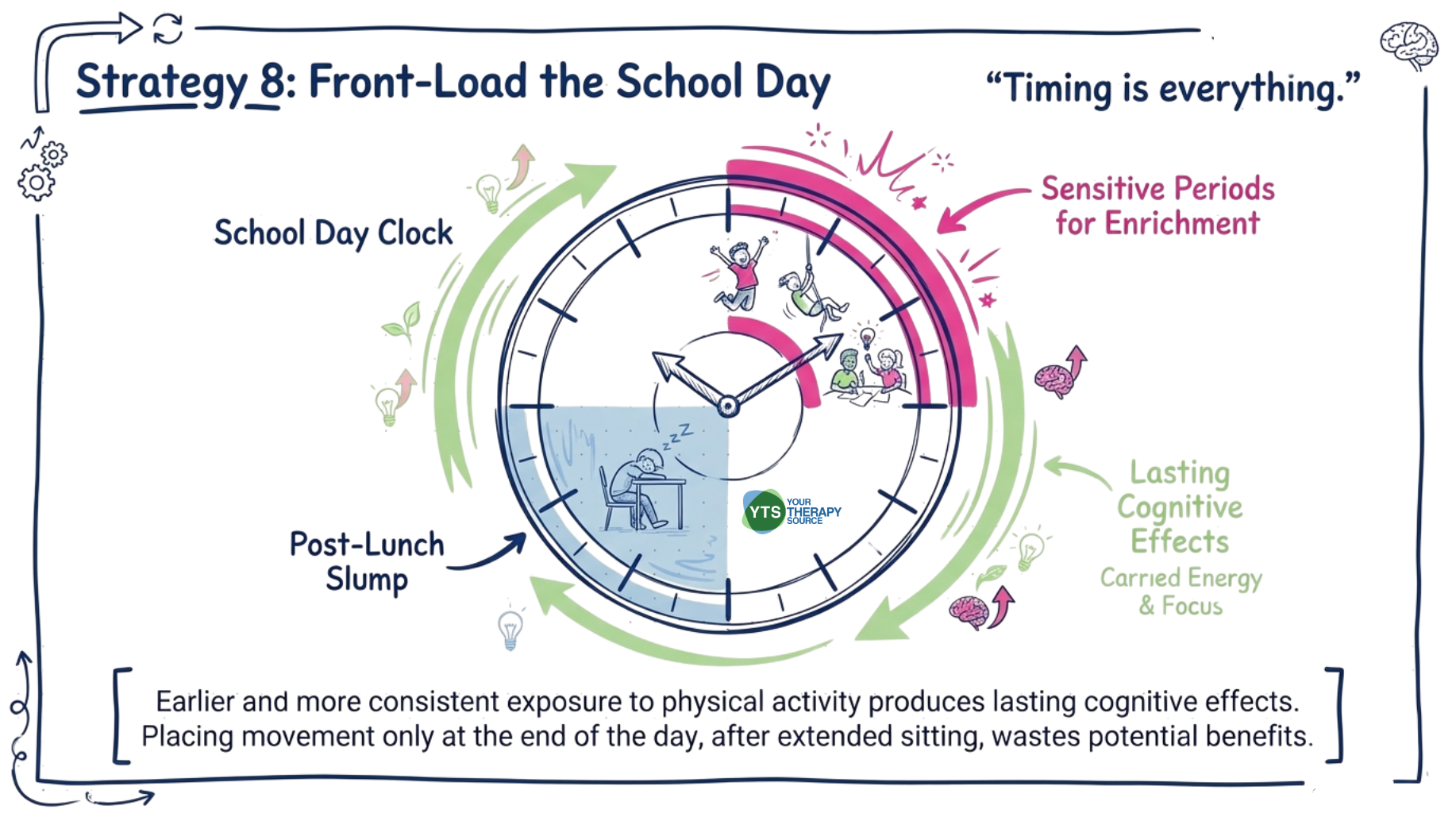
- Think about timing across the school day. If sensitive periods exist, the review suggests that earlier and more consistent exposure to enriching physical activity may produce more lasting effects. Placing movement only at the end of the day, after extended periods of sitting, may not fully capture the potential benefits.
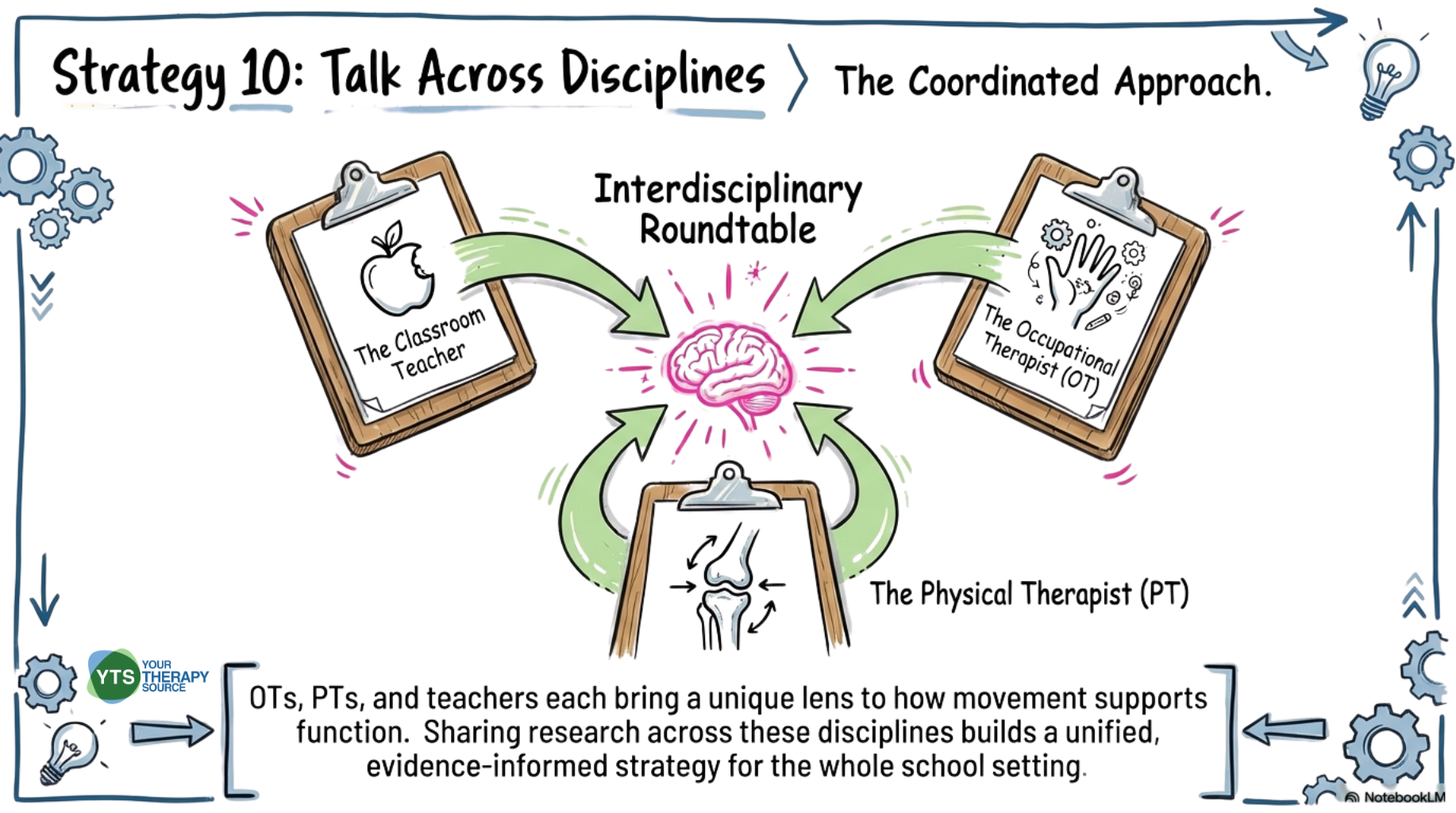
- Support interdisciplinary conversations about movement. Occupational therapists, physical therapists, and classroom teachers each bring a different lens to understanding how movement supports student function. Sharing this kind of research across disciplines can help staff develop a more coordinated, evidence-informed approach to physical activity in the school setting.
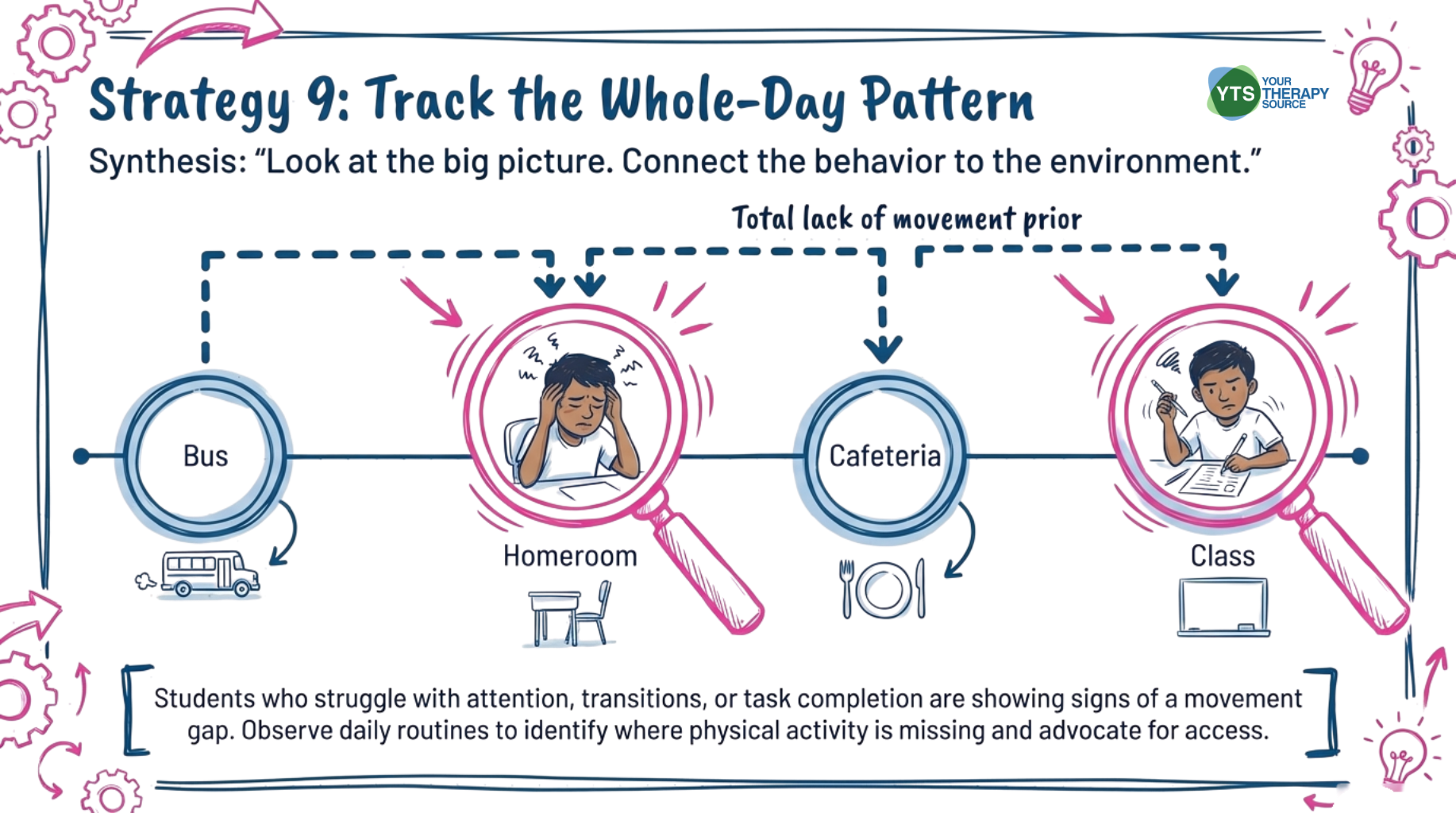
- Look for patterns across the whole school day, not just during structured activity time. Students who struggle with attention, transitions, or task completion may be showing signs that movement and cognitive development are connected in their daily experience. Observing when and how often students have access to physical activity throughout the day can help staff identify gaps and advocate for more consistent movement opportunities across all settings.
CONCLUSION
This narrative review brings together two emerging areas of research, sensitive periods in brain development and the effects of physical activity on executive function, to raise an important and underexplored question. The existing evidence suggests that physical activity supports executive function skills across childhood, and that both the dose and the timing of movement may influence how strong and lasting those benefits are. Most of what is currently known comes from middle-childhood populations, and research with younger children remains limited.
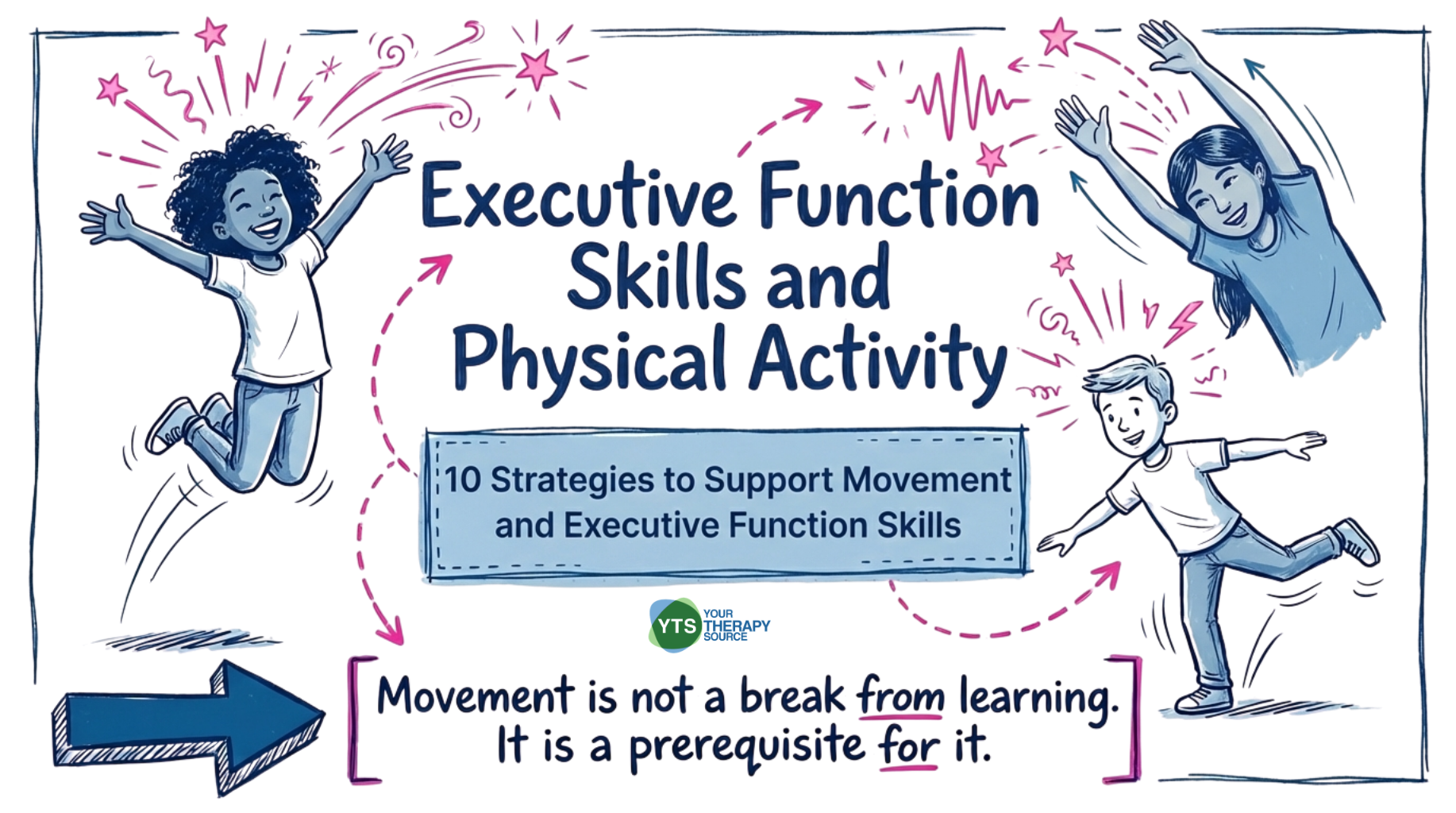
For school-based professionals, these findings offer a useful framework for thinking about when and how movement is prioritized during the school day. Movement is not simply a break from learning. For children in key developmental windows, it may be one of the conditions that makes learning possible. Building consistent, well-supported opportunities for physical activity into the school environment is a practice grounded in both the research reviewed here and a broader understanding of child development.
REFERENCES
Northey, J. M., Raine, L. B., & Hillman, C. H. (2025). Are there sensitive periods for physical activity to influence the development of executive function in children? Journal of Sport and Health Science, 14, 101015. https://doi.org/10.1016/j.jshs.2024.101015
