
When My Feelings Get Too Big: A Calm-Down Song with Free Printable
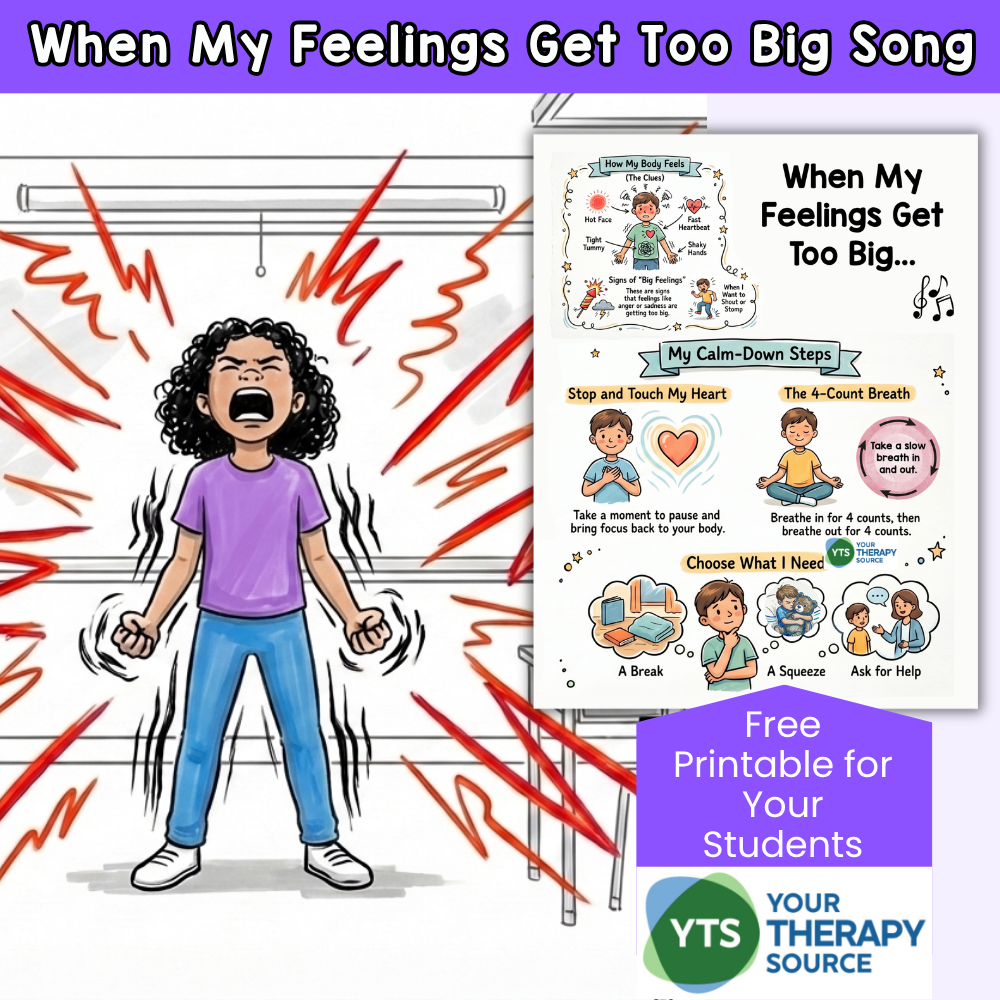
Does your child sometimes feel overwhelmed by big emotions: a racing heart, shaky hands, a tight tummy and not know what to do with all of that? When My Feelings Get Too Big is a song designed to help kids recognize the body signals that come with big feelings and practice simple, effective calm-down steps they can use anytime, anywhere. Best of all? There’s a free printable to go with it.
What the Song Teaches
Music is one of the most powerful tools we have for helping children learn and remember new skills. When a strategy is set to a melody and a rhythm, kids can access it more easily even in the middle of a big emotional moment.
When My Feelings Get Too Big teaches children three core skills:
1. Interoception — noticing body signals The song opens by naming the physical sensations that often accompany strong emotions: a hot face, a fast heartbeat, a tight tummy, shaky hands, and a voice that’s getting loud. These are all examples of interoception — the ability to sense what’s happening inside your own body. When children can identify these cues, they gain a crucial early warning system that helps them respond before feelings escalate. Learn more about teaching interoception through music in our post on the Inside My Body Interoception Song.
2. Calm-down steps they can actually use The chorus walks children through a simple, repeatable sequence:
- Stop and touch my heart — a grounding movement that brings focus back to the body
- Take a breath in 2…3…4, out 2…3…4 — a paced breathing technique that activates the body’s calming response
- Choose what I need — a break, a squeeze, or asking for help
These aren’t abstract strategies. They’re concrete, physical actions that children can practice and internalize. For more visual supports to pair with breathing practice, check out these deep breathing visuals.
3. Emotional normalization The bridge of the song offers something equally important — the message that big feelings are okay:
“Feelings come and feelings go, like waves upon the sea. It’s okay to feel so big, there’s nothing wrong with me.”
This language helps children develop a healthy relationship with difficult emotions rather than feeling ashamed of them.
Watch the Video
You can watch the full song video. Watching along while listening helps children connect the words and movements to the calm-down steps, making them easier to remember and use independently.
The Lyrics
Sometimes my tummy’s tight, My face feels hot and red. My heart is beating fast, So many thoughts inside my head. My hands feel tense and shaky, My voice is getting loud. When my feelings get too big, Here’s what I can do right now:
I stop and touch my heart, I take a breath in…2…3…4, out…2…3…4. I choose what I need, A break, a squeeze, or help please. I stop and touch my heart, I take a breath in…2…3…4, out…2…3…4. My big feelings change, I can help my body feel safe again.
If I’m mad and want to shout, Or stomp across the floor, I pause and take a breath, Like I’ve practiced here before. If I’m sad and left out, Or almost start to cry, I can use my calm-down steps, To help my body try:
(Chorus)
Feelings come and feelings go, Like waves upon the sea. It’s okay to feel so big, There’s nothing wrong with me. When it’s more than I can hold, I know what to do, I use my calm-down steps, To take good care of you.
(Chorus)
When my feelings get too big… I know what to do.
Free Printable: Calm-Down Steps + Interoception Cues
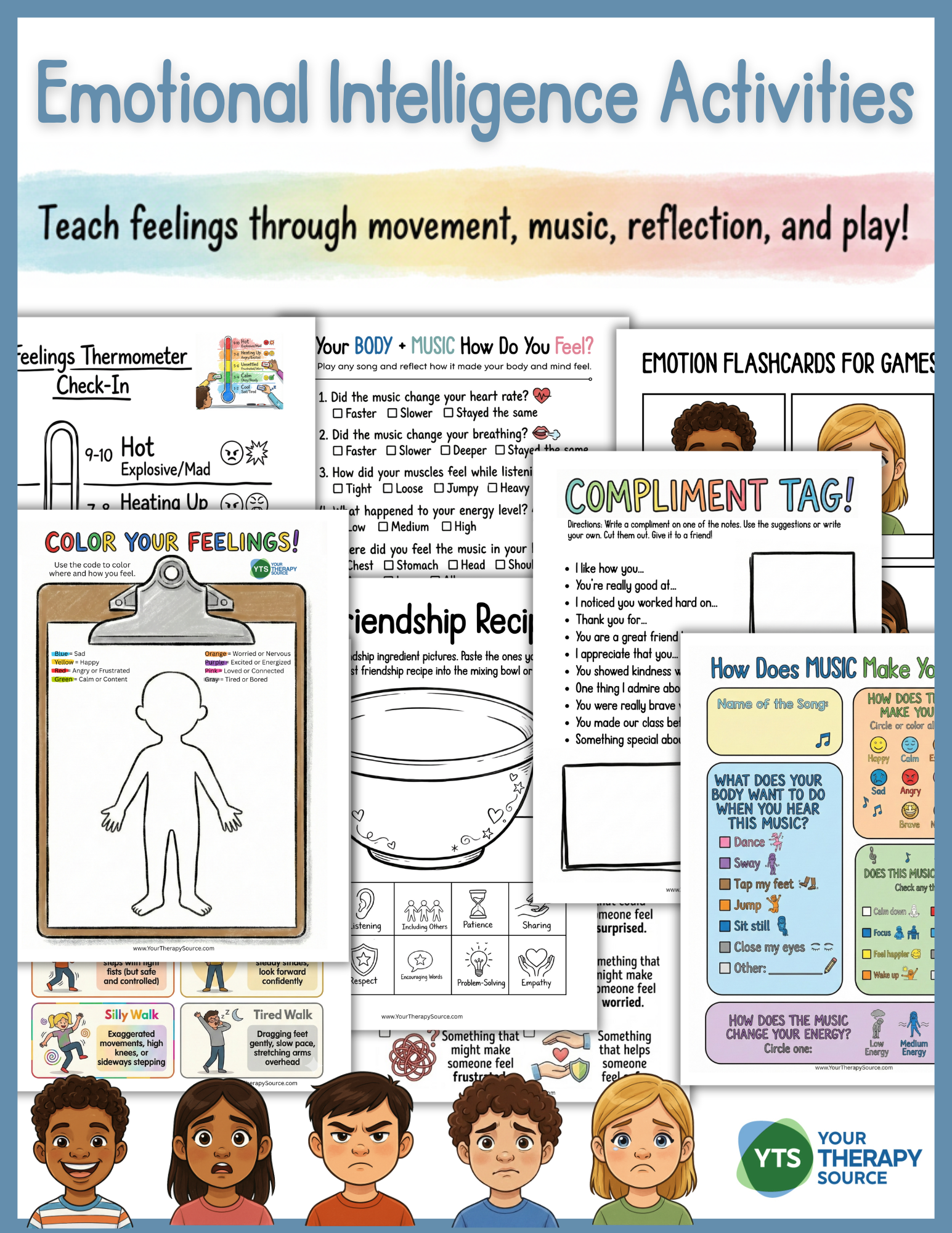
The free printable that goes along with this song includes:
- The interoception body cues illustrated in the song (hot face, fast heartbeat, tight tummy, shaky hands)
- The 3 calm-down steps with visuals: Stop and Touch My Heart, The 4-Count Breath, and Choose What I Need
- A QR code to scan and watch the song video anytime
How to Use This When My Feelings Get Too Big Song Resource
In the classroom: Introduce the song during morning meeting or a social-emotional learning block. Practice the calm-down steps together as a class before any child needs them — that way, when a big feeling does come up, the steps are already familiar.
At home: Play the song during a calm moment and practice the movements together. When your child seems to be heading toward overwhelm, you can simply sing or hum the chorus as a gentle prompt.
In therapy: The song works beautifully as part of a self-regulation program. The interoception body cues pair well with the interoception worksheets available on the site, and the calm-down steps can be practiced and reinforced across sessions.
The Science Behind the Steps
Each of the three calm-down steps in this song is grounded in what we know about the nervous system and self-regulation.
Touching your heart is a grounding technique. Physical touch — especially to the chest — activates interoceptive awareness and can help slow a racing stress response. It signals safety to the nervous system.
4-count breathing (also called box breathing or paced breathing) slows the breath and activates the parasympathetic nervous system — the body’s “rest and digest” mode. Breathing out for as long or longer than breathing in is particularly effective at shifting the body out of fight-or-flight. See more on this in our post about what system is under stress.
Choosing what I need builds interoceptive awareness and self-advocacy. Rather than having one “right” answer, children are empowered to tune into their bodies and make a choice — a break, a squeeze (proprioceptive input), or asking an adult for help. This is a key component of self-regulation: knowing that you have options.
More Self-Regulation Songs
If your child or students respond well to this song, check out our other self-regulation songs for more music-based tools to support emotional learning. Music-based learning is especially effective for children who benefit from rhythm, repetition, and movement as part of their learning style.
Download the Free Printable When My Feelings Get Too Big Song Worksheet Here
Print it out and post it somewhere visible, a classroom calm-down corner, a bedroom wall, a therapy space, or the inside of a folder. The QR code makes it easy for children to pull up the song independently whenever they need a reminder.
This resource was created by Your Therapy Source to support children’s social-emotional development and self-regulation skills. It is intended for use by parents, teachers, and therapists.
