
Sensory Processing and Learning in Students with Autism or ADHD
Understanding sensory processing and learning is important for educators supporting student participation and academics. Recent research examined whether specific sensory modalities, particularly auditory processing, are associated with reading and mathematics performance in autistic students, students with ADHD, and neurotypical students. These findings offer school-based professionals insight into how environmental factors and individual sensory differences may influence learning opportunities for neurodivergent students in general education classrooms.
WHAT THE RESEARCH ON SENSORY PROCESSING AND LEARNING EXAMINED
This study investigated the relationship between sensory processing and academic achievement in school-aged children between ages 8 and 16. The study included three groups of participants:
Participating groups:
- 74 autistic children, including 22 with co-occurring ADHD diagnoses
- 34 children with ADHD who were not autistic
- 40 neurotypical children without autism or ADHD
Researchers used both parent-reported and direct measures of sensory processing. Parents completed the Sensory Profile, Second Edition, which assesses sensory behaviors across six modalities including auditory, visual, and touch processing. Children also completed the SCAN-3, a direct assessment of auditory processing that measures skills such as filtering background noise, processing filtered words, and managing competing auditory information.
Academic achievement was measured through standardized assessments of reading fluency, reading comprehension, numerical operations, and problem solving. The study examined whether sensory processing differences predicted academic performance after accounting for full-scale IQ.
Sensory and Self-Regulation Toolkit: OT-Approved Strategies for Kids
Make regulation skills meaningful, engaging, and fun with child-friendly visuals, activities, and strategies.
KEY FINDINGS FROM THE RESEARCH
The research revealed several patterns regarding sensory processing and academic performance.
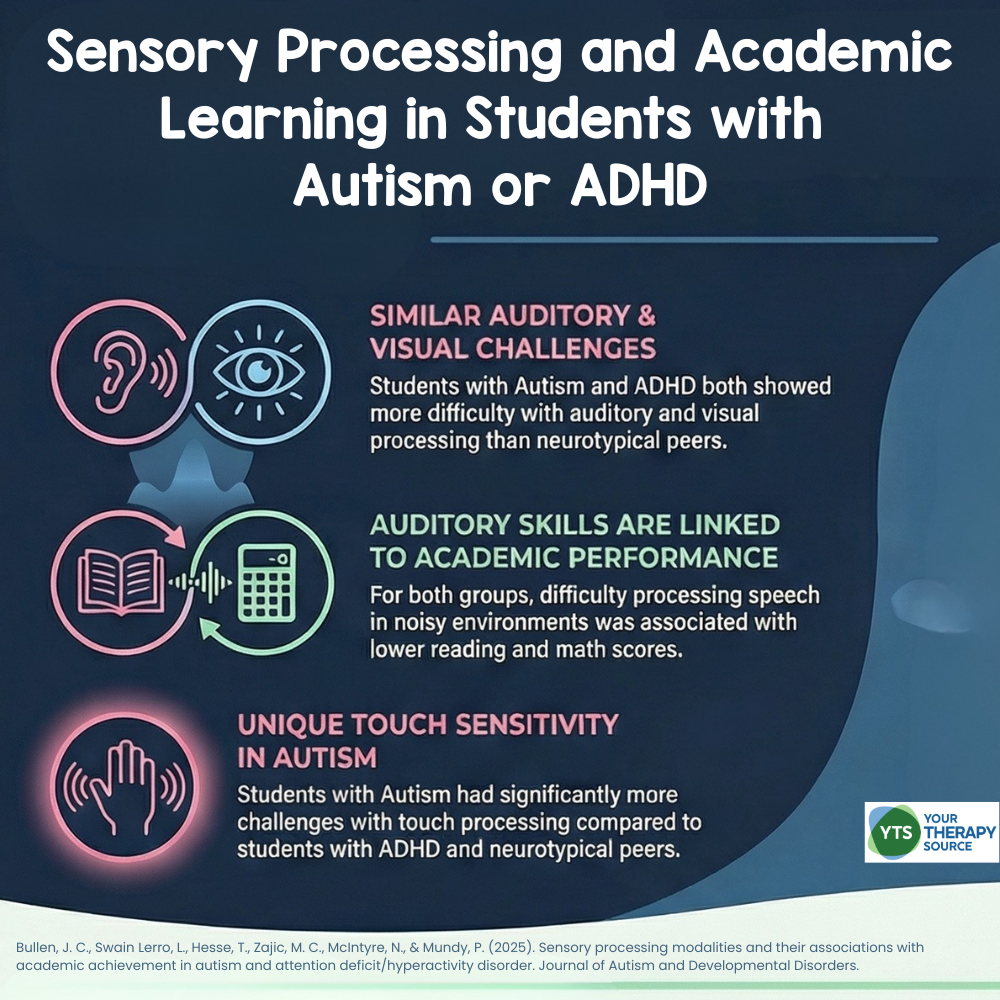
- Both autistic children and children with ADHD demonstrated similar levels of difficulty with auditory and visual processing compared to neurotypical peers. Only touch processing showed differences between the autism and ADHD groups, with autistic children experiencing more pronounced challenges in this area.
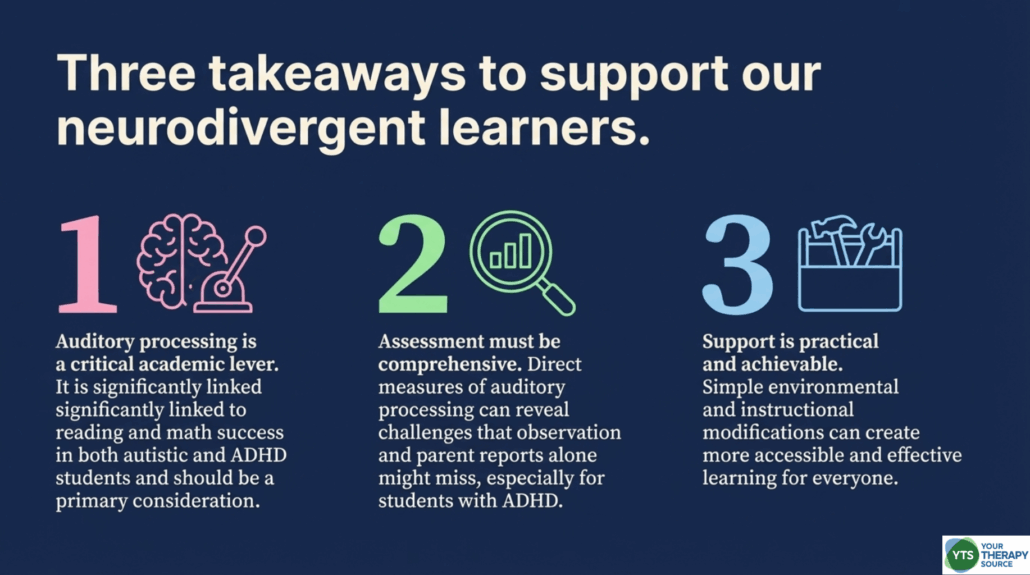
- Direct measures of auditory processing, particularly the SCAN-3 assessment, showed associations with academic achievement in both the autism and ADHD groups. Specifically, performance on tasks involving competing sentences and filtered words was related to reading fluency, reading comprehension, and mathematics achievement.
- Parent-reported auditory processing on the Sensory Profile was correlated with the direct auditory processing measure only in the autism group. In the ADHD group, these two types of measures did not show a relationship, suggesting they may capture different aspects of auditory experience.
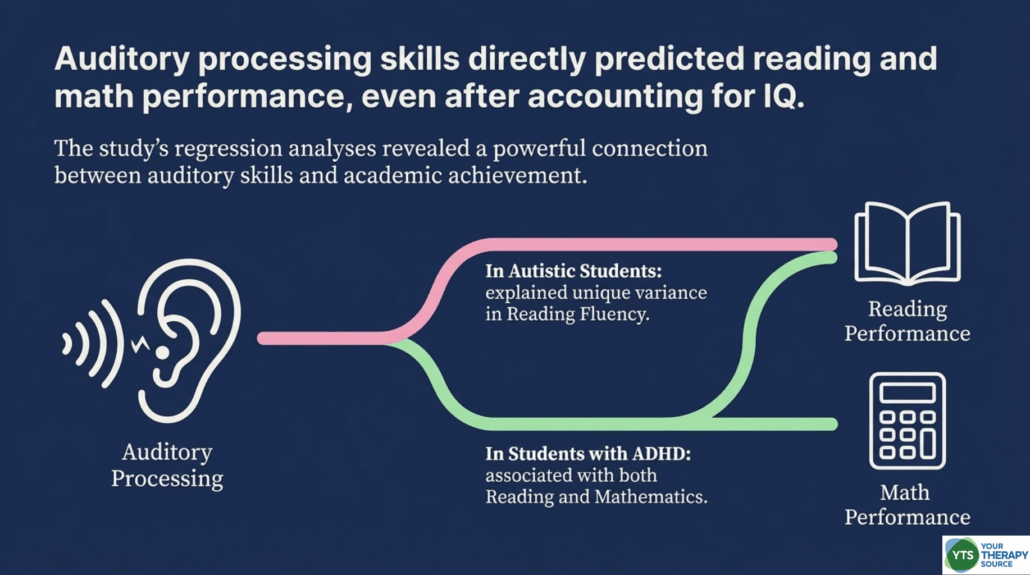
For autistic students, auditory processing explained additional variance in reading fluency beyond what IQ alone predicted. For students with ADHD, auditory processing skills were associated with both reading and mathematics performance.
WHY THESE FINDINGS ON SENSORY PROCESSING AND LEARNING MATTER FOR SCHOOL-BASED PRACTICE
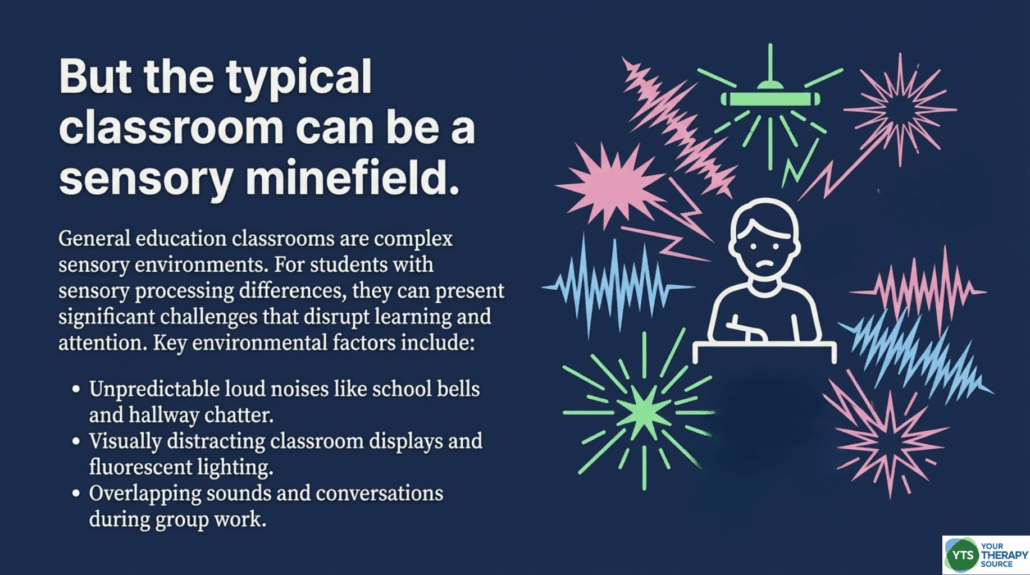
General education classrooms present complex sensory environments. Fluorescent lighting, visually busy displays, unexpected loud noises, and overlapping sounds create demands on sensory processing systems. For students who experience differences in how they process auditory information, these environmental factors may affect their ability to access instruction and participate in learning activities.
The finding that direct measures of auditory processing relate to academic achievement suggests that difficulty filtering background noise or processing speech in noisy environments may influence classroom learning. This is particularly relevant given that much classroom instruction relies on verbal presentation of information.
Understanding sensory processing and self-regulation can help school staff recognize when environmental modifications might support student access to learning rather than assuming academic difficulties stem solely from other factors.
IMPLICATIONS FOR SCHOOL STAFF
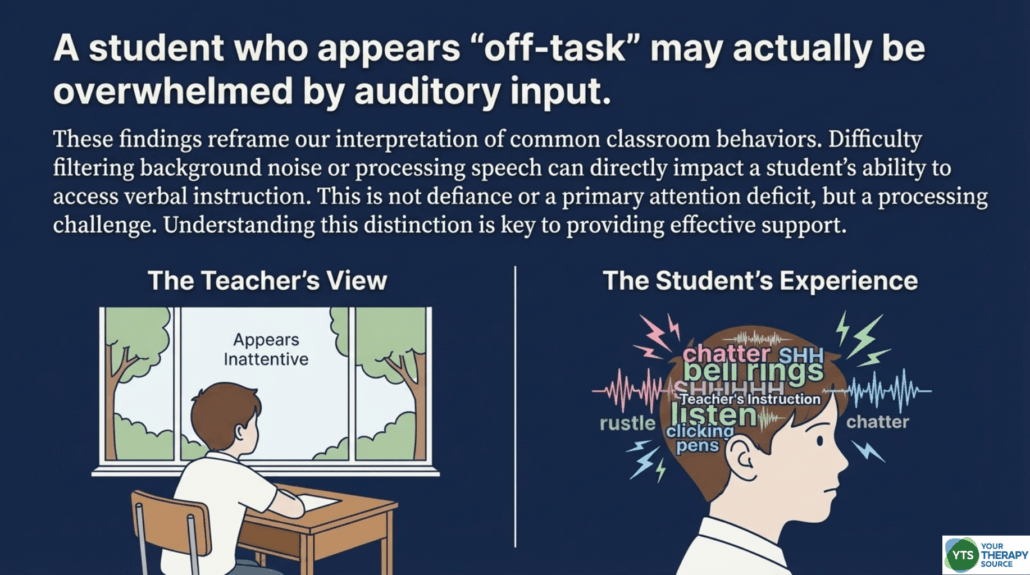
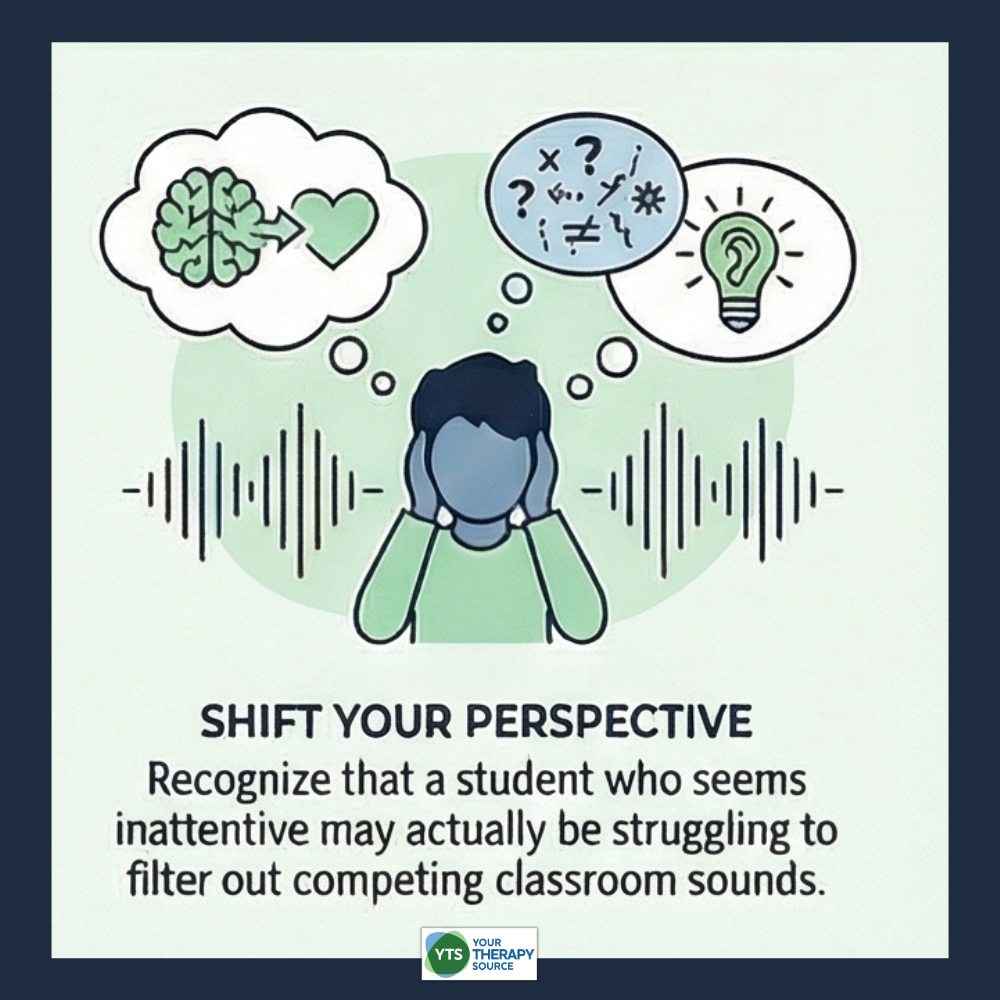
These findings suggest several considerations for supporting neurodivergent students in general education settings. Auditory processing differences may not always be visible to observers. A student who appears inattentive or off-task may be experiencing difficulty filtering relevant speech from background classroom noise. Sensory needs in ADHD are increasingly recognized as relevant to understanding student experiences in school environments.
The relationship between auditory processing and academic achievement does not mean that sensory differences cause learning problems in a simple, direct way. Rather, it suggests that sensory processing is one factor among many that may influence how students access and engage with academic material.
Assessment practices that include both observation and direct measures may provide more complete information about student sensory experiences. Parent report captures behaviors that may occur across settings, while direct assessment can identify specific processing patterns that might not be apparent through observation alone.
PRACTICAL STRATEGIES OR CONSIDERATIONS FOR AUDIOTORY PROCESSING DIFFERENCES
School staff can consider several approaches to support students who may experience auditory processing differences.
Environmental modifications:
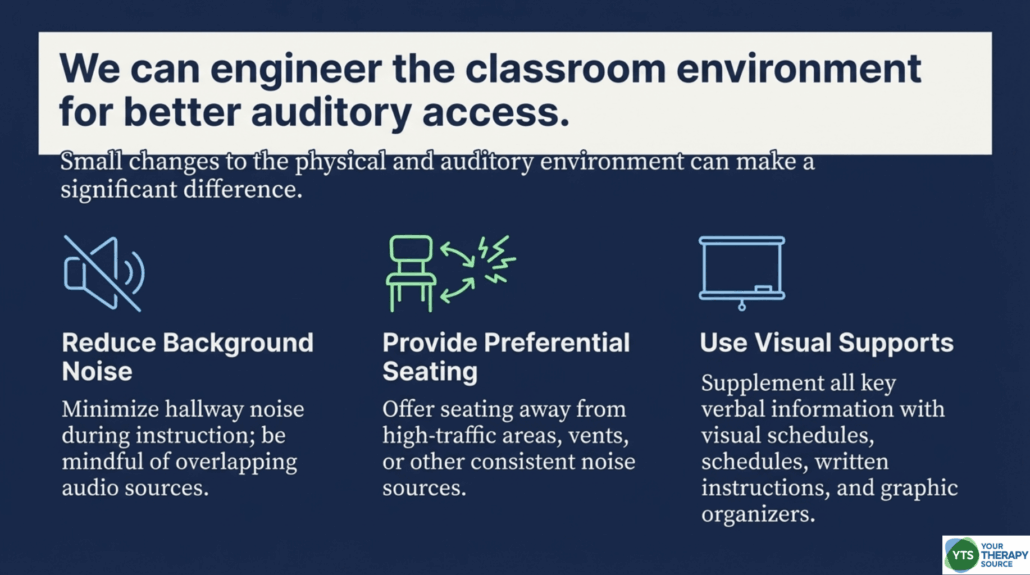
- Reducing unnecessary background noise during instruction may support students who have difficulty filtering competing sounds. This might include minimizing hallway noise during key instructional times or being mindful of overlapping audio sources in the classroom.
- Providing preferential seating that minimizes exposure to competing sounds can help some students access verbal instruction more effectively. Seating away from high-traffic areas, air conditioning units, or other noise sources may be beneficial.
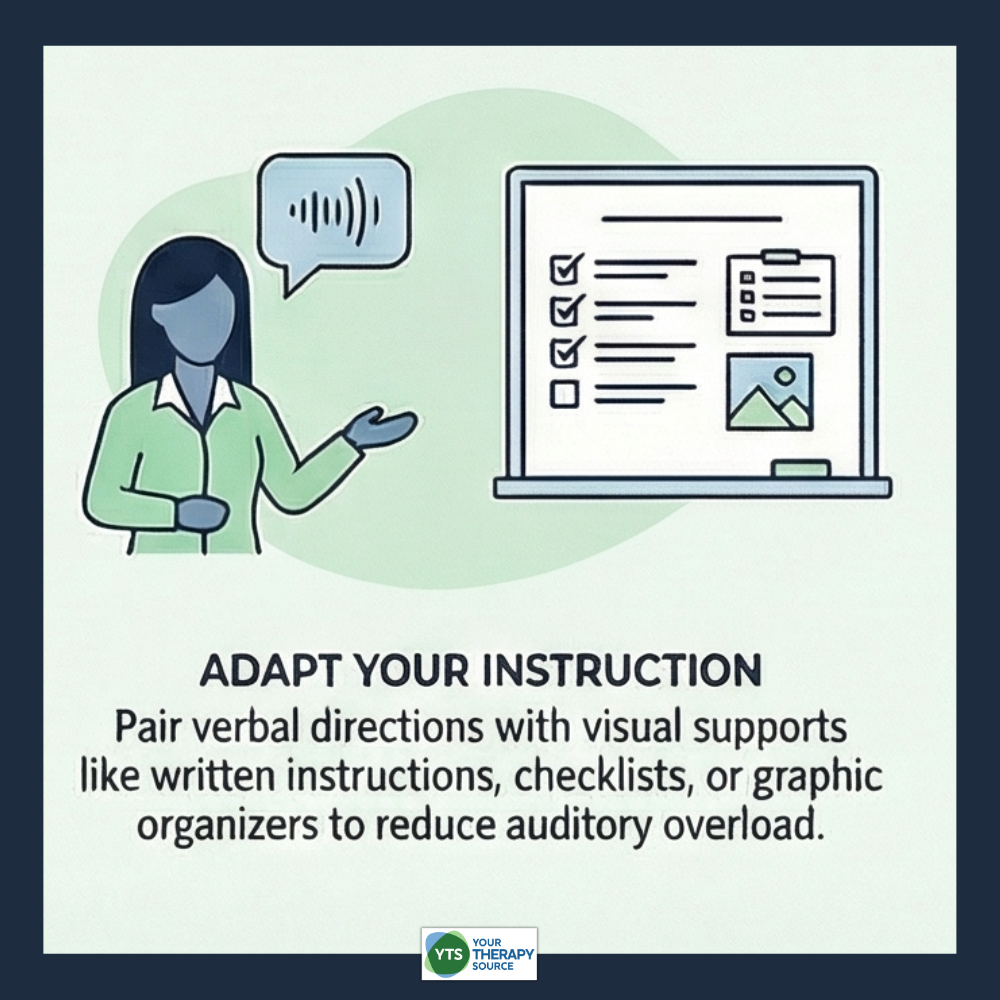
- Using visual supports alongside verbal directions helps students who may not process auditory information as readily. Visual schedules, written instructions, and graphic organizers can supplement spoken information.
Instructional considerations:
- Pairing verbal instructions with visual cues reduces reliance on auditory-only formats. Breaking down multi-step directions into written or pictorial formats supports students who process auditory information differently.
- Checking for understanding through multiple modalities rather than assuming students heard and processed verbal instructions can prevent misunderstandings related to auditory processing differences.
Awareness of individual differences:
- Recognizing when sensory over-responsivity and behavior may be connected helps staff identify when a student who appears distressed by classroom noise or who has difficulty following verbal instructions in group settings may be experiencing auditory processing challenges rather than behavioral or attentional issues.
- Understanding that some students may have difficulty identifying or describing their sensory experiences (a consideration related to alexithymia and autism) can inform how staff gather information about student needs and preferences.
CONCLUSION
This research suggests that auditory processing differences may be relevant to understanding academic learning in both autistic students and students with ADHD. Direct measures of auditory processing, particularly skills related to filtering background noise and managing competing auditory information, showed associations with reading and mathematics achievement in both groups. As neurodivergent students participate in general education classrooms, recognizing how sensory processing differences may interact with environmental demands can inform thoughtful, evidence-based support for student learning and participation.
REFERENCES
Bullen, J. C., Swain Lerro, L., Hesse, T., Zajic, M. C., McIntyre, N., & Mundy, P. (2025). Sensory processing modalities and their associations with academic achievement in autism and attention deficit/hyperactivity disorder. Journal of Autism and Developmental Disorders. https://doi.org/10.1007/s10803-025-07185-0

