5 Ways to Build Student Regulation Skills That Support Learning, Not Just Behavior
When we think about student regulation in schools, it’s easy to default to behavior management strategies: visual schedules, token systems, consequences. But they often miss an important point: student regulation isn’t just about compliance or sitting still. It’s about creating the internal conditions students need to actually learn.
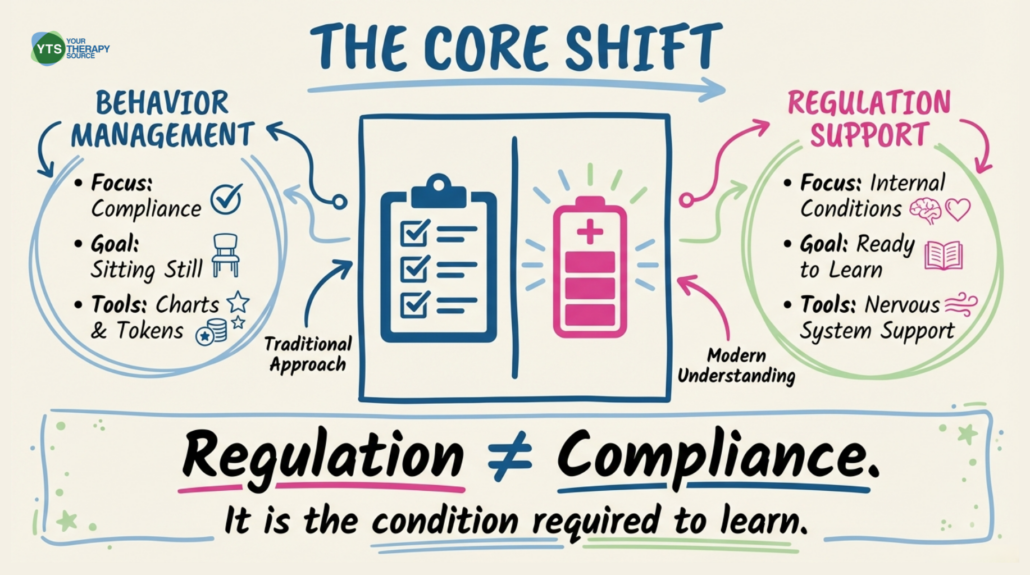
As related service providers and special education staff, we’re uniquely positioned to help students develop regulation skills that go beyond surface-level behavior. The challenge? Translating what we know about regulation into practical strategies we can actually implement in the reality of a busy school day. Here are five practical approaches that support the nervous system, not just the behavior plan.
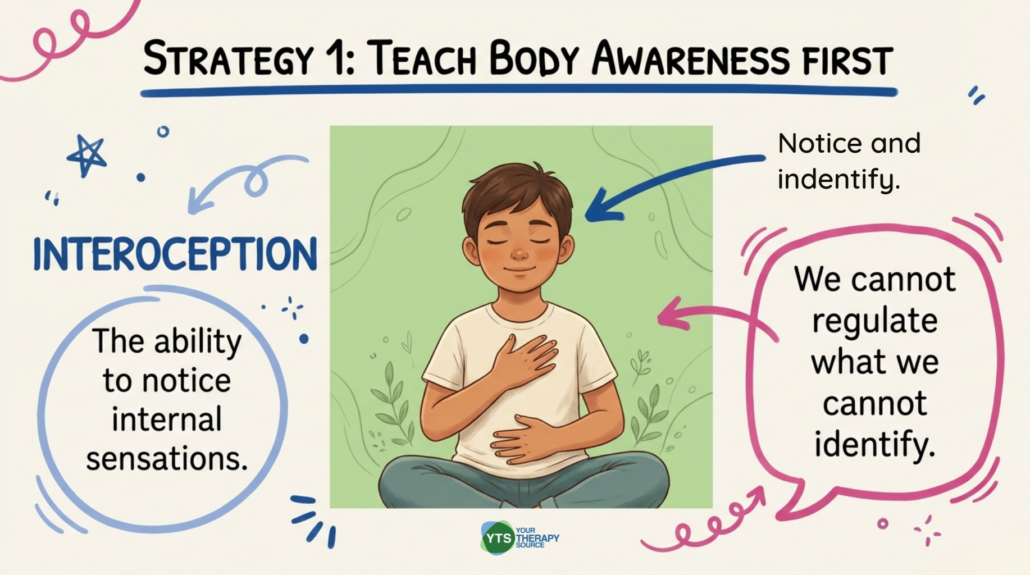
Teach Body Awareness Before Expecting Body Control
We ask students to “calm down” or “focus” without first helping them recognize what their body feels like when it’s dysregulated. Start by building interoceptive awareness: the ability to notice internal sensations.
Try this: Before transitions or challenging tasks, spend 30 seconds doing a quick body scan. “Notice your shoulders. Are they up by your ears or relaxed? What about your breathing? Fast or slow?” This isn’t about changing anything yet, just noticing. You can use a simple 1-5 scale: “How does your energy feel right now? Like a 1 (very low) or a 5 (very high)?”
The goal is self-awareness, which is the foundation for self-regulation. Students can’t regulate what they can’t identify. Once students can notice their internal state, you can introduce co-regulation strategies matched to what they’re experiencing. Use calming strategies when they’re running high, alerting strategies when they’re sluggish, organizing strategies when they’re scattered.
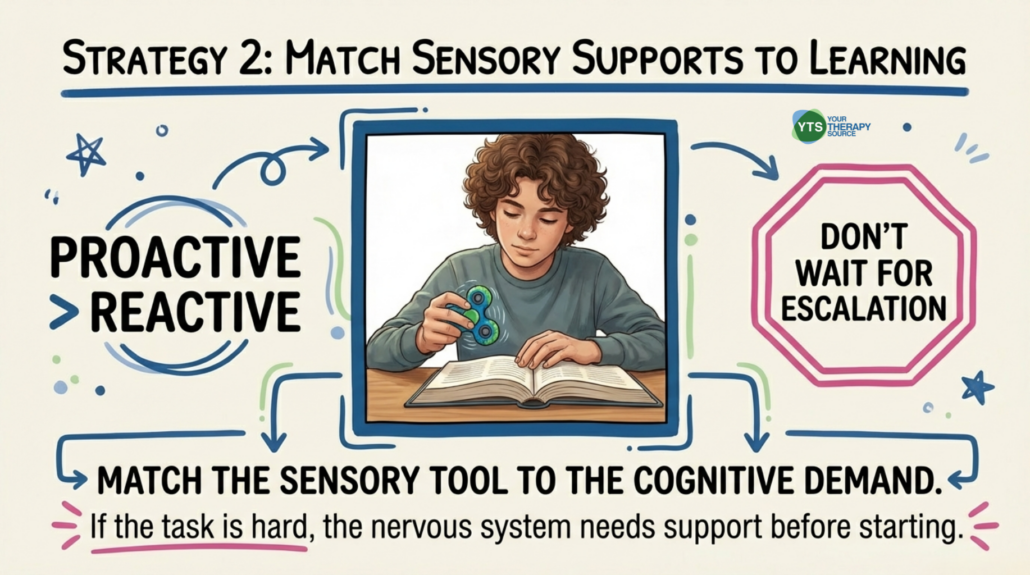
Match Sensory Supports to Learning Demands, Not Just Behavior Needs
Sensory strategies are often introduced reactively, after a student is already escalated. Instead, think proactively about what a specific learning task requires and offer sensory supports that match those demands.
If a student needs to sustain attention for reading, they might benefit from organizing sensory input (chewing gum, a fidget, compression). If they need to generate ideas for writing, they might need alerting input (standing, movement breaks, crunchy snacks). If they’re learning a complex math concept, they might need calming input beforehand (deep pressure, slow breathing).
Create a simple reference for yourself: What regulation state does this task require? Then match your sensory toolkit to that need. This shifts sensory supports from “behavior management” to “learning optimization.” Having a clear framework for analyzing which strategies match which regulation needs takes the guesswork out of the moment and helps you respond confidently when a student is struggling.
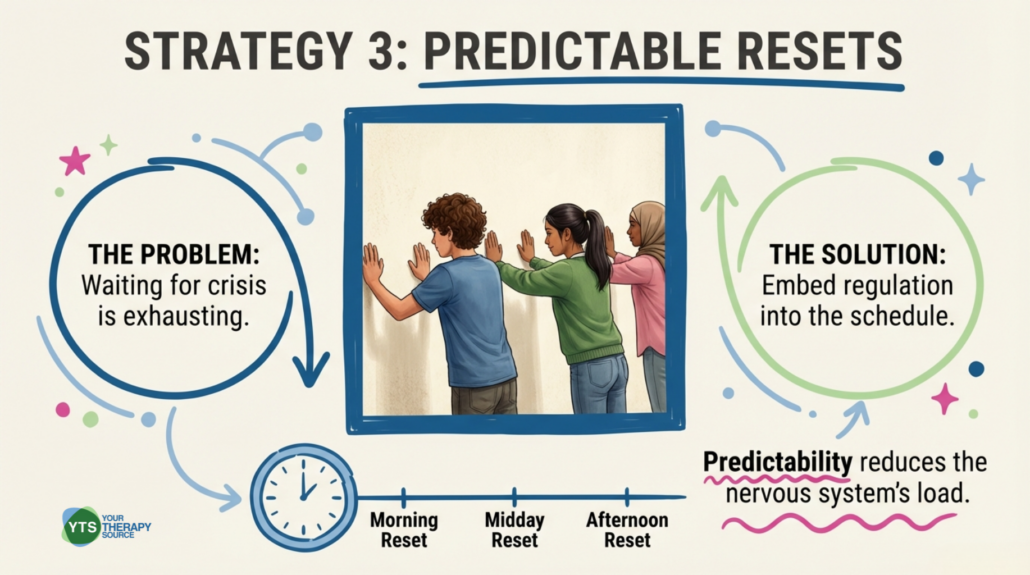
Build in Predictable Opportunities for Nervous System Reset to Support Student Regulation
Waiting until a student is in crisis mode to offer regulation support is exhausting for everyone. Instead, embed brief, predictable regulation opportunities throughout the day before students even need them.
Consider these low-prep options that take 2-3 minutes:
- Wall pushes or chair pushes between activities
- A quick walk to deliver something to the office
- Five deep breaths with a visual (like watching a gif of waves)
- A drinks-of-water break (heavy work for the mouth and a reason to move)
The key word is predictable. When students know these breaks are coming, their nervous system doesn’t have to fight so hard to hold it together. You’re building regulation into the structure of the day, not treating it as an accommodation for “problem behavior.”
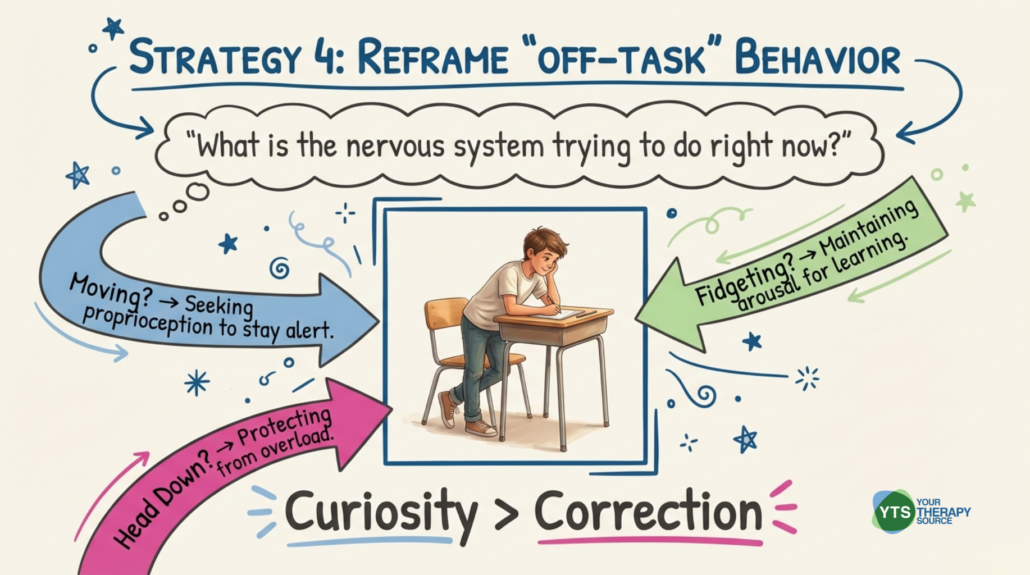
Reframe “Off-Task” Behavior as Student Regulation Attempts
That student who gets up constantly? They might be seeking proprioceptive input to stay alert. The one who seems distracted and fidgety? They could be working hard to maintain an optimal arousal level for learning. The student who shuts down and puts their head down? They may be overwhelmed and protecting their system from overload.
This doesn’t mean we ignore learning expectations, but it does change our response. Instead of redirecting behavior, we can ask: “What is this student’s nervous system trying to do right now?” Then we can offer a more effective regulation strategy that allows them to meet the learning goal.
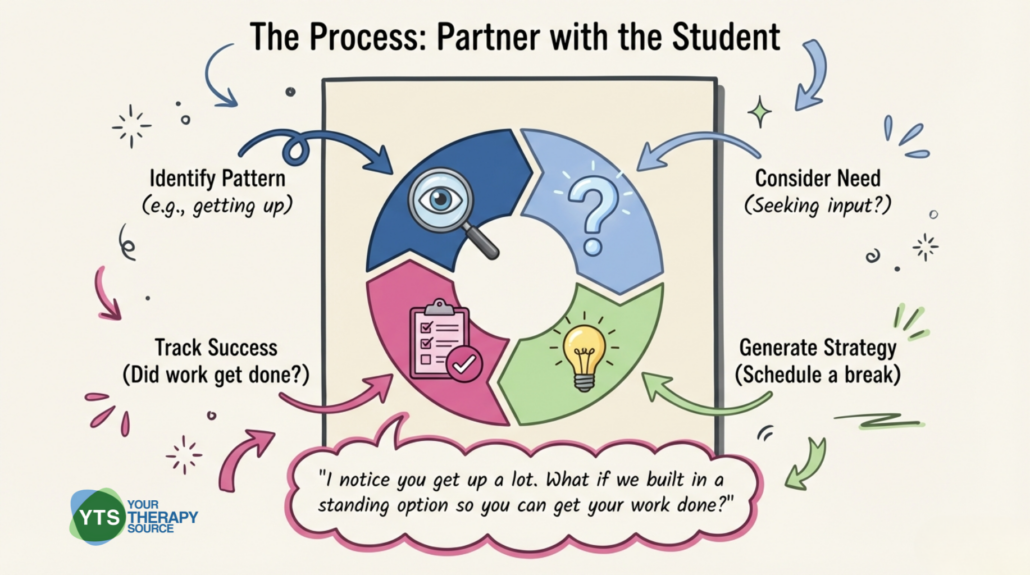
Try partnering with the student: “I notice you get up a lot during independent work. What if we built in a standing option or a quick movement break every 10 minutes? Let’s see if that helps you get your work done.”
When you’re analyzing challenging behavior, it helps to have a clear process: identify the pattern, consider the regulation need, generate matched strategies, and create a simple way to track whether the new approach is working. Having this kind of structured framework prevents you from getting stuck or defaulting to the same strategies that haven’t been effective.
Connect Regulation Back to Learning Goals, Not Just Classroom Rules
When we talk to students about regulation, we often frame it around behavior expectations: “We need calm bodies so everyone can learn” or “When you’re focused, you follow directions better.” While these aren’t wrong, they emphasize compliance over competence.
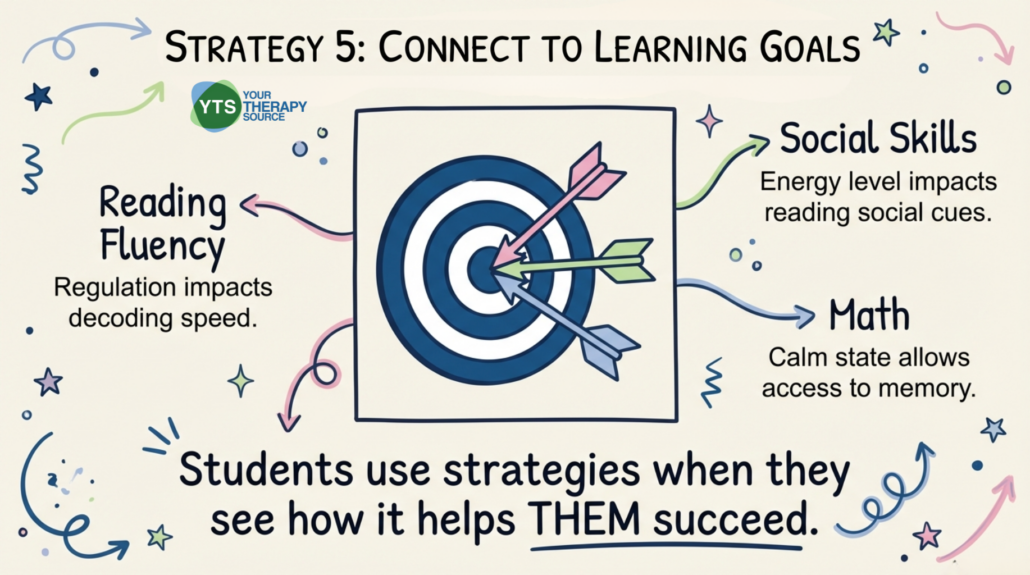
Instead, make the connection explicit between their regulation state and their ability to achieve their own goals. “When your body feels calm and alert, you can remember the steps in this math problem.” “When you take a movement break, your brain can come up with more ideas for your story.”
This is especially powerful during IEP goal work. If a student has a reading fluency goal, talk about how their regulation state impacts their ability to decode quickly. If they’re working on social skills, discuss how their energy level affects their ability to read social cues.
When students understand that regulation serves their learning, not just the teacher’s classroom management, they’re more likely to use strategies independently.
The Bottom Line
Building regulation skills takes time, but it’s time that pays off. When students can recognize their internal state and have tools to adjust it, they’re not just behaving better. They’re accessing their learning more effectively.
The gap between understanding regulation theory and implementing it consistently often comes down to having clear frameworks and ready-to-use tools. When you can quickly analyze what’s happening, identify appropriate co-regulation strategies, and communicate those strategies clearly to teachers and families, this work becomes much more manageable and much more effective.
Read more about Making School Based Therapy More Manageable in this series.