
Impulse Control in Elementary School and Later Outcomes
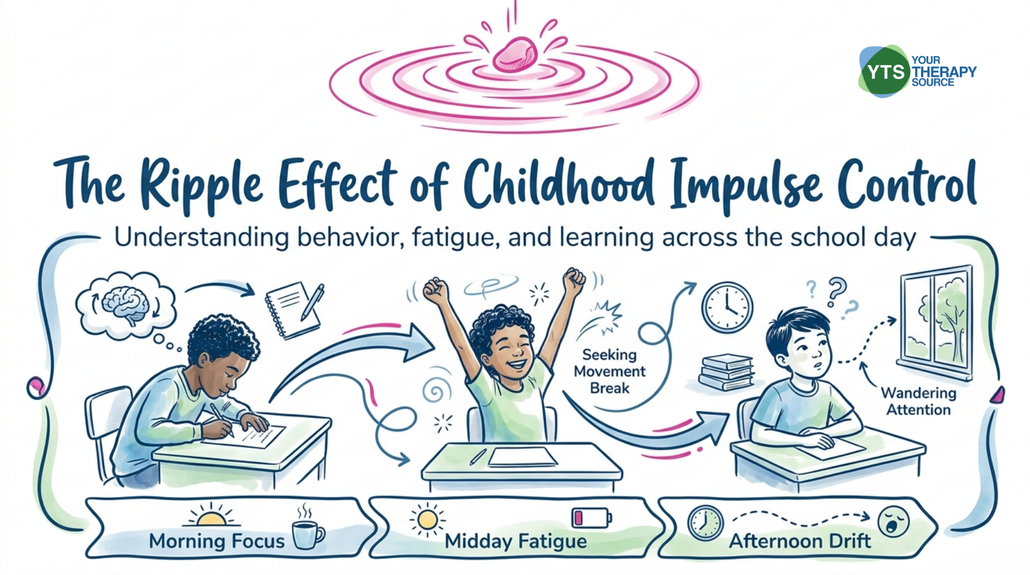
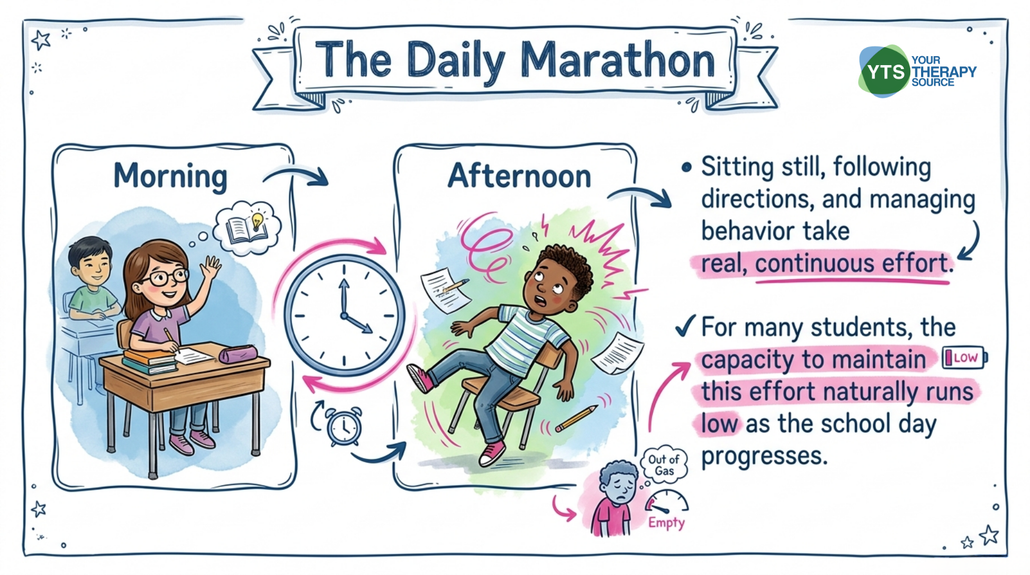
Impulse control in elementary school may play a bigger role in long term outcomes than many educators realize. A child’s ability to sit still, follow directions, and manage their behavior across a school day reflects skills that take real effort to maintain, and that effort can run low as the day goes on.
A recent study looked at how children’s activity levels change over the course of the school day and whether those patterns relate to academic performance and educational attainment many years later. The findings offer school-based teams a useful lens for thinking about behavior, fatigue, and learning across the day.
WHAT THE RESEARCH EXAMINED
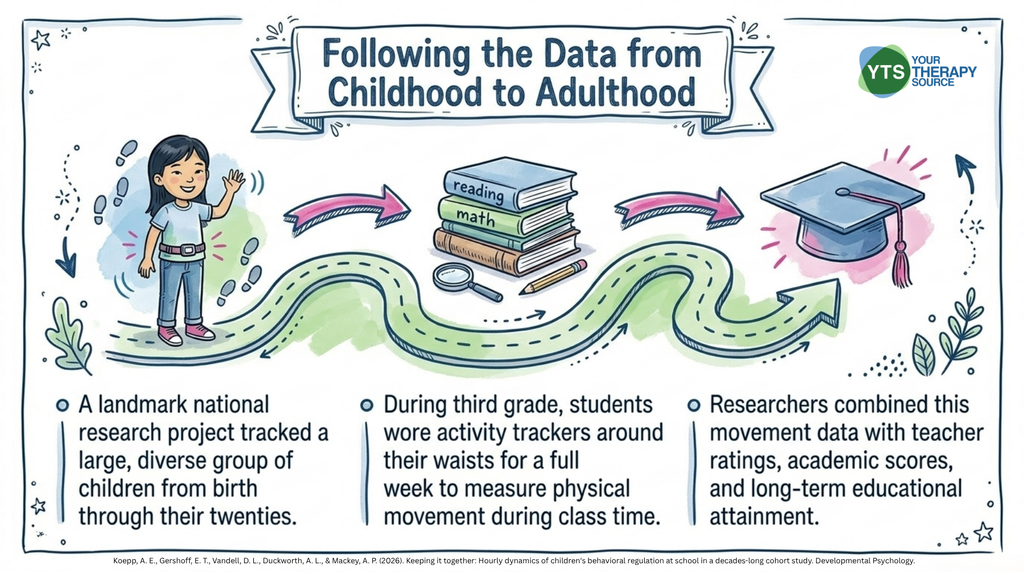
This study used long-term data collected from birth through age 26 as part of a national research project on child development. Researchers focused on third grade as a key point when children are expected to manage more of their own behavior independently.
- The study included 747 children, about 49 percent female, with a mix of White, Black, Hispanic, and other racial and ethnic backgrounds.
- Children wore activity tracking devices around their waists for up to seven days during third grade to measure movement during the school day.
- Researchers also collected teacher ratings of impulsivity and disruptive behavior, academic scores in math and reading, and information about the highest level of education completed by age 26.
KEY FINDINGS FROM THE RESEARCH ON IMPULSE CONTROL IN ELEMENTARY SCHOOL
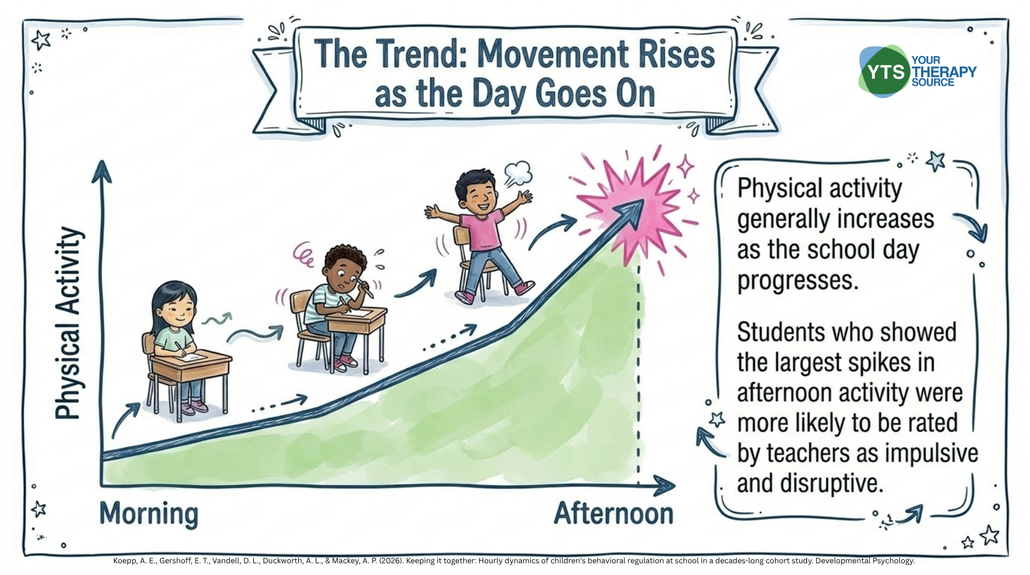
Overall, the study suggests that children’s activity levels tend to rise across the school day, and that this pattern may be linked to behavior and learning outcomes over time.
- Children’s physical activity generally increased as the school day progressed.
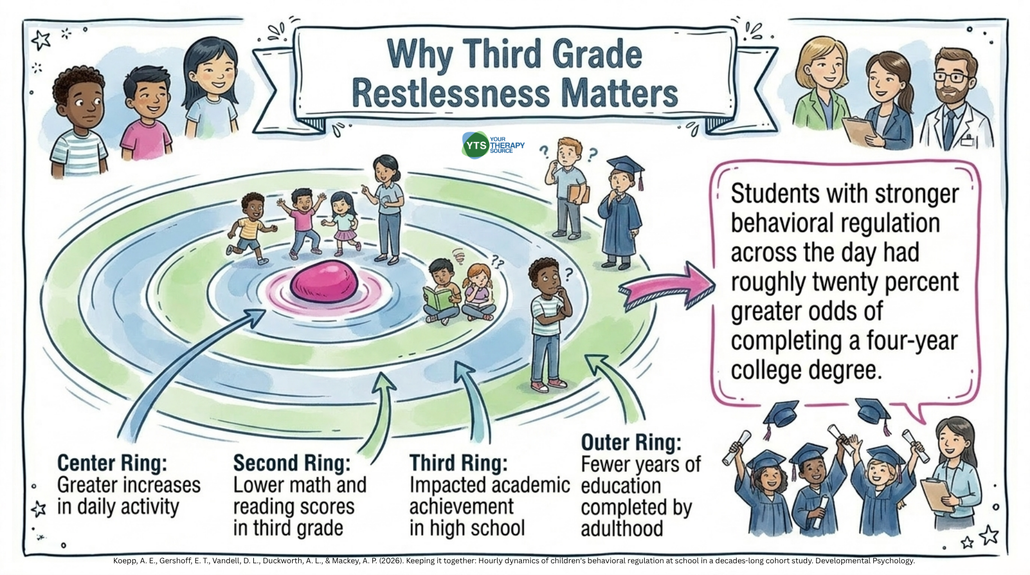
- Children who showed larger increases in activity across the day were more likely to be rated by teachers as impulsive and disruptive.
- Greater increases in daily activity were associated with lower math and reading scores in third grade.
- Third grade academic scores were linked to academic achievement in high school and to fewer years of education completed by age 26.
- Children with stronger behavioral regulation across the day had about 20 percent greater odds of completing a four year degree.
WHY THESE FINDINGS MATTER FOR SCHOOL-BASED PRACTICE
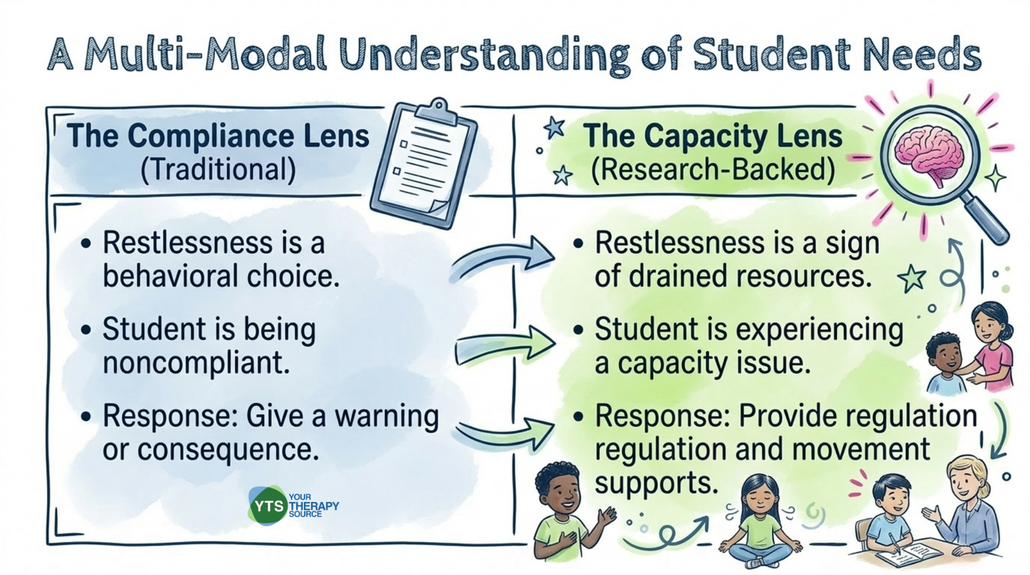
These findings may help school teams better understand why some students seem to struggle more with behavior later in the school day. Recognizing this pattern as a possible capacity issue, rather than only a behavior choice, may support a more understanding approach.
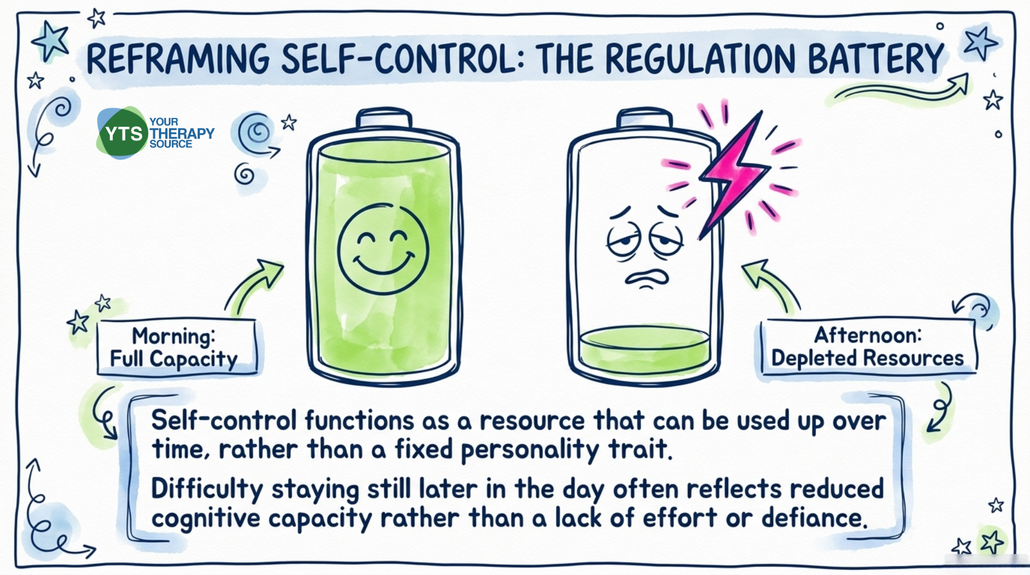
- Behavioral regulation may naturally decline across the school day for many students.
- Difficulty staying still or focused later in the day may reflect reduced capacity rather than lack of effort.
- Opportunities to move, such as recess, may help support students’ ability to regulate behavior and stay engaged in learning.
IMPLICATIONS FOR SCHOOL STAFF
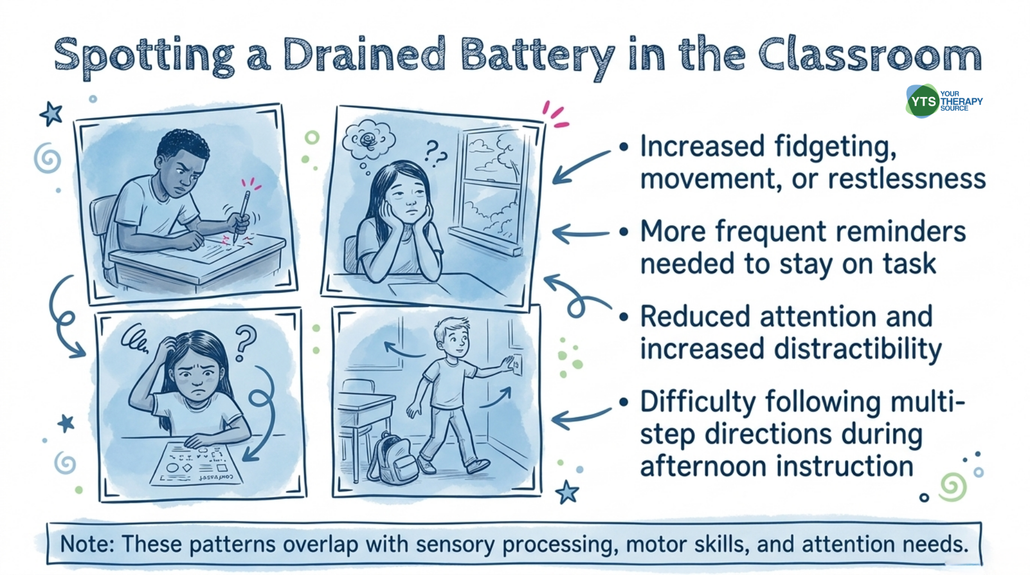
These findings may help staff think differently about behavior patterns observed throughout the school day. Rather than viewing increased restlessness or impulsivity later in the day as simply noncompliance, staff might consider it as a sign that a student’s regulation resources are being used up.
Staff might notice:
- Increased fidgeting, movement, or restlessness as the day goes on
- More frequent reminders needed to stay on task or in seat
- Difficulty following multi-step directions later in the day
- Reduced attention or increased distractibility during afternoon instruction
These patterns may be one piece of a broader picture that includes sensory processing, motor skills, attention, and environmental factors. Considering behavioral regulation alongside other developmental areas may support a more complete, multi-modal understanding of student needs across the school day.
10 PRACTICAL STRATEGIES TO HELP WITH IMPULSE CONTROL IN ELEMENTARY SCHOOL
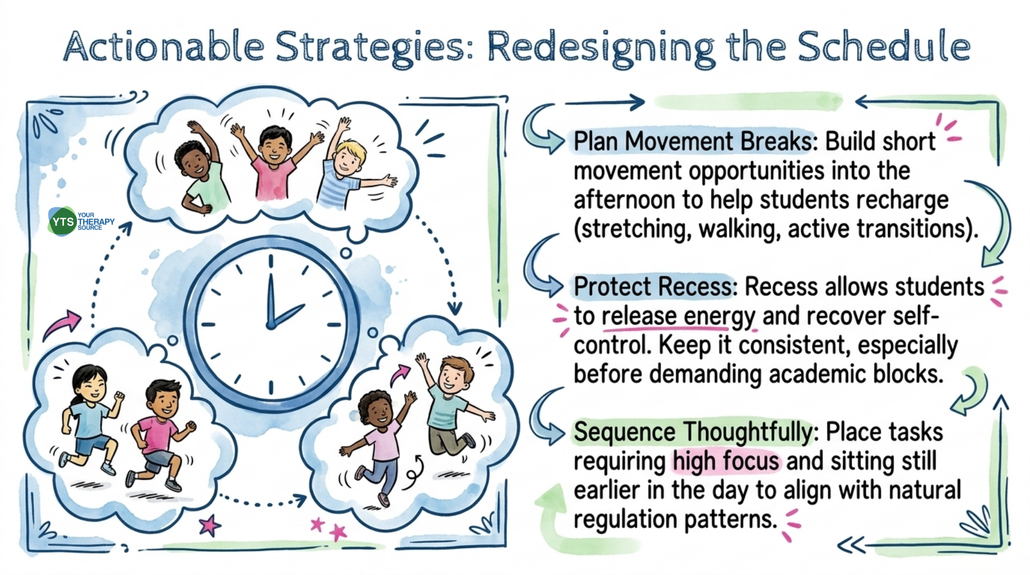
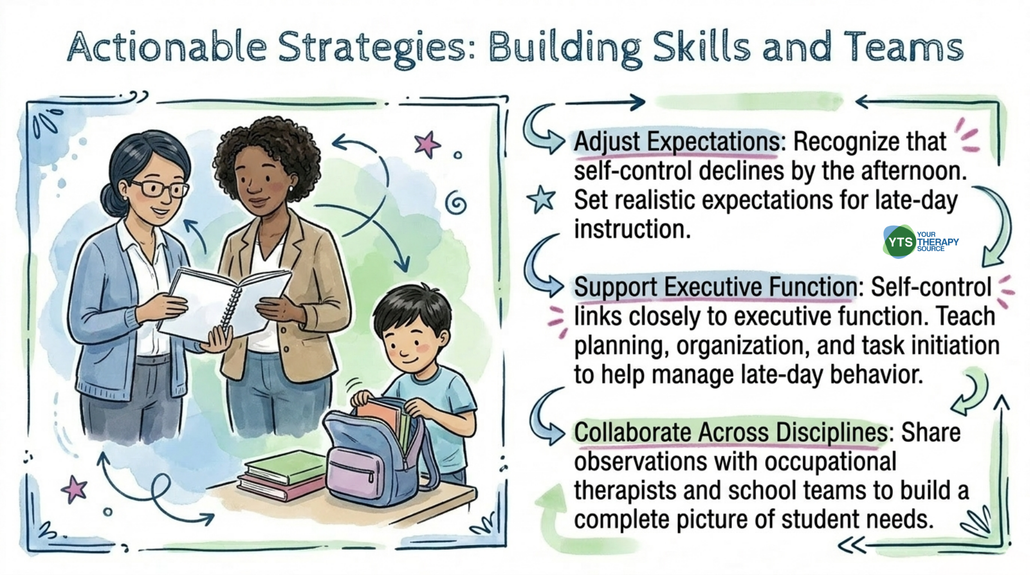
- Plan for Movement Breaks. Building short movement opportunities into the schedule, especially in the afternoon, may help students recharge their ability to regulate behavior. This could include stretching, walking, or brief active transitions.
- Protect Recess Time. Recess may give students a chance to release energy and recover some self-control. Maintaining consistent recess time, particularly before demanding academic blocks, may support both behavior and learning.
- Adjust Expectations Across the Day. Recognizing that self-control may decline over the day can help staff set realistic expectations for behavior during afternoon instruction compared to the morning.
- Sequence Demanding Tasks Thoughtfully. When possible, placing tasks that require high focus or sitting still earlier in the day may align better with students’ natural patterns of regulation.
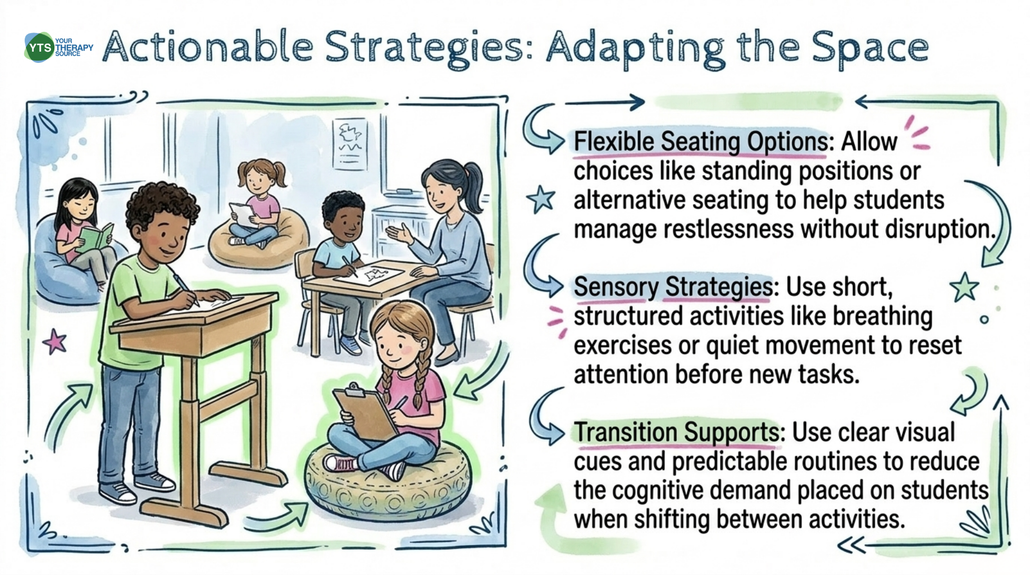
- Offer Flexible Seating Options. Allowing some choice in seating, such as standing positions or alternative seating, may help students manage restlessness without disrupting the classroom.
- Use Brief Sensory or Regulation Strategies. Short, structured activities that support self-regulation, such as breathing exercises or quiet movement, may help students reset attention before transitioning to new tasks.
- Build in Transition Supports. Clear routines and visual cues for transitions may reduce the additional regulation demands placed on students during shifts between activities.
- Monitor Patterns Over Time. Observing whether certain students consistently show more difficulty later in the day may help teams identify when additional support strategies are needed.
- Collaborate Across Disciplines. Sharing observations about behavior patterns across the day among teachers, occupational therapists, and other team members may support a more complete picture of student needs.
- Consider Executive Function Supports. Since self-control relates closely to executive function skills, strategies that support planning, organization, and task initiation may also help students manage behavior as the day progresses.
CONCLUSION
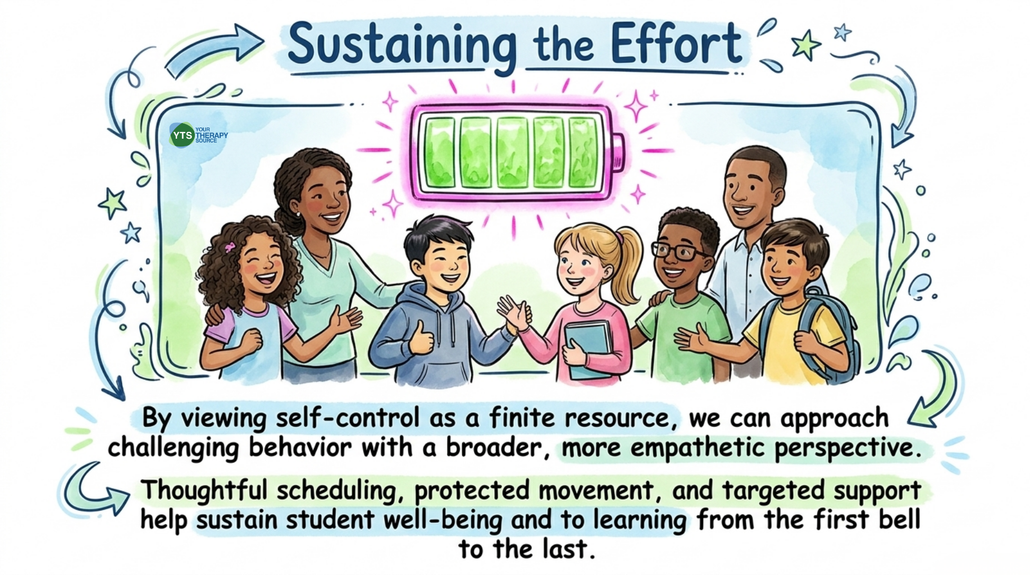
This research suggests that children’s ability to regulate behavior may decline across the school day, and that this pattern in third grade is associated with academic outcomes that extend into high school and adulthood. Self-control appears to function as a resource that can be used up over time, rather than a fixed trait.
These findings may help school-based teams approach behavior with a broader perspective, considering the timing of demands across the day and building in opportunities for movement and recovery. Thoughtful scheduling and a multi-modal understanding of student needs may help support both behavior and learning across the school day.
REFERENCES
Koepp, A. E., Gershoff, E. T., Vandell, D. L., Duckworth, A. L., & Mackey, A. P. (2026). Keeping it together: Hourly dynamics of children’s behavioral regulation at school in a decades-long cohort study. Developmental Psychology. Advance online publication. https://doi.org/10.1037/dev0002212

