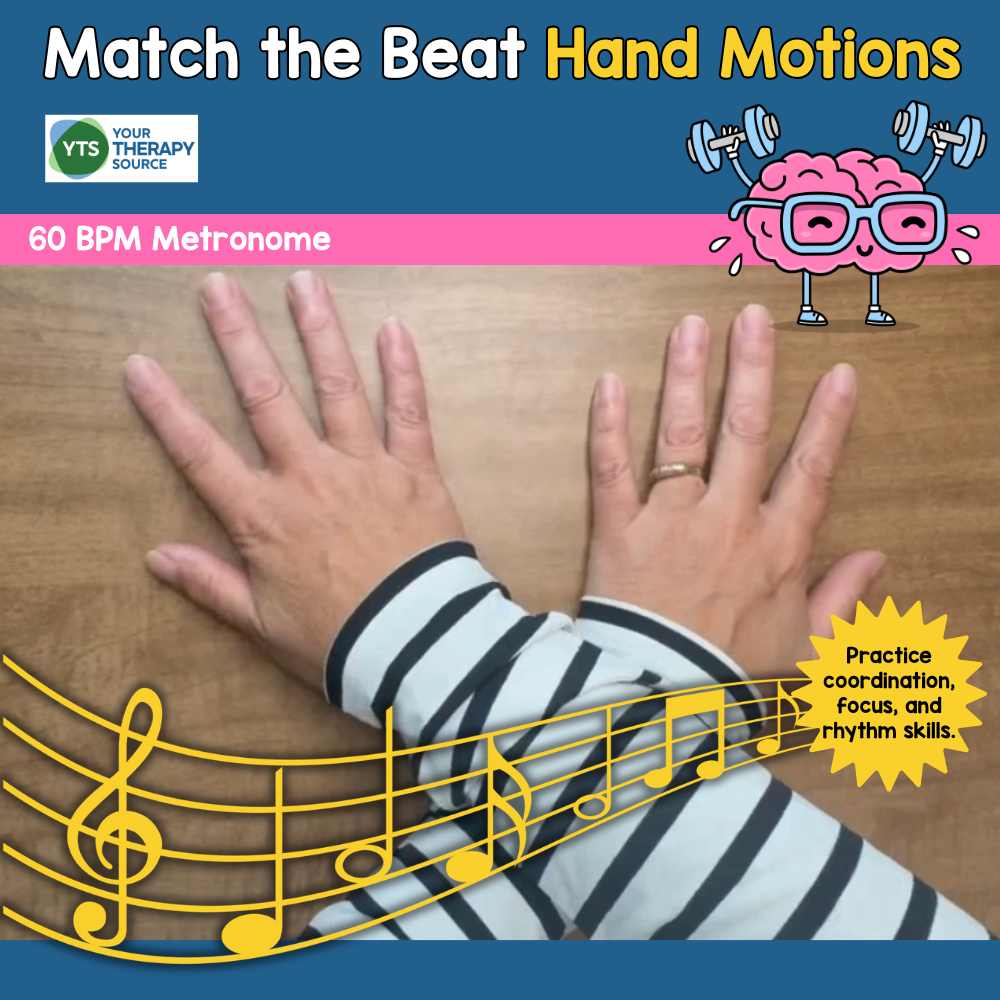
Metronome Coordination – Video Activity
This Metronome Coordination video activity adds an extra layer of challenge and focus. By following rhythmic hand patterns set to a steady 60 beats per minute, children engage in timing, coordination, and self-regulation practice, all while having fun! This structured movement break works well in classrooms, therapy sessions, homeschooling, or any setting where students need to reset their bodies and minds. It’s inclusive for all ages and abilities.
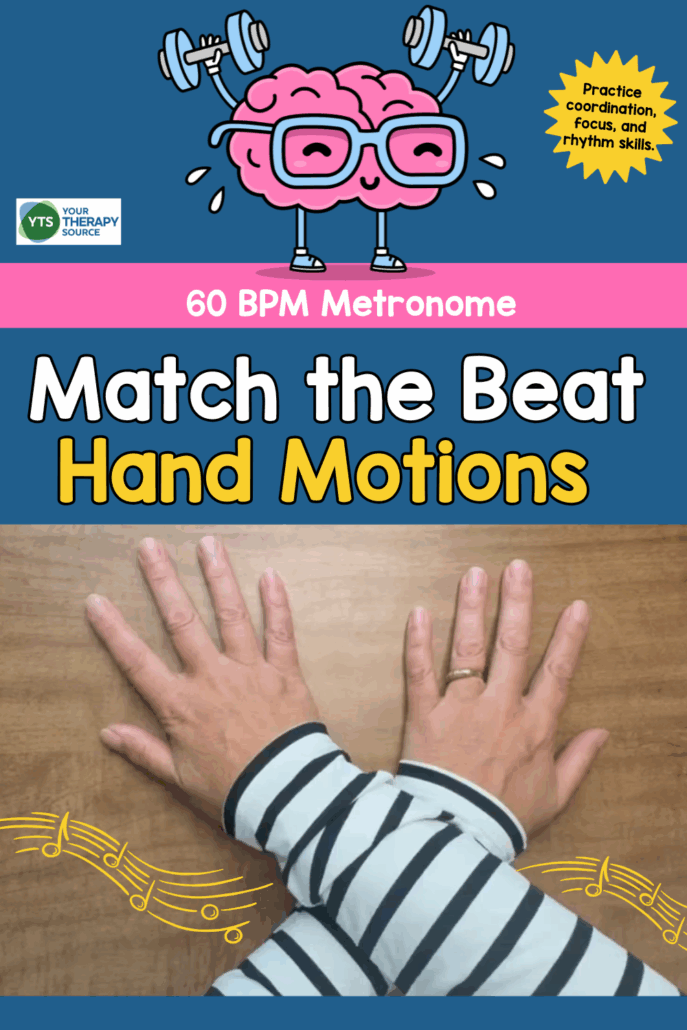
How to Use the Metronome Coordination Brain Break
Play the video and listen for the metronome beat in the background. Students will copy the hand motions in time with the 60 bpm rhythm. The consistent tempo gives a clear structure to the activity, encouraging children to slow down, stay in sync, and improve their timing and focus. It’s an ideal brain break for transitions or calming the body before seated work.
Why a Metronome Beat Enhances Motor Learning
Adding a metronome beat to movement activities provides a consistent, measurable auditory cue that directly supports motor and cognitive development. Unlike music or rhythm that can vary in tempo or complexity, a metronome offers precise timing, helping children anchor their actions to a reliable external signal.
Precise Auditory Cueing for Movement Timing
The metronome delivers a consistent sound at regular intervals (e.g., 60 bpm). This external pacing helps children align their movements with exact timing, which improves their ability to pace, initiate, and complete actions.
Supports the Development of Temporal Processing
Temporal processing is the brain’s ability to perceive and respond to time-based cues. Moving to a metronome strengthens this skill, which is essential for activities like reading fluency, speech production, and coordinated physical tasks.
Promotes Predictability and Reduces Cognitive Load
The predictable nature of a metronome allows the brain to focus on matching movement without unpredictability or distraction. This reduces cognitive effort, making it easier for children to engage and succeed.
Trains Consistent Motor Output
When children move to a steady metronome beat, they practice producing movements at regular intervals. This helps reduce variability in motor performance. This can be an important goal in occupational and physical therapy for children with motor planning challenges.
Improves Timing Accuracy Through Repetition
Practicing movement with a metronome provides instant feedback: if a child is off-beat, they know it. This allows for self-correction and helps fine-tune the nervous system’s ability to execute movement with precise timing.
WATCH THE VIDEO
Why This Hand Coordination Activity with a Metronome Beat Works
Left-Right Brain Integration
Coordinating both hands in time with a rhythm activates communication between the brain’s hemispheres, promoting better coordination and motor control.
Timing and Motor Planning
Matching the beat helps children improve their internal sense of timing. Following the movement patterns in sync requires motor planning and predictive control—skills important for movement and academics.
Auditory Attention and Visual Tracking
With both visual and auditory cues (music + hand motions), this activity supports multisensory engagement. Students must watch the movement while listening to the tempo, improving sustained attention.
Impulse Control and Self-Regulation
The 60 bpm metronome encourages children to stay calm and steady rather than rushing through movements. This supports inhibitory control, patience, and rhythm-based self-regulation.
Sequencing and Memory
Repeating movement patterns to a beat helps reinforce sequencing skills and working memory—critical for learning routines, math, and reading fluency.
More Bilateral Coordination Activities to Try
For additional bilateral coordination practice, explore the printable Brain Bridges activity mats. These colorful, engaging patterns are designed to strengthen body awareness, cross-body coordination, and focus. Explore the resource here:
Brain Bridges COLOR Bilateral Coordination Activity Mats – PRINTED Version
More Brain Break Videos to Support Coordination and Regulation