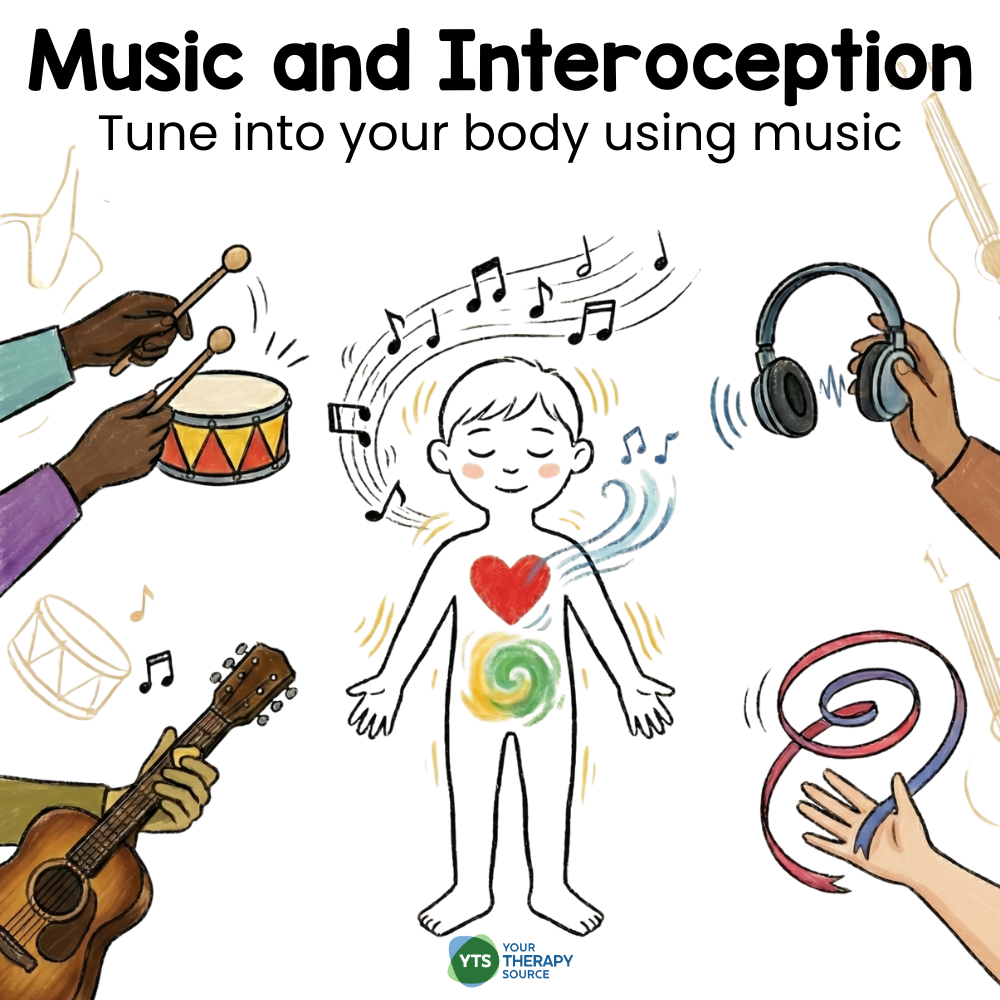
Music and Interoception: How Sound Supports the Mind–Body Connection
Interoception is the sense that helps us notice internal body signals such as heartbeat, breathing, muscle tension, temperature, and more. Children and adults rely on interoception to understand emotions, regulate behavior, and participate effectively in school and daily routines. Music is a powerful doorway into interoception. Research shows that music can influence heart rate, insula activity (a key interoceptive brain region), emotional awareness, and even pain perception. Because music captures attention and naturally creates body-based responses, it is an ideal therapeutic and educational tool for OTs, PTs, SLPs, special educators, and parents.

What Is Interoception?
Interoception is a multidimensional system that includes noticing, interpreting, and responding to signals inside the body (Craig, 2002; Garfinkel, 2015). Development continues across childhood and adolescence and is shaped by caregiving, sensory experiences, and emotional environments. According to a 2025 developmental review (Addabbo & Milani, 2025), interoception includes:
- Interoceptive accuracy: Detecting internal sensations accurately
- Interoceptive sensibility: Awareness of body cues
- Interoceptive awareness: Understanding and interpreting those signals
Stronger interoception supports:
- Better emotional labeling
- Improved self-regulation
- Recognition of hunger, thirst, fatigue, and pain
- Greater body awareness for movement and motor planning
- Increased independence in school, community, and home routines
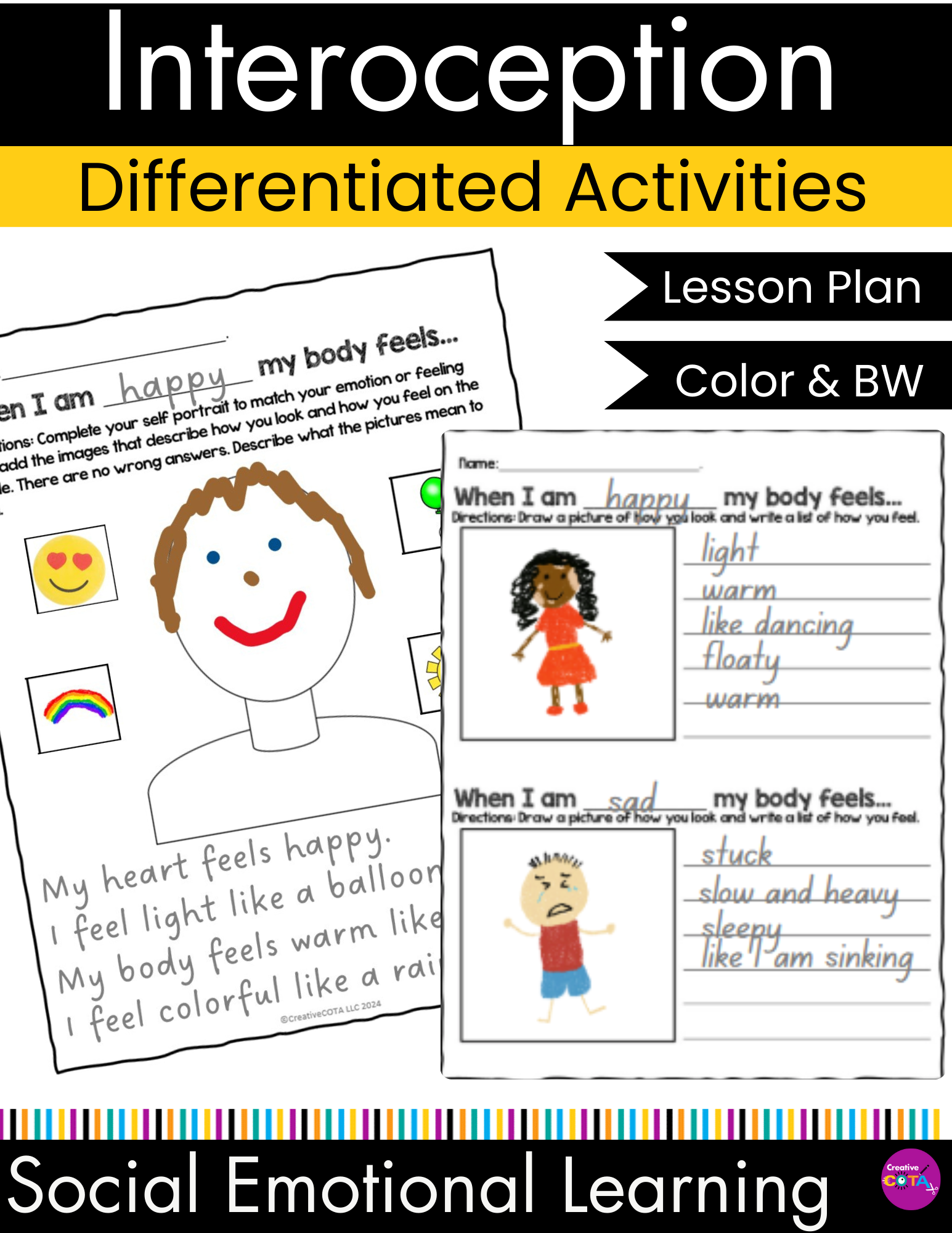
Interoception and Emotional Awareness PDF
How Music Influences the Interoceptive System
According to research, music alters heart rate and emotional processing. These findings confirm that music can heighten awareness of internal body cues. A 2024 study by Maekawa et al. found that individuals with high interoceptive sensitivity showed:
- Larger changes in heart rate while listening to emotional music
- Greater activity in the anterior insula, a key interoceptive region
- A stronger link between how they felt emotionally and how their bodies responded
Music activates brain regions responsible for internal sensation. The insula especially the anterior and mid-dorsal regions is involved in:
- Detecting heartbeat and physiological changes
- Integrating internal signals with emotional experience
- Supporting conscious awareness of bodily states
Music and rhythmic training support body awareness and pain processing. This supports the use of rhythmic movement and musical activities to enhance body awareness. A 2025 study by Kleber et al. comparing musicians, athletes, and non-trained adults found:
- Individuals with more sensorimotor training (musical or physical)
- Showed better interoceptive accuracy
- Demonstrated altered pain thresholds
- Had more precise awareness of internal states
Music-assisted mindfulness improves internal awareness. One study shows that perceived interoceptive awareness improves through repeated practice even before measurable accuracy changes. The 2025 mixed-methods study by Cote found that music combined with mindfulness:
- Reduced anxiety
- Improved focus
- Helped participants notice internal sensations more clearly
- Increased reported awareness even if objective accuracy did not change immediately
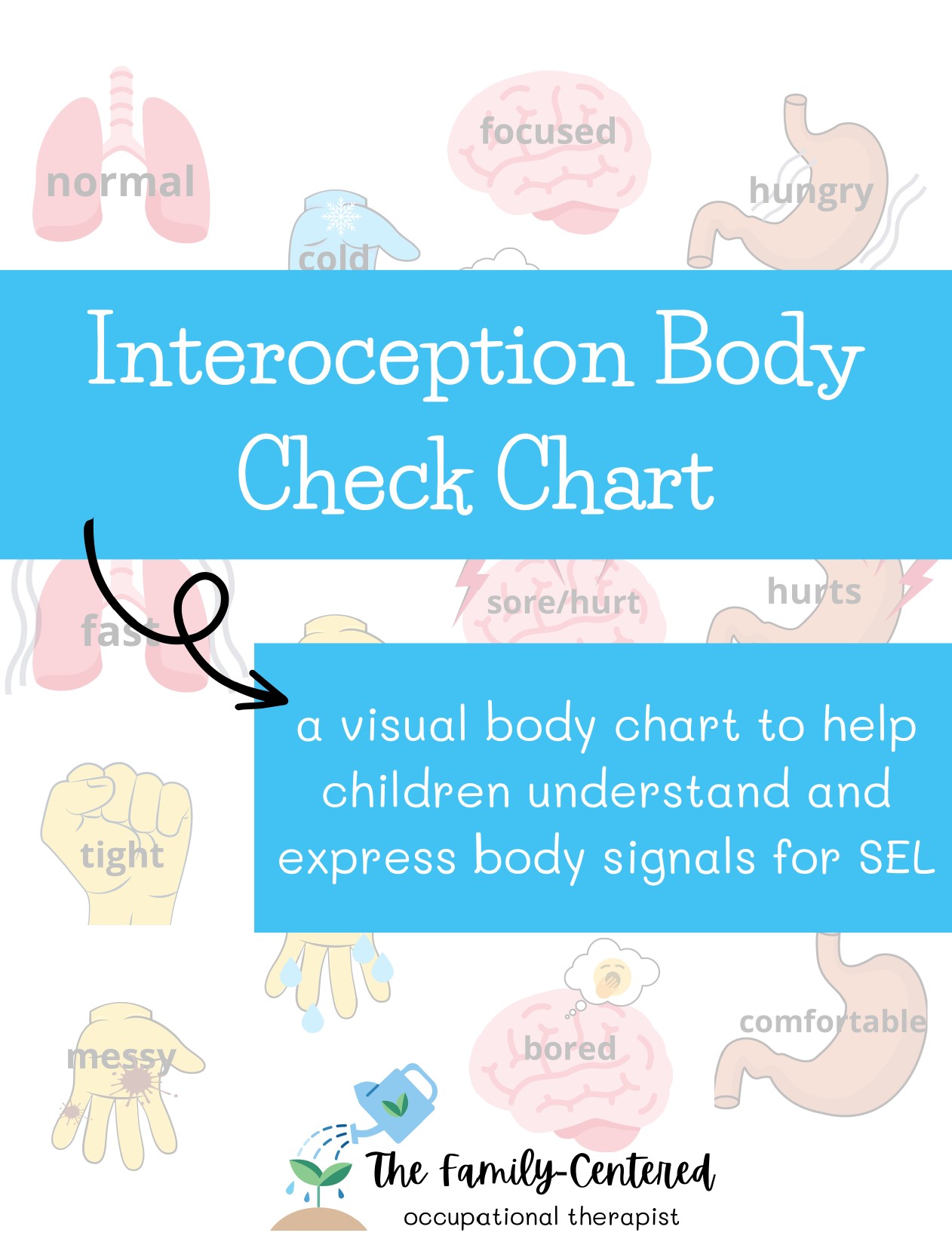
Interoception Body Chart Check
Why Music Supports Interoception in Children and Young Adults
Music is especially effective because it naturally affects the body. Benefits include:
- Predictable rhythm that entrains heartbeat and breath
- Emotional expression without language, helpful for many learners
- Improved attention, especially in students who struggle with quiet mindfulness
- Clear body-state shifts, such as increased energy or calming sensations
- High motivation and engagement across ages and developmental levels
Practical Ways to Use Music to Build Interoceptive Awareness
| Activity | How to Do It | Interoceptive Benefit |
|---|---|---|
| Heartbeat + Music Check-In |
• Play fast, upbeat music. • Have students place a hand on the chest or neck. • Notice heart rate before and after. • Switch to calming music and reflect again. |
• Highlights changes in heartbeat and arousal. • Builds awareness of how sound affects internal states. |
| Musical Emotion Mapping |
• Play clips showing calm, excitement, tension, or sadness. • Discuss how the music makes their body feel. • Build emotional and interoceptive vocabulary. |
• Links emotions with body sensations. • Strengthens emotional awareness. |
| Music-Assisted Body Scan |
• Play soft instrumental music. • Guide noticing of shoulders, hands, chest, belly, legs, and feet. • Encourage slow, mindful attention. |
• Improves sensory attention. • Supports calming and interoceptive awareness. |
| Rhythm & Movement for Body Awareness |
• Use drumming, scarves, or ribbon movement. • Try clap-and-tap routines or simple dance sequences. • Encourage feeling rhythm through the body. |
• Increases awareness of joint pressure and movement. • Helps students notice breath and energy shifts. |
| Transition Songs for Regulation |
• Use predictable calming songs. • Play during clean-up, returning from recess, or switching tasks. • Keep a consistent melody and tempo. |
• Cues the nervous system to settle. • Helps students recognize internal calming patterns. |