20 Ways to Teach Emotional Intelligence
Supporting children’s emotional intelligence helps them understand their feelings, build empathy, develop self-control, and navigate social situations successfully. The 20 ways to teach emotional intelligence make it easy, fun, and meaningful for kids at school, in therapy sessions, or at home. Read below or watch the video. Don’t forget to check out the complete Fun Emotional Intelligence Activities Packet.
How to Use This List
- Choose a few activities and rotate them weekly.
- Use visuals or props to support younger learners.
- Follow up with reflection by asking, “How did that feel?” or “When could you use this strategy?”
- Repeat regularly so emotional skills become part of daily routines.
- Blend activities: movement, art, storytelling, and problem solving to reach different learning styles.
Watch the Video
20 Fun Ways to Teach Emotional Intelligence
- Feelings Charades – Have kids act out an emotion with their face and body while others guess. This strengthens emotional vocabulary and helps children read nonverbal cues.
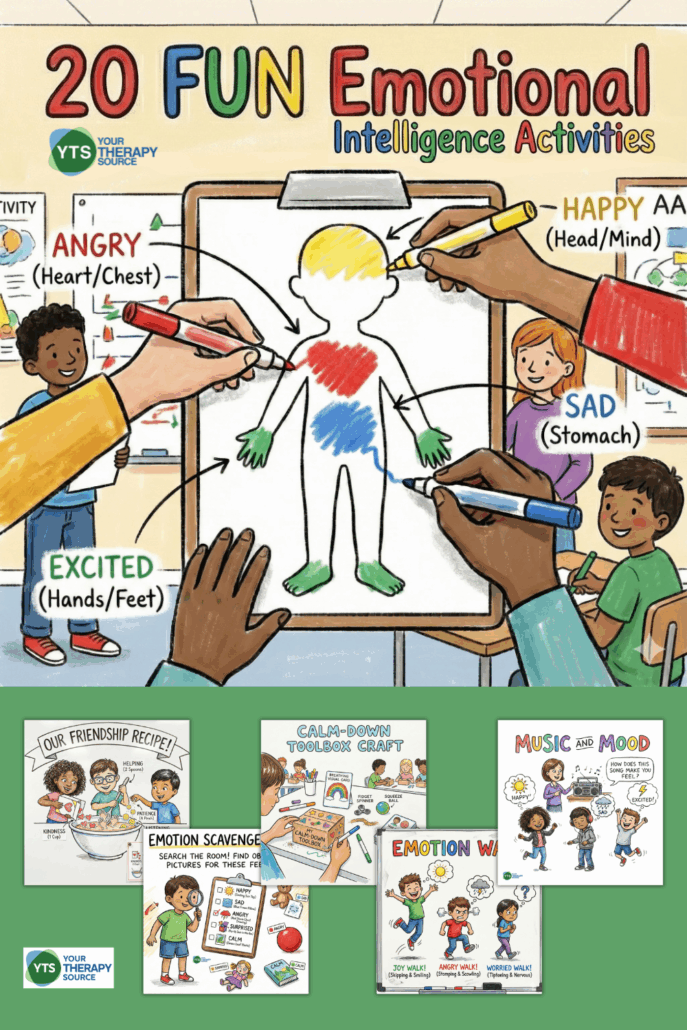
- Emotion Scavenger Hunt – Hide picture cards or objects around the room and ask children to find matches for feelings like happy, calm, or surprised. This links emotions to real experiences.
- “Name That Feeling” Game – Show an emotion card and ask kids to label it. Follow with prompts like, “When might you feel this way?” to build emotional reasoning.
- Calm-Down Toolbox Craft – Kids create their own personalized toolbox with items such as breathing cards, fidgets, or a feelings journal. This encourages independent self-regulation.
- Mirror Faces Practice – Children look in a mirror and practice making different expressions. This strengthens awareness of facial cues and how emotions appear on the body.
- Role-Play Problem Solving – Act out common social challenges, such as someone cutting in line or breaking a toy. Discuss how to respond in a calm, respectful way.
- Story Time: Pause and Reflect – During read-alouds, pause and ask: “How is the character feeling?” “What clues do you see?” This builds empathy and inferencing skills.
- Emotion Walk – Invite children to move like different feelings—stomping like anger, tiptoeing like worry, skipping like happiness. This connects emotions to body sensations.
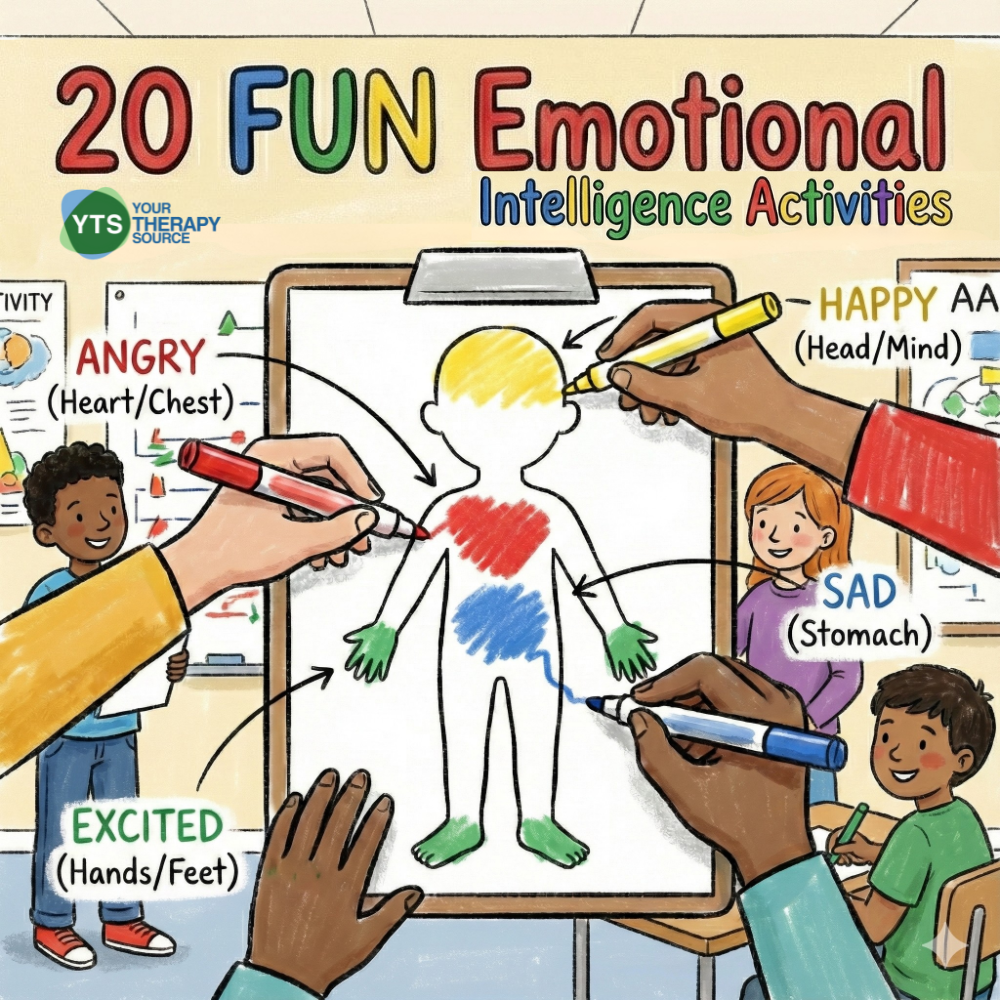
- Color Your Feelings – Children draw or color where feelings show up inside their bodies. This builds interoceptive awareness and helps them notice early signs of big emotions.
- Mindful Movement Routines – Use simple movement flows, like calm flow, energy flow, or shake-out-the-stress to help kids match movement with emotional needs.
- “What Would You Do?” Scenario Cards – Present real-life situations and ask how kids would respond. This teaches coping skills, perspective-taking, and flexible thinking.
- Feelings Thermometer Check-In – Use a visual scale from calm to overwhelmed. Have children check in throughout the day to track emotional intensity.
- Compliment Tag – Encourage children to write kind notes or compliments for classmates. This boosts connection, empathy, and positive communication.
- Emotion Matching Puzzles – Match emotion words, pictures, or situations. This helps kids understand that emotions come from events, body cues, and thoughts.
- Breathing Buddies – Children lie down with a stuffed animal on their belly and watch it rise and fall with slow breaths. A simple way to teach mindfulness.
- Friendship Recipe – Kids create a “recipe” for being a good friend with ingredients like kindness, patience, and listening. Perfect for social-emotional lessons.
- Calm Corner Routine – Set up a designated space for emotional regulation with visuals, breathing cards, and fidgets. Teach when and how to use it appropriately.
- Empathy Glasses Game – Children put on pretend glasses and imagine how someone else might feel in a given situation. This builds perspective-taking in a playful way.
- Music and Mood – Play short music clips and ask, “How does this make your body feel?” Music helps kids connect emotions with physical sensations. Explore more ideas here: Music and Emotions – Your Therapy Source.
- Emotion Sorting Station – Create a center with emotion cards and have children sort them into categories—happy, sad, angry, calm, silly, etc. This reinforces understanding and vocabulary.
Fun Emotional Intelligence Activities for Kids
Want More Tools?
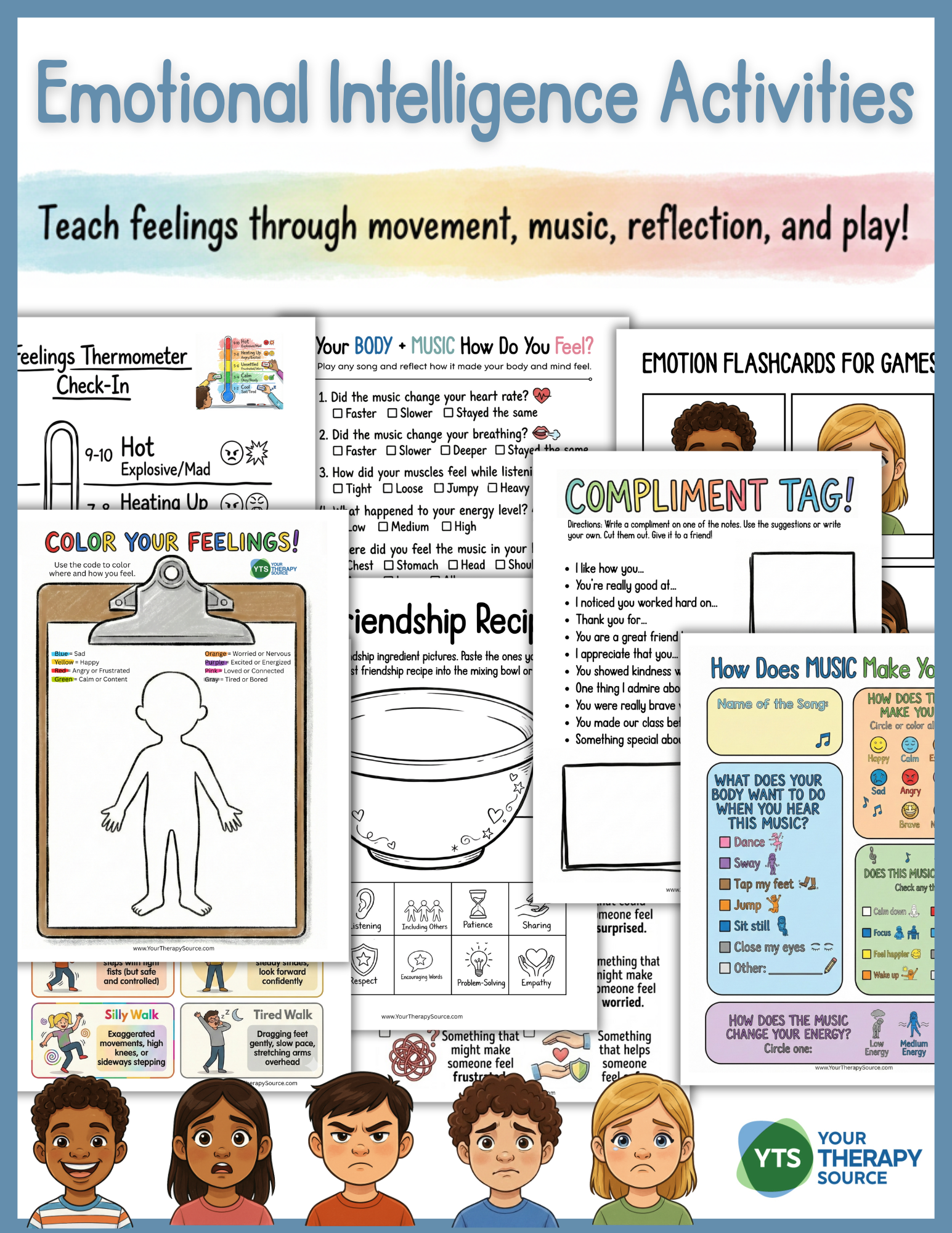
If you’d like deeper resources, like emotion flashcards, coloring worksheets, scenario cards, and movement-based reflection sheets, then check out the full Emotional Intelligence packet brings all these ideas together into a ready-to-use kit.