
Physical Activity and Mental Health Risk in Children
Schools play a critical role in supporting students’ emotional well being, attention, and behavior. As academic demands increase and daily schedules become more sedentary, many students experience fewer opportunities for movement during the school day. At the same time, schools are responding to rising mental health needs with limited time and resources. Long term research on physical activity and mental health can help clarify how everyday school related factors, such as physical activity and participation in structured movement, are associated with students’ mental health outcomes over time.
What Does the Research Say about Physical Activity and Mental Health Risk in Children?
This research was a long term, population based study that followed children from early childhood through adolescence. The study examined whether levels of physical activity, time spent outdoors, and participation in organized sports during childhood were associated with later psychiatric diagnoses during adolescence.
The study followed a cohort of children born in Sweden and tracked them over many years. Physical activity and outdoor time were reported by parents when children were approximately 5, 8, and 11 years old. Participation in organized sports was examined at 11 years of age. Psychiatric diagnoses were identified later in adolescence using national health registry data. The findings describe associations, not cause and effect.
Key Findings – Physical Activity and Mental Health Risk in Children
Several findings from this long term study are directly relevant to educational settings:
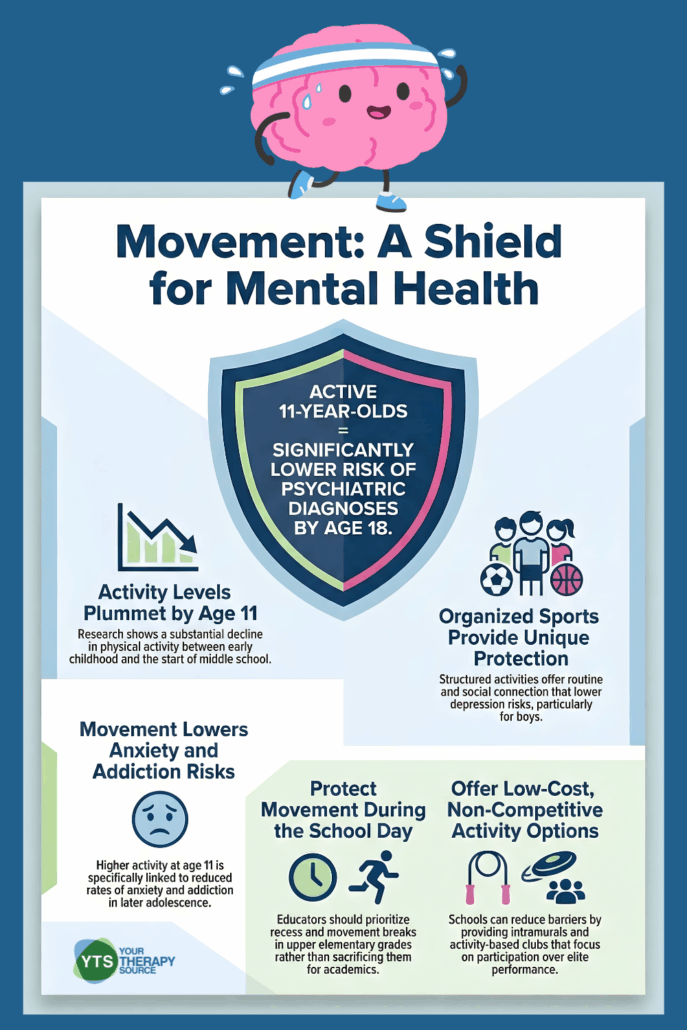
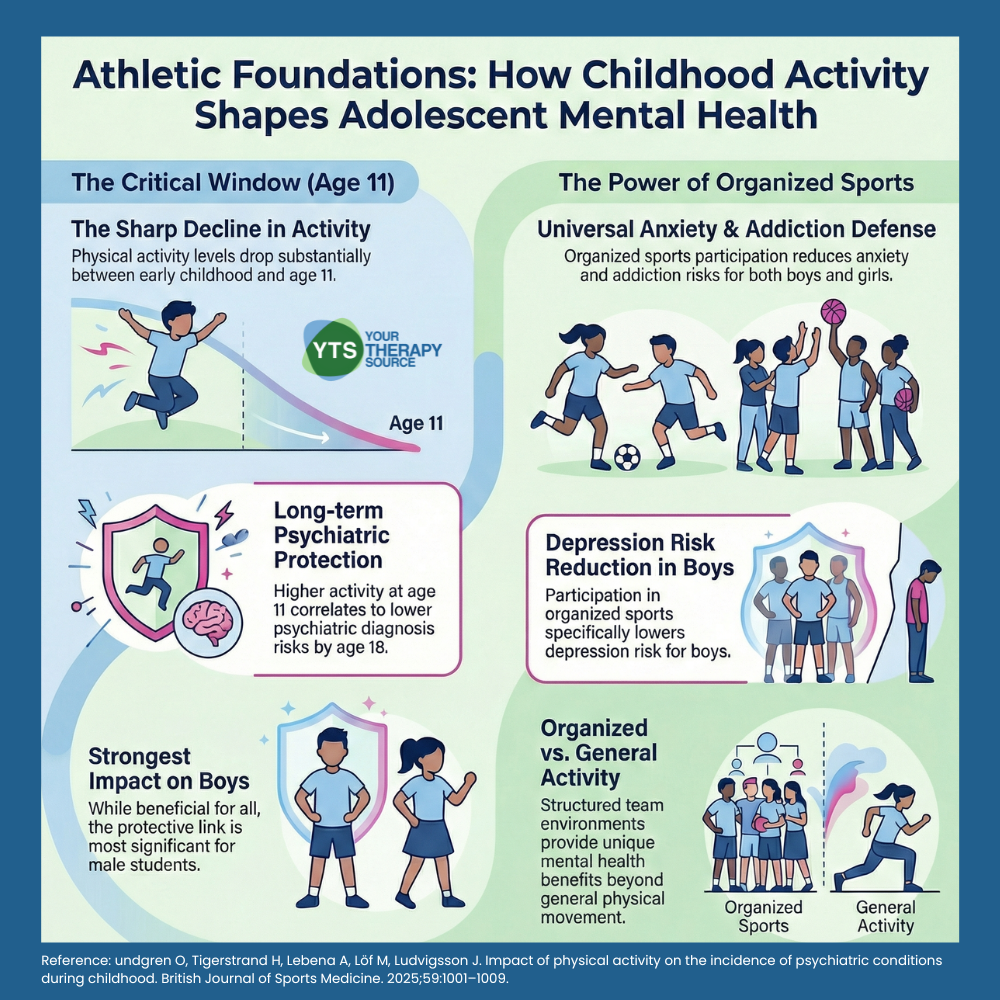
- Physical activity declined steadily from early childhood to late elementary years
- Physical activity at 11 years of age showed the strongest association with later mental health outcomes
- Higher levels of physical activity at 11 years old were associated with a lower likelihood of receiving any psychiatric diagnosis later in adolescence
- These associations were stronger for some students than others
- Physical activity at 11 years of age was associated with lower rates of anxiety and addiction, particularly in boys
- Participation in organized sports at 11 years of age was associated with lower rates of anxiety and addiction for both boys and girls
- Participation in organized sports at 11 years of age was also associated with lower rates of depression in boys, with less consistent findings for girls
- Time spent outdoors alone was not associated with reduced mental health risk
Why This Research Matters at School?
The age of 11 often coincides with late elementary grades, a period when academic expectations increase and schedules become more sedentary. It is also a time of significant developmental change, including increased social demands and emotional stress. The research suggests that maintaining regular physical activity during this specific stage of development is associated with more favorable mental health outcomes later in childhood and adolescence.
From a school perspective, this reinforces the idea that movement during late elementary years is not optional or secondary. It may be an important support for student regulation, engagement, and long term well being.
How Schools Can Support Students with Physical Activity and Mental Health
Schools do not need large or competitive athletic programs to apply these findings. Consistent, intentional movement opportunities throughout the school day can support a wide range of learners:
- Protect daily movement time rather than reducing it to increase instructional minutes
- Schedule movement opportunities before long periods of seated instruction or high cognitive demand
- Integrate movement into lessons through stations, active review, or brief movement tasks
- Use class wide movement breaks so all students benefit
- Offer structured movement options that emphasize inclusion, routine, and participation
- Provide non competitive activity choices for students who may not engage in traditional sports
- Identify grades where movement tends to decrease, especially late elementary grades
- Collaborate with physical education staff, therapists, and student support teams
- Recognize that structured activities provide predictability, peer connection, and adult support
- Frame movement as a proactive support for student mental health and behavior
Supporting regular physical activity during the school day, particularly around 11 years of age, is associated with more favorable mental health outcomes for students over time. Schools that protect movement opportunities during late elementary years may be supporting not only physical health, but also emotional regulation, stress management, and long term well being. Movement should be viewed as a core support for students, not an optional add on.
Important limitations to keep in mind
Physical activity and outdoor time were reported by parents rather than measured directly. Mental health outcomes were based on diagnosed psychiatric conditions, which means milder challenges may not have been captured. The study identified long term associations and does not suggest that physical activity alone prevents mental health concerns.
Reference
Lundgren O, Tigerstrand H, Lebena A, Löf M, Ludvigsson J. Impact of physical activity on the incidence of psychiatric conditions during childhood. British Journal of Sports Medicine. 2025;59(14):1001–1009.
More Helpful Information
- Exercise While Sitting
Practical ideas and adaptations to keep students moving even when seated. - Promote Independence in Student Exercise Programs
Strategies to help students take ownership of their movement routines. - Free Printable Exercise Cards for Kids
Ready-to-use exercise cards that support movement breaks and active engagement. - Sensory Integration Exercises
A collection of sensory based exercises to support regulation and motor planning.

