
15 Interoception Activities to Build Body Awareness in Kids
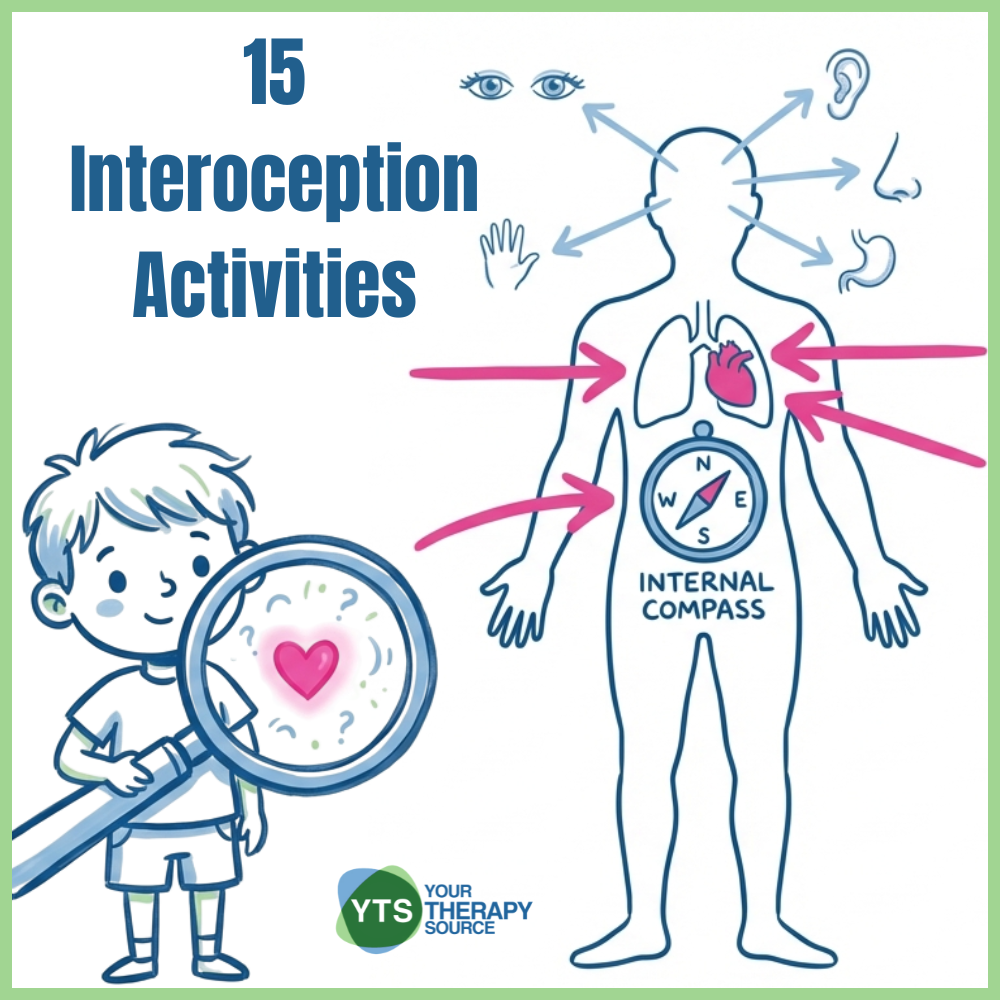
Does your child struggle to recognize when they’re hungry, anxious, or overwhelmed? They may be experiencing difficulty with interoception, the body’s hidden eighth sense. At Your Therapy Source, we believe that helping children tune into their internal signals is one of the most powerful tools we can give them for emotional regulation, self-awareness, and everyday wellbeing. These 15 interoception activities are designed to help children of all ages learn to notice, name, and respond to what their body is telling them.
What Is Interoception and Why Does It Matter?
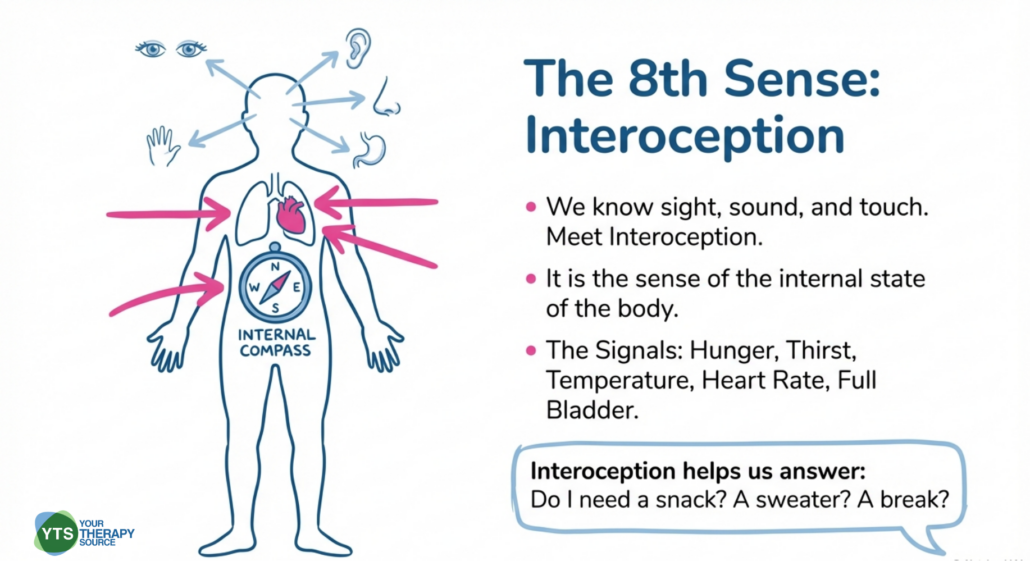
Interoception is often called the “eighth sense” because it goes beyond the well-known senses of sight, sound, and touch. Rather than detecting the outside world, interoception is the sense of the internal state of the body. It picks up on signals like hunger, thirst, temperature, heart rate, and bladder fullness, all the quiet cues that tell us what our body needs from moment to moment.
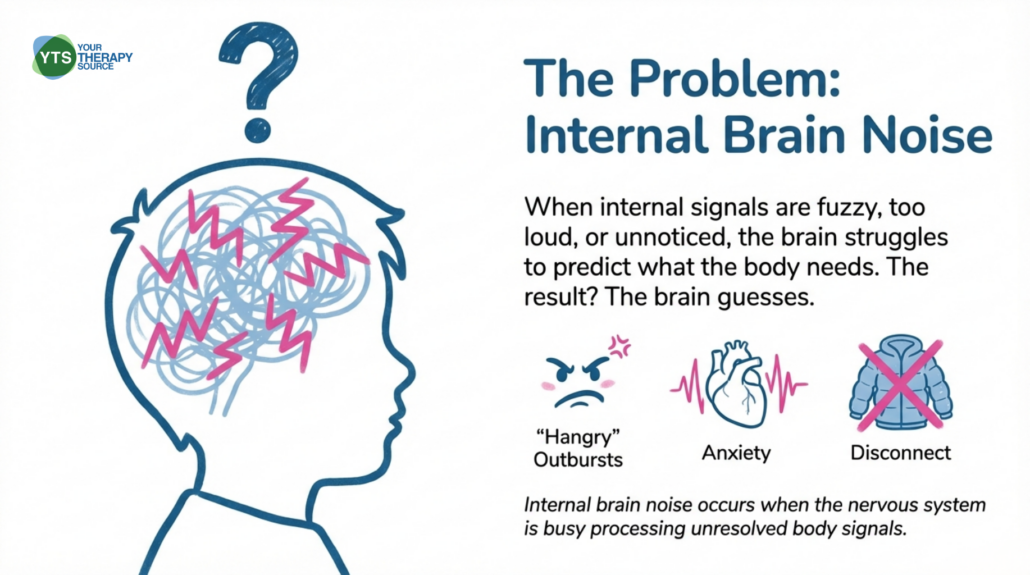
When interoception is working well, a child can answer questions like: Do I need a snack? Do I need a sweater? Do I need a break? But when those internal signals are fuzzy, too loud, or simply go unnoticed, the brain is left to guess, and guessing leads to problems. You may see “hangry” outbursts, unexplained anxiety, or a child who seems disconnected from their physical needs. This happens because the nervous system is busy trying to process unresolved body signals, creating what we call “internal brain noise.” Learn more about interoception awareness and understanding body language to support self-regulation.
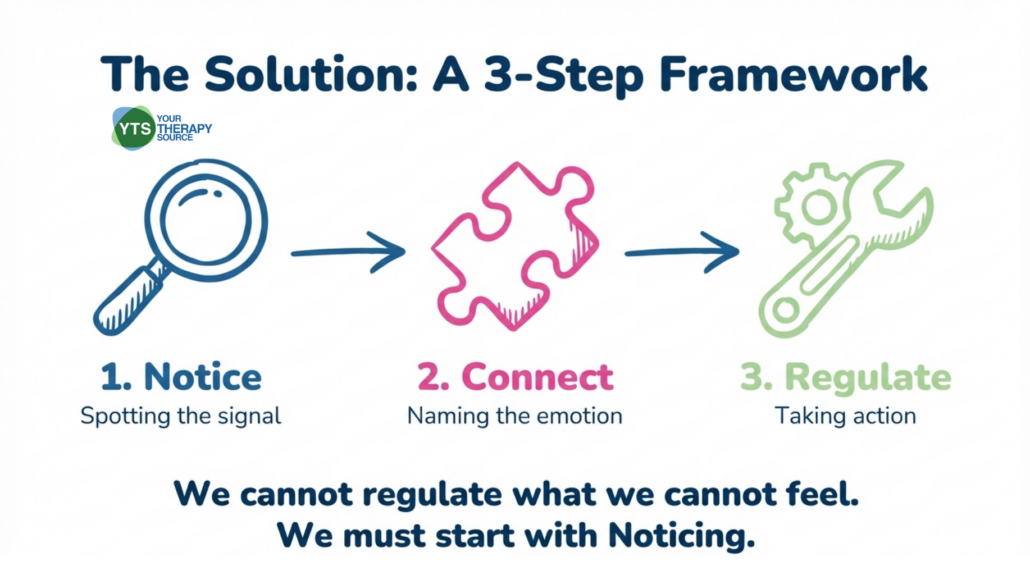
The good news is that interoception is a skill that can be practiced and strengthened. The activities below are organized into three progressive phases: muscle awareness, body mapping, and grounding, all built on a simple framework of Notice, Connect, and Regulate. We truly cannot regulate what we cannot feel, so we always start with noticing.
Phase 1: Muscle Awareness Games
The first phase focuses on helping children feel the difference between tension and relaxation in their own bodies. These activities are concrete, hands-on, and perfect for introducing the concept of body signals in a fun, low-pressure way.
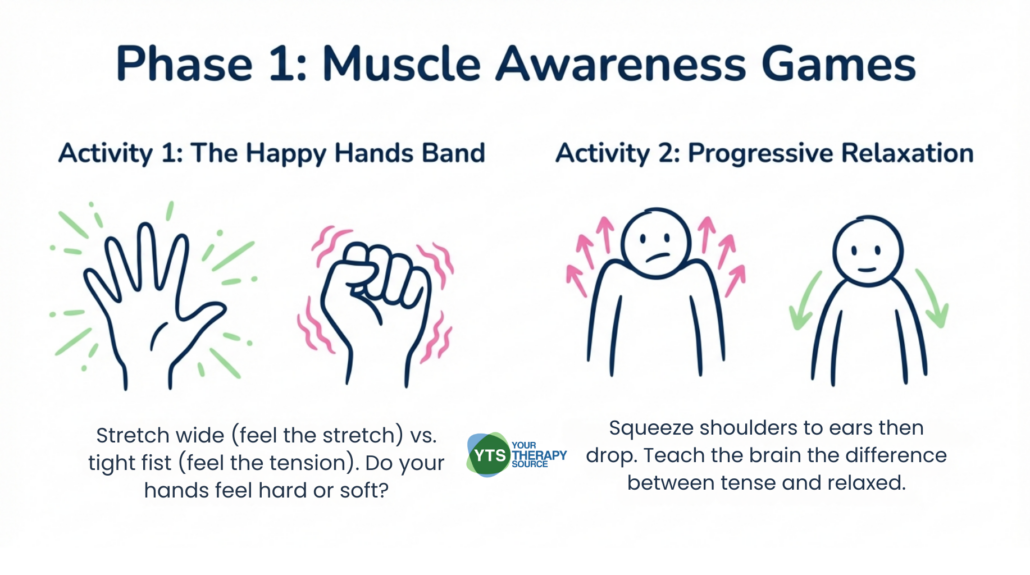
Activity 1: The Happy Hands Band
This simple hand activity teaches children to notice the physical difference between stretch and tension in their own muscles. Ask the child to spread their fingers as wide as possible, really feeling the stretch, and then clench them into a tight fist, noticing the tension. After a few rounds, prompt them with the question: “Do your hands feel hard or soft?” This kind of precise, curious questioning is exactly the type of language that builds interoceptive vocabulary over time, turning a simple movement into a meaningful moment of body awareness.
Activity 2: Progressive Relaxation
Progressive relaxation is a classic technique that works beautifully as an interoception activity because it explicitly teaches the brain the contrast between two states. Have the child squeeze their shoulders up toward their ears as tightly as they can, hold for a moment, and then let them drop. The goal isn’t just to relax; it’s to feel the difference between tense and relaxed, training the nervous system to recognize each state. This activity is especially helpful for children who hold stress in their shoulders and upper body without realizing it, which is more common than many adults might expect.
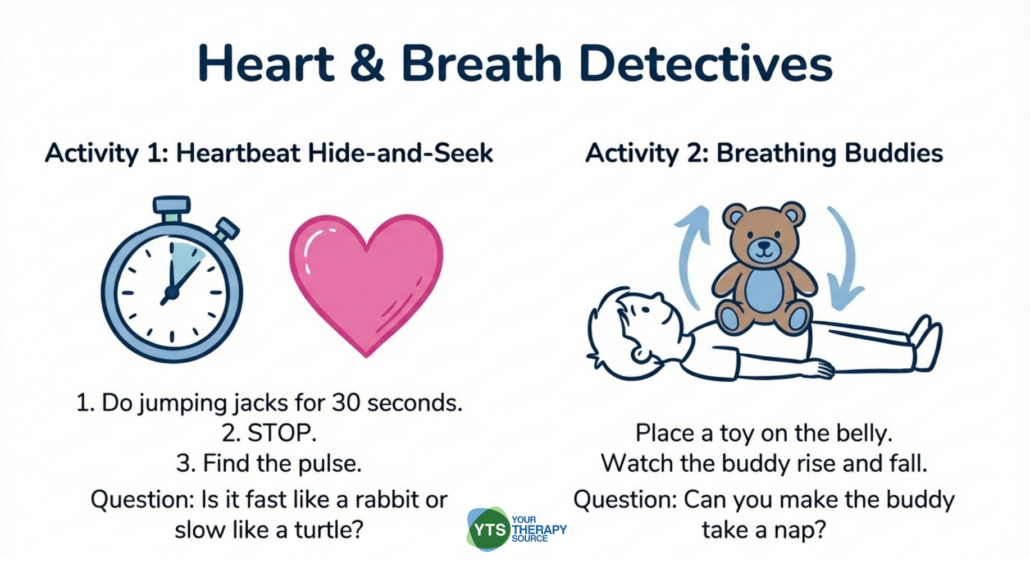
Activity 3: Heartbeat Hide-and-Seek
This energetic activity turns heart rate awareness into a game. Have the child do jumping jacks for 30 seconds, then stop completely and find their pulse. Once they’ve located it, ask: “Is your heartbeat fast like a rabbit, or slow like a turtle?” This simple comparison gives children a way to describe and remember different heart rate states, laying the foundation for recognizing when their body is activated versus calm. Over time, kids begin to notice these shifts without needing the jumping jacks prompt, and they start to feel the difference in real life, in real time.
Activity 4: Breathing Buddies
For younger children especially, breathing awareness can be tricky to teach in the abstract. This activity makes it visual and tangible by placing a small stuffed animal or toy on the child’s belly as they lie on their back. As they breathe in and out, the toy rises and falls with each breath. Ask: “Can you make your buddy take a nap?” meaning, can you breathe so slowly and steadily that the toy barely moves? This encourages deep, diaphragmatic breathing while keeping the child engaged and focused on what their body is actually doing, rather than what they think they should be doing.
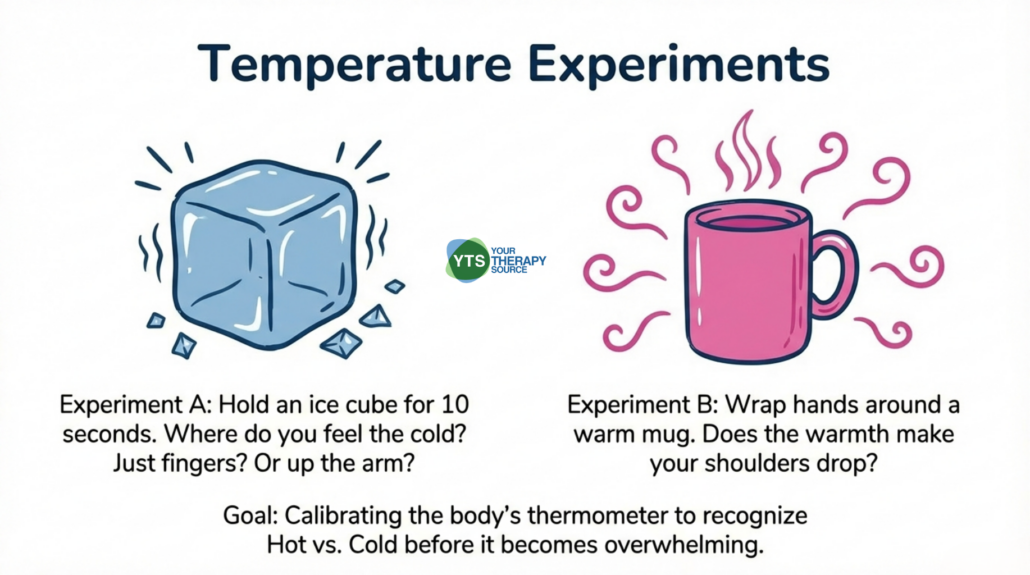
Activity 5: Temperature Experiment A: Ice Cube
Temperature is one of the body’s clearest interoceptive signals, and this experiment helps children tune into it with focused attention. Have the child hold an ice cube for about 10 seconds, then ask: “Where do you feel the cold? Is it just in your fingers, or can you feel it traveling up your arm?” By guiding attention to the exact location and spread of a sensation, you’re helping the brain build a more detailed internal map, which is a critical step in recognizing subtler signals down the road. The goal is to calibrate the body’s thermometer to recognize hot versus cold before it becomes overwhelming.
Activity 6: Temperature Experiment B: Warm Mug
The warm mug experiment is the gentle counterpart to the ice cube activity. Ask the child to wrap both hands around a warm (not hot) mug and simply notice what happens throughout the body. A key observation question to pose: “Does the warmth make your shoulders drop?” Many children are surprised to discover that warmth in their hands produces a relaxation response across their whole body. This is an excellent way to introduce the idea that the body’s signals are connected, and that noticing one sensation can unlock awareness of many others.
Activity 7: The Hunger Scale: How Low Can You Go?
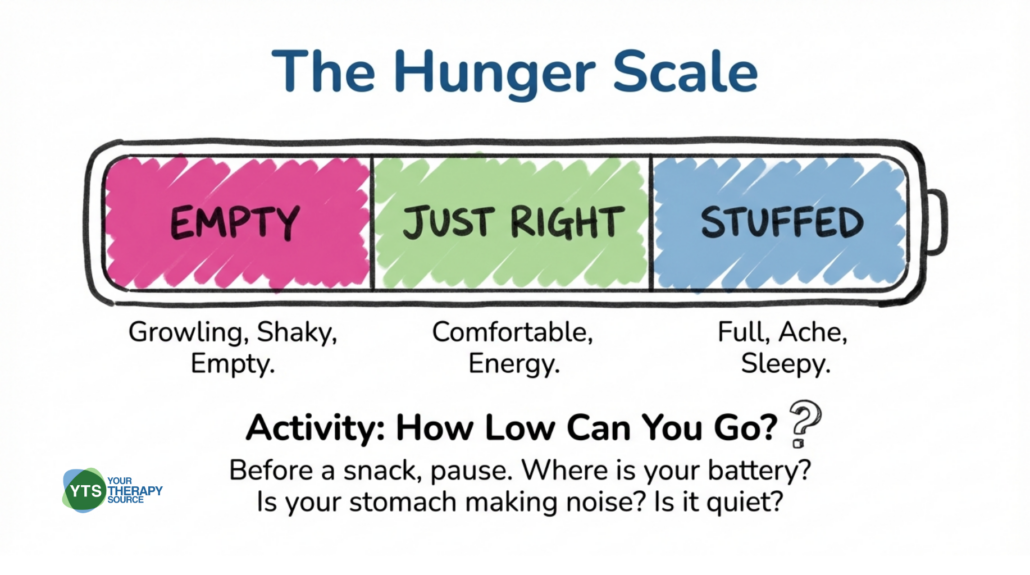
One of the most practical interoception skills a child can develop is the ability to recognize hunger before it becomes distress. This activity introduces a simple three-zone hunger battery: Empty (growling, shaky, empty), Just Right (comfortable, energized), and Stuffed (full, achy, sleepy). Before a snack, pause and ask: “Where is your battery right now? Is your stomach making noise, or is it quiet?” Practicing this check-in consistently at snack and mealtimes helps children move from reactive eating to mindful, body-led eating, a habit with benefits that extend well into adulthood.
Phase 2: Body Mapping
Once children can notice basic physical sensations, the next step is connecting those sensations to emotions. Body mapping is a powerful technique that helps children externalize their internal experience, making it easier to talk about, share, and work through together.
Activity 8: Map Your Feelings
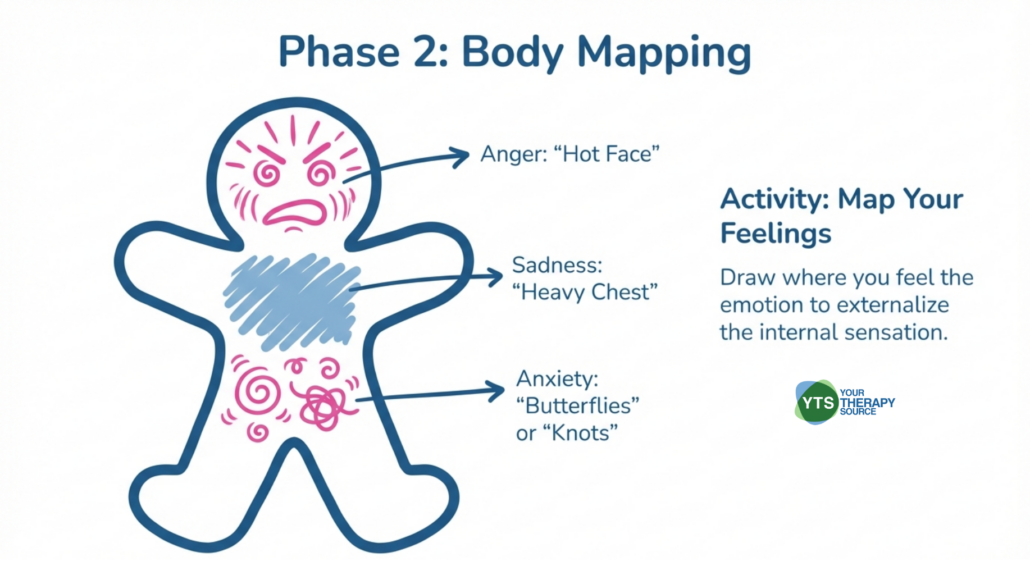
Provide a simple outline of a body (a gingerbread-style figure works well) and ask the child to draw where they feel different emotions. For example, anger often lives in the face as a “hot face” feeling, sadness can feel like a “heavy chest,” and anxiety might show up in the stomach as “butterflies” or “knots.” The act of drawing the location of a feeling takes it from an overwhelming, invisible experience and makes it concrete and visible. This externalization is a key therapeutic step, giving children and the adults who support them a shared language for talking about big feelings. To complement this activity, our interoception worksheet gives children a structured, printable way to practice mapping their body sensations on their own.
Activity 9: Expanding the Vocabulary: Interoception Simon Says
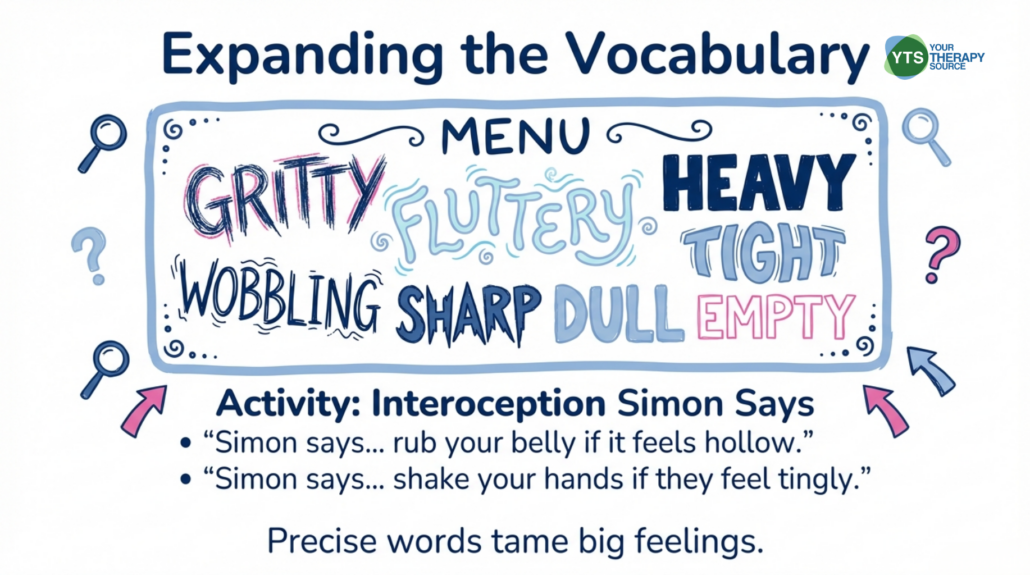
One reason children struggle to communicate about their internal states is simply that they don’t have the words for them. This activity introduces a richer menu of sensation vocabulary: gritty, fluttery, heavy, tight, wobbling, sharp, dull, empty. The game is played like classic Simon Says, but with interoceptive prompts: “Simon says… rub your belly if it feels hollow.” “Simon says… shake your hands if they feel tingly.” The playful format keeps kids engaged while quietly building the precise vocabulary they need to describe and therefore tame big feelings. Precise words, it turns out, really do tame big feelings.
Phase 3: Grounding
The third phase moves into active regulation, helping children use their interoceptive awareness to bring themselves back to a calm, grounded state when emotions run high. These activities close the loop on the full Notice, Connect, and Regulate cycle.
Activity 10: The 5-4-3-2-1 Grounding Game
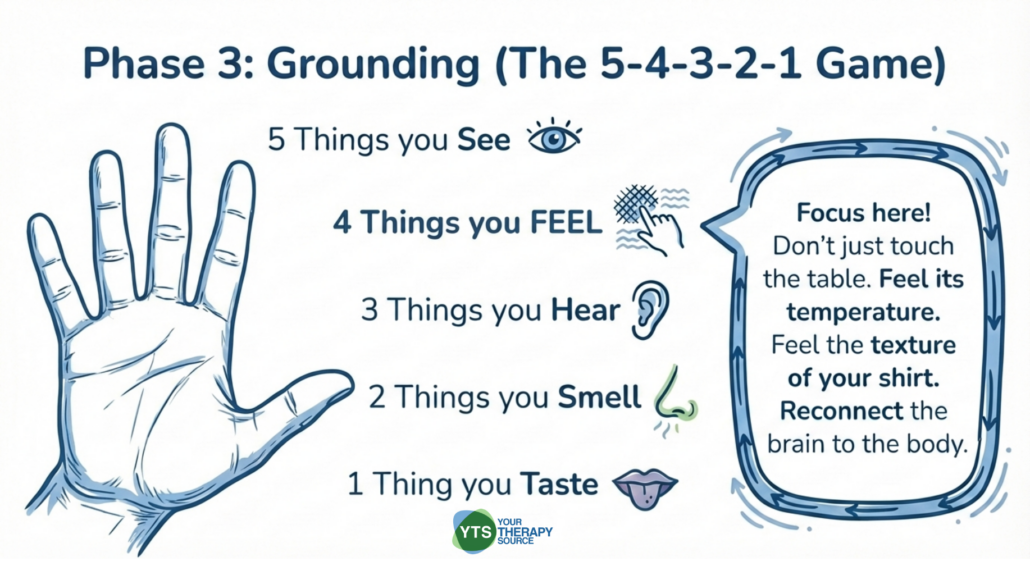
This well-known grounding technique gets a meaningful upgrade when framed as an interoception activity. The sequence of 5 things you see, 4 things you feel, 3 things you hear, 2 things you smell, and 1 thing you taste is powerful, but the “4 things you feel” step deserves special emphasis. Encourage children not to just touch a surface and name it, but to truly feel its temperature and texture, to feel the fabric of their shirt and notice whether the table is cool or warm. This active sensory engagement is what reconnects the brain to the body, and that reconnection is exactly what regulation requires.
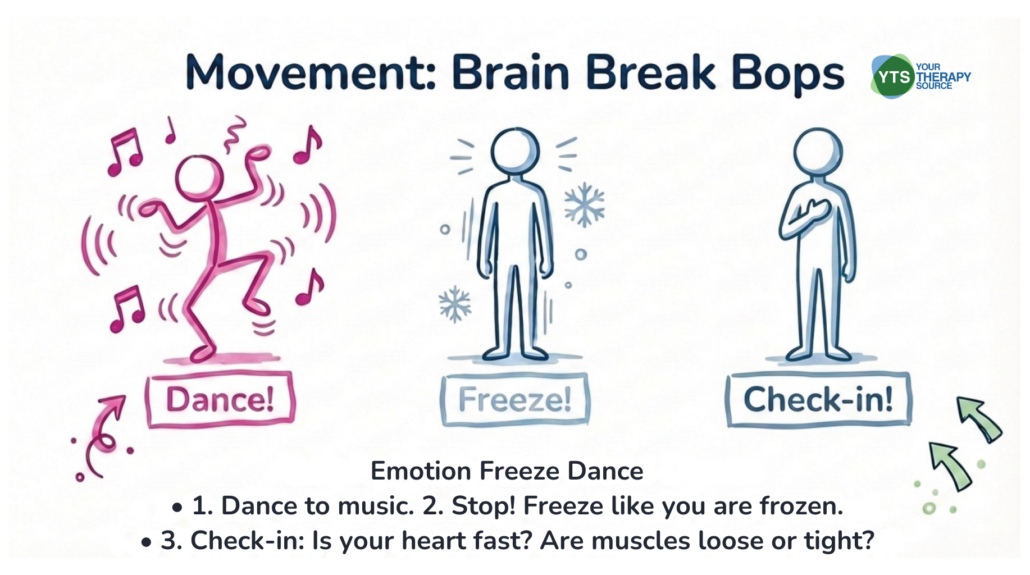
Activity 11: Emotion Freeze Dance: Movement Brain Breaks
This activity combines movement with a body check-in, making it an ideal brain break for classrooms or therapy sessions. Children dance freely to music, and when the music stops, everyone freezes completely. In that moment of stillness, prompt a quick check-in: “Is your heart beating fast? Are your muscles loose or tight?” The contrast between the active dancing state and the sudden freeze gives children a clear window into how their body responds to movement and excitement, making it much easier to notice and describe those same signals in real-life emotional moments. Music is a particularly powerful tool for this kind of work; read more about music and interoception and how it supports body awareness, or use our Inside My Body interoception song as the soundtrack for this activity.
Tools for the Environment
Building interoception awareness is most effective when it’s supported by the physical environment, not just practiced during structured activities. Visual supports scaffold the skill until it becomes automatic, reducing the cognitive load on children who are still learning to tune in.
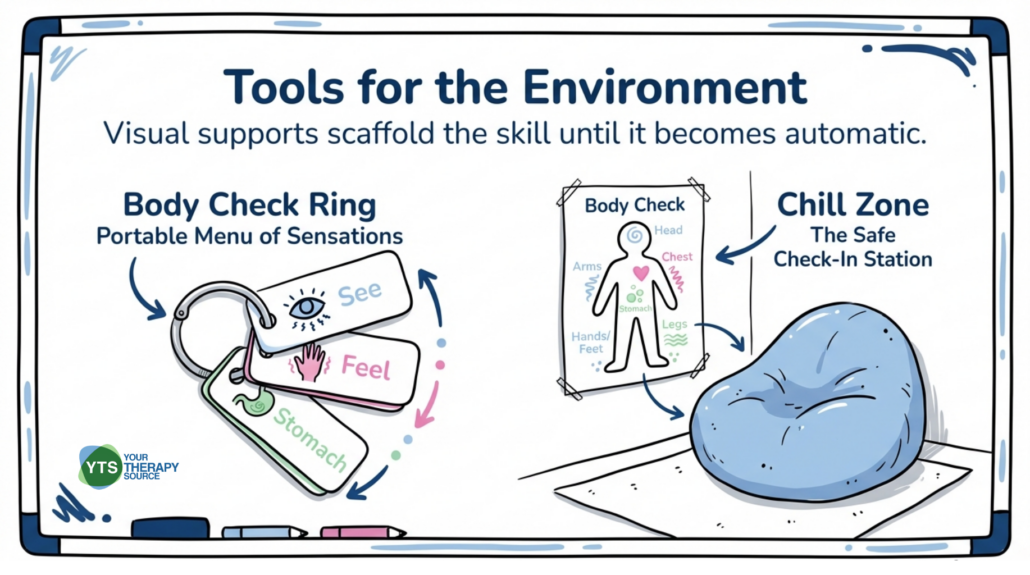
Activity 12: Body Check Ring
A Body Check Ring is a portable, keychain-style set of cards that serves as a personal “menu of sensations” a child can carry with them throughout the day. Each card prompts a different area of body awareness, covering what you see, what you feel, and what’s happening in your stomach. When a child feels dysregulated but can’t quite identify why, flipping through the ring gives them a structured starting point for the Notice, Connect, and Regulate process. It’s a simple but highly effective tool for bridging the gap between guided practice and independent self-regulation in the classroom, car, or anywhere life happens.
Activity 13: The Chill Zone: A Safe Check-In Station
A designated Chill Zone in the classroom or home is more than just a calm-down corner; it’s a structured environment designed to actively support interoceptive check-ins. Paired with a body map poster showing labeled areas like head, chest, arms, stomach, legs, and hands/feet, the space gives children both permission and a clear process for tuning into their body. The combination of a comfortable physical space and a visual tool makes the skill accessible even when a child is dysregulated and may not be able to access verbal language in the moment. For more ideas on how to bring interoception into your classroom environment, our post on interoception in the classroom is a great next read.
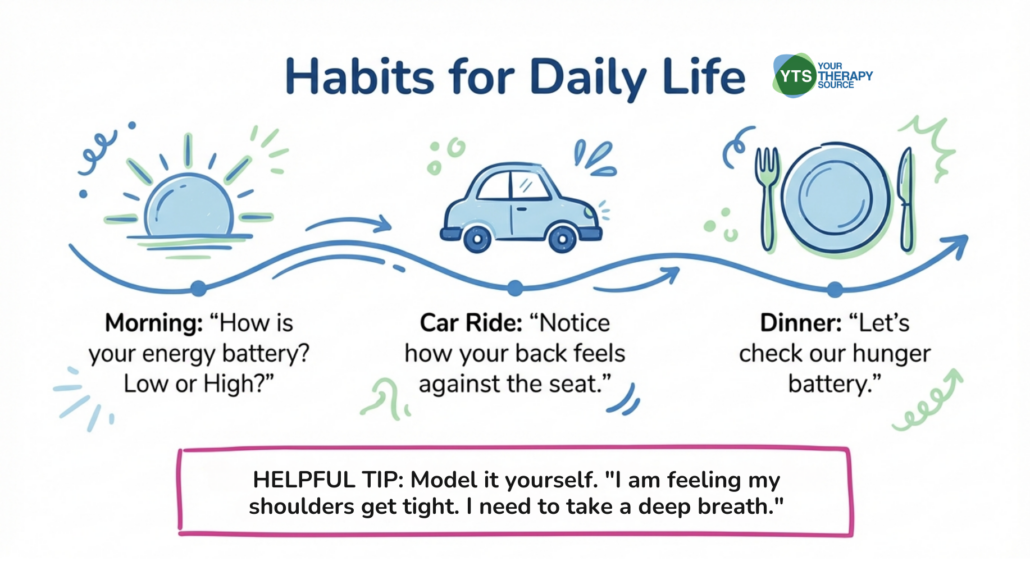
Activity 14: Daily Life Habit Anchors
The most powerful interoception practice happens not just during therapy or structured activities, but throughout the ordinary moments of daily life. Try anchoring body check-ins to three consistent daily moments: in the morning, ask “How is your energy battery, low or high?”; during a car ride, prompt “Notice how your back feels against the seat”; and at dinner, invite the whole family to “check our hunger battery.” These brief, repeated prompts build the habit of interoceptive noticing without requiring any special materials or preparation, just a willingness to pause and ask the question. A helpful tip: model it yourself by narrating your own experience, saying things like, “I’m feeling my shoulders get tight. I need to take a deep breath.”
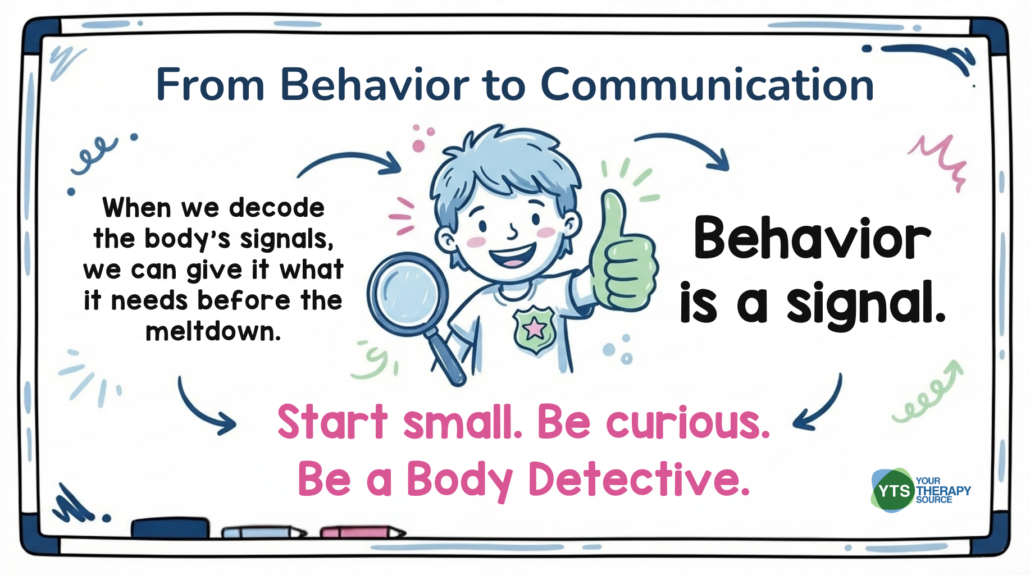
Activity 15: From Behavior to Communication
This final activity is perhaps more of a mindset shift than a structured game, but it may be the most important of all. When we reframe challenging behavior as a signal rather than a choice, everything changes for both child and caregiver. A meltdown is often the body’s last resort after a cascade of unnoticed or unaddressed internal signals. By practicing the activities above consistently, children learn to decode those signals earlier and earlier, communicating their needs before reaching the point of overwhelm. The goal isn’t perfection; it’s building the habit of curiosity. Start small, stay curious, and encourage every child to become their own Body Detective.
Bringing It All Together
Interoception is a foundational skill that underlies emotional regulation, communication, and self-awareness. The 15 activities above follow a progressive, three-phase framework, moving from basic muscle awareness through body mapping to active grounding, giving children a comprehensive toolkit for understanding what their body is telling them. Whether you’re a therapist, teacher, or parent, weaving these activities into daily routines creates the kind of repeated, low-stakes practice that builds lasting skills. Remember: we cannot regulate what we cannot feel. Start with noticing, and let the rest follow naturally.
Looking for more body awareness resources? Explore the full library of interoception tools and printables at Your Therapy Source.

