What the Research Says About Children’s Post Pandemic Executive Function Skills
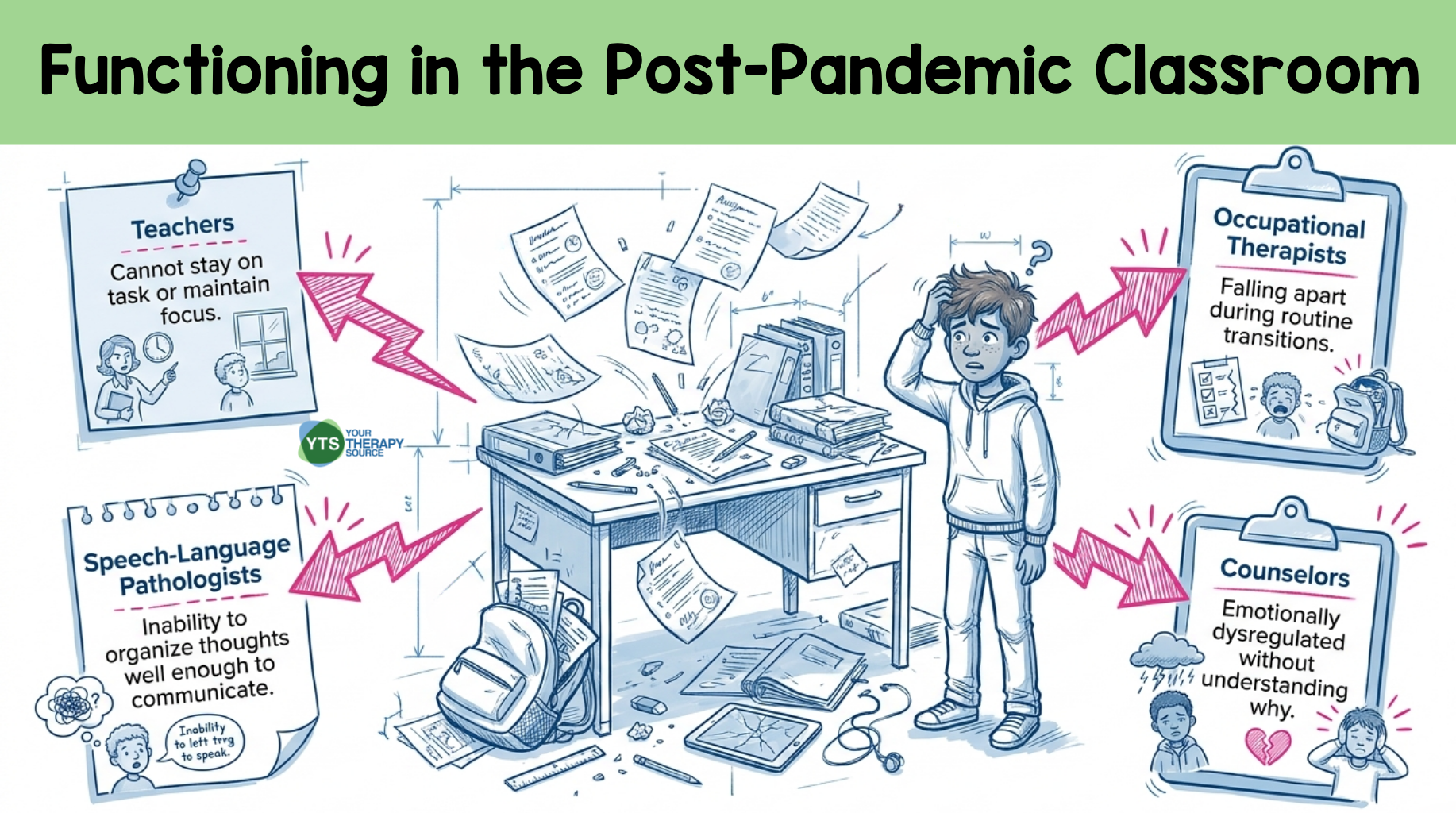
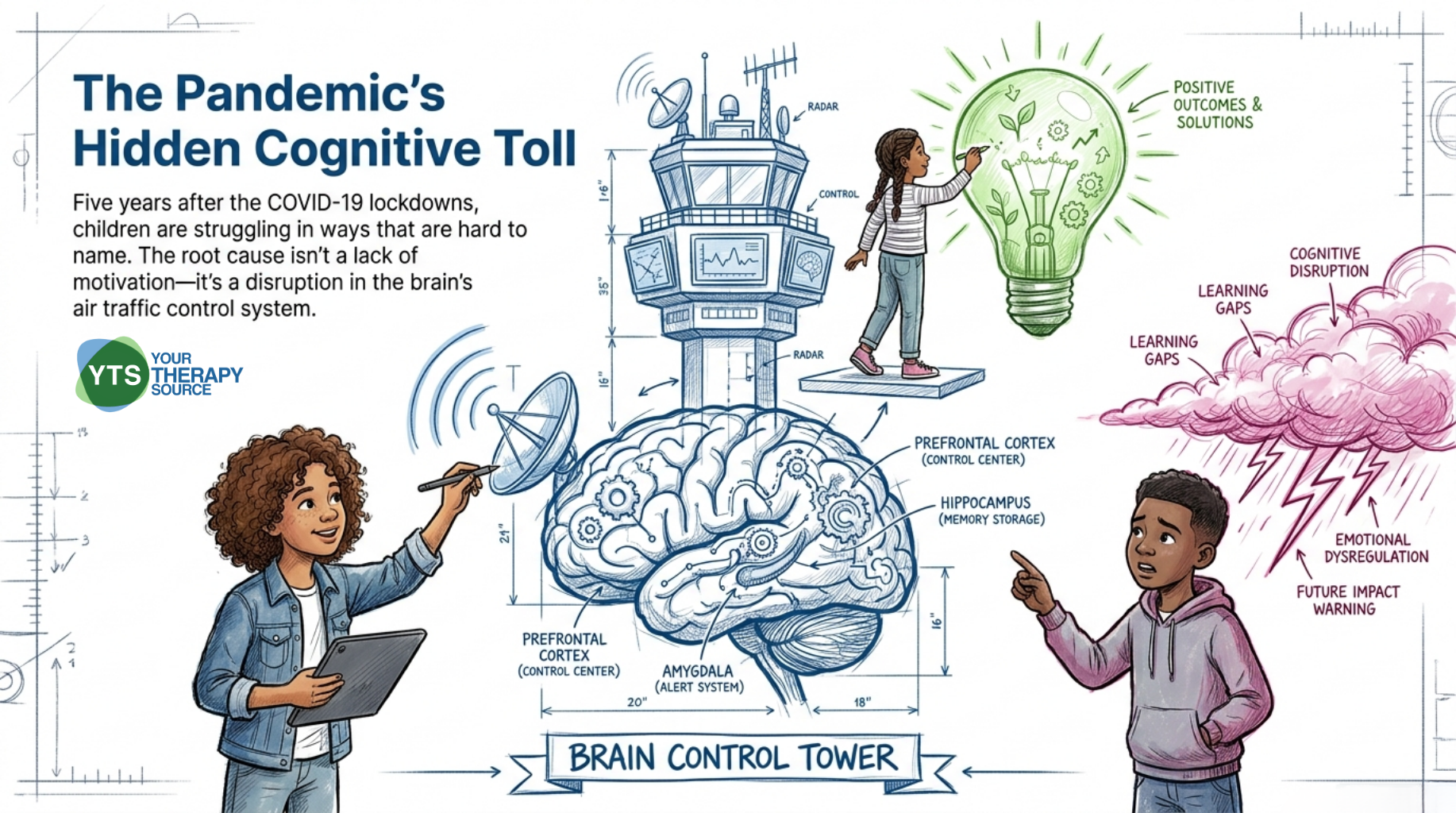
Five years after COVID-19 turned daily life upside down, many children are still struggling in ways that are hard to name. Teachers see kids who cannot stay on task. OTs work with children who fall apart during transitions. SLPs support students who cannot organize their thoughts well enough to communicate them. Counselors meet with kids who are emotionally dysregulated and do not know why. A growing body of research points to one underlying factor connecting all of these struggles: executive function. What does the research say about post pandemic executive function skills?
What Is Executive Function?
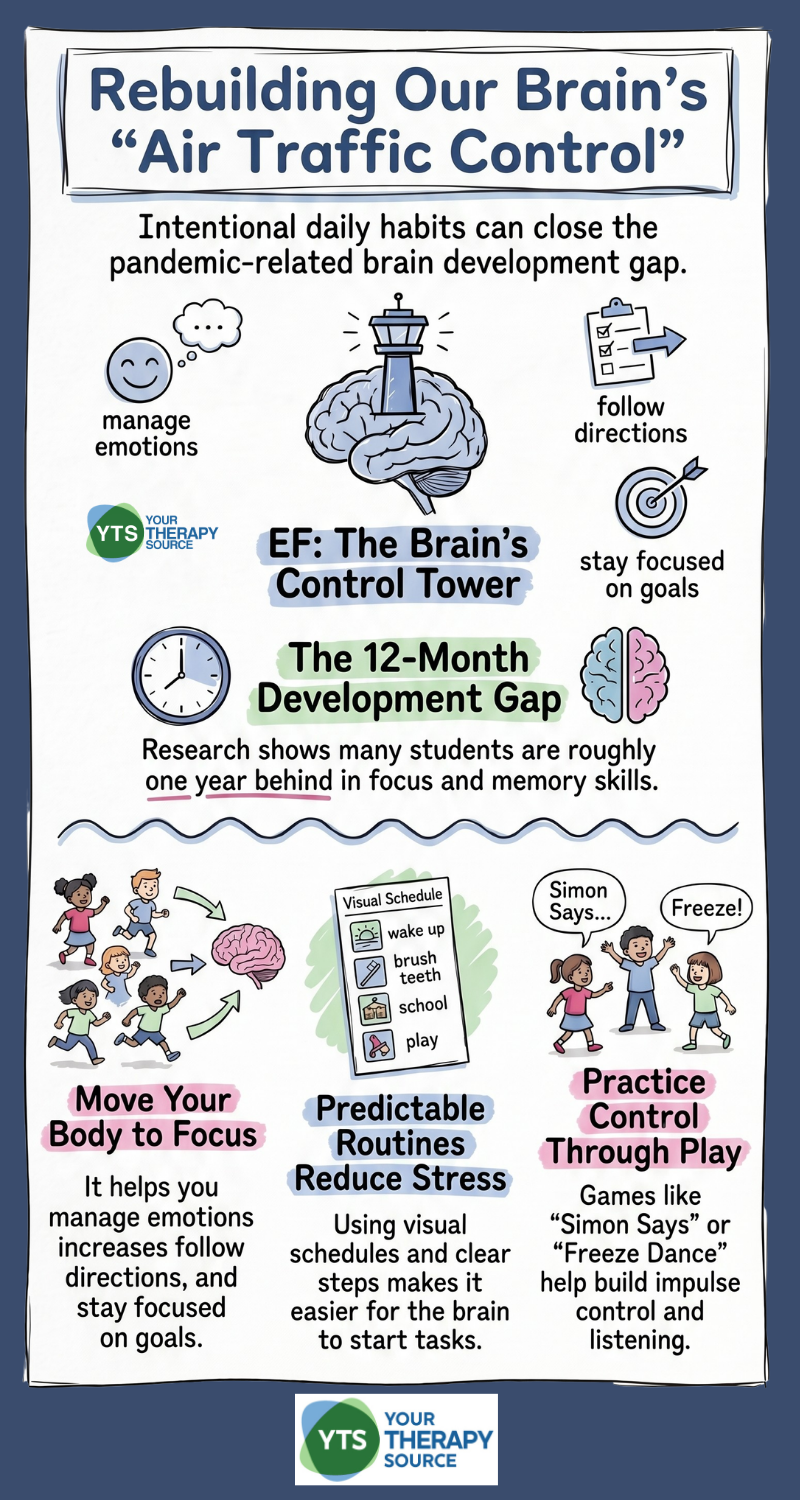
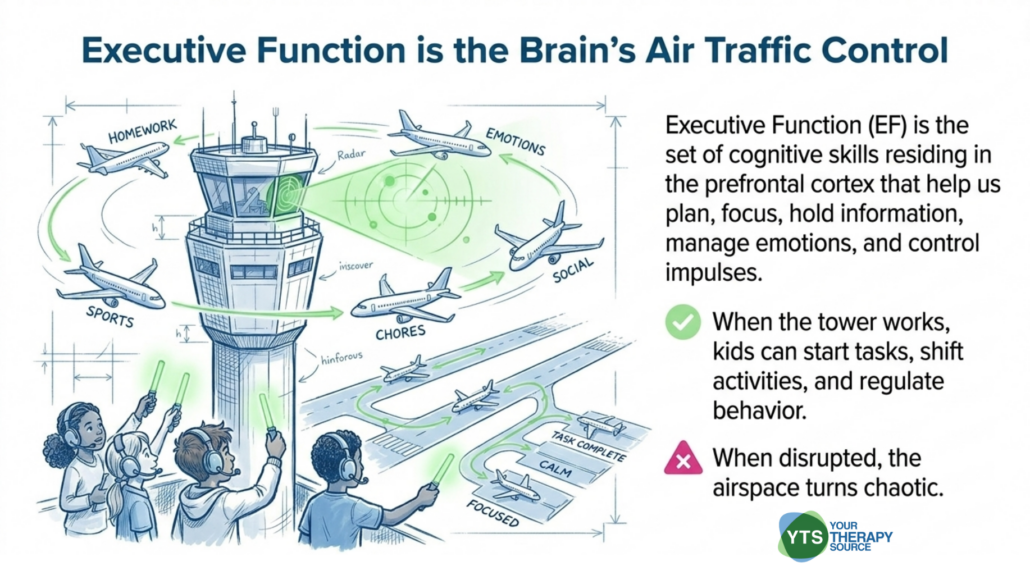
Executive function (EF) is the set of cognitive skills that help us plan, focus, hold information in mind, manage emotions, and control impulses. Think of it as the brain’s air traffic control system. When it works well, kids can start tasks, shift between activities, regulate their behavior, and keep track of what they are doing.
These skills develop rapidly in early childhood and continue maturing through young adulthood. The prefrontal cortex, the brain region most closely associated with executive function, continues developing well into early adulthood. This is why children and adolescents need so much support from the adults around them in developing these skills. Strong executive function is associated with better academic outcomes, emotional wellbeing, and healthier relationships.
Students can develop many EF skills with the right support. When they work on these skills, they are working toward better academic performance and better experiences at home too. Special education teachers and occupational therapists are particularly well-positioned to target these skills. You can also get started with these free executive functioning activity worksheets.
Here is a closer look at the core executive function skills and what they look like in students:
Working Memory — The ability to take in new information and recall it when needed. Students rely on working memory to remember instructions, complete multi-step tasks, and hold information in mind while they work.
Self-Regulation — The ability to control emotions, behavior, and impulses in order to reach a goal or complete a task. This is the foundation for nearly everything else on this list.
Emotional Regulation — Recognizing and managing one’s own emotions in order to stay focused and engaged. Students who struggle here may appear dysregulated, avoidant, or explosive, especially during challenging tasks.
Mental Flexibility — The ability to switch between tasks quickly and adjust when presented with new information or unexpected changes. This is sometimes called cognitive flexibility or shifting.
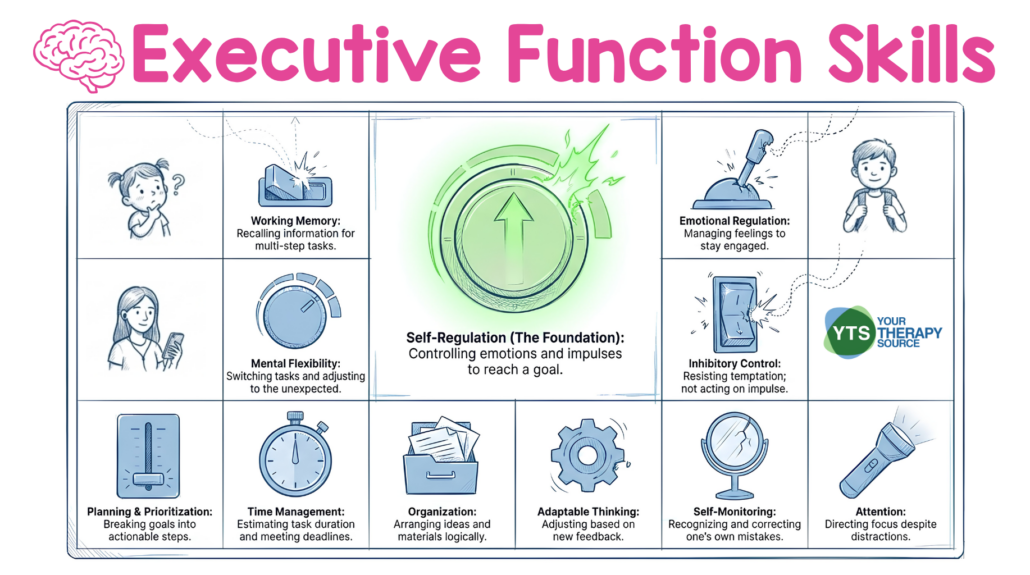
Inhibitory Control — Resisting temptation, staying focused, and not acting on impulse. Students who struggle with inhibitory control may blurt out answers, have difficulty waiting, or act before thinking.
Planning and Prioritization — Breaking a goal down into smaller steps, deciding what to do first, and developing a plan of action. This skill is essential for multi-step assignments and long-term projects.
Time Management — Estimating how long tasks will take, planning ahead, and meeting deadlines. Students with time management difficulties often underestimate how long things take or lose track of time entirely during tasks.
Organization — Arranging ideas, materials, and information in a logical way. Poor organization shows up as messy backpacks and desks, lost papers, and difficulty structuring written work.
Adaptable Thinking (Cognitive Flexibility) — Adjusting one’s thinking based on new information or feedback from teachers, adults, or peers. Students who struggle here may appear rigid or resistant to correction.
Self-Monitoring — Recognizing one’s own mistakes and adjusting behavior accordingly. This skill supports independence because students can catch and correct errors without relying on an adult to point them out.
For a complete overview of these skills and strategies to support them, see: List of Executive Functions
When any of these skills is disrupted during a critical window of development, the effects ripple across every area of a child’s life. That is exactly what the research is now showing us happened during the pandemic.
The Research: A Developmental Stall Across the Board
Lost Months for Elementary-Age Children
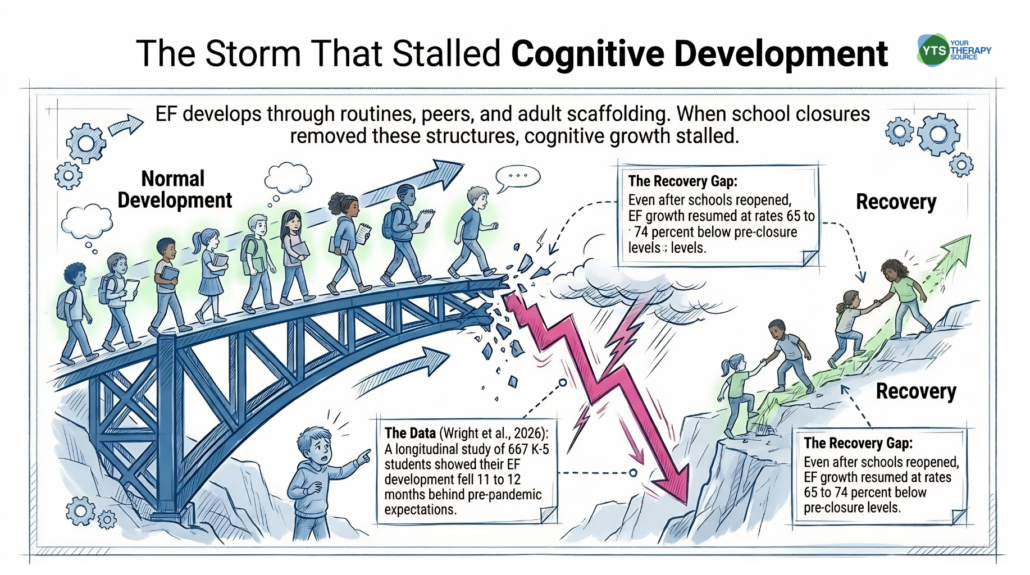
One of the most striking studies comes from a longitudinal cohort published in Developmental Psychology (Wright et al., 2026). Researchers followed 667 elementary-age children from kindergarten in 2018 all the way through fifth grade in 2023. They used direct, repeated assessments rather than relying solely on parent or teacher reports.
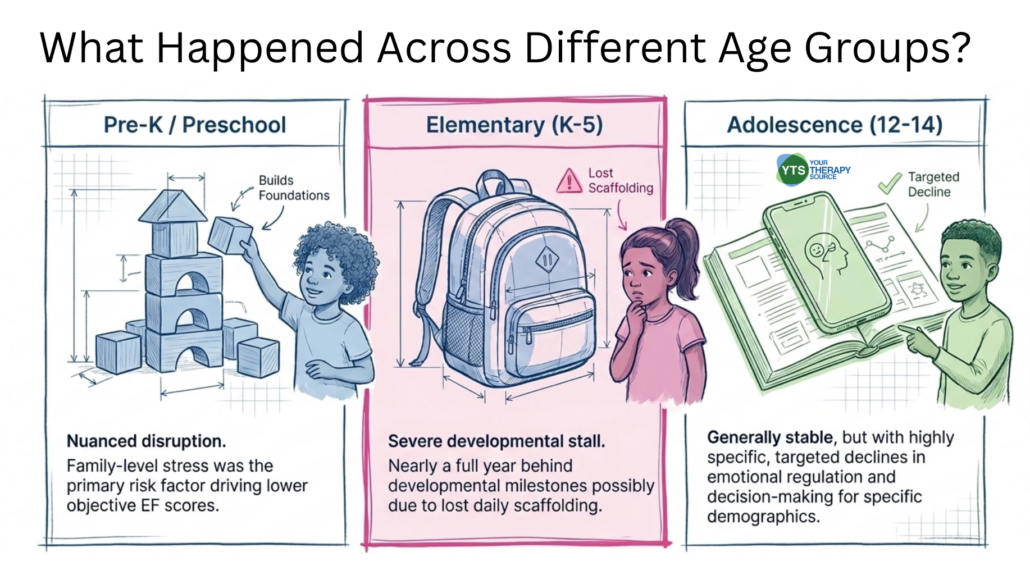
Their findings were stark. Researchers estimated that executive function development slowed substantially during school closures, with children in this cohort showing developmental trajectories roughly equivalent to 11 to 12 months behind pre-pandemic expectations. After schools reopened, EF growth resumed, but recovery rates in this cohort remained substantially slower than pre-pandemic developmental trends, with estimated growth rates 65 to 74 percent below pre-closure levels.
The structure, routines, peer interactions, and adult scaffolding that school provides are thought to support EF development. When those were removed, cognitive growth slowed alongside them, though the researchers note that other pandemic-related stressors likely contributed as well.
The Youngest Children: Preschoolers and Pre-K
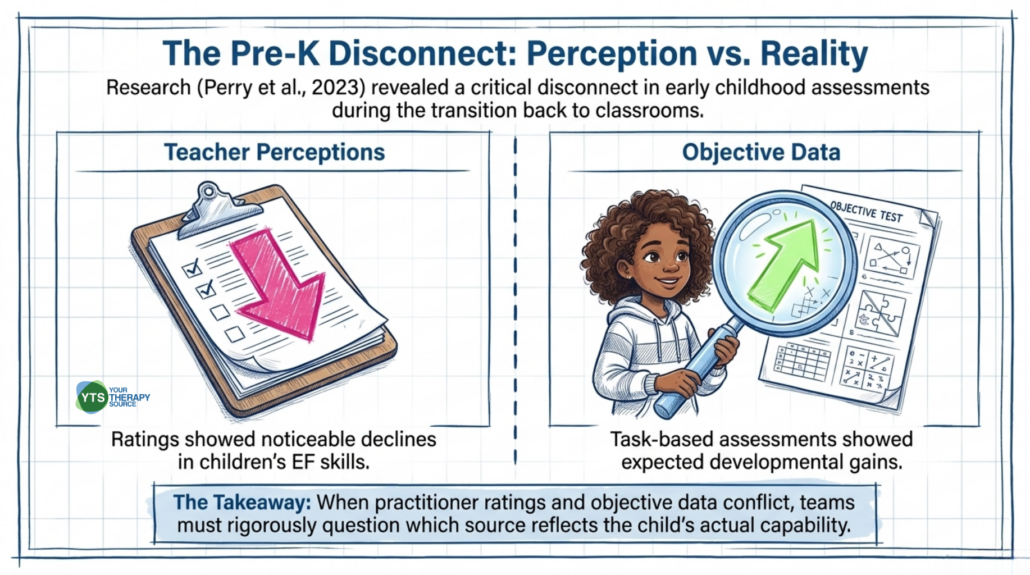
For the youngest children, the picture is more nuanced. Perry and colleagues (2023), publishing in Psychological Assessment, examined EF assessment across pre-pandemic and pandemic-era cohorts of preschool and pre-kindergarten children.
A key finding: teacher perceptions of children’s EF appeared to shift during the pandemic, even when objective task-based assessments told a different story. Teacher ratings showed declines for children transitioning into kindergarten right after the lockdowns, while direct assessments showed the expected developmental gains.
This matters for every practitioner on a school team. If teacher ratings and objective data are pointing in different directions, it is worth asking which source best reflects what a child can actually do. Families who experienced greater COVID-related disruption also tended to have children who showed lower EF on objective measures, reinforcing that family-level stress was a meaningful risk factor.
Adolescents: A Mixed Picture with One Clear Red Flag
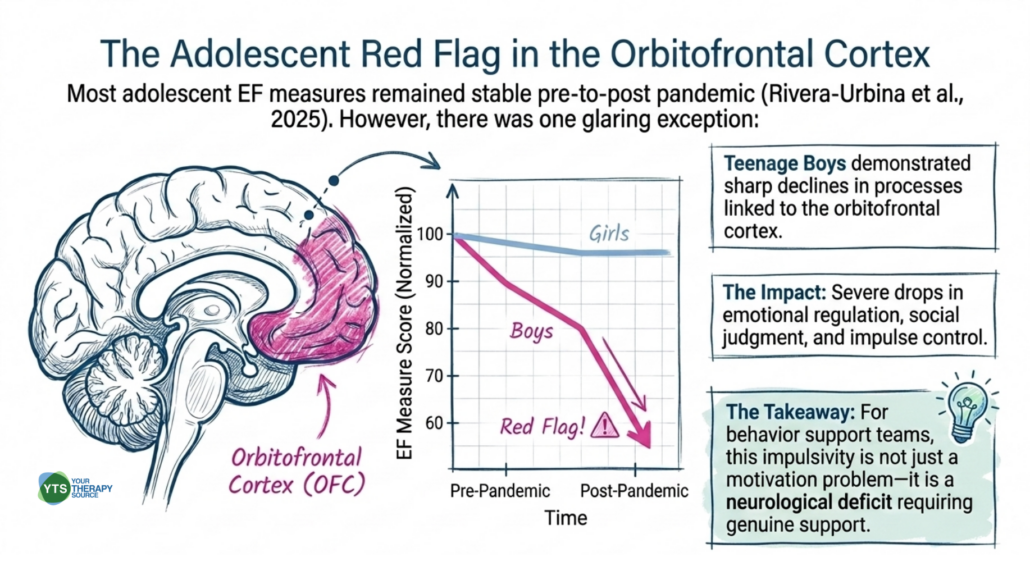
For teenagers, the news is somewhat more reassuring overall. Rivera-Urbina and colleagues (2025), publishing in Social Neuroscience, assessed adolescents at ages 12 and 14, before and after pandemic restrictions. Most EF measures showed no significant pre-to-post differences.
However, there was one important exception. Boys demonstrated declines in executive functioning measures associated with orbitofrontal processes, including emotional regulation and decision-making, while girls did not. Girls’ scores were essentially stable across both time points.
For counselors, behavior support teams, and anyone working with adolescent boys, this is a finding worth holding onto. Difficulties with emotional regulation, impulsivity, and social judgment in this group may not simply be a motivation problem. There may be a neurological dimension that calls for genuine support rather than redirection alone.
A Surprising Twist: When Strong EF Was Not Protective
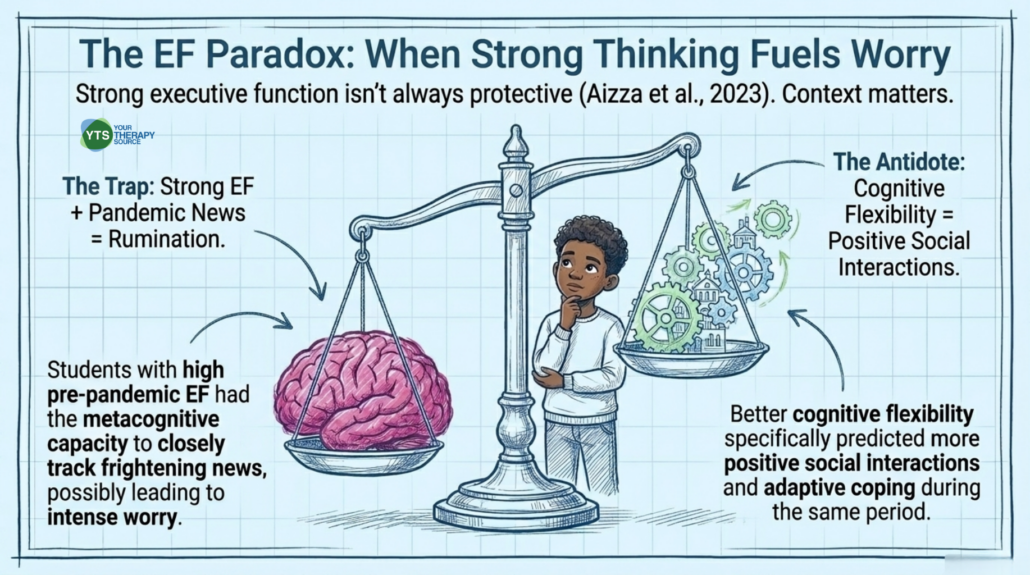
Research from the University of Texas at Austin (Aizza, Porter, and Church, 2023) added a counterintuitive finding. The study followed 149 youths whose EF had been measured before the pandemic, then tracked their emotional, cognitive, and social experiences during the first year of COVID-19.
Unexpectedly, better pre-pandemic EF predicted more emotional and cognitive difficulties mid-pandemic, not fewer. The researchers suggest that stronger executive function may have powered the metacognitive capacity to closely attend to rapidly changing, often frightening pandemic news, fueling worry and rumination rather than adaptive coping.
At the same time, better cognitive flexibility predicted more positive social interactions during the pandemic.
The takeaway: EF is not a simple “more is always better” skill. Context matters. Students with strong thinking skills may need just as much support around anxiety and emotional regulation as students who struggle cognitively.
What Practitioners Can Do: Strategies That Build Executive Function
The research is clear that recovery is possible, but it does not happen automatically. It requires intentional effort. This is where educators and related service providers are uniquely positioned to make a real difference, every single day.
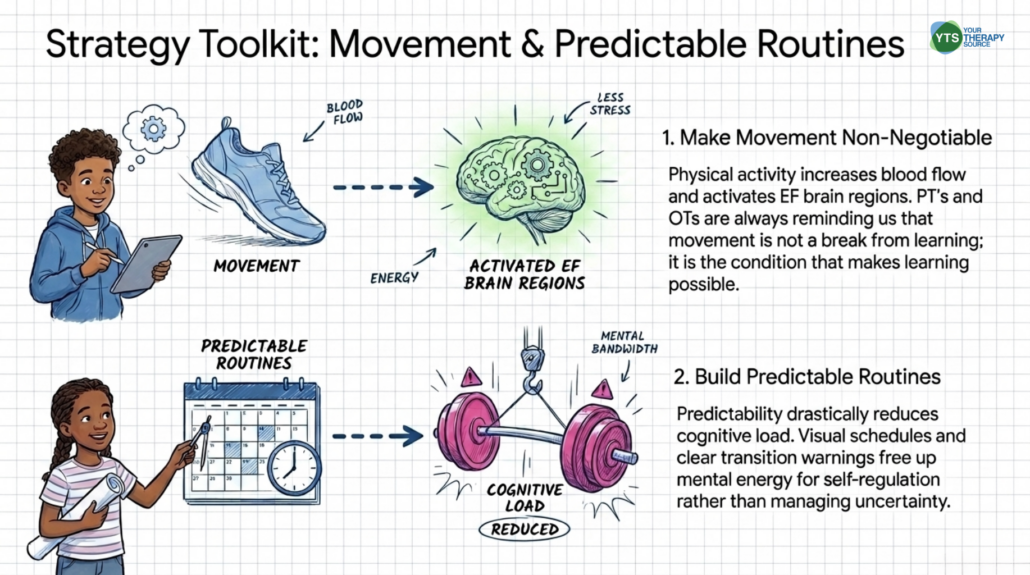
1. Make Movement a Non-Negotiable Part of the Day
Physical activity is one of the most well-supported strategies for building EF. Research suggests that physical activity may support attention, working memory, and inhibitory control, potentially through mechanisms including increased blood flow and activation of brain regions involved in executive functioning. For OTs, PTs, and classroom teachers, purposeful movement is not a reward or a break from learning. It may be one of the conditions that supports learning.
Learn more: Physical Activity and Executive Function in Children
2. Build Predictable Routines and Clear Transitions
Predictability reduces cognitive load. When children know what is coming next, they spend less mental energy managing uncertainty and have more available for learning and self-regulation. Visual schedules, consistent daily structures, and transition warnings are low-cost, high-impact supports that every classroom and therapy session can include.
This is especially important for children who experienced prolonged disruption to routines during the pandemic years.
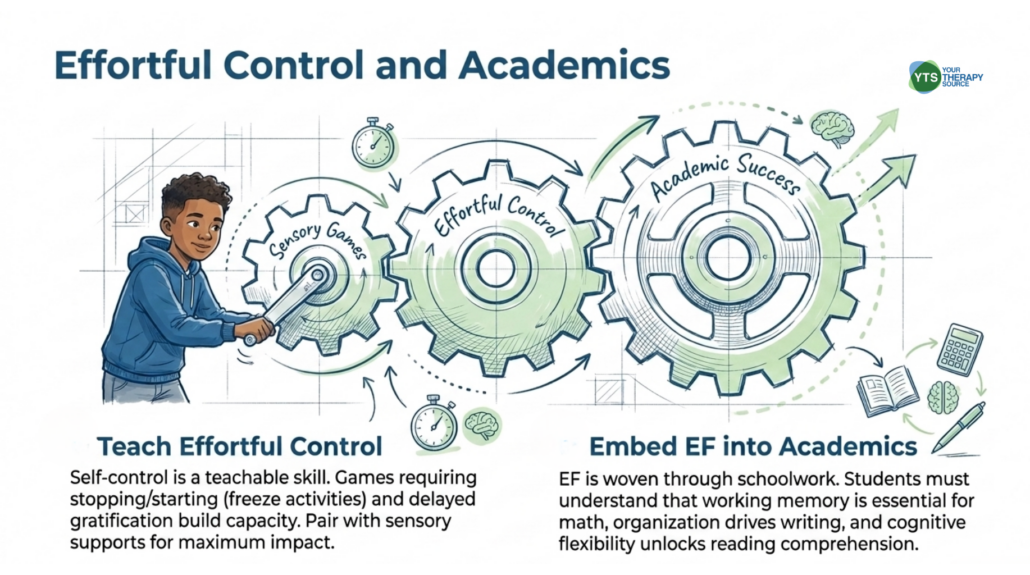
3. Teach and Practice Effortful Control
Effortful control is the ability to manage attention and behavior in service of a goal. It is a teachable skill. Games that require stopping and starting (Simon Says, freeze activities, musical chairs), waiting before acting, following multi-step instructions, and delaying gratification all build this capacity in developmentally appropriate ways.
For children with sensory processing differences, pairing effortful control activities with sensory supports can make these activities more accessible and more effective.
Read more: Effortful Control, Sensory Processing, and Executive Function
4. Connect EF Explicitly to Academic Work
Executive function is not separate from academic learning. It is woven through it. Working memory is essential for math. Planning and organization are required for writing. Cognitive flexibility supports reading comprehension. When students understand why they are practicing these skills and how those skills connect to their schoolwork, they are more likely to apply them.
Related reading: Math and Executive Function Skills
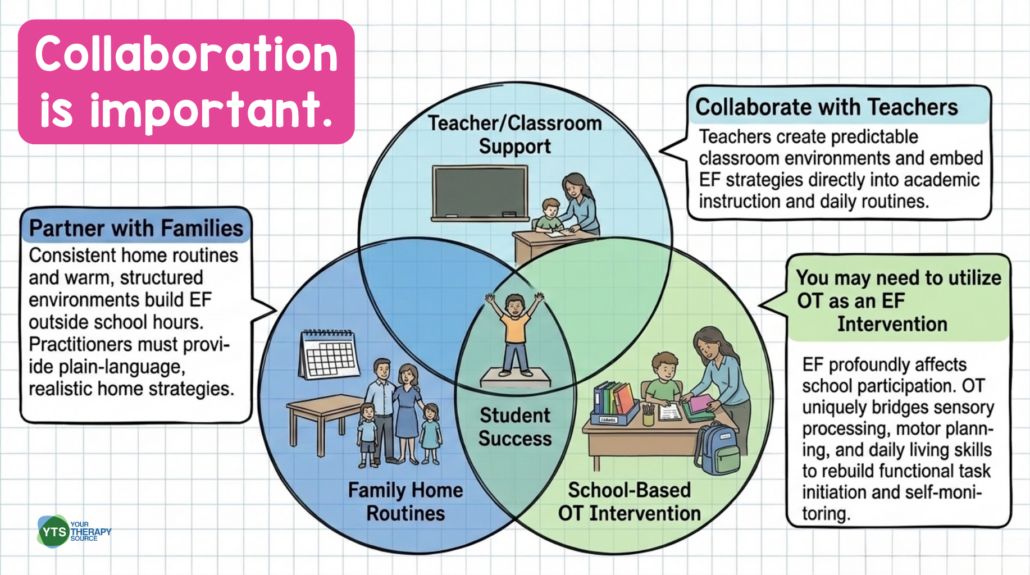
5. Partner with Families
Parents and caregivers are partners in EF development. Consistent home routines, warm but structured family environments, and activities that require planning and waiting all support EF outside of school hours. Counselors, school psychologists, and therapists can help families understand executive function in plain language and offer strategies that are realistic to use at home.
Research suggests that parenting behaviors and the home environment play an important role in EF development alongside school-based supports, and that these influences can have lasting effects into the early school years.
More on this: Executive Function and Parenting
6. Use OT as an EF Intervention
Occupational therapists are uniquely positioned to address EF because of how it intersects with sensory processing, motor planning, daily living skills, and classroom participation. Many school-based occupational therapists report that executive functioning significantly affects school participation, and EF-focused intervention is increasingly recognized as central to school-based OT practice.
EF-focused OT intervention can be embedded in meaningful, functional contexts including task initiation, organization of materials, time management during occupational tasks, and self-monitoring. These are not add-ons. They are central to what OT does.
See also: Executive Functioning and Occupational Therapy
Try This Now: Get an Executive Function Strategy in Under 2 Minutes
Knowing the research is one thing. Knowing exactly what to do for a specific student on Monday morning is another.
The YTS Action Toolkit now includes an Executive Function Strategy Generator. Describe what you are seeing with a student and get structured, ready-to-use strategies you can apply right away. No searching through books, no starting from scratch.
The toolkit is built for school-based professionals including OTs, PTs, SLPs, teachers, and counselors who need practical support fast. It also includes tools for behavior support, MTSS goal and intervention planning, and generating professional handouts for families and staff.
Explore the YTS Action Toolkit
The Bottom Line
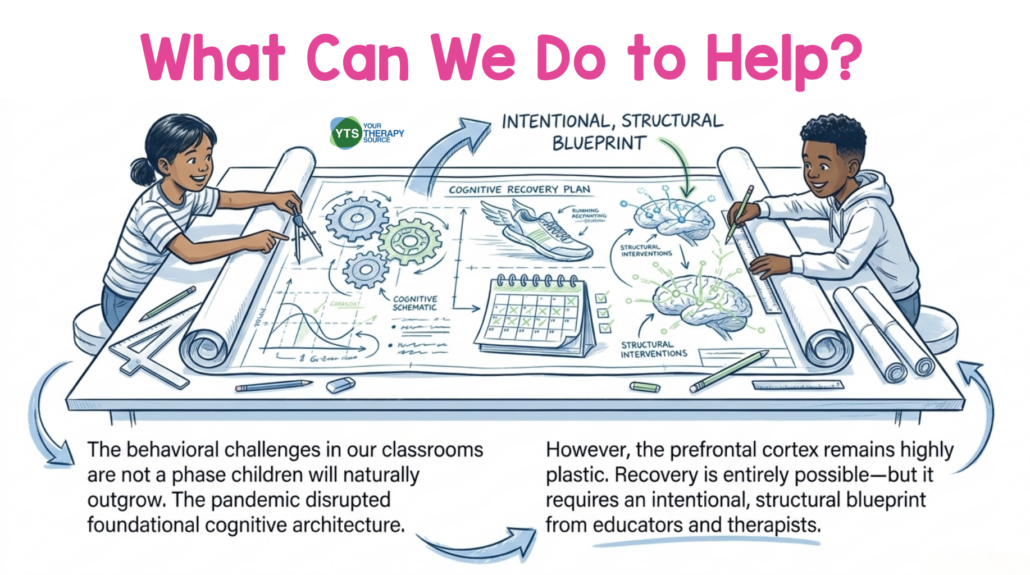
The behavioral and academic challenges showing up in classrooms and therapy rooms right now are not simply a phase children will grow out of. The research tells us the pandemic disrupted the development of foundational cognitive skills that children need to learn, regulate themselves, connect with others, and succeed in school and in life.
The good news is that executive function skills can improve with supportive environments, instruction, and practice. That means every educator, OT, PT, SLP, and counselor has a meaningful role to play in helping children recover what was lost. Recovery is possible. It just needs to be intentional.
References
- Wright, A., Martin, A., Pollak, S. D., Phillips, D. A., Stein, G. L., & Johnson, A. D. (2026). COVID-19-induced educational disruptions and children’s executive functioning: A longitudinal cohort study. Developmental Psychology, 62(4), 830-847. https://doi.org/10.1037/dev0002113
- Perry, K. J., Perhamus, G. R., Lent, M. C., Murray-Close, D., & Ostrov, J. M. (2023). The COVID-19 pandemic and measurement of preschoolers’ executive functions. Psychological Assessment, 35(11), 986-999. https://doi.org/10.1037/pas0001250
- Rivera-Urbina, G. N., Orozco-Roldan, M. F., & Molero-Chamizo, A. (2025). Executive functions in adolescence: A longitudinal study comparing evaluations before and after the COVID-19 pandemic. Social Neuroscience, 20(1), 16-24. https://doi.org/10.1080/17470919.2025.2457954
- Aizza, A., Porter, B. M., & Church, J. A. (2023). Youth pre-pandemic executive function relates to year one COVID-19 difficulties. Frontiers in Psychology, 14. https://doi.org/10.3389/fpsyg.2023.1033282