
Thermosensory Signals and Self Regulation
Understanding how thermosensory signals and self regulation interact can support educators and therapists in thinking more broadly about the sensory context of learning. Thermosensory signals include skin temperature and the perception of warmth or cold. In adult research, these signals have been linked not only to physical regulation but also to how individuals experience their bodies as their own, a concept known as body ownership. While this research does not examine children, it offers an interesting perspective when considered alongside existing knowledge that sensory input plays a role in motor performance, behavior, and participation.
WHAT THE RESEARCH EXAMINED
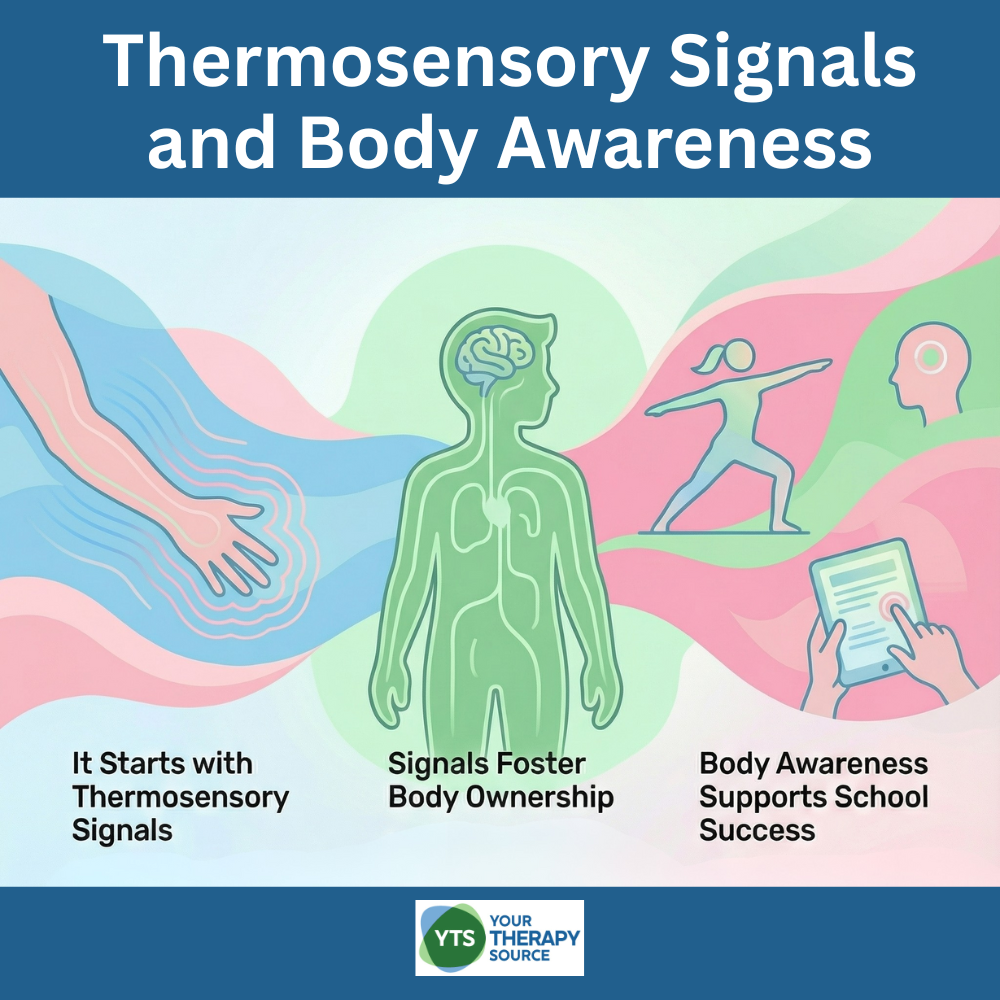
The research reviewed the role of thermosensory signals in bodily self-awareness, with a specific focus on body ownership, defined as the feeling that one’s body or body parts belong to oneself. The authors examined how warm and cold signals are detected by the skin, how this information is processed in the brain, and how thermosensory input interacts with other sensory systems.
The review synthesized findings from experimental studies using multisensory body ownership paradigms, along with evidence from neurological and neuropsychiatric populations in which body ownership is disrupted. All studies included in the review were conducted with adult participants, either neurologically typical adults or adults with identified brain injury or clinical conditions. Methods included behavioral tasks, multisensory illusion paradigms, skin temperature measurement, and neuroimaging or lesion mapping approaches .
KEY FINDINGS FROM THE RESEARCH
The reviewed studies, conducted with adult participants, suggest the following:
- Thermosensory signals such as skin temperature and the perception of warmth or cold are associated with how adults experience body ownership
- In some experimental contexts, changes in perceived body ownership occurred alongside measurable changes in skin temperature
- Thermosensory information is processed in brain regions involved in interoception and multisensory integration, which support a coherent sense of the body
- In adult clinical populations, altered thermosensory processing was associated with disrupted body ownership
These findings describe relationships observed in adults and are correlational in nature. They do not establish causation and do not indicate that the same mechanisms operate in children.
WHY THESE FINDINGS MATTER FOR SCHOOL-BASED PRACTICE
Although this research does not include children and should not be generalized to them, it may be useful as a conceptual lens for school-based practice:
- Sensory input is widely understood to support motor coordination, attention, regulation, and participation across development
- Thermosensory input represents one component of the broader sensory environment in which learning occurs
- Environmental and bodily sensory experiences may influence comfort, readiness, and engagement without directly determining behavior or learning outcomes
Rather than suggesting that temperature shapes behavior or learning in children, these findings encourage reflection on learning as a context-dependent experience influenced by multiple sensory factors.
Sensory Strategies Workbook
Support a balanced sensory lifestyle today!
IMPLICATIONS FOR SCHOOL STAFF
For teachers and school staff, this research supports a strengths-based and neuroaffirming perspective on student participation:
- Differences in attention, movement, or engagement can reflect how a student is experiencing their body within a specific environment
- Changes in participation may relate to context or routine rather than effort, motivation, or compliance
- Transitions between settings or activities may influence engagement differently for different learners
These observations are not indicators of sensory deficits or regulation problems. Instead, they can provide useful information that supports collaboration with occupational therapists, physical therapists, and other school-based professionals when appropriate.
PRACTICAL STRATEGIES OR CONSIDERATIONS
This research does not suggest that teachers should intervene around temperature or attempt to manage sensory systems. From a supportive and neuroaffirming perspective, it encourages awareness and reflection rather than action. Considerations may include:
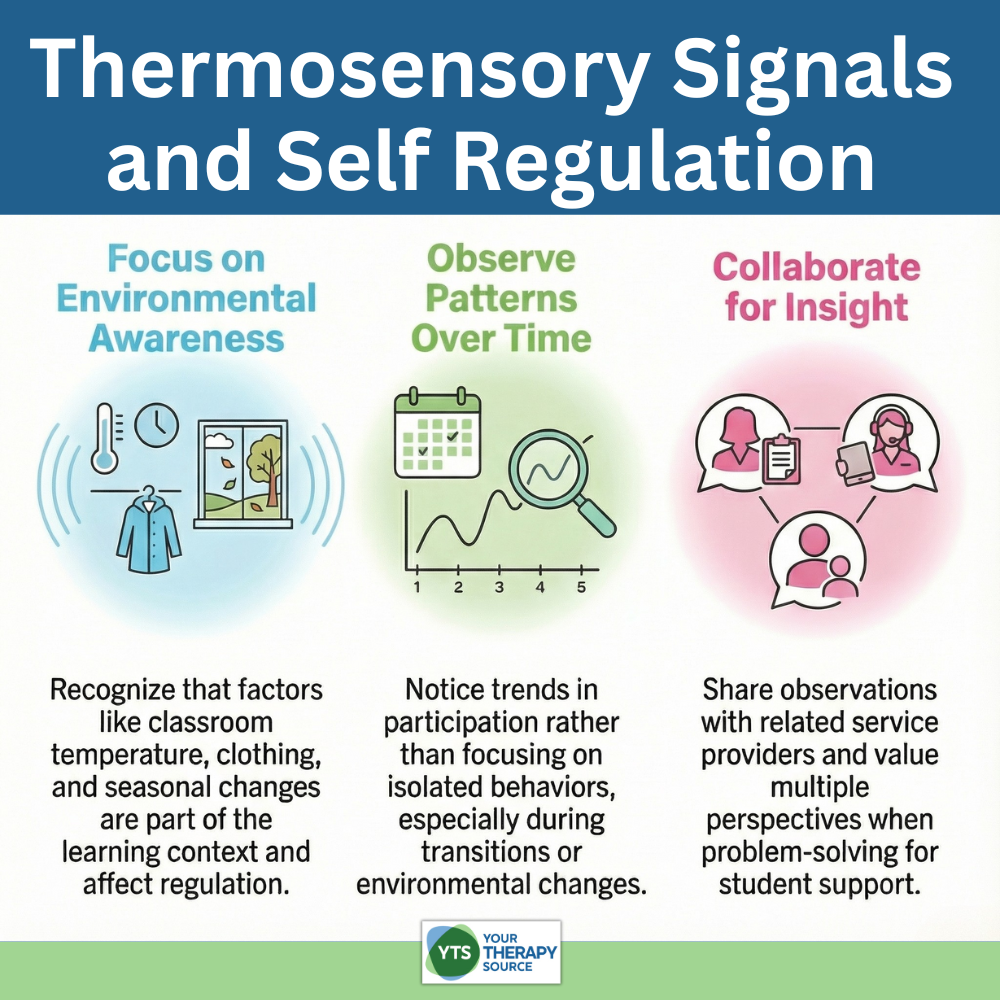
- Environmental awareness related to classroom temperature, seasonal changes, and clothing layers as part of the learning context
- Observation of participation patterns over time rather than focusing on isolated behaviors
- Collaboration with related service providers to share observations and support access and participation
These considerations emphasize understanding and inclusion rather than correction or normalization.
RELATED INFORMATION
Educators interested in how internal and environmental sensory input relates to regulation and participation may find the following resources helpful:
- Air Pressure and Sensory Processing
- Interoception and Emotional Regulation
- Interoception Awareness: Understanding Body Language to Support Self-Regulation
CONCLUSION
Adult research on thermosensory signals and body ownership highlights the complex ways sensory input contributes to bodily self-awareness. While these findings cannot be assumed to apply to children, they are interesting to consider alongside existing knowledge that sensory experiences influence participation, movement, and engagement.
For educators and school-based professionals, this research reinforces the value of viewing learning and behavior through a context-aware, strengths-based lens. By recognizing sensory experiences as part of the environment in which learning occurs, staff can support participation and collaboration in ways that are respectful, empowering, and responsive to individual differences.
REFERENCES
Salvato, G., & Crucianelli, L. (2025). Shaping bodily self-awareness through thermosensory signals. Trends in Cognitive Sciences. https://doi.org/10.1016/j.tics.2025.11.008

