HOW TO QUIET A BUSY MIND IN THE CLASSROOM
A busy mind can get in the way of learning and teaching. It often shows up when the brain has been working overtime. The goal is not silence, but creating enough calm for the brain to focus and stay connected. In school settings, teachers and related service providers are constantly processing information such as student needs, transitions, academic demands, behaviors, and emotional cues. At the same time, many students are navigating that same mental load with developing nervous systems and fewer regulation tools.
Brain noise is not a sign that something is necessarily wrong. It is a nervous system response to environments that demand sustained attention, flexibility, and regulation.
WHAT IS BRAIN NOISE?
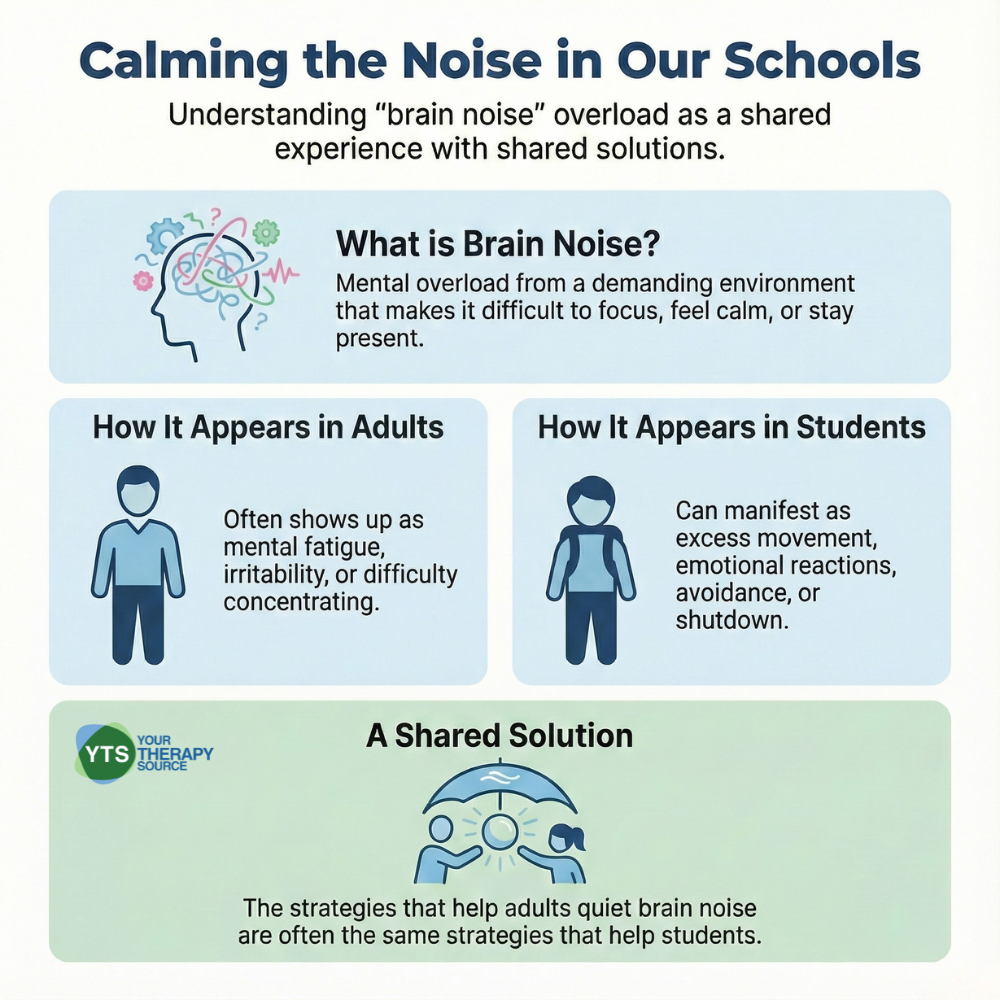
Brain noise refers to mental overload that makes it difficult to focus, feel calm, or stay present. It may include racing thoughts, constant internal dialogue, replaying interactions, or feeling mentally “on” even during quiet moments.
In classrooms, brain noise builds as the brain continuously:
- Anticipates what comes next
- Manages multiple demands at once
- Responds to emotional and behavioral cues
- Holds information without time to offload it
Adults may experience brain noise as mental fatigue, irritability, or difficulty concentrating.
Students may show brain noise through movement, emotional reactions, avoidance, or shutdown.
WHY A BUSY MIND IS SO COMMON IN SCHOOLS
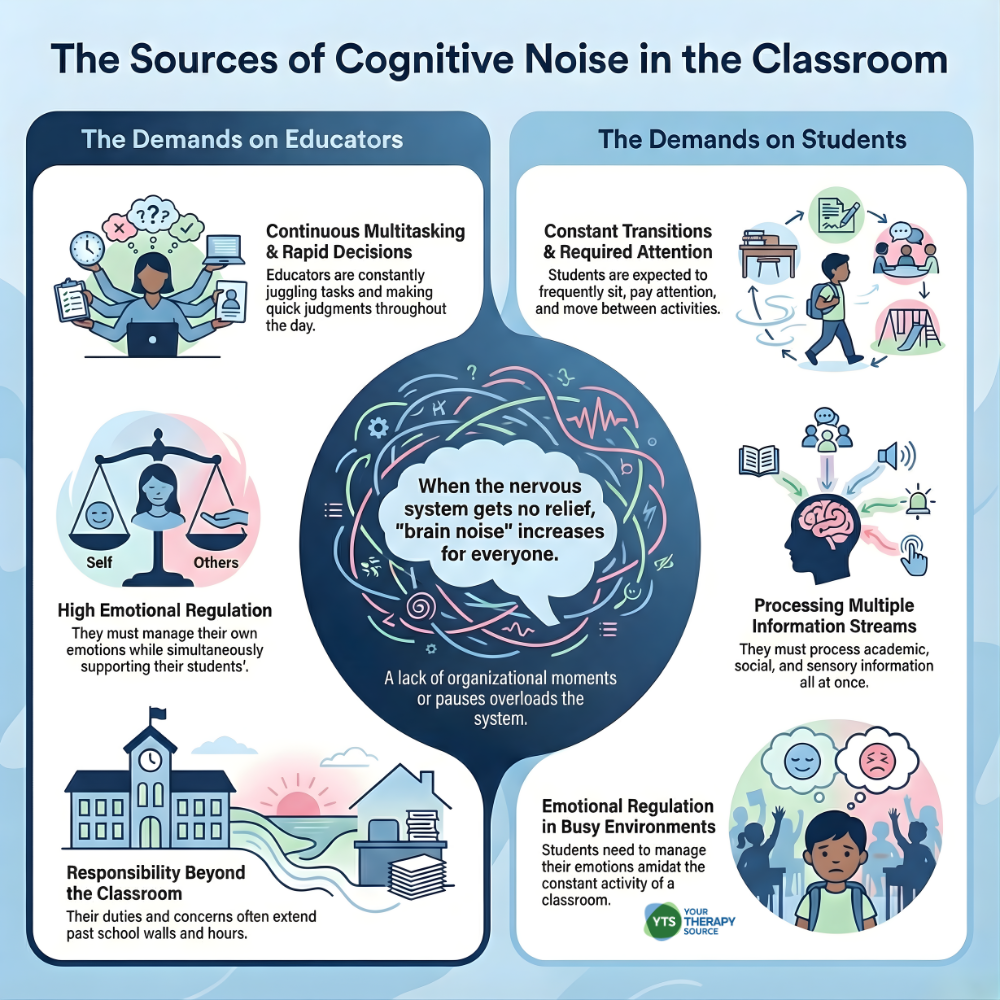
School environments are fast-paced and sensory-rich, with very few true pauses built into the day.
Educators and related service providers are expected to:
- Multitask continuously
- Make rapid decisions
- Regulate their own emotions while supporting others
- Carry responsibility beyond the classroom
Students are expected to:
- Sit, attend, and transition frequently
- Process academic, social, and sensory information
- Regulate emotions in busy environments
When the nervous system does not get moments of organization or relief, brain noise increases for everyone.
BRAIN NOISE VS. SENSORY OVERLOAD: WHY THE DIFFERENCE MATTERS
Brain noise and sensory overload are related, but they are not the same. Sensory overload occurs when too much sensory input is coming into the nervous system at once. Brain noise occurs when the brain is working overtime to process information, even if the environment itself is relatively calm.
Sensory overload is about input. Brain noise is about processing.
Understanding the difference helps educators choose supports that match what the nervous system needs in the moment.
A SHARED LENS: STRATEGIES THAT SUPPORT ADULTS AND STUDENTS
Many of the most effective classroom supports work across ages because they support the nervous system itself. Regulation is not something adults teach and students do. It is something that happens together.
REDUCE WHAT THE BRAIN IS MANAGING
- Lower background noise when possible
- Reduce visual clutter on desks and walls
- Keep routines predictable
These supports reduce mental scanning and free up attention for learning and connection.
MOVE INFORMATION OUT OF THE MIND
- Write down tasks, reminders, or worries
- Use visual schedules for adults and students
- Keep directions short and consistent
Externalizing information reduces the mental load of holding everything in working memory.
USE MOVEMENT TO RESET ATTENTION
- Take brief walking breaks
- Stretch between activities
- Add predictable movement before demanding tasks
Movement helps regulate arousal and prepares the brain for focus.
GROUND THE BODY TO SUPPORT THE BRAIN
- Do wall push-ups
- Press hands firmly on the desk or chair
- Use firm self-hugs
These actions provide organizing body input that helps the nervous system settle, reducing mental noise and overwhelm.
SUPPORT FOCUS THROUGH SOUND
- Use steady background sounds or nature audio
- Build in intentional quiet before transitions
- Reduce overlapping voices when possible
Consistent auditory input can help both adults and students stay regulated.

SLOW THE PACE ON PURPOSE
- Pause before giving instructions
- Allow extra processing time
- Move and speak more slowly during busy moments
Slowing the pace supports comprehension and regulation for everyone.
BUILD CALM INTO THE SCHOOL DAY
- Start and end the day with consistent routines
- Take regular movement and hydration breaks
- Spend time outdoors when possible
Predictable rhythms help the nervous system relax and stay present.
USE CONNECTION AS REGULATION
- Sit near someone calm
- Use simple, reassuring language
- Respond consistently and predictably
Calm, connected adults help students feel safe and regulated.
QUIETING A BUSY MIND SUPPORTS CO-REGULATION
Students often borrow calm from the adults around them. When educators and therapists use regulation strategies themselves, they naturally model skills students are still developing.
Calm transitions, slower pacing, and regulated responses create classrooms where learning is more accessible and adults feel more sustainable in their roles.
Quieting brain noise is not about eliminating thoughts or creating silence. It is about supporting the nervous system so it does not have to stay on high alert all day.
When adults and students are supported together, focus improves, stress decreases, and classrooms function more smoothly.