
Interoception in the Classroom: How Internal Body Awareness Shapes Regulation and Participation
In classrooms, students are expected to regulate emotions, maintain attention, transition between activities, and participate socially and academically throughout the day. When these skills break down, challenges are often addressed through behavioral supports, academic accommodations, or environmental modifications. However, an underlying system frequently influences all of these areas. Learn more about how interoception in the classroom plays a role throughout the school day.
Interoception refers to the nervous system’s ability to sense and interpret internal body signals. Interoceptive processing plays a central role in self-regulation and participation, yet it is often overlooked because it is internal and not directly observable. When interoceptive processing is inefficient, inconsistent, or inaccurate, students may struggle to engage, regulate, or respond predictably in the classroom even when external supports are in place.
What Is Interoception?
Interoception is sometimes described as the body’s internal sensory system. It allows individuals to recognize what is happening inside their body and to make meaning of those sensations.
Interoceptive awareness helps students answer questions such as:
- Am I hungry or thirsty?
- Do I need to use the bathroom?
- Am I tired or energized?
- Is my body calm, tense, or overwhelmed?
- What does this feeling in my body mean?
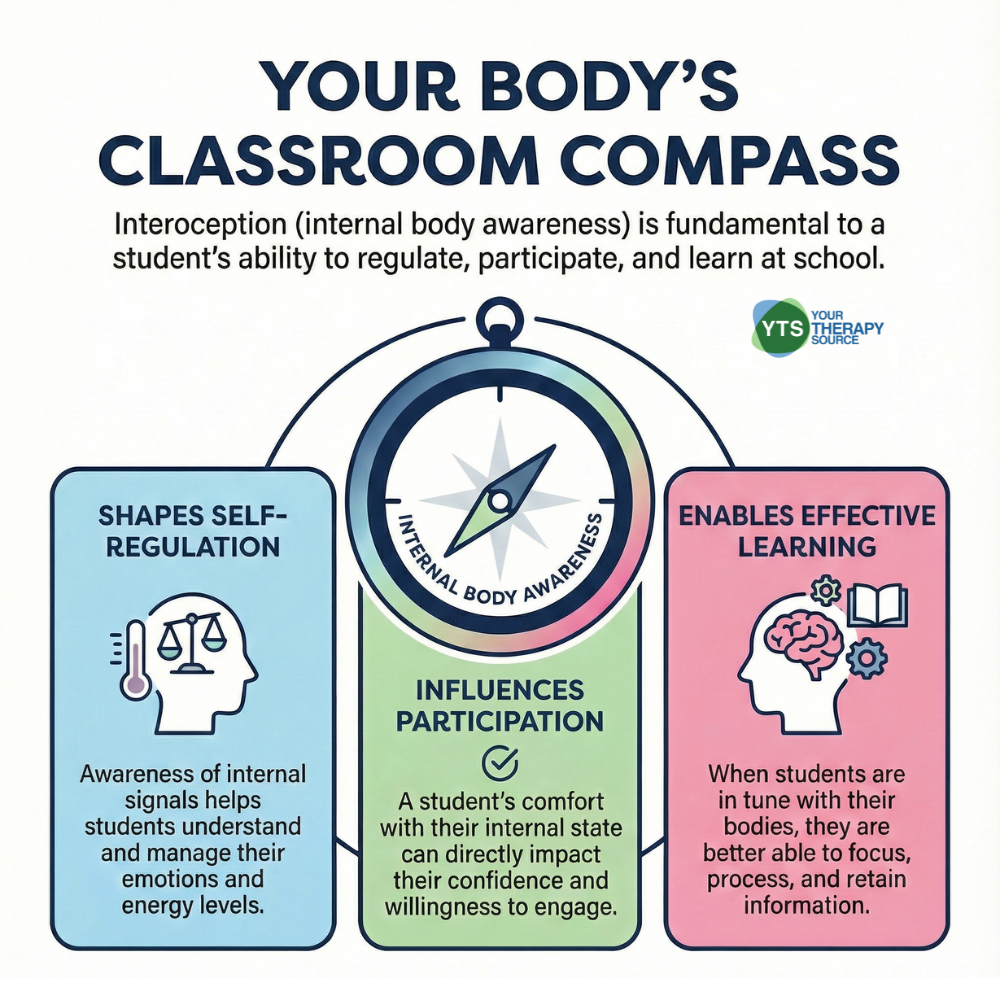
These internal signals are processed in the brain and integrated with emotional, attentional, and executive systems. This integration allows students to recognize internal states and respond in ways that support learning, behavior, and participation.
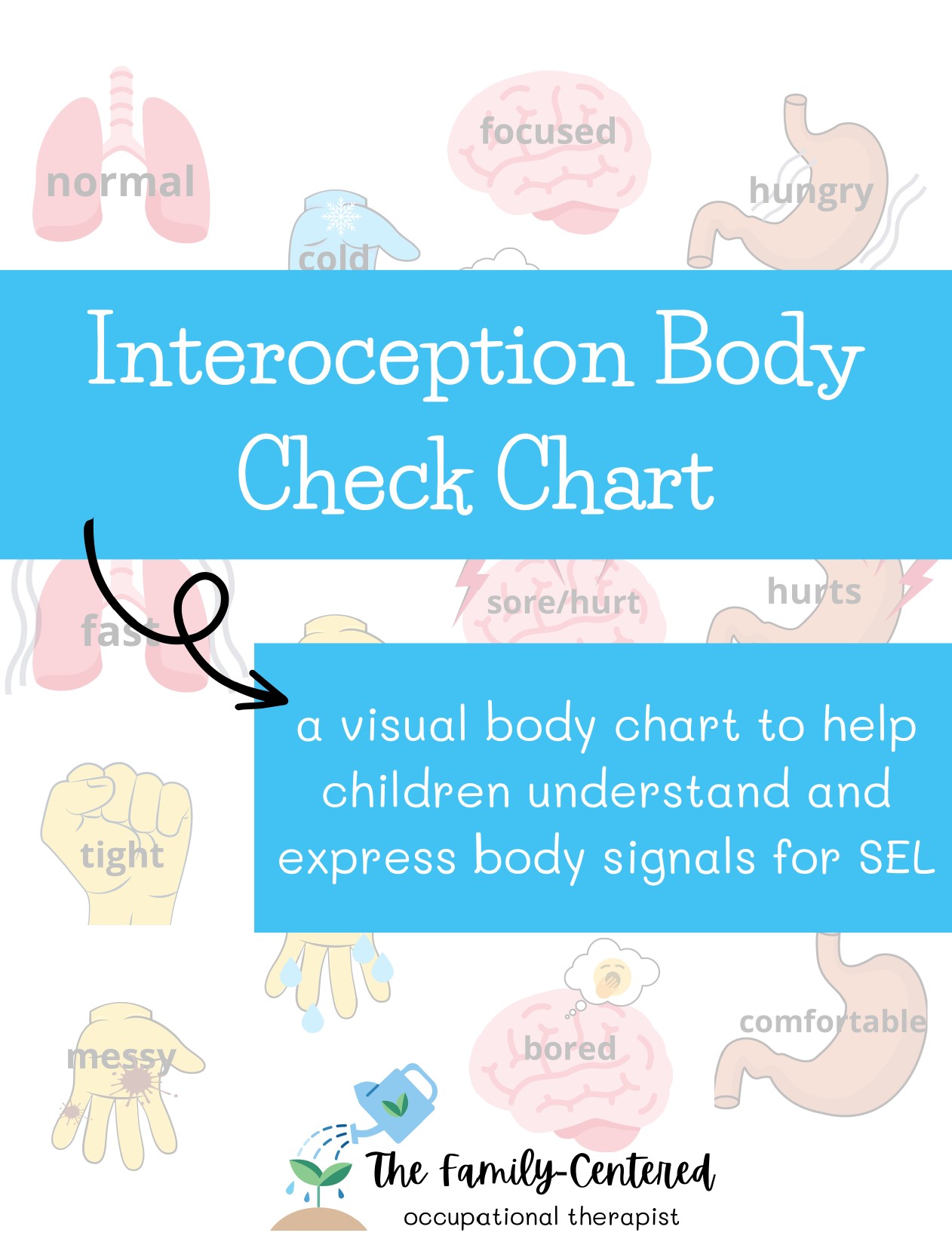
Interoception Body Chart Check
Help your students understand and express body signals.
Interoception and Internal Brain Noise
The brain is constantly sorting information from both the environment and the body. When internal body signals are clear and accurately interpreted, the brain can allocate attention and energy toward learning tasks. When those signals are unclear, intense, or misinterpreted, they contribute to internal brain noise.
Internal brain noise occurs when the nervous system is busy processing unresolved body signals. This may include unnoticed hunger, escalating muscle tension, shallow breathing, rising emotional arousal, or fatigue. Even when students cannot name these sensations, the brain is still responding to them.
In the classroom, internal brain noise can reduce cognitive efficiency and make it harder for students to:
- Sustain attention
- Inhibit impulses
- Transition between activities
- Manage emotional responses
- Engage socially
From the outside, this may look like inattention, behavioral challenges, or lack of motivation. From a nervous system perspective, the brain may be overloaded by internal signals that have not yet been recognized or regulated.
Self Regulation Workbook – Learn About Yourself
Empowers kids to understand themselves and develop self-regulation skills!
Interoception and Self-Regulation
Emotional Regulation
Emotions are experienced in the body before they are identified cognitively. Changes in heart rate, breathing, muscle tension, or temperature often occur before a student can label feelings such as anxiety, frustration, excitement, or overwhelm.
Students with stronger interoceptive awareness are more likely to notice these early physical signals and use strategies before emotions escalate. Students with limited interoceptive awareness may not recognize these cues until their nervous system is already highly activated, making regulation much more difficult.
This helps explain why some students appear to escalate “suddenly.” The escalation has often been building internally, but the student lacked awareness of the early warning signs.
Energy and Arousal Regulation
Interoception also supports awareness of energy levels. Students rely on internal cues to know when they are becoming fatigued, overstimulated, or under-alert.
When these cues are missed or misinterpreted:
- Some students push through until they abruptly shut down
- Others become restless or impulsive without understanding why
- Sustained work and transitions become more challenging
Energy regulation is often addressed behaviorally, but interoceptive awareness is a key underlying factor.
Interoception and Classroom Participation
Attention and Learning Readiness
Attention requires the brain to filter information and focus on what is most relevant. When internal needs are unmet or unidentified, they compete with instructional demands.
A student who is internally uncomfortable may struggle to attend even during well-structured lessons. The issue is not a lack of skill or motivation, but a nervous system that cannot quiet internal signals enough to engage fully.
Transitions and Flexibility
Transitions require shifts in both cognitive and physiological state. Students with limited interoceptive awareness may struggle to assess readiness for change, leading to resistance, anxiety, or dysregulation during transitions.
Supporting interoception helps students recognize what their body needs to move from one activity to another.
Social Participation
Understanding others’ emotions and responding appropriately relies partly on recognizing similar sensations in one’s own body. Students who struggle to interpret their own internal states may have difficulty with empathy, perspective-taking, and social problem-solving.
Variability in Interoceptive Awareness
Interoceptive processing exists along a continuum and may vary across different sensations.
Some students may:
- Miss internal signals until they become intense
- Experience internal sensations very strongly
- Misinterpret physical sensations, such as confusing excitement with anxiety
These differences can influence behavior, regulation, and participation without being immediately obvious to adults.
Supporting Interoception in School Settings
Supporting interoception does not require complex programming. Small, consistent practices embedded throughout the school day can strengthen awareness and reduce internal brain noise.
Helpful approaches include:
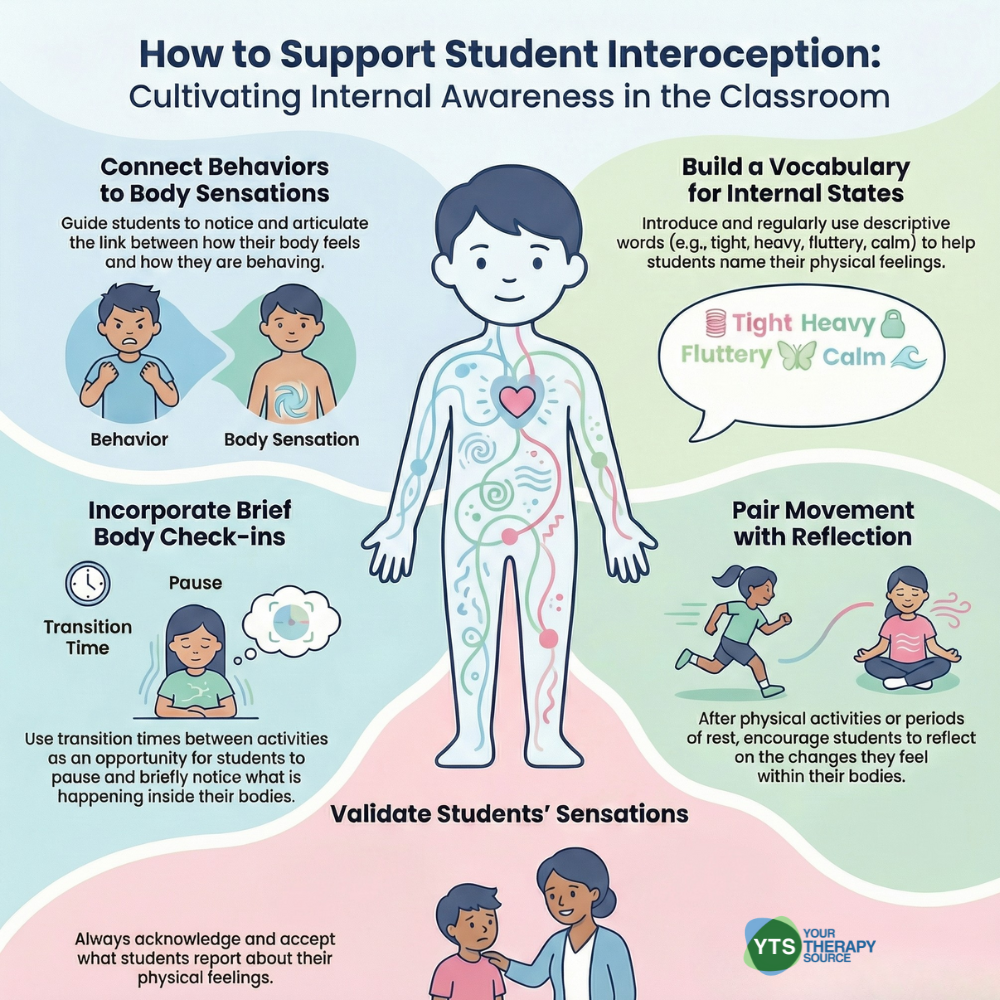
- Helping students connect behaviors to body sensations
- Building vocabulary for internal states such as tight, heavy, fluttery, calm, or tense
- Incorporating brief body check-ins during transitions
- Pairing movement and rest with reflection on body changes
- Validating students’ reports of physical sensations
These strategies support regulation by improving the brain’s ability to interpret internal signals earlier and more accurately.
Why Interoception Matters for School Professionals
For teachers and related service providers, interoception offers a nervous-system-based explanation for many common classroom challenges. Rather than viewing regulation and participation difficulties solely through a behavioral or academic lens, interoception highlights the role of internal awareness in supporting readiness, engagement, and self-management.
When interoceptive awareness is supported:
- Internal brain noise is reduced
- Self-regulation improves
- Participation increases across academic and social contexts
- Classrooms become more responsive and sustainable
Interoception is foundational to regulation, attention, and participation, yet it often goes unnoticed because it operates beneath the surface. When students struggle in the classroom, their bodies may be communicating important information that has not yet been translated into awareness.
By supporting interoceptive development, educators and therapists help students recognize internal signals, respond earlier, and engage more fully in learning. This internal awareness is not an add-on; it is a core component of how students function throughout the school day.
Understanding interoception allows school professionals to move beyond managing behaviors and toward supporting the systems that make regulation and participation possible.

