Self-Regulation and Emotional Regulation: What School Staff Need To Know
Self-regulation vs. emotional regulation is a distinction that comes up often in school-based practice, yet the two terms are frequently used as if they mean the same thing. For occupational therapists, physical therapists, school counselors, special educators, and other support staff working with students who have neurodevelopmental conditions such as autism, ADHD, or intellectual disability, understanding how these concepts differ can lead to more informed observations and more thoughtful classroom support.
A 2026 overview of reviews published in Nature Human Behaviour examined how self-regulation has been defined and measured across research on neurodevelopmental conditions. The study found that the field uses inconsistent terminology and that emotional regulation is just one part of a much broader picture.
WHAT THE RESEARCH EXAMINED
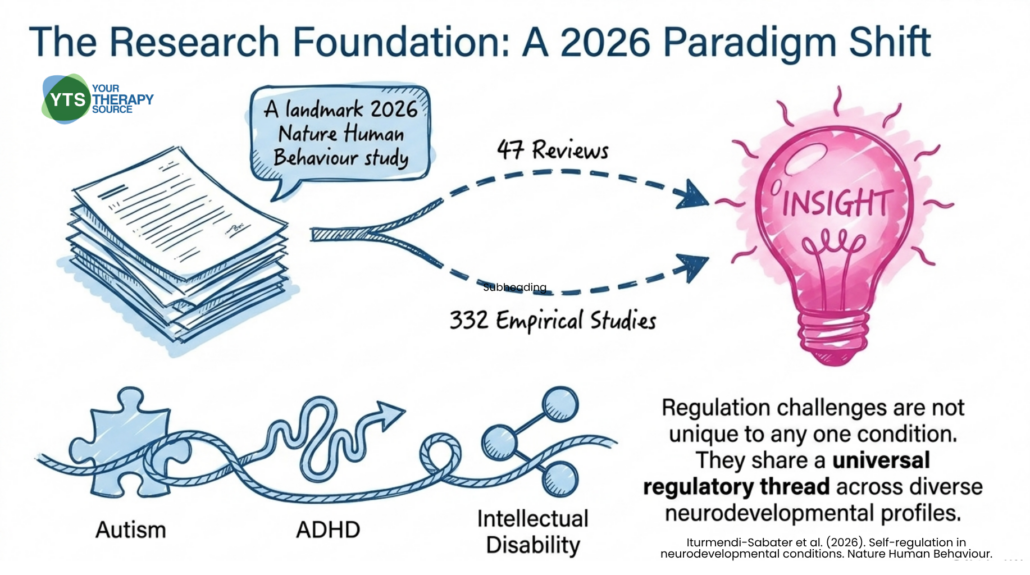
Researchers set out to review how self-regulation has been defined, modeled, and measured in studies involving children and adults with neurodevelopmental conditions. They focused specifically on autism, ADHD, and intellectual disability, searching five major databases from inception through September 2024 and ultimately including 47 reviews and drawing on 332 primary empirical studies across all three populations.
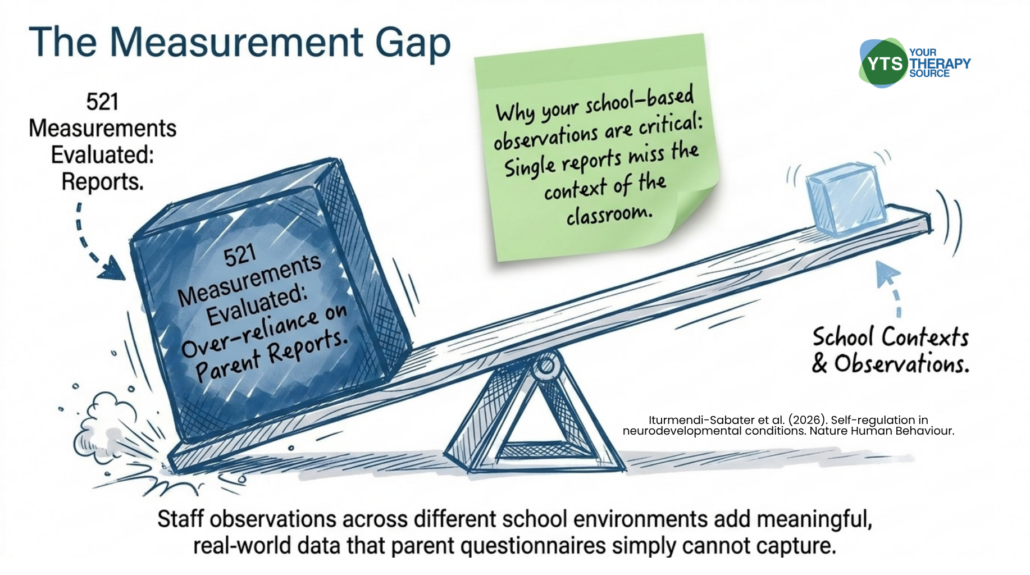
The study used inductive content analysis to identify common psychological constructs across the included reviews and to map how self-regulation has been assessed in practice. Across the included scoping, systematic, and meta-analytic reviews, researchers identified 521 distinct self-regulation measurements, and study designs varied considerably in quality and approach, which is worth keeping in mind when interpreting the findings.
KEY FINDINGS FROM THE RESEARCH ON SELF REGULATION AND EMOTIONAL REGULATION
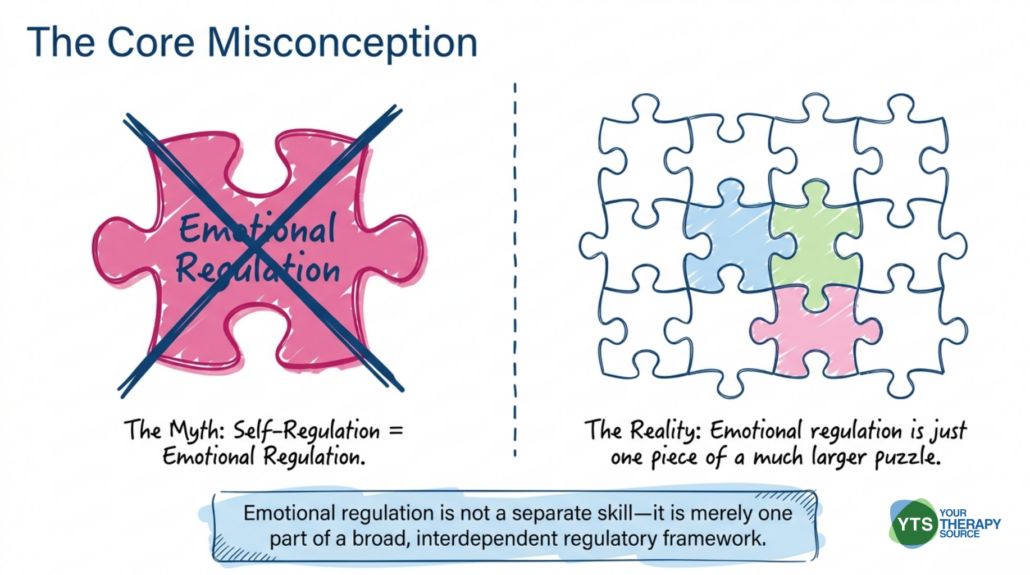
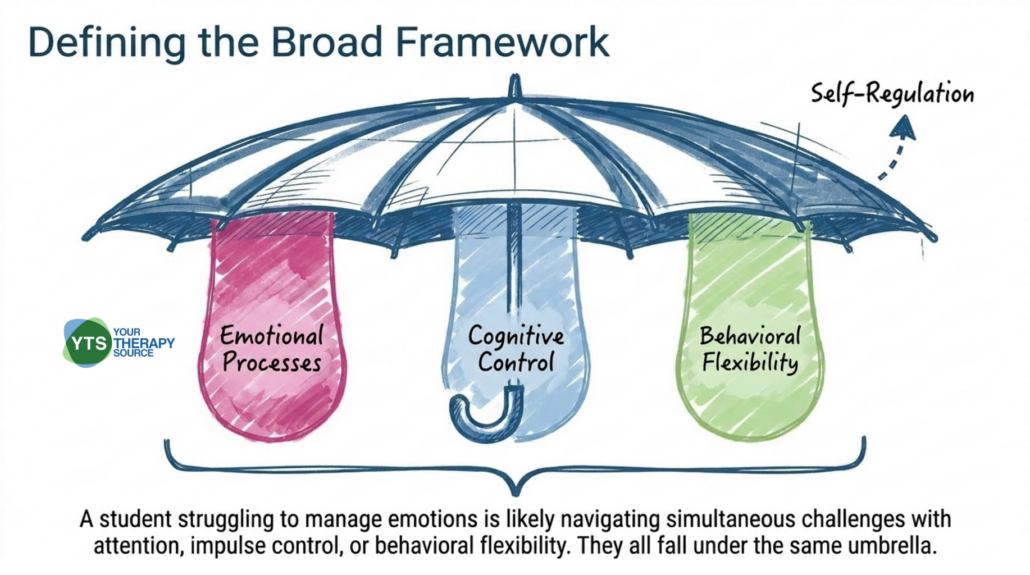
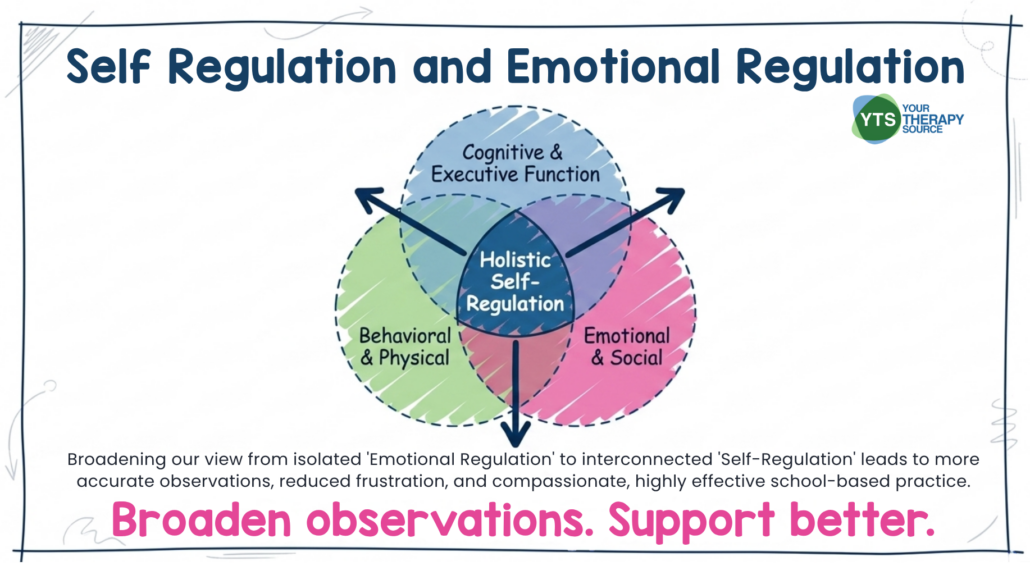
Across 47 reviews, the research suggests that self-regulation is a broad concept that includes emotional, cognitive, and behavioral processes working together. Emotional regulation is one part of that larger picture, not a separate skill.
Key findings include:
- Elevated dysregulation was consistently reported across all included reviews, despite varied terminology in the field
- Regulation challenges appear across autism, ADHD, and intellectual disability, rather than being unique to any one condition
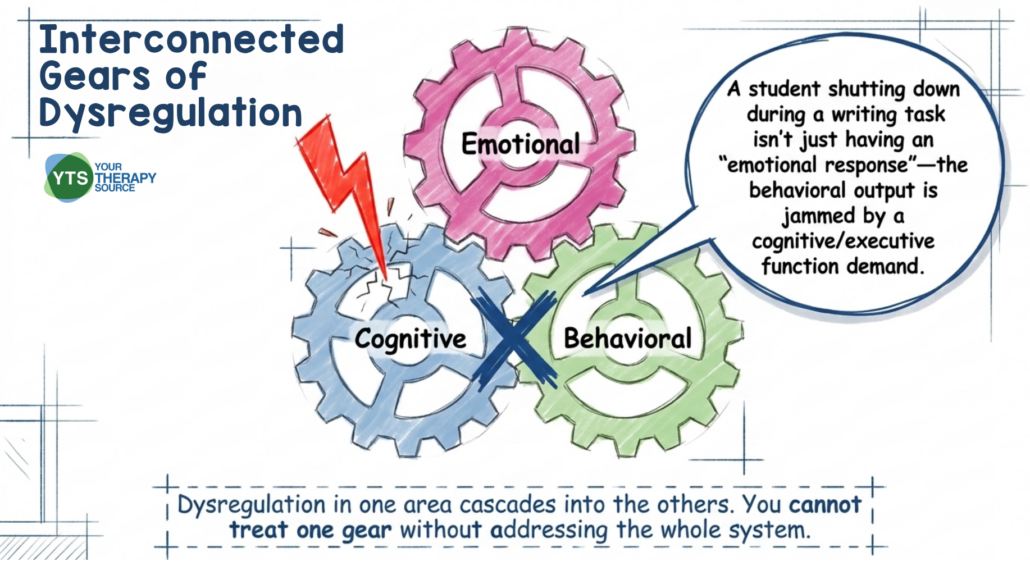
- Emotional, cognitive, and behavioral regulation are interdependent and shaped by developmental stage and environment
- A meta-summary across the included scoping, systematic, and meta-analytic reviews identified 521 measurements, most of which relied on parent-report questionnaires, pointing to a significant gap in how regulation is assessed
- Study designs varied considerably, so findings should be interpreted with that limitation in mind
WHY THESE FINDINGS MATTER FOR SCHOOL-BASED PRACTICE
When a student appears dysregulated in school, it may not be accurate to frame that only as an emotional response. Regulation challenges can involve cognitive control, behavioral flexibility, and emotional processes at the same time. Understanding this broader view can help staff respond more thoughtfully to what they observe.
Standout points for school-based practice:
- Emotional regulation is part of self-regulation, not the whole of it. A student struggling to manage emotions may also be navigating challenges with attention, impulse control, or behavioral flexibility simultaneously.
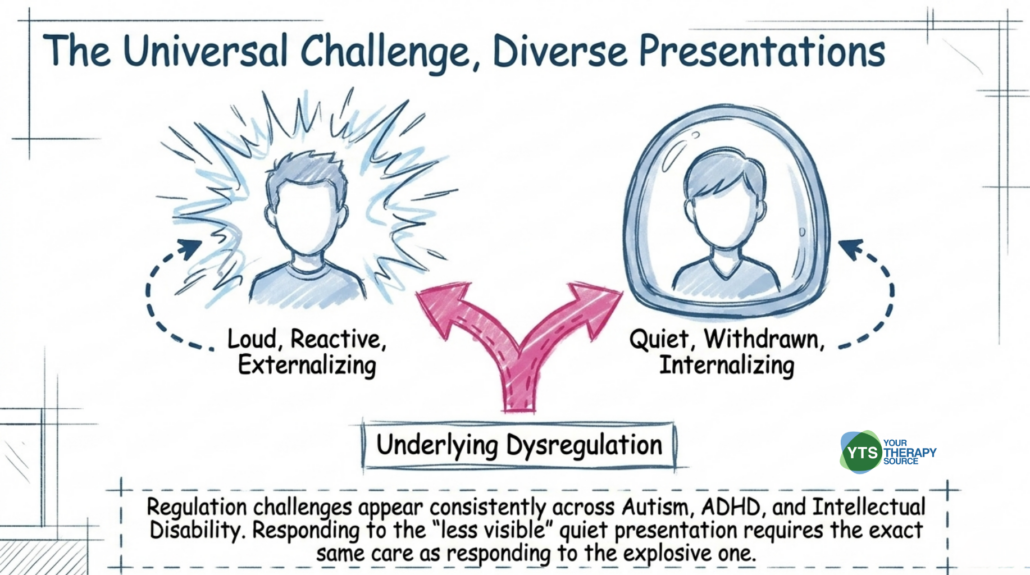
- Dysregulation appears across different neurodevelopmental conditions. Students with autism, ADHD, or intellectual disability may all present with regulation challenges, even though those challenges may look quite different from one student to the next.
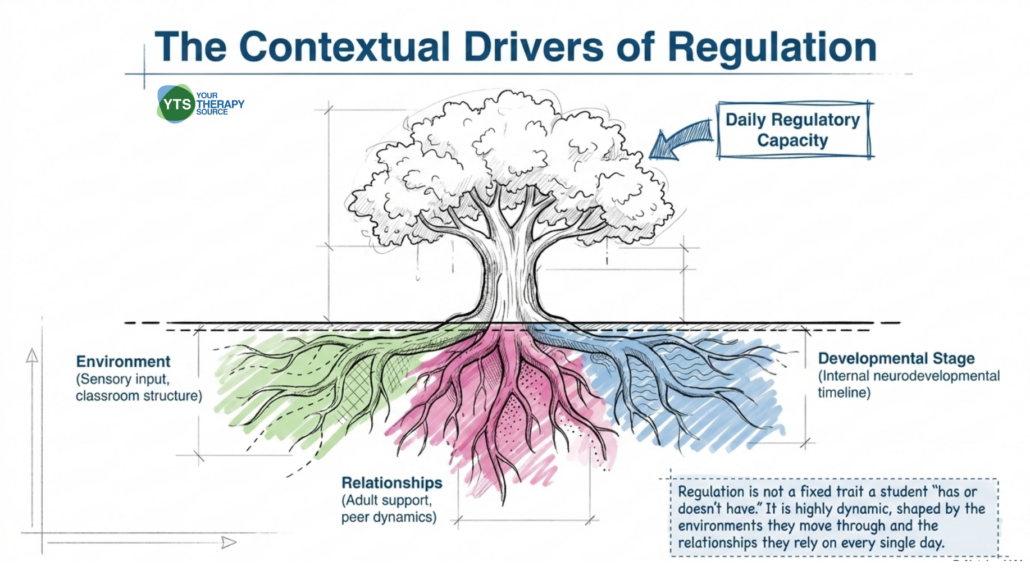
- Context shapes regulation. Environment, relationships, and developmental stage all appear to influence how regulation unfolds for a given student on a given day.
For more background read more at what self-regulation is and how it develops.
IMPLICATIONS FOR SCHOOL STAFF
Regulation is not a single skill that a student either has or does not have. Occupational therapists, physical therapists, school counselors, special educators, and other support staff are all in a position to notice when students may be experiencing difficulty across emotional, cognitive, and behavioral domains. Because these areas are interconnected, challenges rarely appear in just one area at a time, and a student who seems to be struggling behaviorally may also be managing sensory, attentional, or emotional demands simultaneously.
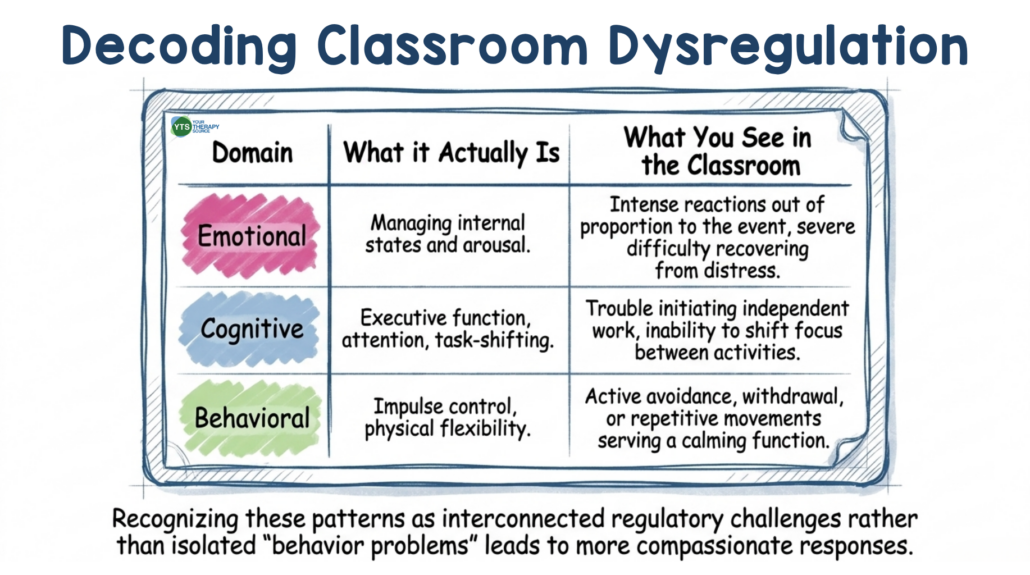
What staff observe may include difficulty shifting between tasks, intense reactions that are hard to recover from, trouble initiating work, avoidance, withdrawal, or repetitive movement that seems to serve a calming function. Recognizing these patterns as possible signs of broader regulation challenges, rather than framing them only as behavioral problems, supports a more informed and compassionate response. Reviewing self-regulation examples in real school contexts can help staff connect these observations to everyday classroom moments and consider what kinds of support may be appropriate.
10 PRACTICAL STRATEGIES TO SUPPORT SELF REGULATION AND EMOTIONAL REGULATION
- When observing a student who seems dysregulated, consider whether the challenge looks primarily emotional, primarily cognitive, or a combination of both. A student who shuts down during writing tasks may be managing executive function demands as much as emotional ones. Framing challenges more broadly can lead to more targeted and useful support.
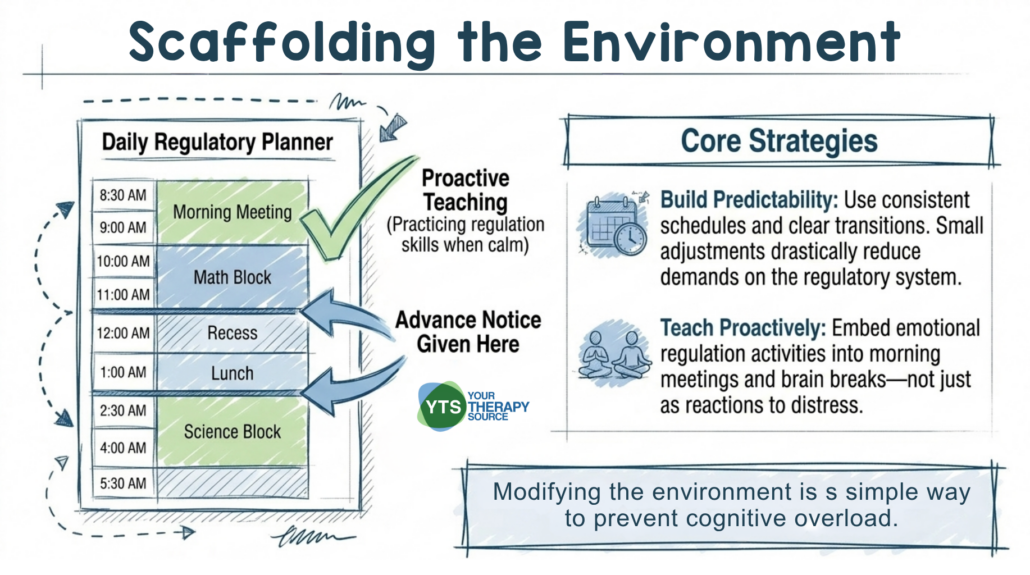
- Build predictability into daily routines. Consistent schedules, clear transitions, and advance notice of changes can help reduce the demands placed on a student’s regulatory system throughout the school day. Small environmental adjustments can make a meaningful difference in how accessible learning feels.
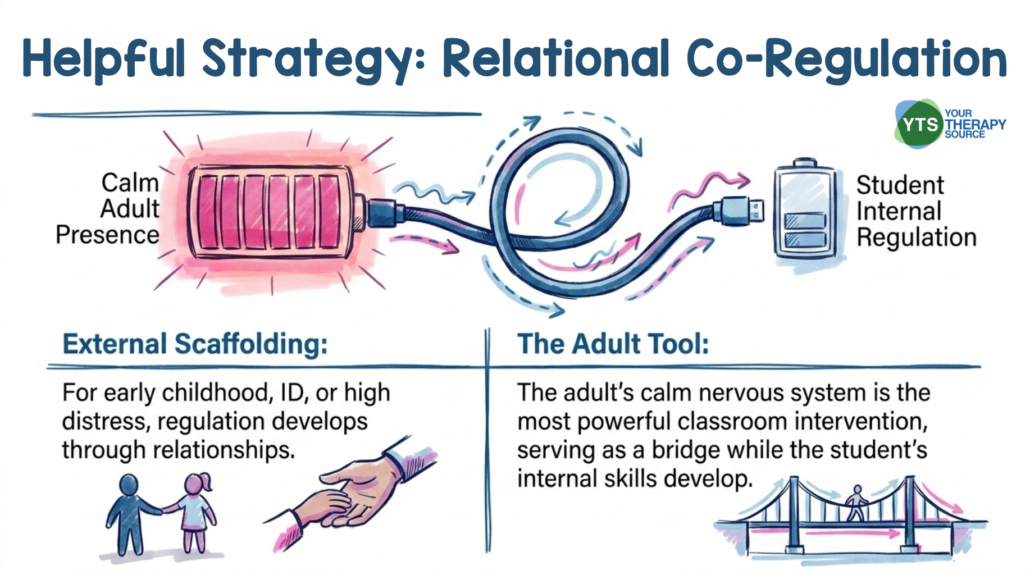
- Use co-regulation as a classroom tool. For younger students or those with intellectual disability, regulation often develops in relationship with a supportive adult. A calm, consistent adult presence can serve as an external scaffold while a student’s internal regulation skills are still developing.
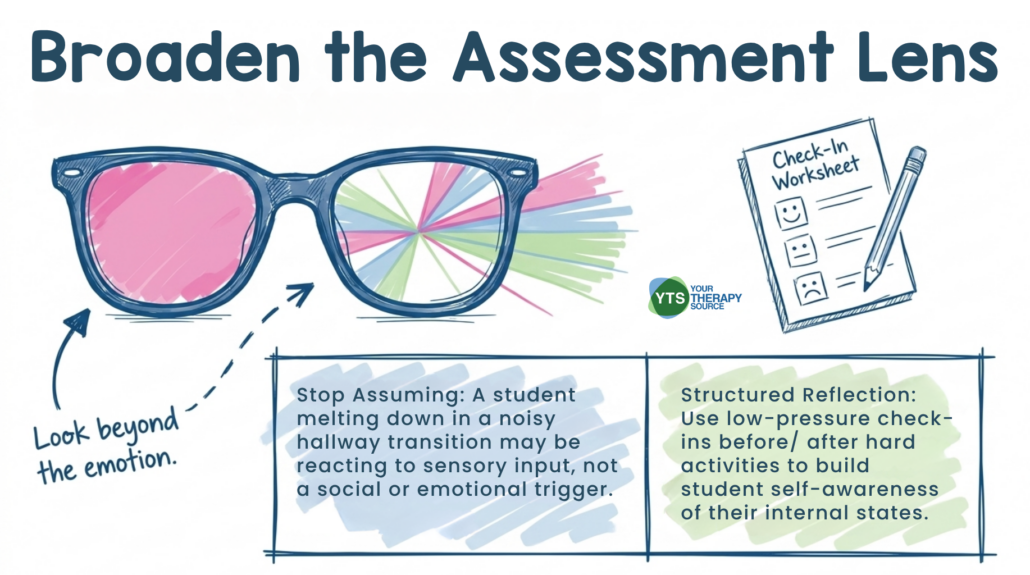
- Avoid assuming an emotional cause when behavior may reflect a cognitive or sensory demand. A student who becomes dysregulated during a noisy hallway transition may be responding to sensory input as much as to any social or emotional trigger. Considering the full regulatory context before responding can make support more relevant.
- Incorporate brief structured reflection opportunities into the school day. Simple check-ins before or after challenging activities can help students begin to notice their own internal states. An emotion regulation worksheet can offer a concrete, low-pressure starting point for building this kind of self-awareness.
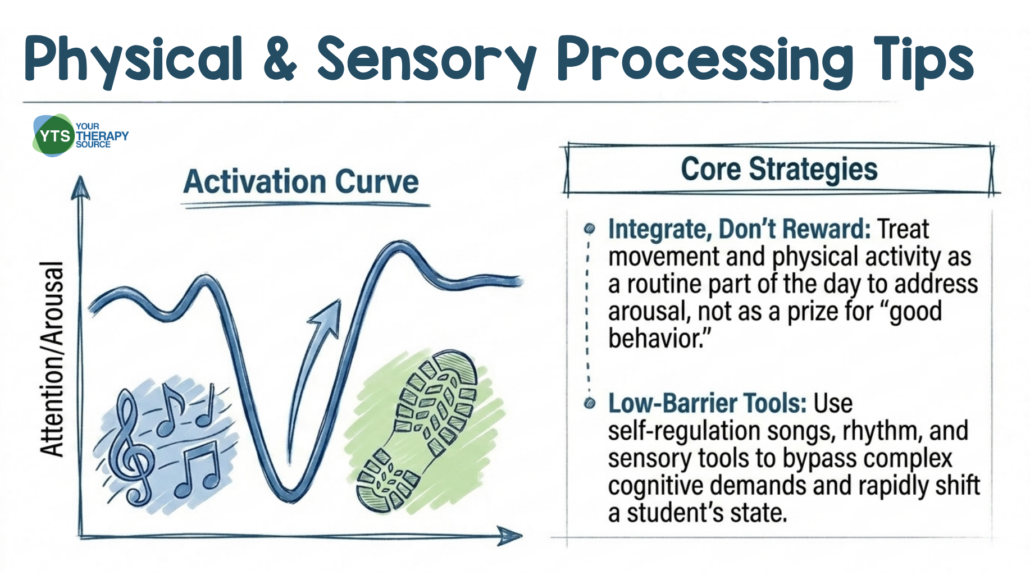
- Integrate movement purposefully throughout the day. Physical activity and movement breaks may support regulatory capacity by addressing arousal and attention alongside emotional readiness. Treating movement as a routine part of the school day, rather than a reward, supports all three domains of regulation highlighted in this research.
- Recognize that dysregulation may look different across different students. One student may become loud and reactive while another becomes quiet and withdrawn. Both presentations may reflect regulation difficulties, and responding to the less visible presentation with the same care is just as important.
- Offer emotional regulation activities as part of general classroom practice, not only as a response to behavior. Teaching regulation skills proactively, when students are calm, tends to be more effective than introducing them during moments of distress. Emotional regulation activities for kids can be embedded into morning meetings, transitions, or brain breaks as part of everyday classroom life.
- Limit over-reliance on parent-report as the only source of information about a student’s regulation. A meta-summary across the included scoping, systematic, and meta-analytic reviews identified 521 measurements, most of which relied on parent-report questionnaires. Staff observations across different school contexts add meaningful information that a single report may not capture.
- Consider music and sensory tools as accessible supports for building self-regulation. Rhythm, movement, and sensory experiences can all support a student in accessing a more regulated state. A self-regulation song is a simple, low-barrier tool that can make regulation concepts more concrete and engaging, particularly in early childhood and elementary settings.
CONCLUSION
A 2026 overview of reviews published in Nature Human Behaviour found that self-regulation is best understood as a broad framework that includes emotional, cognitive, and behavioral processes working together. Dysregulation appears consistently across autism, ADHD, and intellectual disability, shaped by developmental stage and the environments students move through each day.
For school-based professionals, this means that emotional regulation is an important but incomplete lens when viewed on its own. Observing and supporting students through a broader regulatory framework can lead to more informed practice and more meaningful support for the students who need it most.
REFERENCES
Iturmendi-Sabater, I., Jain, S., Turcany-Diaz, S., Besa, R., Anagnostou, E., Fournier, M. A., Lin, H.-Y., & Lai, M.-C. (2026). The conceptual landscape of self-regulation in neurodevelopmental conditions: an overview of reviews. Nature Human Behaviour. https://doi.org/10.1038/s41562-026-02410-x