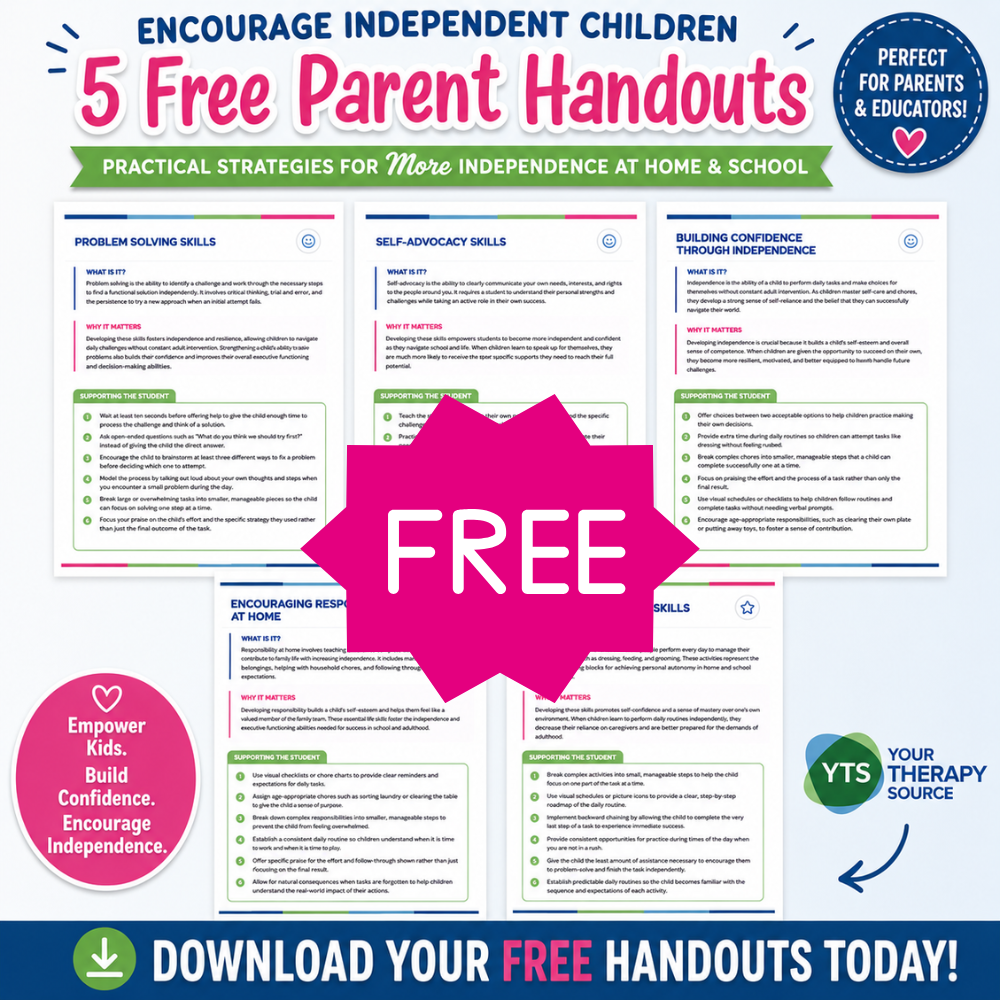
Helping Children Become More Independent: 5 Free Parent Handouts
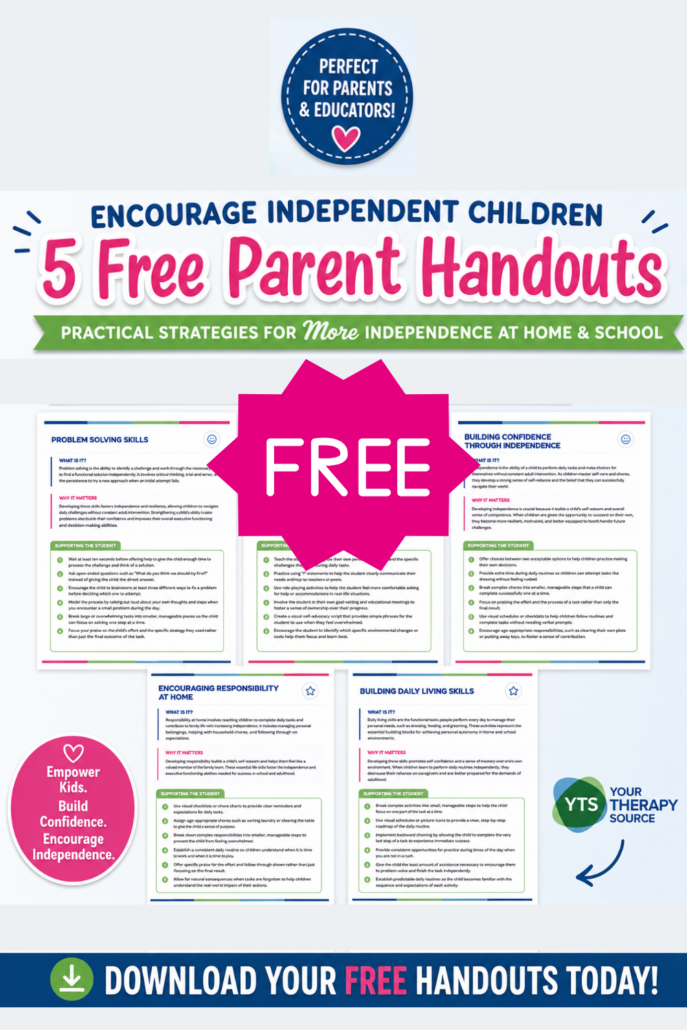
These five free parent handouts were created to support the children you serve beyond the therapy room or classroom. Each one explains a key skill, describes why it matters, and gives families practical strategies they can use right away at home to help children become more independent. Download all five at the bottom of this post.
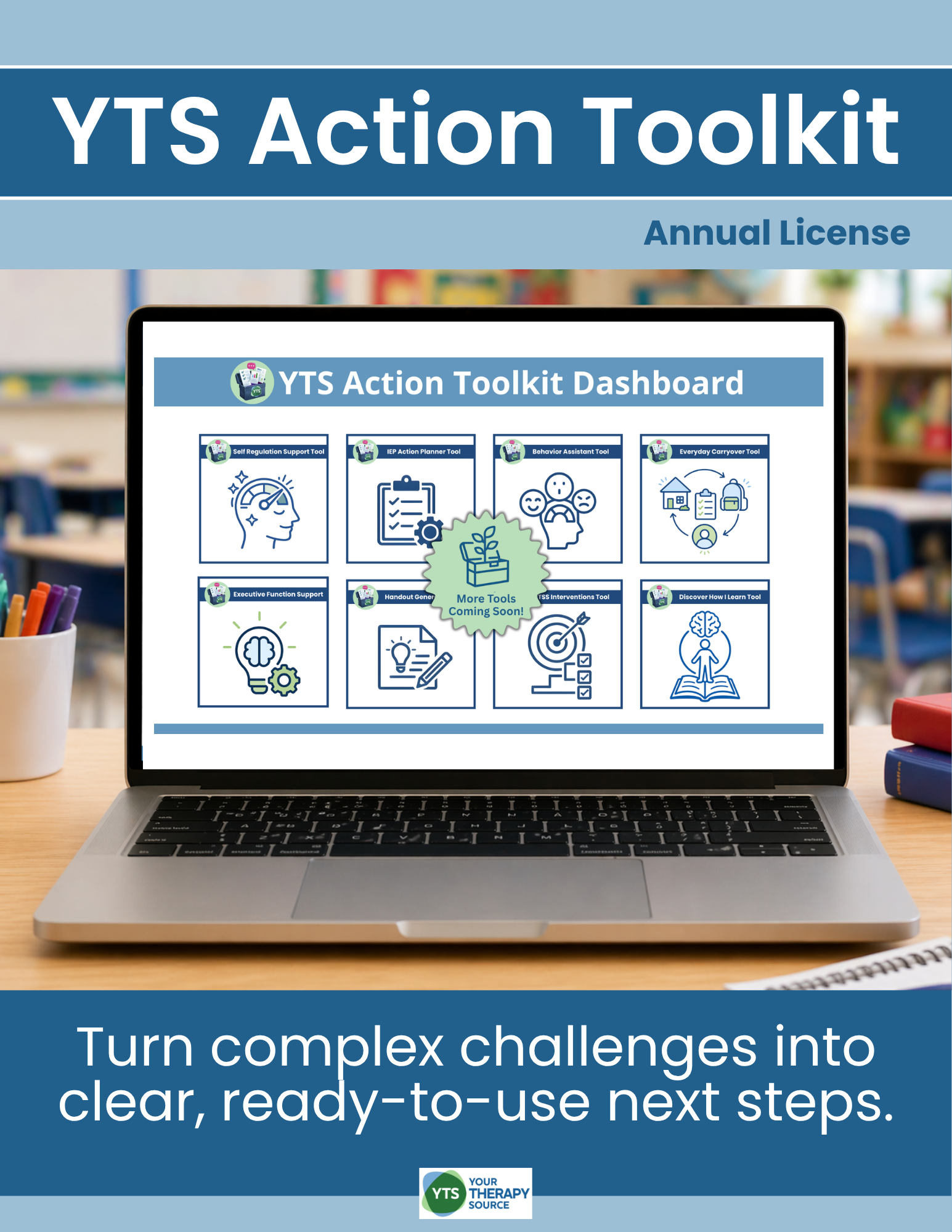
The handouts were generated using the YTS Action Toolkit Handout Generator, a professional tool for school-based therapists and educators. They are designed to be printed and sent home with families as part of a carryover plan.
Why Educating Everyone on Independence Matters
Building independence does not happen in a therapy session alone. It takes consistent support from every adult in a child’s life, including parents, caregivers, and teachers. One of the most effective ways to get everyone on the same page is also one of the simplest: a clear, easy-to-read handout that explains the skill, why it matters, and exactly what adults can do at home to help. When families understand the “why” behind independence-building strategies, they are far more likely to follow through consistently, and that consistency is what drives real progress.
When Is a Good Time to Use These Handouts
These handouts are a good fit any time you want to strengthen the home-school connection around independence. Here are some of the best times to send them home:
- Before summer break, winter break, or spring break, when children have weeks of real-life opportunity to practice daily living skills, responsibility, and problem solving outside of school
- At the start of a new IEP cycle when independence is part of a student’s goals and families need a clear picture of what to work on at home
- Any time independence, daily living skills, or self-advocacy has come up as a concern during a parent meeting or school conference
- When onboarding a new family who is just beginning to understand what independence-building looks like in everyday routines
- At any point in the school year when you want to give caregivers the language and strategies to support the work you are already doing in sessions
Encouraging Responsibility at Home
Responsibility at home means teaching children to complete daily tasks and contribute to family life with increasing independence. It includes managing personal belongings, helping with household chores, and following through on expectations consistently.
The handout explains that developing responsibility builds a child’s self-esteem and helps them feel like a valued member of the family team. Practical strategies on the handout include using visual checklists or chore charts, assigning age-appropriate tasks, breaking responsibilities into smaller steps, and establishing a consistent daily routine. Families are encouraged to offer specific praise for effort and allow natural consequences when tasks are forgotten.
Building Daily Living Skills for Greater Independence
Daily living skills are the functional tasks children perform every day to manage their personal needs, such as dressing, feeding, and grooming. These activities are the essential building blocks for achieving personal autonomy in home and school environments.
The handout walks families through strategies including backward chaining, where the child completes the final step of a task first to experience immediate success. Other strategies cover using visual schedules, providing the least amount of assistance necessary, and establishing predictable routines so children become familiar with the sequence and expectations of each activity.
Helping Children Solve Problems on Their Own
Problem solving is the ability to identify a challenge and work through the necessary steps to find a solution independently. It involves critical thinking, trial and error, and the persistence to try a new approach when an initial attempt fails.
This handout gives families concrete tools for stepping back and letting children work through challenges. Strategies include waiting at least ten seconds before offering help, asking open-ended questions instead of providing answers, and encouraging the child to brainstorm at least three different solutions before deciding which to try. Families are also encouraged to model the problem-solving process by thinking aloud during everyday moments.
Teaching Self-Advocacy Skills
Self-advocacy is the ability to clearly communicate one’s own needs, interests, and rights. It requires children to understand their personal strengths and challenges while taking an active role in their own success.
The handout provides families with strategies that build this skill gradually and in low-pressure settings. These include teaching “I” statements, using role-playing to practice asking for help or accommodations, and involving the student in their own goal-setting. Creating a simple visual self-advocacy script gives children phrases to use when they feel overwhelmed or unsure how to speak up.
Growing Confidence Through Independence
Independence is the ability of a child to perform daily tasks and make choices for themselves without constant adult intervention. As children master self-care and chores, they develop a strong sense of self-reliance and the belief that they can successfully navigate their world.
This handout helps families understand how to support independence without taking over. Strategies include offering choices between two acceptable options, providing extra time during daily routines, using visual schedules or checklists, and praising effort rather than outcome. Encouraging age-appropriate responsibilities such as clearing a plate or putting away toys gives children a meaningful sense of contribution.
You Might Also Like
- End-of-Year Made Easy: Send Home a Carryover Plan Parents Will Actually Use
- Chore Charts for Kids Free Printable PDF
- Build My Routine Puzzle Daily Routine Habit Tracker Free PDF
- Teaching Life Skills to Encourage Responsibility and Independence
- Self-Advocacy for Students Workbook
- Life Skills Activities for Special Needs Students
Download Your Free Handouts Here
These five parent handouts are free PDFs you can print and send home right away as part of your end-of-year or ongoing carryover planning. They offer a simple, low prep way to support independence, responsibility, problem solving, and self-advocacy across home and school settings. Enter your email below to download all five free printables.