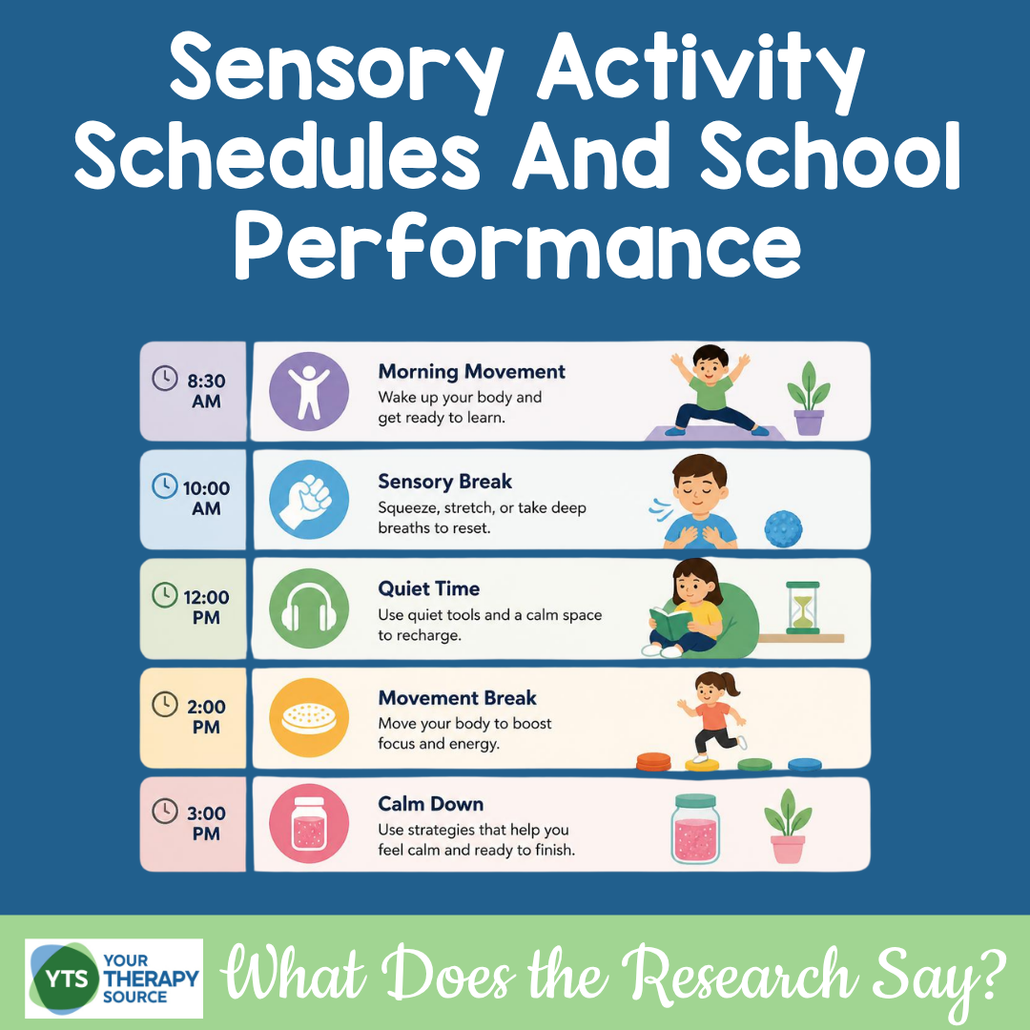
Sensory Activity Schedules And School Performance: What Does the Research Say?
Sensory activity schedules are becoming a common tool that school-based occupational therapists and teachers use to help students manage attention, behavior, and participation throughout the school day. For many students with sensory processing differences, moments like transitions, independent work, or return from recess can be especially hard to navigate without built-in sensory support.
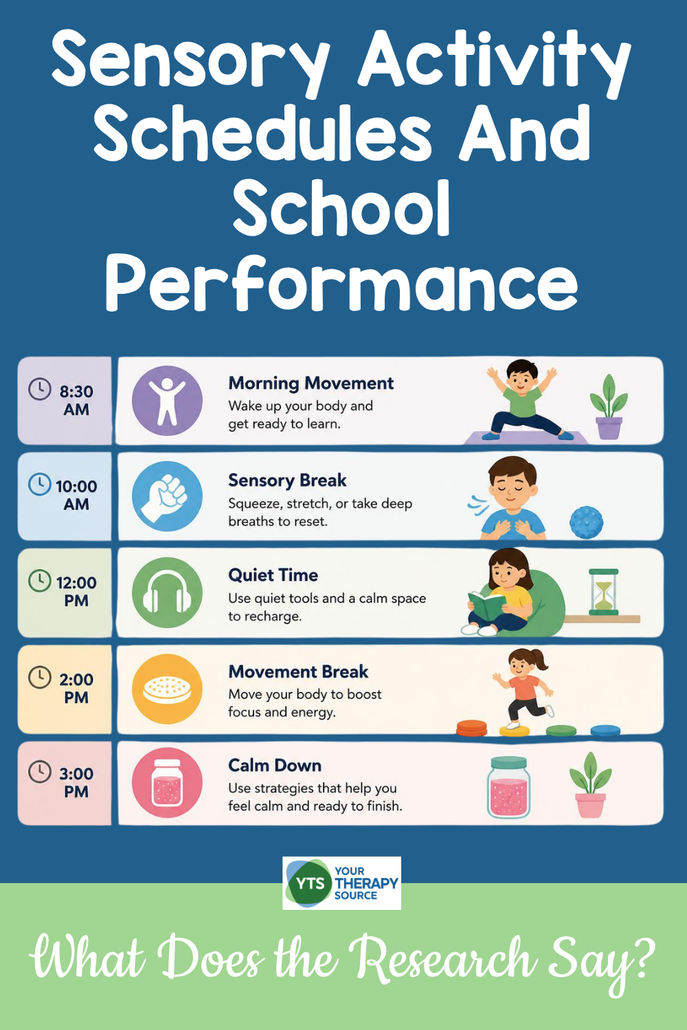
A systematic review looked closely at what the research actually says about sensory activity schedules and whether they help students perform better in the classroom. The findings offer useful, if cautious, guidance for school teams who are already using or considering this approach with students.
WHAT THE RESEARCH EXAMINED
Researchers reviewed studies published between 2014 and 2024 that looked at sensory activity schedules used with students who had documented sensory processing differences. The review followed established systematic review guidelines and focused specifically on school settings rather than clinics or homes.
- Nine studies were included, mostly small single-subject design studies, along with two higher-level group studies.
- Participants ranged from 4 to 12 years old, and all included students had signs of sensory processing challenges, many with a co-occurring autism diagnosis.
- Studies took place mainly in the United States and Australia, and sensory activities included things like therapy ball sitting, animal walks, deep pressure input, and scooter board activities.
KEY FINDINGS FROM THE RESEARCH ON SENSORY ACTIVITY SCHEDULES
Overall, the review found that sensory activity schedules may be associated with improvements in several areas of school performance, though the strength of the evidence was generally low.
- Sensory activity schedules were associated with decreased disruptive behavior in some students, particularly during group activities.
- On-task behavior, such as transitioning between tasks and staying engaged, improved for some students, though results varied widely between individuals.
- Cognitive strategy use, meaning how a student plans and carries out a task, showed improvement for some students, with the clearest gains in the ability to perceive and plan tasks.
- Task mastery, or how independently and accurately a student completed classroom tasks, showed the most consistent improvement across studies.
- Most studies had a low risk of bias, but the overall level of evidence remained low due to small sample sizes and study design.
WHY THESE FINDINGS MATTER FOR SCHOOL-BASED PRACTICE
These findings suggest that sensory activity schedules may be a reasonable option to support student participation, but they are not a guaranteed fix, and results are likely to differ from student to student.
- A sensory activity schedule may support a student’s ability to stay engaged with classroom tasks, which directly affects access to instruction.
- Improvements in task mastery suggest sensory input, when scheduled strategically, may support a student’s independence with classroom work.
- Because outcomes varied so much between students, individualized planning appears more important than following a one-size-fits-all sensory routine.
School teams looking for practical, ready-to-use ideas may find it helpful to review these sensory classroom ideas for all students, which align with the flexible, whole-classroom approach the researchers describe.
IMPLICATIONS FOR SCHOOL STAFF
Because sensory needs and responses to sensory input vary so much between students, school staff play an important role in noticing patterns and communicating them to the team.
- Staff may notice a student struggles to settle after transitions, recess, or unstructured time.
- Staff may observe a student needing frequent redirection to stay engaged with independent work.
- Staff may see inconsistent completion of classroom tasks, even when a student appears capable of the work.
These observations are valuable pieces of information, not conclusions about diagnosis or need for services. Sensory activity schedules work best as part of a broader, collaborative approach that includes teachers, related service providers, and ongoing progress monitoring. Many school teams find it helpful to build sensory supports into a tiered framework, similar to the approach described in this guide to managing sensory overload at school.
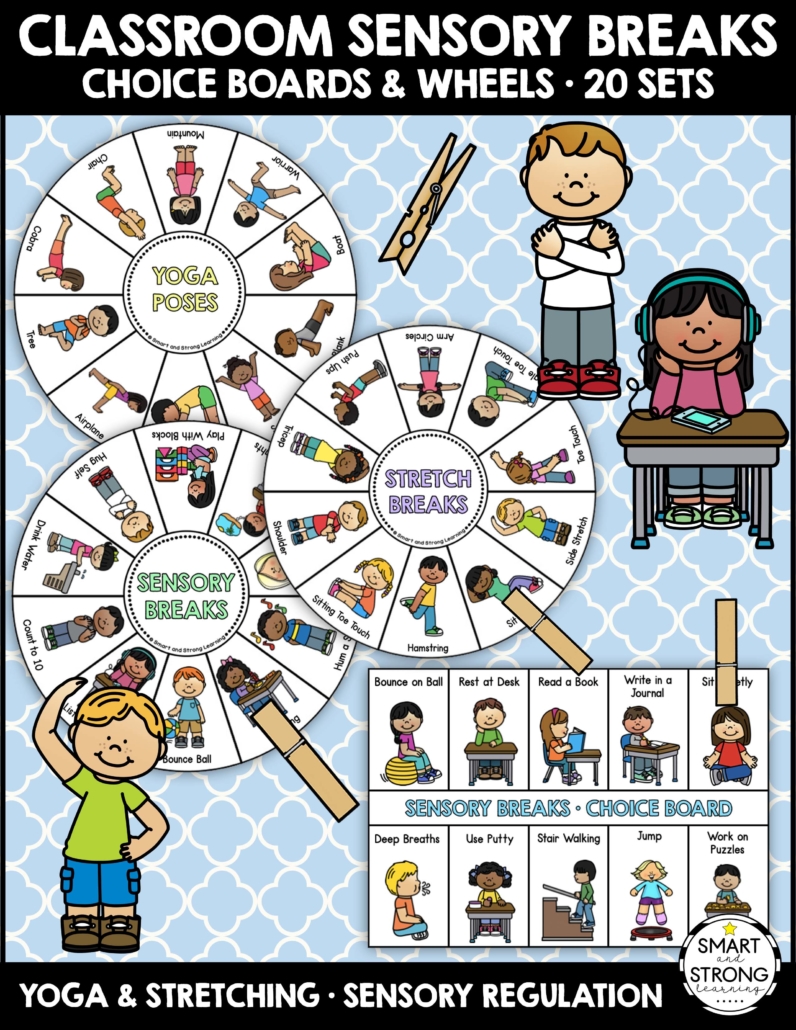
10 PRACTICAL STRATEGIES FOR SENSORY ACTIVITY SCHEDULES
- Individualize the schedule. Base sensory activities on a specific student’s needs and preferences rather than applying a generic list of activities to every student who struggles with attention or behavior.
- Time activities strategically. Consider scheduling sensory input before predictable challenge points, such as before independent work, after recess, or during long transitions.
- Include movement-based input. Vestibular and proprioceptive activities, like bouncing on a therapy ball or animal walks, were commonly used across the studies reviewed and may support regulation.
- Involve the classroom teacher. Teachers are often the ones implementing sensory activities day to day, so their buy-in and understanding of the purpose matters for consistency.
- Track progress over time. Because the evidence is still developing, monitoring whether a specific student is actually responding to a sensory activity schedule is an essential part of using this approach responsibly.
- Consider whole-classroom strategies. Sensory-friendly practices, such as flexible seating or quiet spaces, may support self-regulation for many students, not just those with identified sensory processing differences.
- Pair sensory input with task expectations. Some studies linked sensory activities directly to the task a student was about to complete, which may help connect the input to classroom demands.
- Watch for cognitive strategy needs. Students who struggle to plan or organize a task may benefit from combining sensory strategies with support for task planning and sequencing.
- Use visual supports when helpful. Visual schedules can help some students understand and independently follow a sensory routine throughout the school day.
- Coordinate across environments. Sensory strategies used only at school may not carry over to home routines, so sharing simple, practical ideas with families can support consistency. This guide to starting a sensory diet offers a starting point for that conversation.
CONCLUSION
This systematic review suggests that sensory activity schedules may be associated with improvements in classroom behavior, task engagement, cognitive strategy use, and task mastery for some students with sensory processing differences. However, the overall strength of the evidence remains low, and results varied considerably between individual students and studies.
For school-based teams, this means sensory activity schedules can be a reasonable tool to consider, but they should be applied thoughtfully, individualized to each student, and paired with consistent progress monitoring. Combining clinical reasoning with ongoing data collection can help determine whether a particular student is truly benefiting from this approach. <hr>
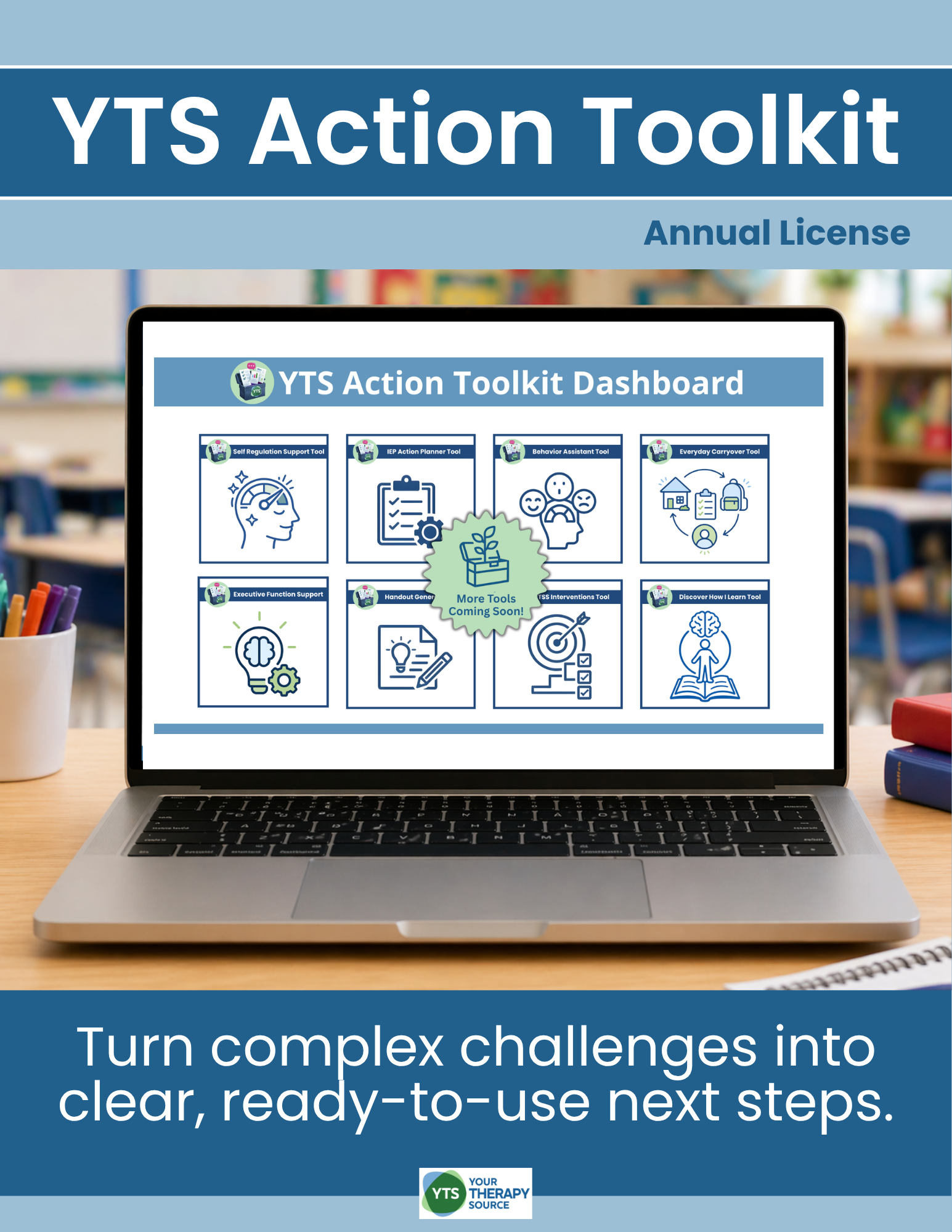
Not sure if a sensory activity schedule is actually working for a student? The YTS Action Toolkit makes it easy to track progress and measure whether sensory strategies and other interventions are having a real impact over time.
Need help identifying the right starting point for a student with sensory or self-regulation needs? Try the YTS MTSS Goal & Intervention Finder. Simply enter a student need to generate a Mini-SMART goal with matched interventions across Tier 1, Tier 2, and Tier 3.
EXAMPLE: SENSORY SUPPORT ACROSS THE TIERS
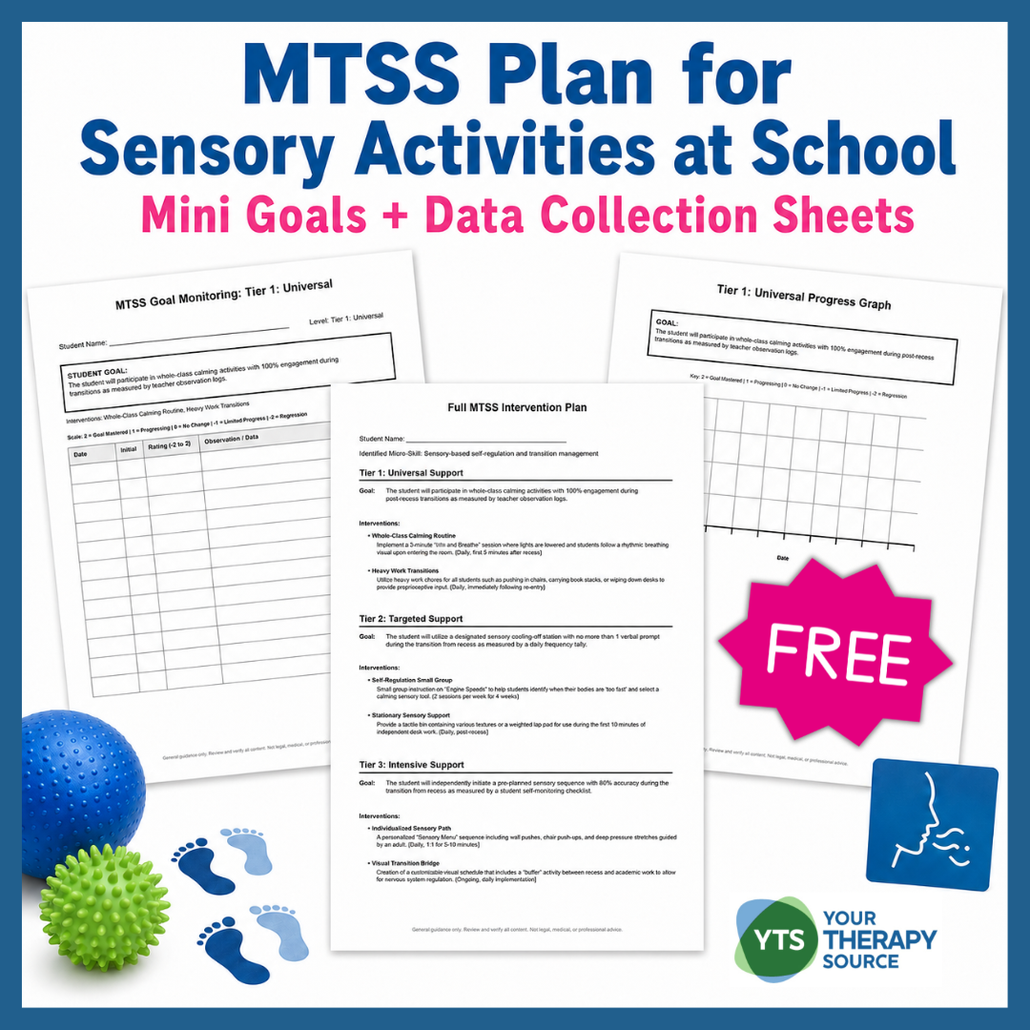
Here is what a tiered plan might look like for a 7-year-old student who has documented sensory differences and struggles to settle back into classwork after recess. This example was generated using the YTS MTSS Goal & Intervention Finder, part of the YTS Action Toolkit.
Tier 1: Universal Support
Goal: The student will participate in whole-class calming activities with full engagement during post-recess transitions, based on teacher observation.
- A brief whole-class calming routine, such as dimmed lights paired with a guided breathing visual, right after students re-enter the room.
- Heavy work transition tasks for all students, like pushing in chairs or carrying book stacks, to provide proprioceptive input as part of the daily routine.
Tier 2: Targeted Support
Goal: The student will use a designated sensory cooling-off station with no more than one verbal prompt during the transition from recess, tracked with a daily frequency tally.
- A small group lesson on identifying body “engine speed” to help the student recognize when a calming tool is needed.
- A stationary sensory option, such as a tactile bin or weighted lap pad, available during the first part of independent desk work.
Tier 3: Intensive Support
Goal: The student will independently start a pre-planned sensory sequence with a high level of accuracy during the transition from recess, tracked with a self-monitoring checklist.
- An individualized sensory sequence, such as wall pushes and chair push-ups, guided by an adult on a consistent daily basis.
- A personalized visual schedule that includes a buffer activity between recess and academic work.
Each tier includes a data sheet and progress graph so the team can track whether the student is progressing, staying the same, or needing an adjusted approach, which reflects the kind of ongoing progress monitoring this research recommends.
DOWNLOAD A SAMPLE MTSS REPORT FOR SENSORY ACTIVITY SCHEDULES
Enter your email below to access the sample MTSS plan with micro-goals and data collection sheets.
REFERENCE
Latifi, K., Patterson, K., Rider, J. V., & Lau, C. (2025). Impact of sensory activity schedules on school performance of students with sensory processing differences: A systematic review. American Journal of Occupational Therapy, 80, 8001185060. https://doi.org/10.5014/ajot.2025.051334