Embodied Music and Executive Function Skills
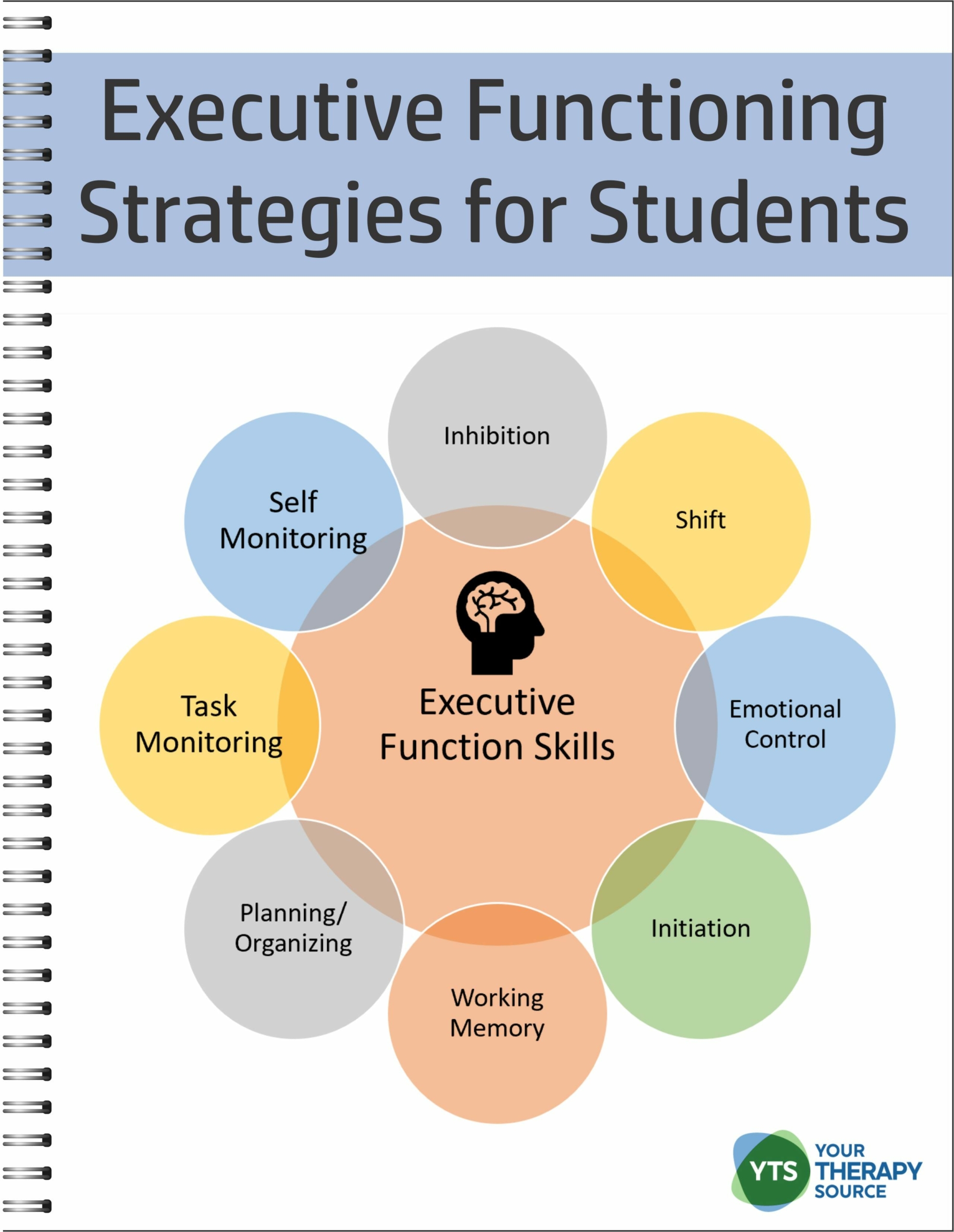
Many students find it hard to stop, switch tasks, and stay calm during the school day. These skills are part of executive function and emotion regulation, and they shape how well students take part in learning. A new study looks at whether embodied music and executive function may be linked, especially when children move their bodies in time with the beat.
Music is already part of many classrooms and therapy sessions. This study asked whether adding structured movement to music offers more than listening and singing alone. The answer may help educators and therapists plan music-based activities with more purpose, and a free staff hand out with song-based movement routines is available to download at the end.
WHAT THE RESEARCH EXAMINED ON EMBODIED MUSIC AND EXECUTIVE FUNCTION SKILS
The researcher compared three groups of children over 12 weeks. One group took part in an embodied music program built around clapping, stepping, body percussion, and moving to musical cues. A second group did music without much movement, such as guided listening, singing, and rhythm games. A third group kept its usual school activities.
- Participants: 180 children ages 8 to 11 from six public primary schools in Tianjin, China.
- Program dose: Both music groups met three times a week for 45 minutes, in small groups of about 8 to 12 children.
- What was measured: Executive function, parent-reported emotion regulation, moving in time to a beat, well-being, resting heart rate variability, and sleep problems. Children were checked at the start, at 6 weeks, at 12 weeks, and 3 months after the program ended.
KEY FINDINGS FROM THE RESEARCH
Overall, the study suggests that music with structured movement was associated with larger gains than music alone or usual activities. Some gains were stronger than others.
- Children in the embodied music group showed larger gains in executive function, emotion regulation, and moving in time to a beat than both other groups.
- Within executive function, gains were largest for inhibition (stopping an action) and cognitive flexibility (switching rules). Gains in working memory were smaller.
- The music-only group also improved more than the usual-activity group on executive function, emotion regulation, and beat timing, though by smaller amounts.
- Gains in well-being and resting heart rate variability were more modest. For sleep problems, the embodied group differed from the usual-activity group but not from the music-only group.
- Three months later, gains were smaller than at the end of the program but stayed above where children started.
- An exploratory analysis found that beat timing, executive function, emotion regulation, and well-being changed together. The researcher notes this does not show that one caused the next.
WHY THESE FINDINGS MATTER FOR SCHOOL-BASED PRACTICE
Stopping on cue, switching rules, and staying regulated are daily demands in school. This study suggests that how music is used, not only whether it is used, may matter for these skills.
- Movement to the beat may add something beyond listening and singing alone.
- The activities were simple and fit into small-group sessions, which matches how many school teams already work.
- Music without much movement was still associated with some benefit, so both types of music activity may have a place.
These findings add to what is known about music and emotions in children, since emotion regulation was one of the main outcomes studied.
IMPLICATIONS FOR SCHOOL STAFF
For staff, the study points to rhythm and movement as one possible way to give students practice with self-control and flexible thinking. It also reminds teams that these skills may show up across the whole school day.
- Students who start an action easily but have trouble stopping it when a signal is given.
- Students who get stuck when a rule or routine changes partway through a task.
- Students who have difficulty matching their movements to a beat or to a partner.
- Students whose frustration builds quickly when demands shift.
Music and movement fit best as one part of a broader, multi-modal approach that also includes environment, routines, and adult support. Interest in this area has grown, including work on supporting students with ADHD using music. Keep in mind that this study included typically developing children, so findings may not apply the same way to every student.
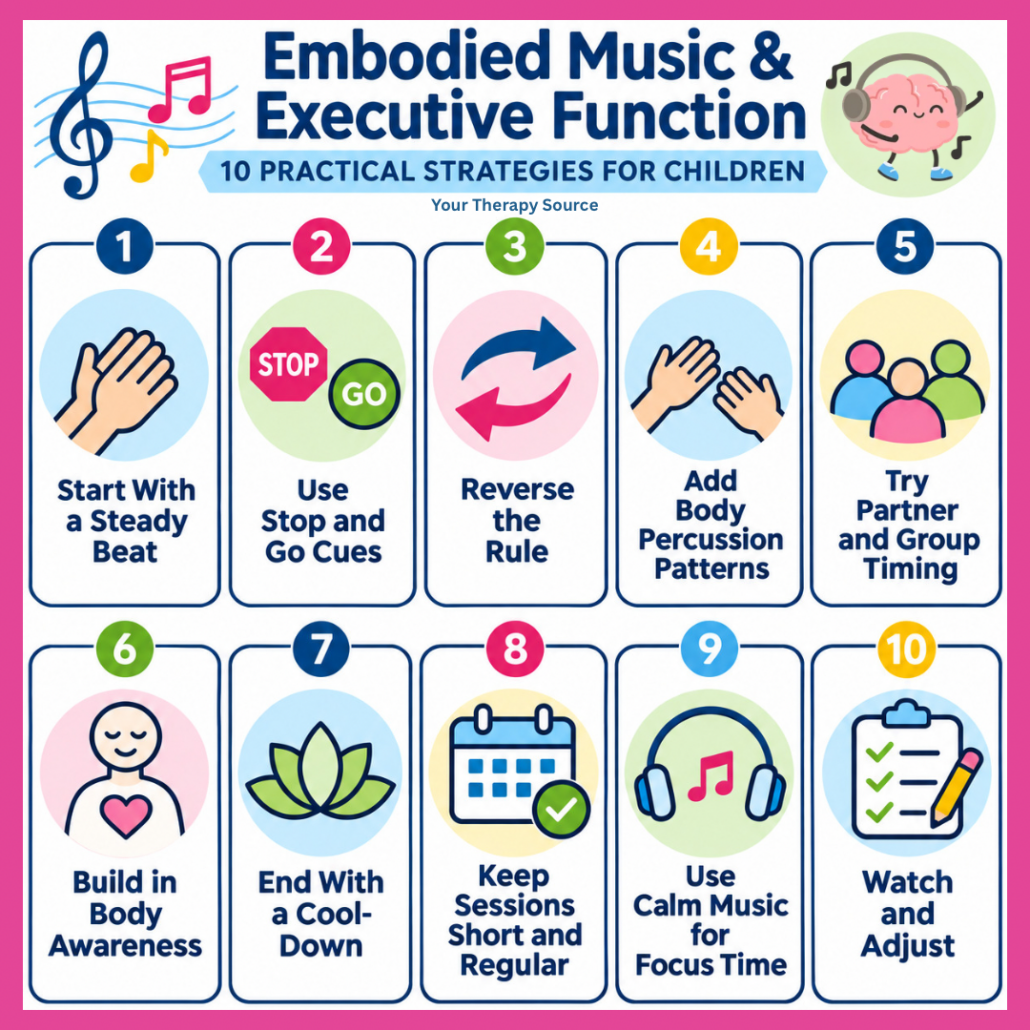
10 PRACTICAL STRATEGIES FOR EMBODIED MUSIC AND EXECUTIVE FUNCTION SKILLS
The strategies below are drawn from the types of activities described in the study. The researcher suggests these could be added to school music, movement, or extracurricular sessions, which is an interpretation from the discussion rather than a tested finding.
- Start With a Steady Beat. Begin sessions with simple clapping or stepping to a steady beat. This gives students a shared rhythm to follow and a calm starting point for the group.
- Use Stop and Go Cues. Have students move to the music and freeze when it stops or when a sound signal is given. These games give practice with inhibition, which showed some of the largest gains in the study.
- Reverse the Rule. Once students learn a pattern, switch it. For example, students might clap on a high note and step on a low note, then trade. This builds practice with cognitive flexibility.
- Add Body Percussion Patterns. Patterns such as pat, clap, snap give students a chance to plan and sequence movements. They also support gross and fine motor coordination in a playful way.
- Try Partner and Group Timing. Ask pairs or small groups to keep a beat together. Moving in sync with peers may support attention to others and classroom participation.
- Build in Body Awareness. Ask students to notice how their bodies feel before and after active rhythm games. This links well to ideas about music and interoception, which relates to noticing internal body signals.
- End With a Cool-Down. The study program closed each session with a cool-down. A slow beat, deep breaths, or gentle stretches can help students shift back to calmer learning time.
- Keep Sessions Short and Regular. The study used three 45-minute sessions each week for 12 weeks. School teams may adapt the length to their schedules, but regular practice over time may matter.
- Use Calm Music for Focus Time. Music without much movement was also associated with some benefit. During seated work, some teams use options such as lo-fi focus music as a separate support from active rhythm games.
- Watch and Adjust. A few children in the movement group reported short-term soreness or tiredness. Watch for fatigue, offer seated options, and adjust the pace to fit each group’s needs and abilities.
CONCLUSION
This study suggests that music paired with structured movement may be associated with larger gains in executive function, emotion regulation, and beat timing than music alone or usual school activities. Some gains lasted at three months, though they were smaller over time. The researcher notes that the results need to be repeated in other groups of children.
For school teams, these findings offer a thoughtful starting point. Rhythm and movement activities can be one flexible option within a broader plan to support self-regulation, participation, and learning.
REFERENCE
Shu, Q. (2026). Effects of an embodied music intervention on executive function, emotion regulation and psychophysiological well-being in children: The role of movement-rhythm synchronization and self-regulation. Frontiers in Psychology, 17, 1988460. https://doi.org/10.3389/fpsyg.2026.1988460
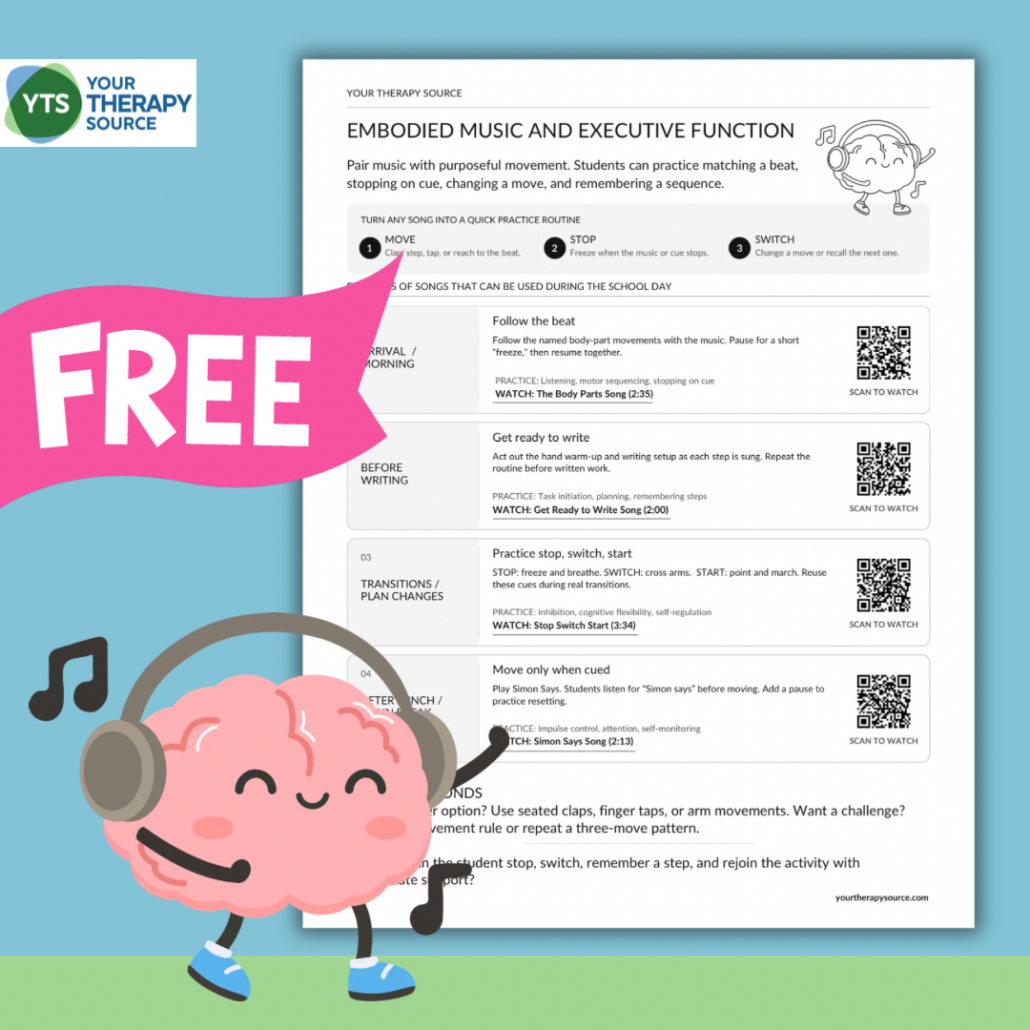
FREE DOWNLOAD: EMBODIED MUSIC AND EXECUTIVE FUNCTION STAFF CHEAT SHEET
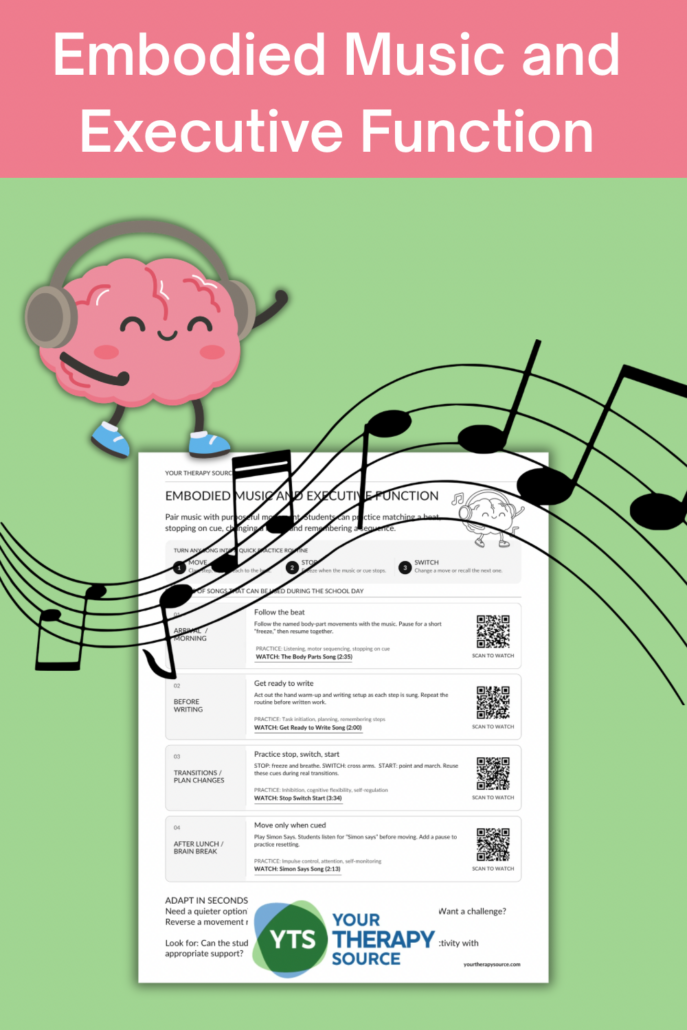
Want an easy way to bring these ideas into the school day? Download the free Embodied Music and Executive Function hand out. This one-page handout gives staff a simple routine and ready-to-use song examples for different times of the day.
Inside the handout, you will find:
- A Move, Stop, Switch routine: A three-step way to turn any song into a quick practice activity. Students move to the beat, freeze when the music or cue stops, and then change a move or recall the next one.
- Four song examples matched to the school day: The Body Parts Song for arrival or morning, the Get Ready to Write Song before written work, Stop Switch Start for transitions and plan changes, and the Simon Says Song for after lunch or a brain break. Each example lists the skills it practices and includes a QR code to watch the video.
- Quick adaptations and a “look for” prompt: Quieter options such as seated claps or finger taps, ways to add a challenge, and a simple question to guide what staff observe during the activity.