What System Is Under Stress? A Simple Way to Understand Challenging Behavior
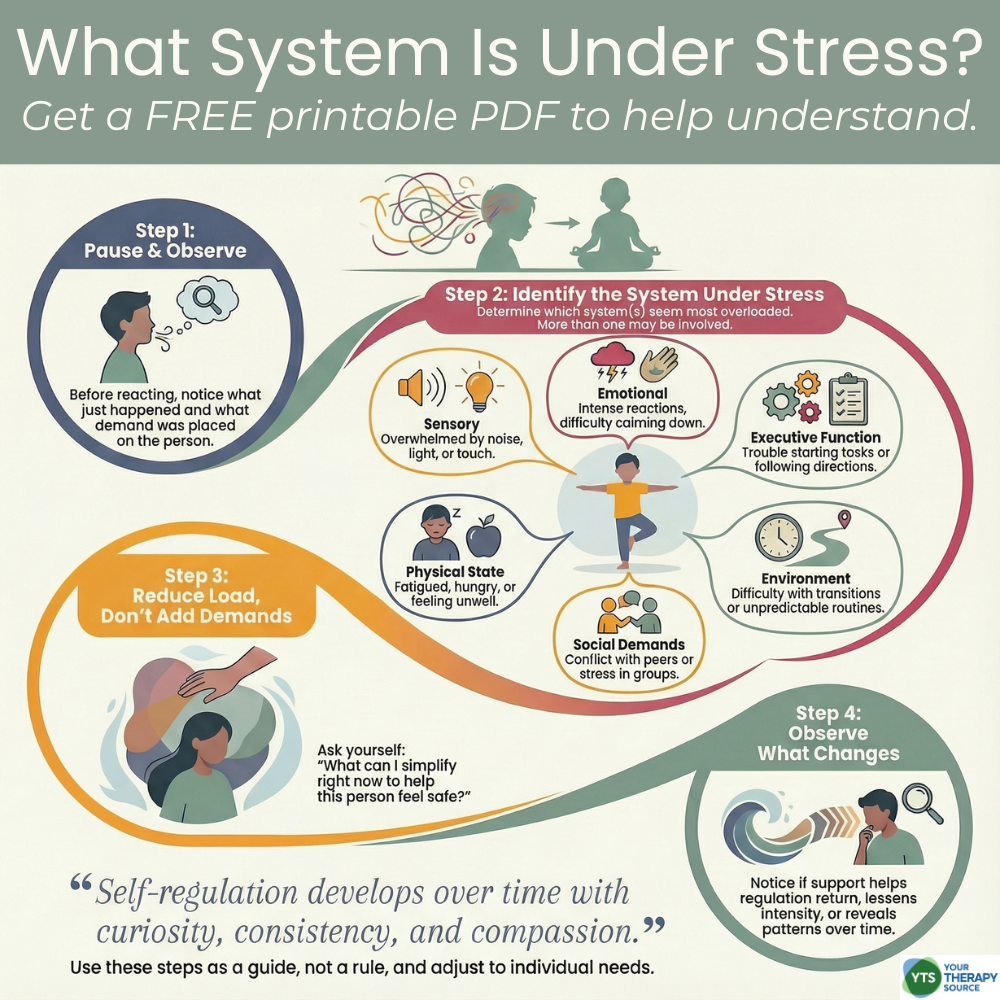
When behavior feels challenging, overwhelming, or confusing, it is tempting to focus on stopping it as quickly as possible. However, behavior is rarely the problem itself. More often, it is a signal that something beneath the surface is not working as smoothly as it could. Understanding what system is under stress is often the key to responding in a way that truly helps.
Across ages and settings, self-regulation breaks down when demands exceed available resources. These demands may be sensory, emotional, cognitive, physical, social, or environmental. When one or more systems become overloaded, behavior is how the brain and body communicate distress.
You can download FREE worksheets to help you understand at the bottom of the post.
Understanding which system is under stress is often the key to responding in a way that truly helps.
Why “Fixing the Behavior” Often Doesn’t Work
Many common behavior strategies focus on correction, consequences, or compliance. While those approaches may temporarily stop a behavior, they do not always address the underlying cause.
For example:
- A child melting down during transitions may not lack motivation, but flexibility.
- A student refusing work may not be defiant, but overwhelmed.
- An adult snapping after a long day may not be choosing conflict, but running out of emotional and physical resources.
When the underlying system remains overloaded, the behavior tends to return.
Using a Systems-Based Lens
A systems-based lens looks at behavior as the result of multiple interacting systems rather than a single skill deficit. These systems include:
- Sensory processing
- Emotional regulation
- Executive functioning
- Physical state
- Social demands
- Environmental factors
Instead of asking, “How do I stop this behavior?” a systems-based approach asks, “What demand may be exceeding capacity right now?” This shift in thinking opens the door to more effective, compassionate responses. Need help shifting your thinking? Try the Reframe My Approach tool.
A Free Worksheet to Support Your Thinking
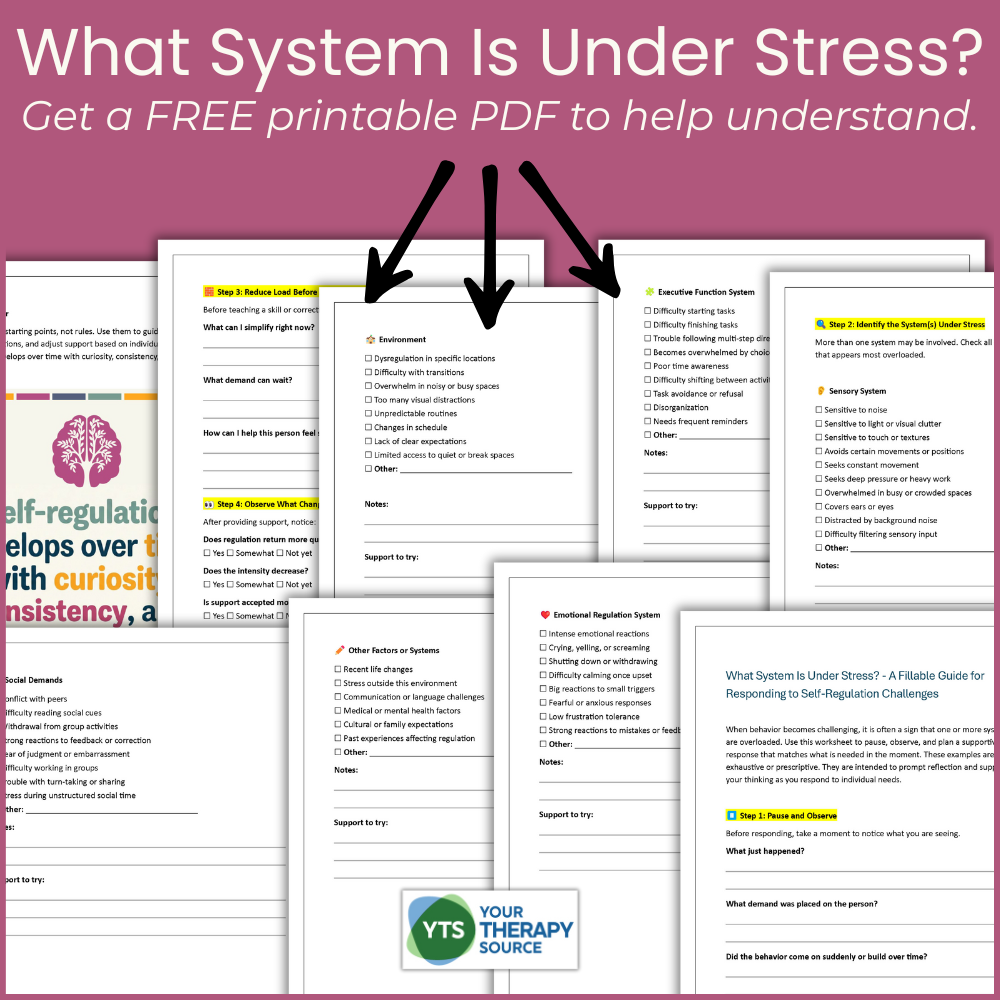
To help apply this lens in real-life moments, I created a free printable worksheet:
What System Is Under Stress?
A Quick Guide for Responding to Self-Regulation Challenges
This worksheet is designed to help you:
- Pause and observe before reacting
- Identify which system or systems may be overloaded
- Reduce demands before adding expectations
- Notice patterns over time instead of focusing on one moment
The options listed in the worksheet are suggestions meant to support your thinking. They are not rules or diagnoses. Every individual is unique, and this tool is meant to guide reflection, not provide a one-size-fits-all solution.
Issue #4: Real-Life Case Studies & Practical Examples for Self-Regulation Success
Real-life case studies that show how to support self-regulation across ages.
Want to See What This Looks Like in Real Life?
The worksheet is a starting point. Many readers find that once they begin using it, new questions emerge:
- What does this look like at different ages?
- How does this show up in school, home, or community settings?
- What kinds of supports actually help in real situations?
These questions are explored in depth in Issue #4: Real-Life Case Studies and Practical Examples for Self-Regulation Success.
This issue walks through common self-regulation challenges from preschool through adulthood, showing how a systems-based lens can be applied across environments. It includes detailed case studies, practical insights, and guidance for supporting regulation in everyday life.
Learn more about Issue #4 here.
Behavior is communication. When adults respond with curiosity, consistency, and compassion, they create the conditions for stronger regulation skills and greater resilience over time.
If you’re looking for a simple way to start thinking differently about behavior, the free worksheet is a great first step.
Download Your FREE Worksheets to Help Determine What System Is Under Stress here
Enter your email to access the free PDF.