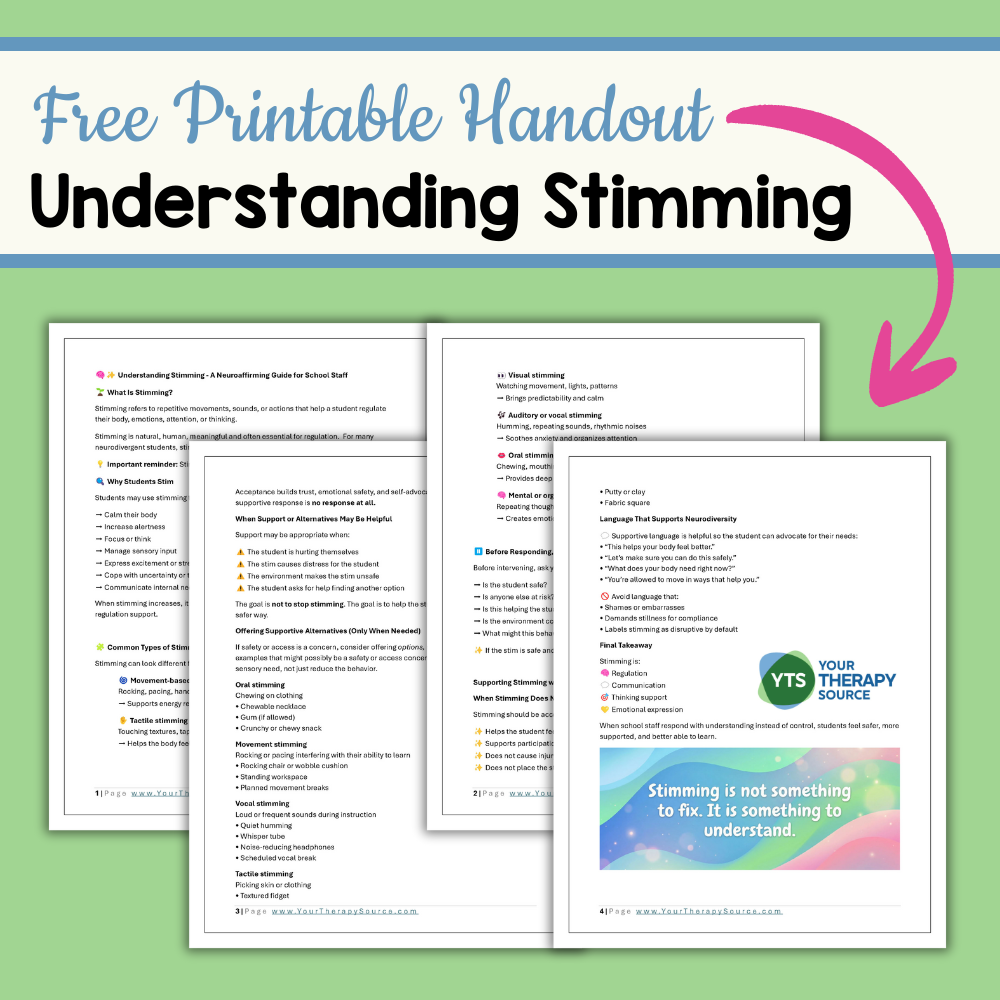
Sharing Information on Stimming Behaviors – Free Handout
Stimming behaviors are a natural and meaningful way many children regulate their bodies, emotions, attention, and thinking. While stimming is often misunderstood in school and community settings, a neuroaffirming perspective helps shift the focus from stopping behaviors to understanding what students need to feel safe, supported, and ready to learn.
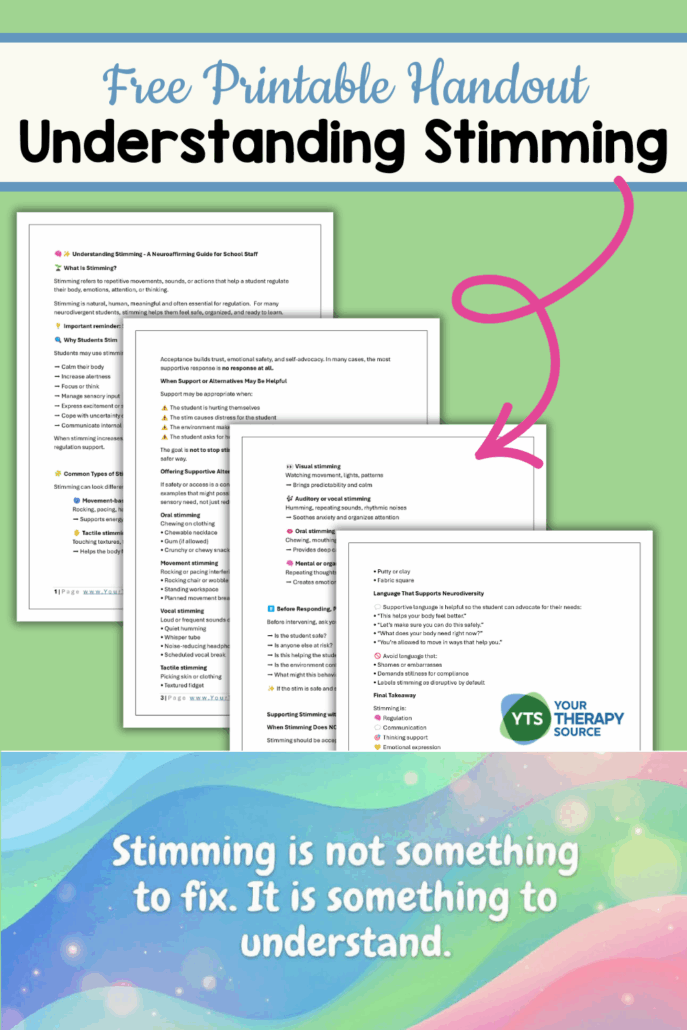
To support educators, therapists, and school staff, a free printable handout has been created to help explain stimming behaviors in a clear, compassionate, and practical way. You can download the free printable handout at the bottom of the post.
Understanding Stimming Behaviors in Everyday Settings
Stimming behaviors can include movement, sounds, touch, visual engagement, oral input, or internal repetition. These behaviors serve a purpose. They may help students calm their bodies, increase alertness, manage sensory input, express emotion, or cope with uncertainty.
When school staff understand that stimming behaviors are forms of regulation and communication, responses naturally shift toward support rather than correction. This understanding reduces power struggles and creates environments where students feel accepted and understood.
For a deeper explanation of what stimming is and why it occurs, this post on stimming provides a comprehensive overview.
Why Education Around Stimming Behaviors Is So Important
Many challenging situations involving stimming behaviors happen not because the behavior is unsafe, but because others do not understand its purpose. Education helps staff recognize that stimming is not misbehavior and does not need to be eliminated when it is safe.
Sharing information on stimming behaviors helps teams:
• Respond with empathy rather than discipline
• Support regulation and learning at the same time
• Reduce stigma around neurodivergent behaviors
• Create more inclusive classrooms and common spaces
When adults have shared language and understanding, students benefit from consistency and emotional safety.
When Stimming Behaviors May Look Different at School
Some forms of stimming, such as vocal or oral stimming, are more noticeable in classroom settings and may raise questions for staff. Understanding the sensory and regulatory needs behind these behaviors is key to responding effectively.
For staff looking to learn more about oral input and regulation, this related resource is helpful. In addition, sensory needs related to attention and regulation can look different for students with ADHD. Read more about how sensory needs and regulation are closely connected.
Using the Free Handout to Support Staff and Teams
The free handout was created to make conversations about stimming behaviors easier and more supportive. It is designed to be shared during team meetings, professional development, or informal conversations with staff.
The handout includes:
• A clear explanation of stimming behaviors
• Common types of stimming and their purpose
• Reflection prompts to guide adult responses
• Guidance on when stimming does not need to change
• Supportive alternatives only when safety or access is a concern
• Neuroaffirming language that respects student autonomy
The goal of the handout is not to create rules around stimming behaviors, but to support understanding and thoughtful decision making.
Offering Support Without Suppressing Stimming Behaviors
A neuroaffirming approach recognizes that stimming behaviors should only be redirected when there is a clear safety concern or when the student requests help. When alternatives are offered, they should match the sensory need rather than simply reduce the behavior.
This approach aligns with sensory based interventions that support regulation without compliance driven goals.
Why Sharing This Information Matters
When information about stimming behaviors is shared openly and respectfully, it benefits both students and staff. Students feel safer using the strategies their bodies need. Staff feel more confident responding in ways that support learning and regulation at the same time. Stimming behaviors are not something to fix. They are something to understand.
Download the Free Stimming Behaviors Handout
The free printable handout is available to support educators, therapists, and school teams in building shared understanding around stimming behaviors. It is designed to be practical, accessible, and grounded in a neuroaffirming perspective. Sharing this handout is one small step that can make a meaningful difference in how students experience school environments.