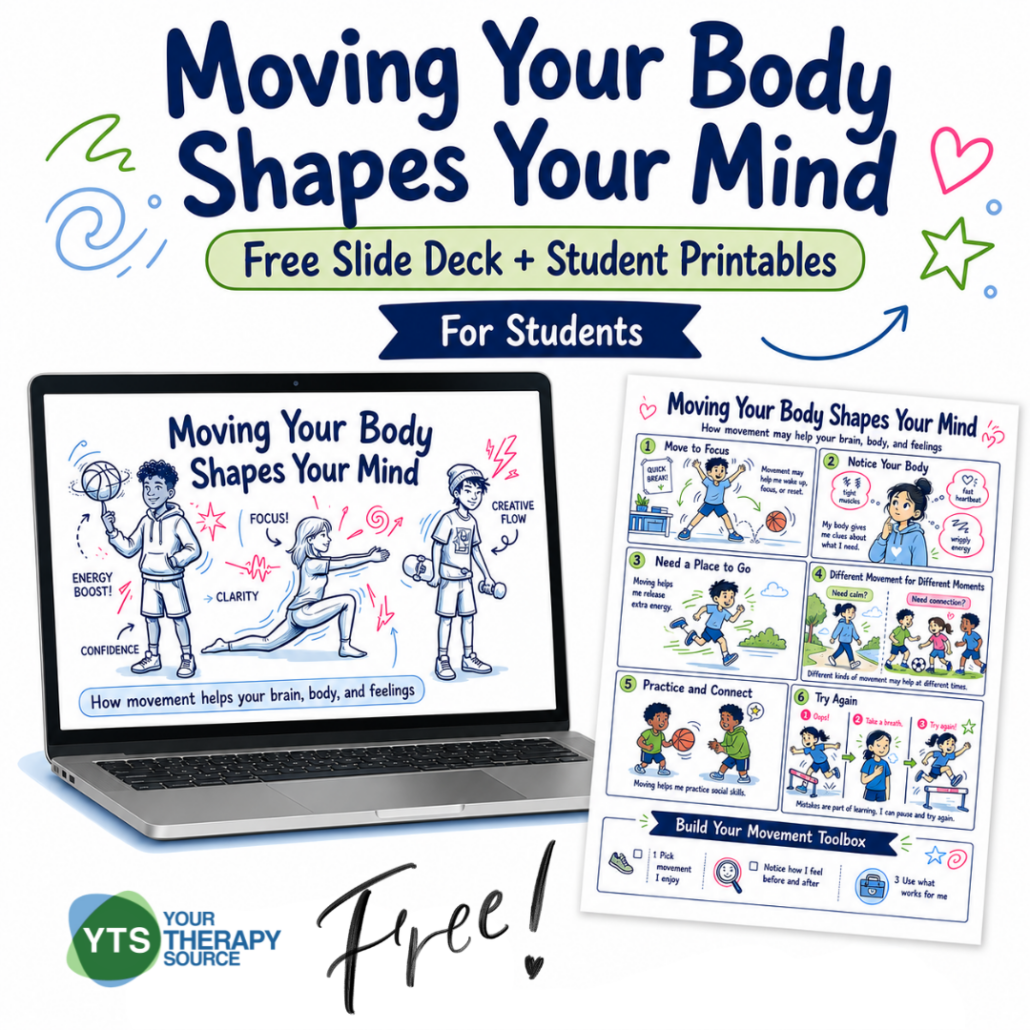
Move Your Body Shape Your Mind Free Slide Deck and Printables
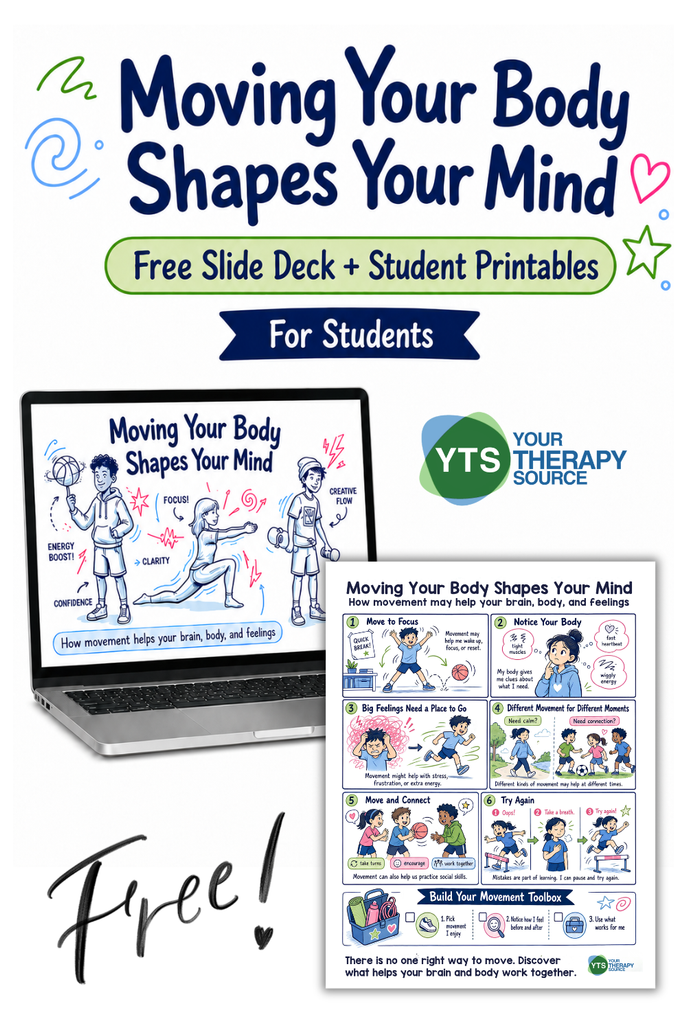
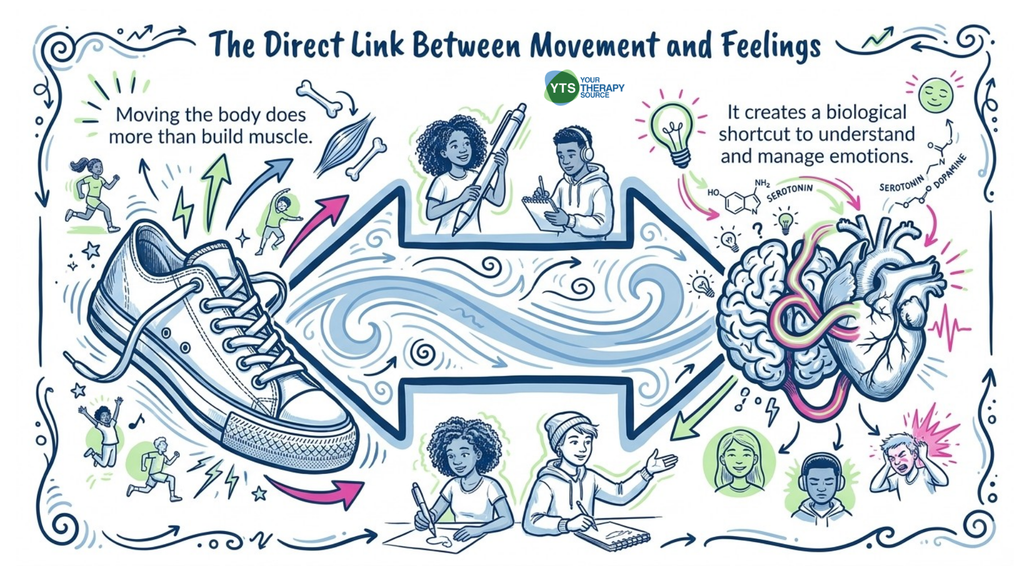
Students are often told to sit still, pay attention, calm down, or get ready to learn. But many students benefit from something more useful: explicit instruction about how their bodies and brains work together. The Move Your Body Shape Your Mind Free Printable gives you an easy way to teach this concept directly to students. The free resource includes a 12-slide teaching deck, student handouts, and a visual summary page that you can use together for a complete lesson.
The goal is not to teach students that movement should always make them calm. Instead, students can learn to notice their own body signals, experiment with different types of movement, and discover what may help them feel ready to learn, participate, connect, or manage big feelings.
WHY EXPLICITLY TEACH STUDENTS ABOUT MOVEMENT?
Students experience body signals throughout the school day, but they may not always recognize what those signals mean.
A student may notice:
- tight muscles
- a fast heartbeat
- wiggly energy
- heavy arms or legs
- shallow breathing
- an urge to move
These signals are not automatically problems that need to be stopped.
They are information.
Teaching students to notice these signals may help them begin to understand what their bodies need.
For example, one student may discover that a quick walk helps them feel more alert. Another may prefer stretching. Another may focus better while standing or moving. Some students may need more movement before returning to seated work.
The goal is not to teach every student the same strategy. The goal is to help students learn more about themselves.
USE THE SLIDE DECK TO TEACH THE BRAIN-BODY CONNECTION
The included slide deck can help guide the lesson step by step.
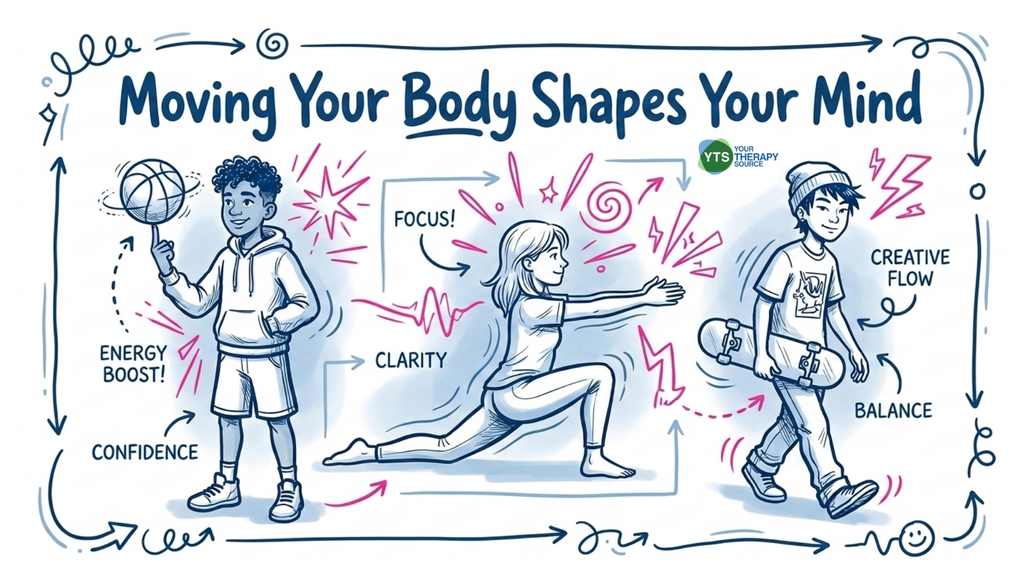
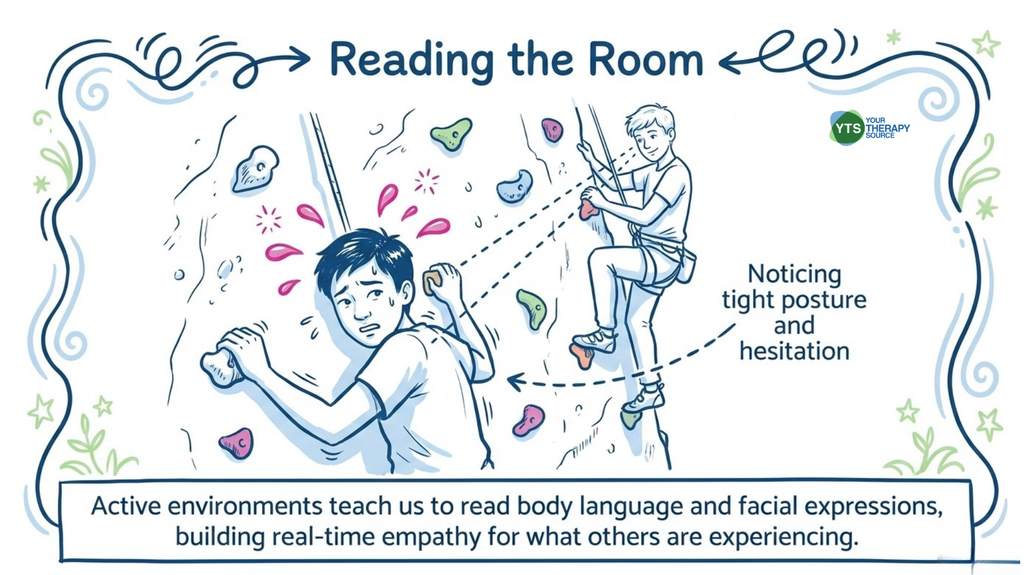
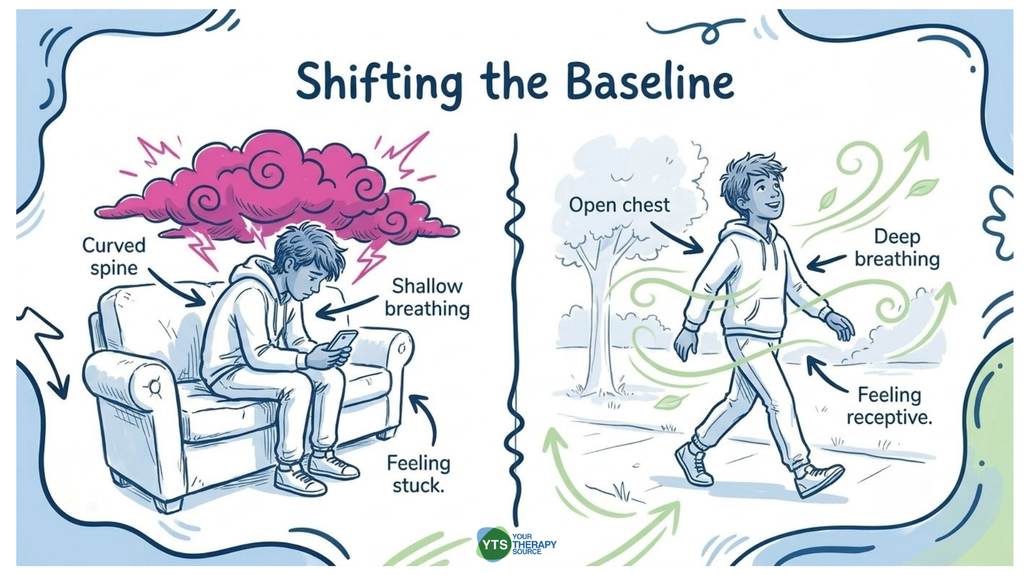
It introduces students to the idea that moving the body can affect more than muscles. The slides encourage students to think about how movement may relate to focus, feelings, body awareness, communication, and connection with others.
As you move through the slides, pause and invite students to connect the ideas to their own experiences.
You might ask:
- What does your body feel like when you have lots of energy?
- How can you tell when your body needs a break?
- What kind of movement helps you feel more ready to learn?
- Do you prefer moving alone or with other people?
- Does the same kind of movement help you every time?
There are no required answers. The purpose is to help students notice patterns in their own bodies.
MOVEMENT MAY HELP STUDENTS GET READY TO LEARN
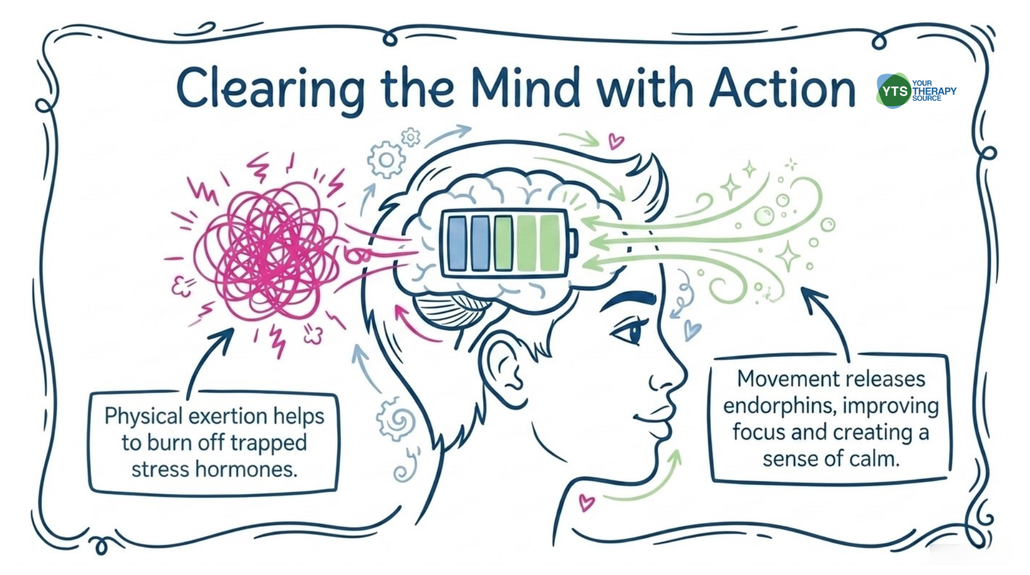
Movement can influence how ready a student feels for learning.
Depending on the student and the situation, movement may help with:
- alertness
- attention
- focus
- releasing extra energy
- reducing physical tension
- taking a break
- transitioning between activities
- getting ready to return to work
This does not mean movement will always make a student calm.
In fact, calm does not always need to be the goal.
Sometimes a student may need more activation, more movement, or a change in body position to feel ready.
Recent research has also explored the relationship between physical activity and emotional intelligence in adolescents. You can read more in Physical Activity and Emotional Intelligence in Teens.
TEACH STUDENTS TO NOTICE BODY SIGNALS
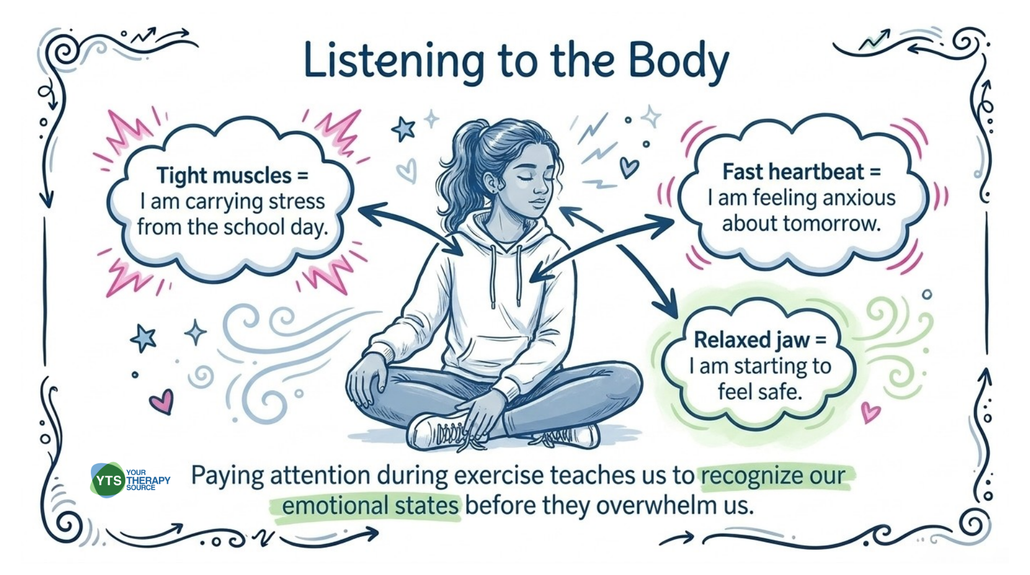
One section of the slide deck focuses on listening to the body and noticing signals such as muscle tension, heartbeat, breathing, and changes in how the body feels.
This connects closely with interoception.
Interoception is our ability to notice internal body signals such as heartbeat, breathing, muscle tension, hunger, thirst, temperature, or the need to move.
Students may benefit from learning to pause and notice:
- Does my body feel tight or loose?
- Does my body feel heavy or full of energy?
- Is my breathing fast or slow?
- Do I feel like I need to move?
- Would movement help right now?
These observations can help students build awareness over time.
For more ideas, see Interoception Activities and the Inside My Body Interoception Song.
BIG FEELINGS CAN COME WITH BIG BODY SENSATIONS
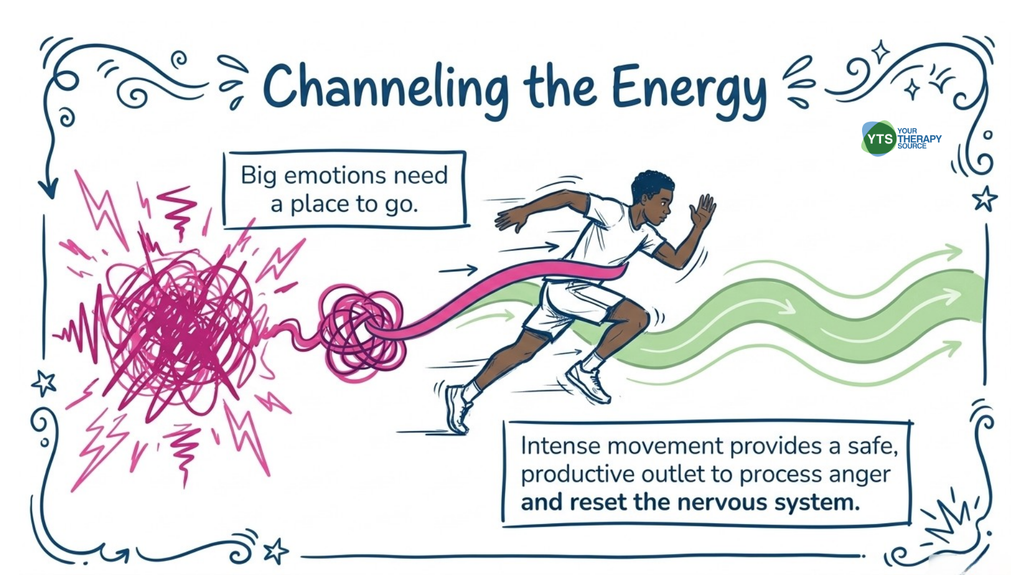
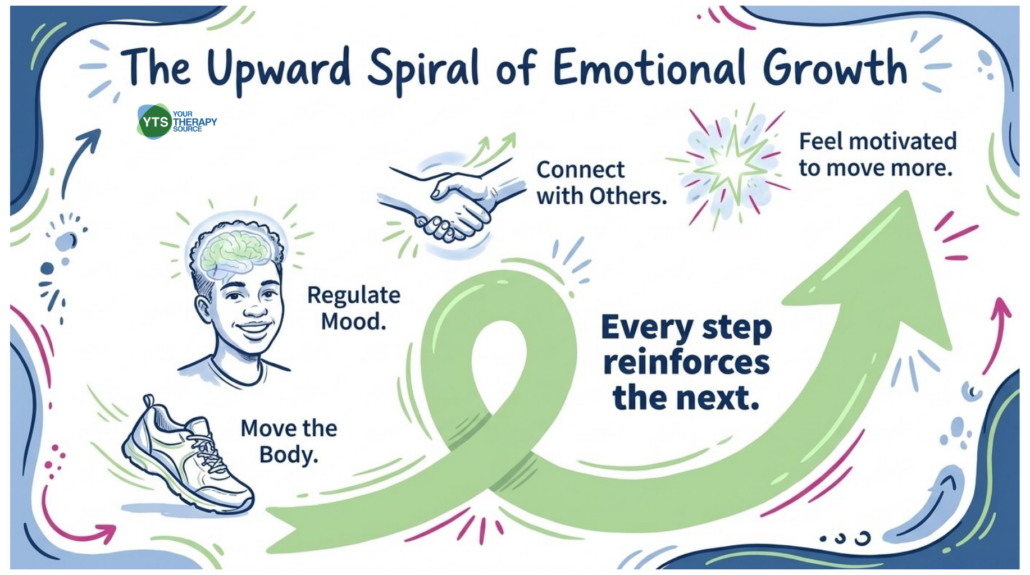
The slide deck also helps students understand that big emotions can come with strong body sensations and extra energy.
When a student feels frustrated, worried, excited, angry, or overwhelmed, movement might provide a safe way to use some of that energy.
Students might experiment with:
- walking
- running
- stretching
- dancing
- jumping
- climbing
- pushing or pulling
- playing a sport
The important part is helping students notice whether the movement actually feels helpful to them.
Instead of simply saying, “Go take a movement break,” we can begin teaching students to ask:
What does my body need right now?
DIFFERENT MOVEMENT WORKS FOR DIFFERENT STUDENTS
The lesson also introduces the idea that different movement may work at different times.
Some students may prefer:
- quiet movement
- vigorous movement
- solo movement
- movement with friends
- structured sports
- casual walking
- stretching
- dancing
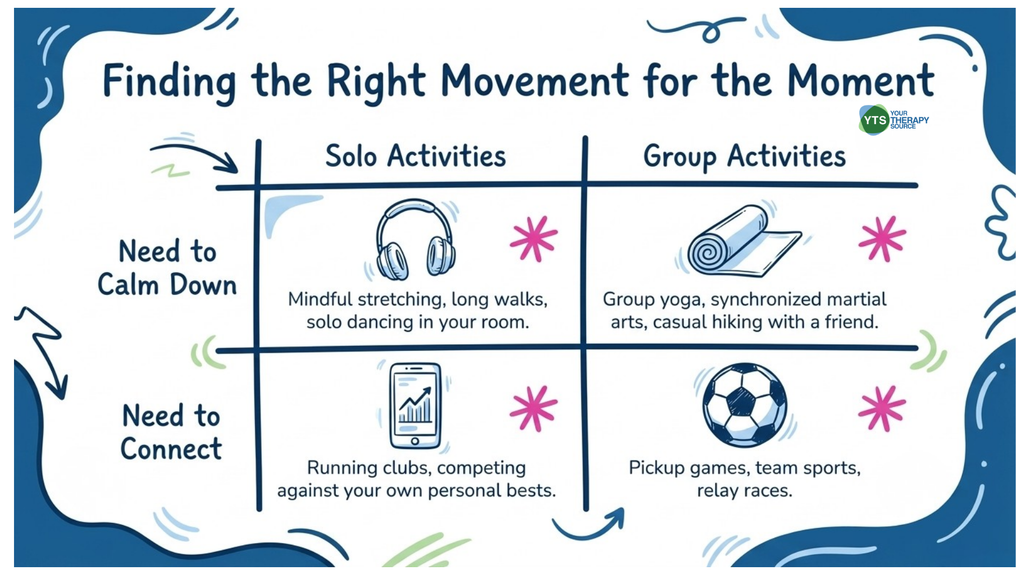
The slide deck specifically compares solo and group activities and encourages students to think about whether they need calm, connection, or something else in the moment.
Neuroaffirming movement support recognizes that students are not expected to regulate their bodies in exactly the same way.
One student may prefer walking alone.
Another may want to play with friends.
One student may enjoy fast, vigorous movement.
Another may prefer slow stretching or changing positions.
These differences do not need to be fixed. They can be explored.
MOVEMENT CAN SUPPORT SOCIAL LEARNING
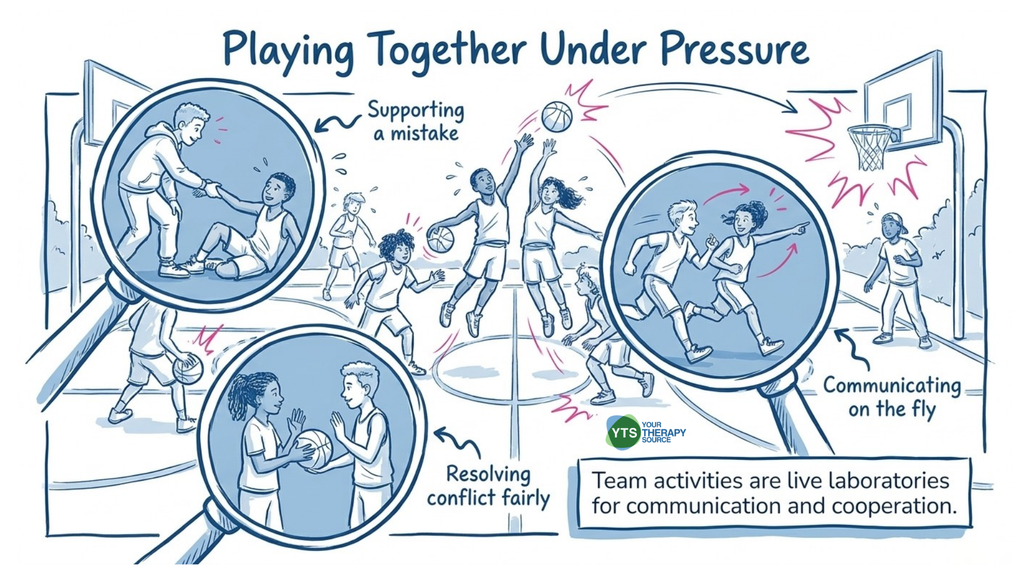
Movement with other people may also give students opportunities to practice:
- taking turns
- communicating
- encouraging others
- solving problems
- working together
- handling mistakes
- trying again
The slide deck uses team activities to highlight communication, cooperation, supporting others after mistakes, and resolving conflict.
For students who benefit from additional structured movement activities, the Brain Body Reset provides more ideas for using movement throughout the day.
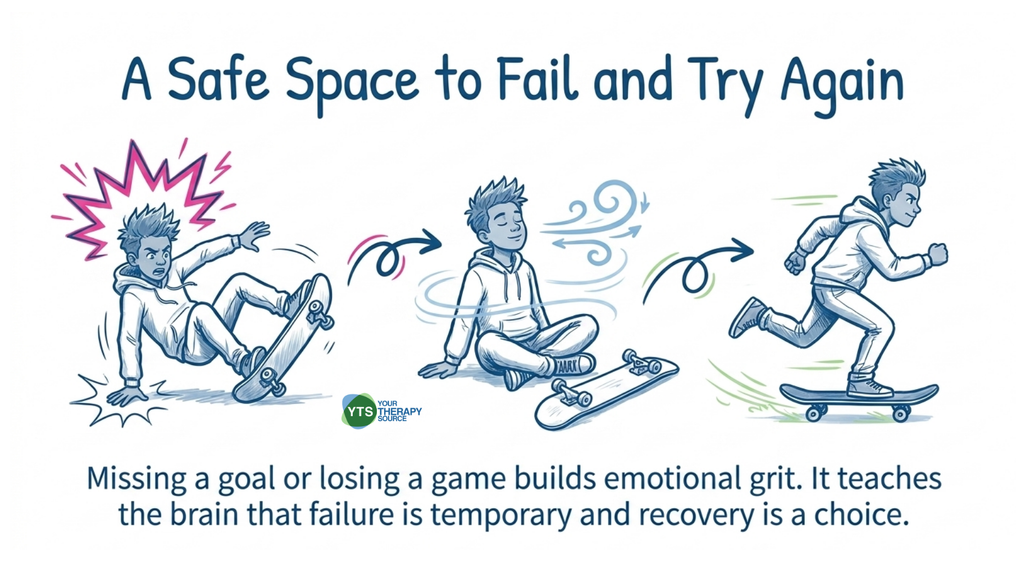
TEACH STUDENTS THAT MISTAKES ARE PART OF LEARNING
Movement provides natural opportunities to practice trying something, making a mistake, adjusting, and trying again.
Students may:
- miss a shot
- lose a game
- trip
- forget a movement sequence
- need several attempts to learn a new skill
The slide deck includes a visual lesson about making a mistake, pausing, and trying again.
This can be a useful opportunity to reinforce that students can pause, change their plan, ask for help, or try again when they are ready.
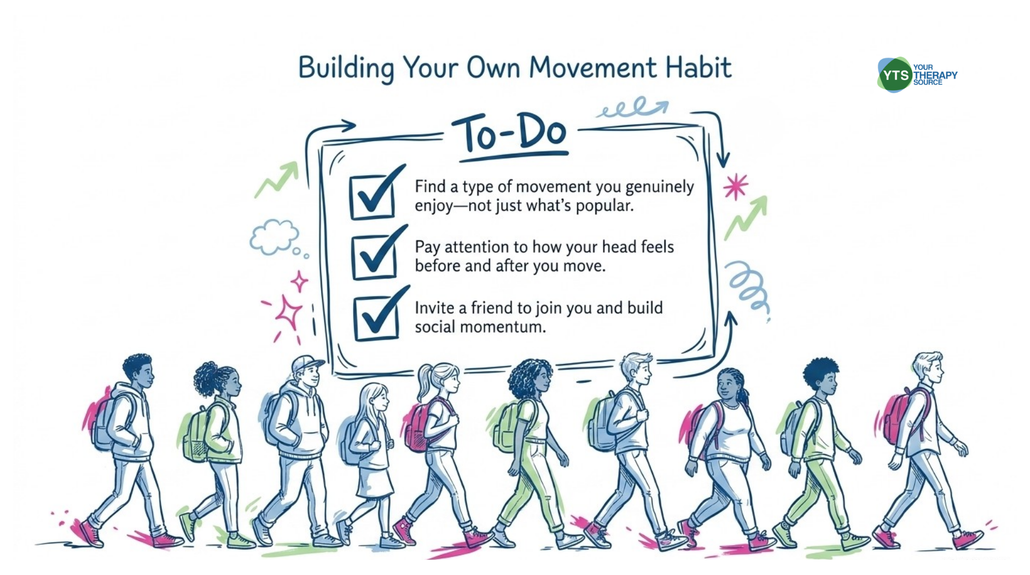
BUILD A PERSONAL MOVEMENT TOOLBOX
The final part of the lesson can shift from teaching to self-discovery.
Help students begin building their own movement toolbox.
They can:
- Choose a type of movement they enjoy.
- Notice how their body feels before moving.
- Try the movement.
- Notice how they feel afterward.
- Decide whether it was helpful.
The final slide encourages students to find movement they genuinely enjoy and pay attention to how they feel before and after moving.
The student printable follows the same idea. It reinforces that different kinds of movement work for different people and that body signals can give students useful information about themselves.
HOW TO USE THE FREE PRINTABLE AND SLIDE DECK
This resource can work well for a classroom lesson, counseling group, therapy session, health lesson, or small-group activity.
A simple lesson sequence could be:
- Present the slide deck and discuss each concept.
- Pause for short student reflection and discussion.
- Try one or two simple movement examples.
- Have students notice how they feel before and after moving.
- Review the student handout together.
- Use the visual summary page as an ongoing classroom reminder.
You do not need to complete everything in one sitting. You can also teach one concept at a time across several days.
THE GOAL IS SELF-AWARENESS, NOT COMPLIANCE
The purpose of teaching students about movement is not to make every child sit quietly afterward.
It is to help students understand themselves.
When students learn to notice body signals, try different strategies, and reflect on what helped, they are beginning to build skills they can use more independently.
Instead of teaching:
“Your body needs to look ready.”
We can teach:
“Notice what your body is telling you and discover what helps you participate and learn.”
That is a much more useful skill for school and beyond.
GET THE MOVING YOUR BODY SHAPES YOUR MIND FREE PRINTABLE
The free Moving Your Body Shapes Your Mind resource includes:
- a 12-slide teaching deck
- student-friendly written handouts
- a visual summary page
- ideas for noticing body signals
- examples of different types of movement
- support for building a personal movement toolbox
Use the materials to explicitly teach students about the connection between movement, body signals, feelings, and learning, then keep the visual printable available as a reminder that there is no one right way to move.