Why Your Students Won’t Start Their Work? Exploring Task Initiation Through a Brain-Body Lens
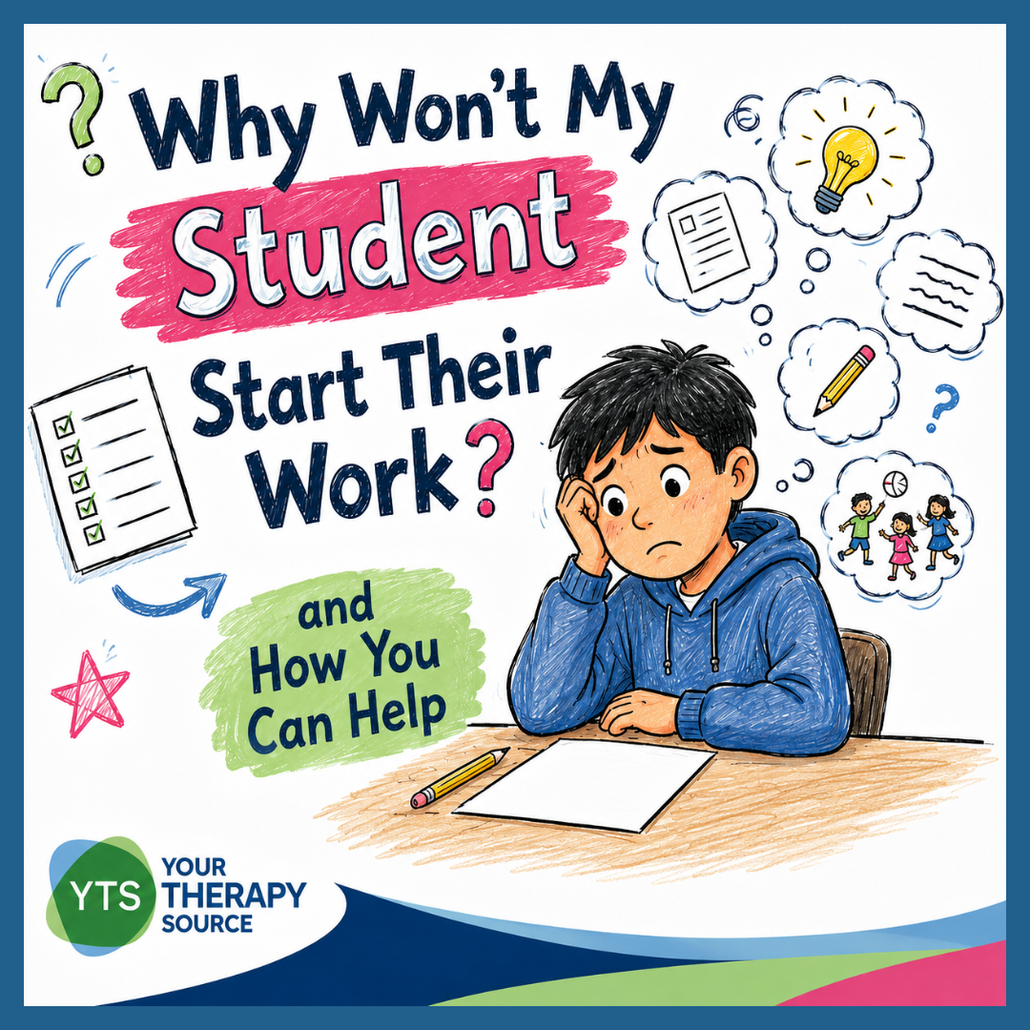
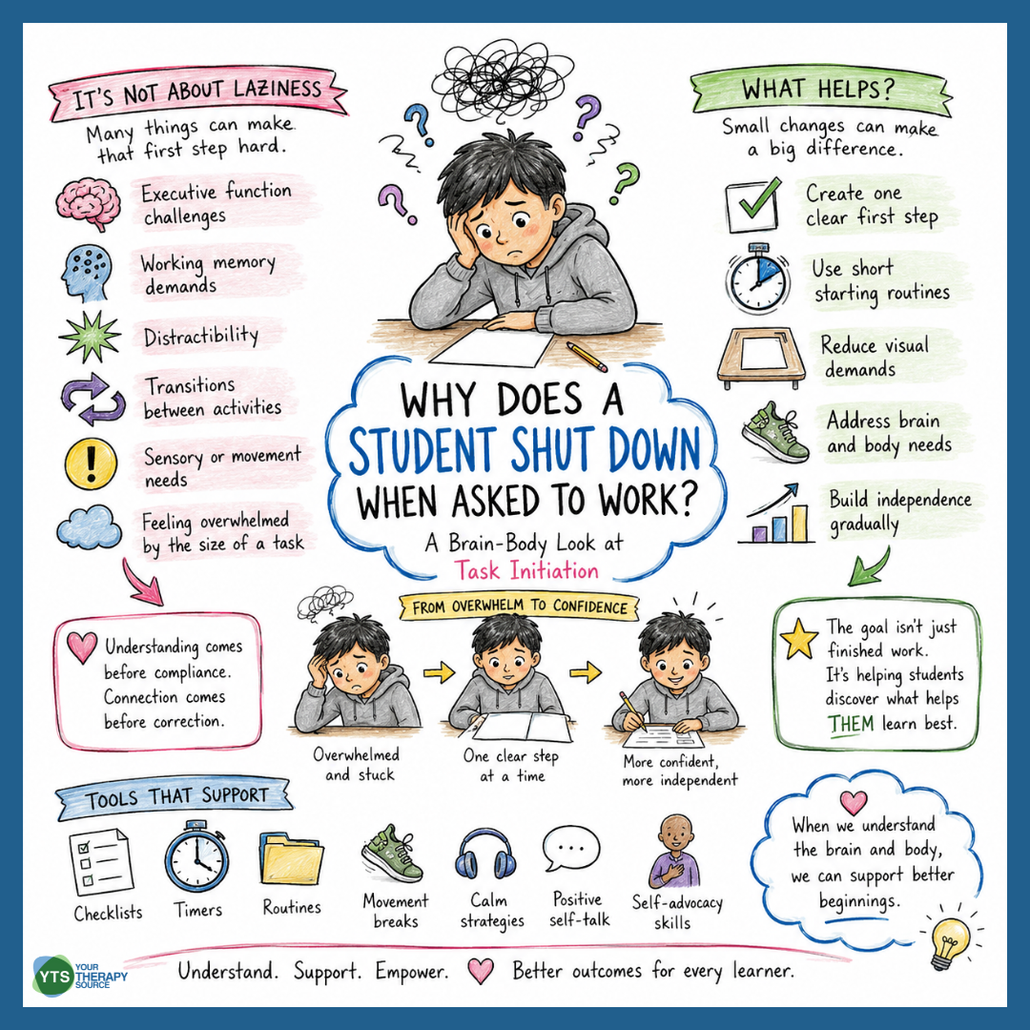
A student sits in front of a blank worksheet. The directions have been given, the materials are ready, and the student appears to understand what to do, but nothing happens. It is easy to see this as a motivation problem. In reality, getting started can depend on a long list of brain and body factors, including executive function skills, working memory, attention, cognitive demands, movement needs, emotional readiness, sensory processing, and the ability to transition from one activity to another. That is why task initiation deserves a closer look. If you ever wonder why your students won’t start their work, then explore task initiation through a brain body lens to help discover why.
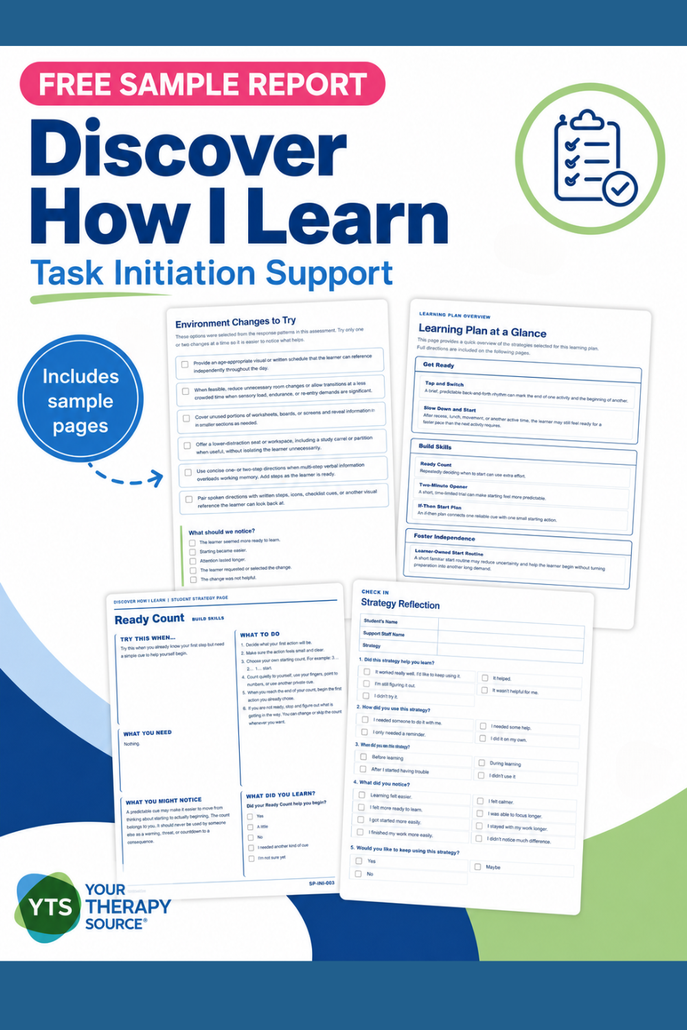
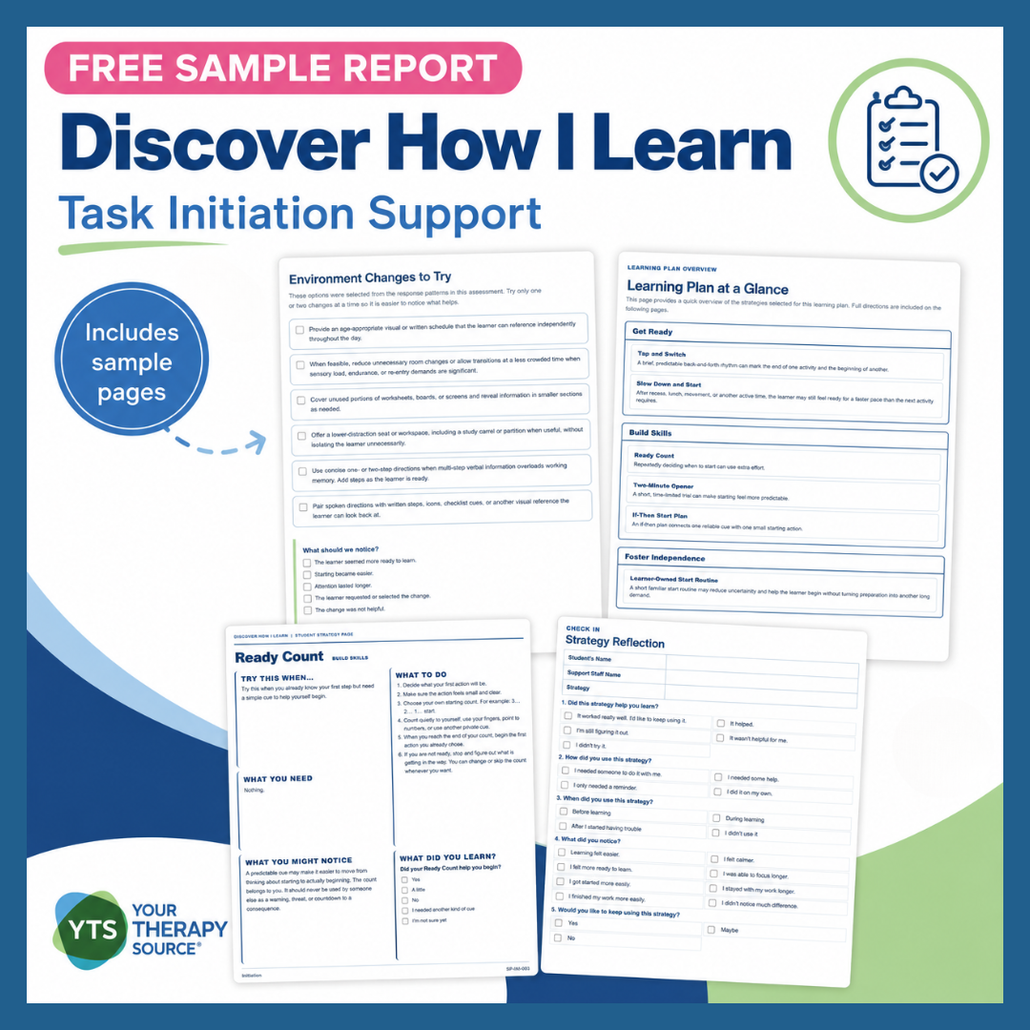
At the bottom of this post, you can download a FREE sample PDF report from the Discover How I Learn tool that focuses on a student who struggles with task initiation.
Task Initiation Is More Than Motivation
Task initiation is an executive function skill that helps a student move from knowing what needs to be done to actually beginning.
Starting may look simple from the outside, but a student may need to:
- remember the directions,
- shift attention away from the previous activity,
- decide what comes first,
- organize materials,
- ignore distractions,
- tolerate sitting or remaining in the learning space,
- manage frustration or uncertainty,
- and turn an idea into action.
A breakdown anywhere in that process can look like a task initiation problem.
For more background on this executive function skill, read Task Initiation: What It Is and How to Help Students Get Started.
Working Memory May Be Getting in the Way
A student may understand the directions when they are given but have difficulty holding that information in mind long enough to act on it.
You may notice that the student:
- repeatedly asks what to do,
- watches classmates before beginning,
- waits for an adult to return,
- starts the wrong part of the assignment,
- or begins more easily when directions are written down.
In this situation, the issue may not be willingness to start. The student may be trying to reconstruct what they are supposed to do.
The sample Discover How I Learn report illustrates how these areas can overlap. Difficulty starting tasks appears alongside challenges with remembering steps, transitions, and emotional readiness.
Distractibility Can Look Like Poor Task Initiation
Some students never really reach the starting point because their attention is constantly being pulled elsewhere.
They may be:
- looking around the room,
- listening to nearby conversations,
- watching other students,
- playing with materials,
- responding to movement,
- or shifting from one distraction to another.
In these cases, the question becomes less about why the student will not start and more about what is competing for attention.
Possible supports might include:
- reducing visual clutter,
- using a lower-distraction workspace,
- showing only part of the worksheet,
- shortening verbal directions,
- or pairing spoken directions with written or visual cues.
These types of environment changes are included in the sample report as options to test.
Cognitive Demands May Be Too High
Sometimes the student is not stuck because of initiation alone.
The task may require too much:
- language processing,
- reading,
- writing,
- sequencing,
- organization,
- problem-solving,
- or decision-making.
A student who quickly begins easier assignments but consistently stalls before more complex work may be giving an important clue.
The academic demand itself may need to be examined before assuming the primary problem is task initiation.
Movement Needs Can Affect Getting Started
Some students have difficulty tolerating long periods of sitting.
By the time the next seated activity begins, they may already be:
- shifting constantly,
- tapping,
- rocking,
- standing up,
- touching materials,
- looking for opportunities to move,
- or becoming increasingly restless.
This does not automatically mean movement is causing the problem.
It does mean physical readiness should be considered.
A student may start more successfully:
- after movement,
- while standing,
- in a different seating position,
- after a brief transition routine,
- or when the first part of the task includes an active component.
The goal is not to make the student perfectly still. The goal is to learn whether movement, position, or activity level influences the ability to begin.
Transitions Can Make Starting Harder
The moments before an assignment matter.
Think about a student returning from recess. A few minutes earlier, the student may have been running, talking, playing, negotiating with peers, and responding to constant sensory input.
Now the expectation changes quickly.
The student needs to:
- enter the classroom,
- shift activity level,
- organize materials,
- listen,
- remember directions,
- locate the first step,
- and begin.
Some students make this transition easily. Others may need a clearer bridge between one activity and the next.
The sample report includes strategies such as Tap and Switch and Slow Down and Start to explore whether a short, predictable transition routine makes beginning easier.
Emotional Readiness Can Stop a Task Before It Starts
A student may know what to do but still hesitate because starting feels risky.
You might notice:
- repeated reassurance seeking,
- fear of making a mistake,
- erasing before much is written,
- saying “I don’t know” despite knowing the answer,
- avoiding choices,
- or waiting for an adult to confirm each step.
For some students, not beginning may temporarily feel safer than beginning incorrectly.
That makes emotional readiness another important part of the picture.
The Same Behavior Can Have Very Different Causes
Two students can both sit in front of blank worksheets for five minutes.
One may have forgotten the directions.
Another may be distracted.
Another may not know how to organize the answer.
Another may be worried about making a mistake.
Another may need movement after sitting for a long period.
Another may understand everything but struggle specifically with moving from intention to action.
The behavior looks the same.
The reason may be completely different.
Look for Strengths, Not Just Problems
When a student struggles to start, it is useful to look closely at when starting goes well.
Ask:
- What tasks does the student start easily?
- Which subjects are easier?
- What time of day is better?
- Does the student start faster with written directions?
- Does movement help?
- Does reducing the amount of work help?
- Does identifying the first step help?
- Is starting easier in a quieter environment?
- Does the student begin more independently during preferred activities?
- Does working beside another person help?
These patterns can reveal strengths that are easy to miss.
For example, a student who begins quickly once the first step is identified may understand the academic content well but need support with planning.
A student who starts independently in a quieter setting may have adequate initiation skills but difficulty managing competing sensory or attentional demands.
Move From Observation to Hypothesis
Instead of stopping at:
“The student will not start.”
Try describing the pattern more precisely:
- “Starting is harder after recess.”
- “Starting is harder when directions are only verbal.”
- “Starting improves when only part of the worksheet is visible.”
- “Starting is easier when the student can stand.”
- “Starting improves after the first step is identified.”
- “Starting is difficult primarily during writing.”
- “Starting is easier when an adult is nearby.”
Now there is something specific to investigate. The goal is not to label the student. The goal is to better understand what may be helping or interfering with learning.
Change One Thing and Watch What Happens
Trying many strategies at once can make it difficult to know what actually helped. Instead, change one or two variables. For example:
- make the first step visible,
- reduce how much work is shown,
- provide written directions,
- change the workspace,
- allow a different position,
- add a brief movement transition,
- or make the first action smaller.
Then observe. Did the student:
- begin more easily,
- need fewer repeated directions,
- stay engaged longer,
- seem more ready,
- or begin selecting the support independently?
The sample report specifically encourages adults to watch for these types of changes.
Build Skills Once the Barrier Is Clearer
After identifying patterns, strategies can be taught more intentionally. The sample task initiation report includes:
- Ready Count, a learner-controlled cue for beginning a known first action,
- Two-Minute Opener, a brief and predictable starting period,
- If-Then Start Plan, which connects a familiar cue with one small action,
- and a Learner-Owned Start Routine, which creates a short, predictable sequence for beginning work. The goal is not simply to find a better adult prompt.
Over time, the student can begin learning:
- what makes starting difficult,
- what helps,
- which strategies are worth using,
- and when to ask for support.
A Closer Look at the Whole Learner
Task initiation may be the behavior that first gets noticed, but it may only be one part of the picture. The Discover How I Learn tool explores multiple areas that can affect learning, including sensory processing, self-regulation, attention, and executive function skills.
The goal is to identify strengths, areas for improvement, and patterns that can help explain why starting is easier in some situations and harder in others.
The individualized learning plan then organizes suggestions around:
Get Ready → Build Skills → Foster Independence
Learn More About Discover How I Learn
Discover How I Learn is available as part of the YTS Action Toolkit.
For a student who struggles with task initiation, the most useful next step may be to look beyond the blank worksheet. Understanding the student’s strengths and the brain-body factors that make starting easier or harder can help identify more meaningful supports.
Download the FREE Task Initiation Sample Report
The PDF shows what a personalized learning plan can look like for a student who has difficulty getting started. It includes a learning profile, possible environment changes, task initiation strategies, student-facing strategy pages, reflection tools, and a 30-day check-in.
Download the FREE Discover How I Learn Task Initiation Sample Report.