50 Student Success Strategies to Foster Independence
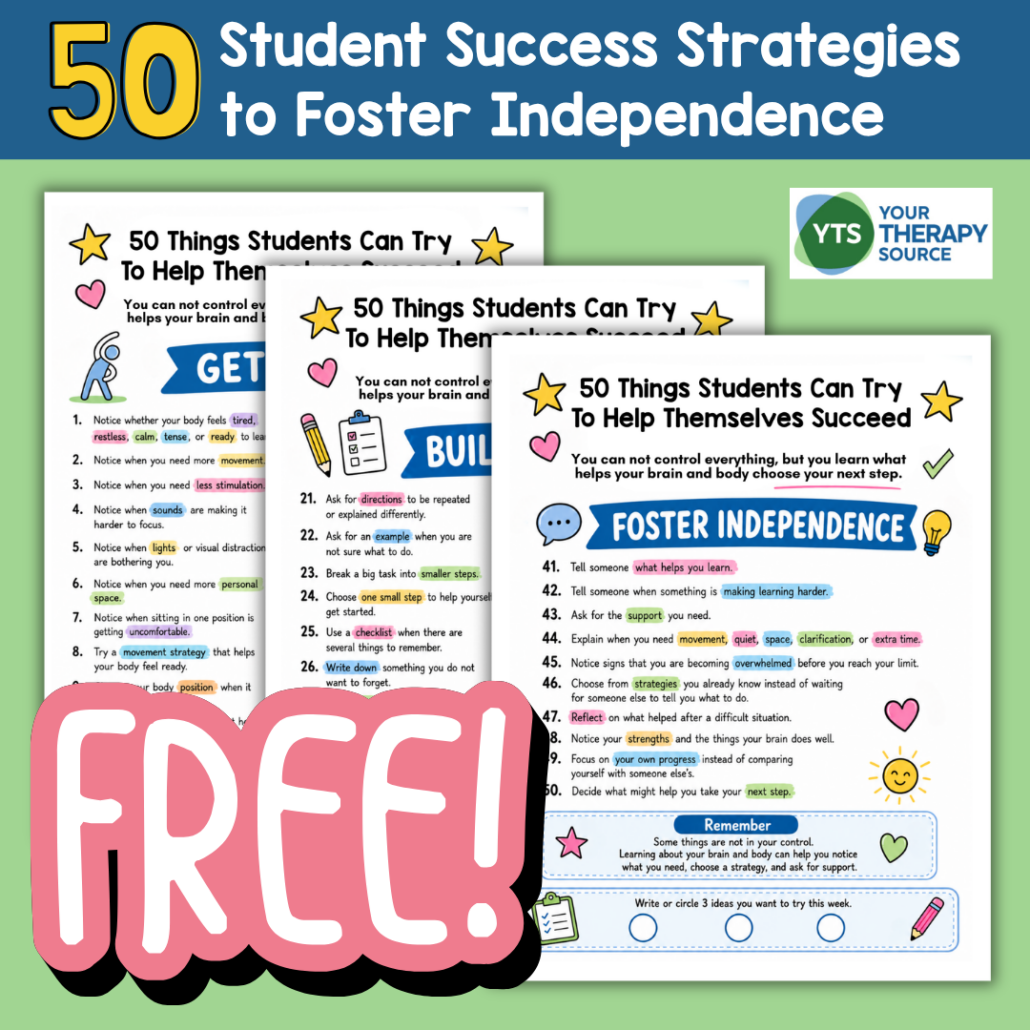
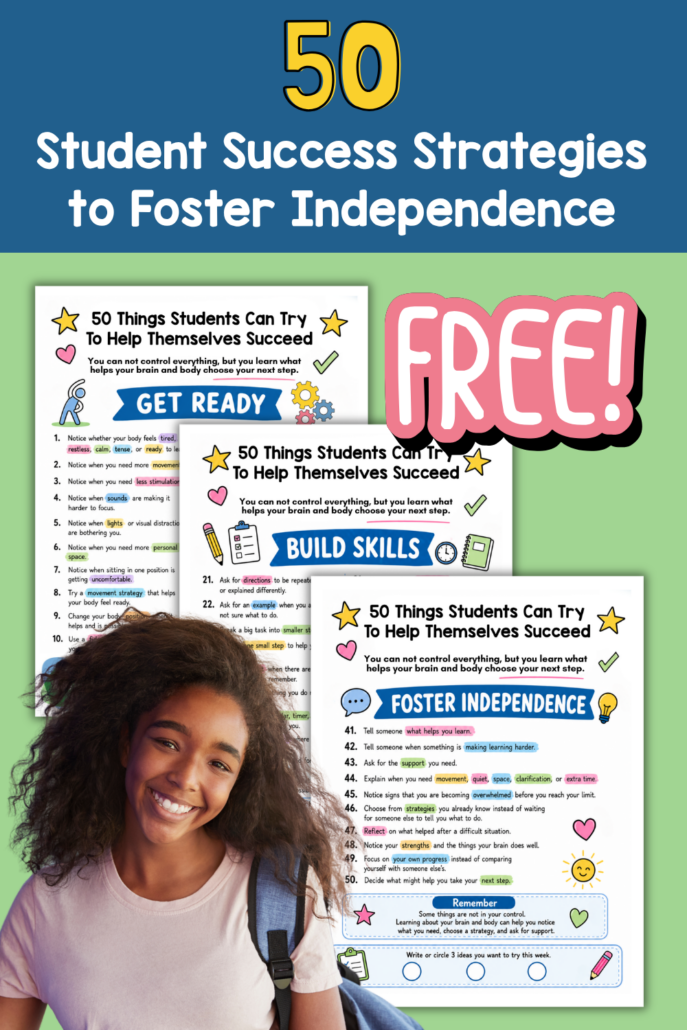
Helping students succeed is not about reminding them of every step or staying beside them until the work is finished. One of the most important student success strategies we can teach is how to recognize what they need and take the next step with less adult support. The free printable 50 Things Students Can Try to Help Themselves Succeed gives students practical ideas they can use to better understand their brains, bodies, learning needs, and strategies. The goal is not for every strategy to work for every student, it is to help students discover what helps them succeed.
This printable is based on the Get Ready → Build Skills → Foster Independence framework behind the Discover How I Learn Tool inside the YTS Action Toolkit. The framework helps educators move away from constant prompting and toward teaching students the skills and strategies they need to become more independent. Learn more about Discover How I Learn
What Are Student Success Strategies?
Student success strategies are practical actions that help students participate more successfully in learning. They can support regulation, attention, organization, task initiation, problem solving, self-advocacy, and independence. Examples of student success strategies include:
- noticing when movement is needed
- recognizing when an environment is distracting
- asking for clarification
- breaking a large task into smaller steps
- using a checklist
- returning attention to a task after becoming distracted
- asking for support before becoming completely stuck
- recognizing which strategies make learning easier
- explaining what helps with learning
- choosing a strategy without waiting for an adult to suggest one
The long-term goal is not simply better behavior or more completed assignments. The goal is helping students understand themselves well enough to participate more independently.
Get Ready: Help Students Notice What Their Brain and Body Need
Before expecting students to focus, organize, remember directions, or complete challenging work, we need to consider whether their brains and bodies are ready for learning. This is the Get Ready part of the framework. Students can learn to notice things such as:
- whether they feel tired, restless, calm, tense, or ready to learn
- when they need more movement
- when they need less stimulation
- when sounds make it harder to focus
- when lighting or visual distractions are bothering them
- when they need more personal space
- when sitting in one position is becoming uncomfortable
- whether a fidget or movement strategy would help
- whether hunger, thirst, or bathroom needs are affecting concentration
- which environments help their brain and body work best
The first page of the printable focuses on this kind of awareness and encourages students to identify ideas that may help their brains and bodies. This creates an important shift in responsibility. Instead of always relying on an adult to notice that something is wrong, students begin learning to recognize when something is making learning harder.
Build Skills: Teach the Strategies Students Need
Once students are ready to learn, they still need skills that help them manage the demands of school and daily life. This is the Build Skills part of the framework. These skills are not always automatic, and many students need direct teaching and repeated practice. Important skills can include:
- asking for directions to be repeated or explained differently
- asking for an example
- breaking large tasks into smaller steps
- choosing one small step to get started
- using a checklist
- writing down information that needs to be remembered
- using planners, calendars, timers, or reminders
- organizing materials
- preparing needed items ahead of time
- reducing distractions
- noticing when attention has wandered
- returning attention to the task
- taking planned breaks
- trying a different strategy when the first one does not work
- checking work
- allowing more time for difficult tasks
The second page of the printable focuses on these types of learning and executive functioning skills. Students are encouraged to identify specific skills they may want to practice. This is important because simply telling a student to “be more independent” does not teach independence. Students need opportunities to learn and practice the individual skills that make independence possible.
Foster Independence: Hand More of the Process Back to the Student
The third part of the framework is Foster Independence. This is where students begin taking more ownership of recognizing their needs, choosing strategies, and deciding what to do next. Students can practice:
- telling someone what helps them learn
- explaining when something is making learning harder
- asking for support
- communicating when they need movement, quiet, space, clarification, or extra time
- recognizing signs that they are becoming overwhelmed
- choosing from strategies they already know
- reflecting on what helped after a difficult situation
- recognizing their strengths
- focusing on their own progress
- deciding what might help them take the next step
The third page of the printable focuses directly on these independence and self-advocacy skills. It encourages students to recognize what helps, choose strategies, and think about their own next step.Over time, students can begin doing more of this thinking for themselves. They are not expected to become independent overnight, but they can gradually require fewer adult prompts as their awareness and skills improve.
Why Student Independence Matters for Teachers and Parents
Teachers and parents provide an enormous amount of invisible support throughout the day. We repeat directions, redirect attention, find missing materials, explain what comes next, prompt students to start, and remind them to keep going. Often, we do this because it is faster and easier in the moment. In a busy classroom or household, giving the next direction may feel much more efficient than waiting for a student to figure it out.
The problem is that when adults consistently do the remembering, planning, noticing, and problem solving, students have fewer opportunities to practice those skills themselves. Supporting independence means intentionally creating more chances for students to take part in that process.
The Goal Is Not Less Support, It Is Different Support
Fostering independence does not mean removing support before a student is ready. Students still need supportive adults, but the type of support can gradually change. Instead of immediately solving the problem, adults can begin prompting reflection with questions such as:
- What do you notice?
- What helped you last time?
- What is one thing you could try?
- What do you need to get started?
- What is your next step?
Sometimes the student will still need the answer or direct assistance. At other times, waiting a few extra seconds gives the student an opportunity to remember, choose, initiate, or problem solve independently.
When Students Build Independence, Teachers Can Step Back
The transformation is not just about what changes for the student. As students become more capable of recognizing their needs and choosing strategies, teachers and parents can begin stepping back. The progression often looks like this:
- adult provides direct support
- adult guides the student through the strategy
- student practices using the strategy
- adult reduces prompts
- student begins choosing the strategy independently
This can mean fewer repeated directions, fewer reminders, and less hovering. It can also free educators to spend more time teaching instead of continuously managing every student’s next step.
Small Changes Can Encourage More Independence
You do not need an entirely new classroom system to begin fostering independence. Small changes in adult behavior can create more opportunities for students to think and act for themselves. You can try:
- waiting a few seconds before repeating a direction
- asking the student what the first step might be
- pointing to a visual instead of repeating the answer
- asking which strategy helped previously
- offering two possible strategies and letting the student choose
- encouraging students to gather their own materials
- teaching students how to recognize when they need a break
- asking students to reflect on what worked
- praising strategy use, not just task completion
- gradually reducing prompts when a skill becomes more familiar
These small shifts can add up over time. The goal is to move from adults constantly directing the process toward students increasingly understanding and managing the process themselves.
Student Success Looks Different for Every Learner
There is no single student success strategy that works for everyone. One student may work better after movement, while another may need fewer visual distractions or more quiet.
A student may rely on a checklist, timer, written directions, or extra processing time. The goal is not to make every student use the same strategies, it is to help each student recognize what helps their own brain and body learn best.
Go Beyond a List of Student Success Strategies
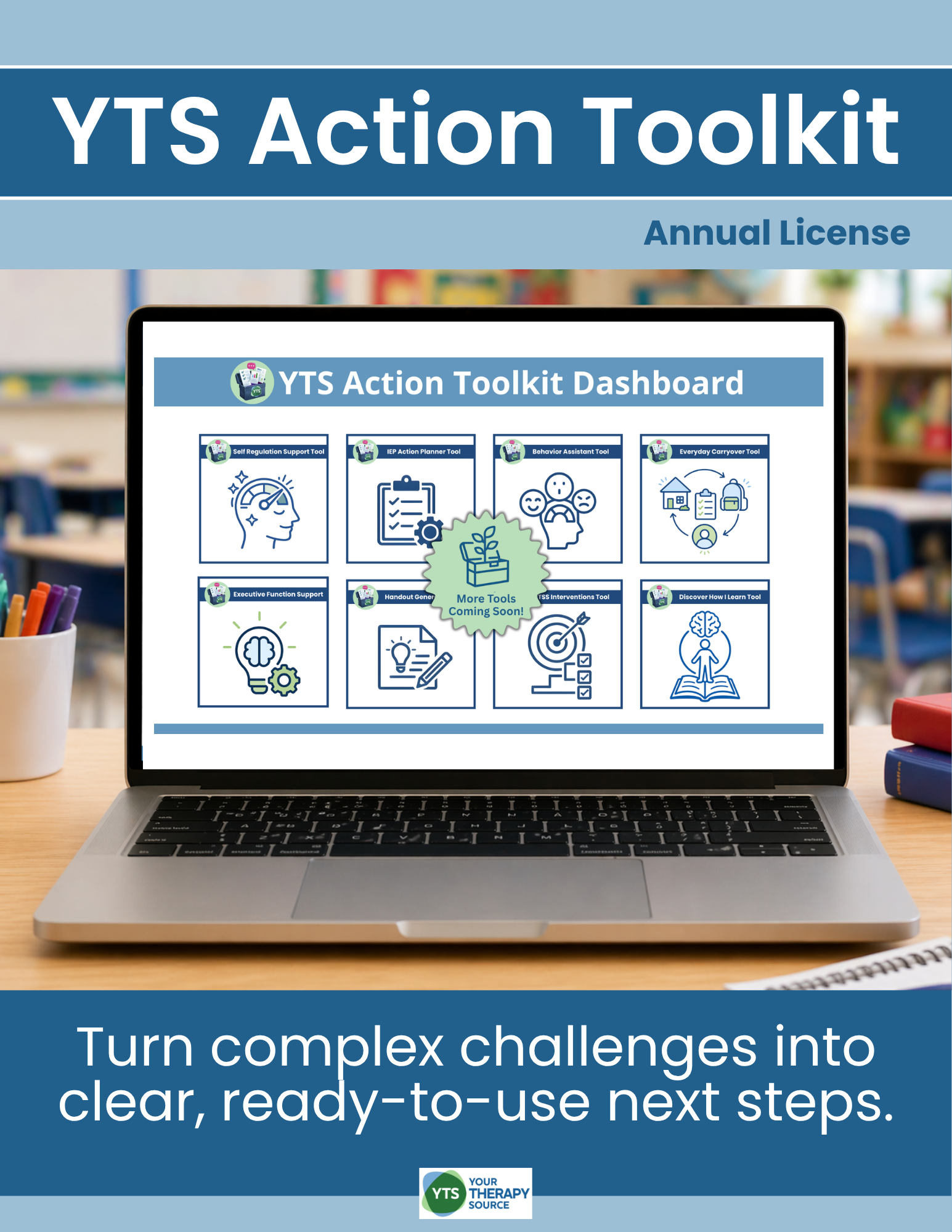
A list of strategies can be a useful starting point, but educators often need help figuring out which areas to focus on for an individual student. That is where the Discover How I Learn Tool can help.
Discover How I Learn is built around the same Get Ready → Build Skills → Foster Independence framework. It helps you look at the student’s brain, body, learning skills, and growing independence so you can focus on strategies that are more meaningful for that student.
The goal is not to add more prompting or more adult management. The goal is to help students understand what they need, practice useful strategies, and gradually take more ownership of their own learning.
Explore the Discover How I Learn Tool inside the YTS Action Toolkit
Download the Free Student Success Strategies Printable
The printable is organized around the three-part framework of Get Ready, Build Skills, and Foster Independence. It can be used in classrooms, therapy sessions, counseling groups, special education settings, homeschool environments, or at home.
Rather than asking students to work on all 50 strategies, encourage them to choose a few ideas that seem relevant. Give them opportunities to practice those strategies and revisit the list later as their needs and skills change. Enter your email below to access the printable.