Recess Recommendations for Students K Through 12
Recess is often the first thing cut when schedules get tight or behavior problems arise. Yet growing research suggests that regular breaks from classroom instruction may support learning, attention, social skills, and mental health for students of all ages. The American Academy of Pediatrics (AAP) recently updated its recess recommendations in a 2026 policy statement, reaffirming that recess is a necessary part of the school day. For therapists, teachers, related service providers, and parents, this update matters because it frames recess not as extra time or a reward, but as a protected part of child and adolescent development from kindergarten through 12th grade.
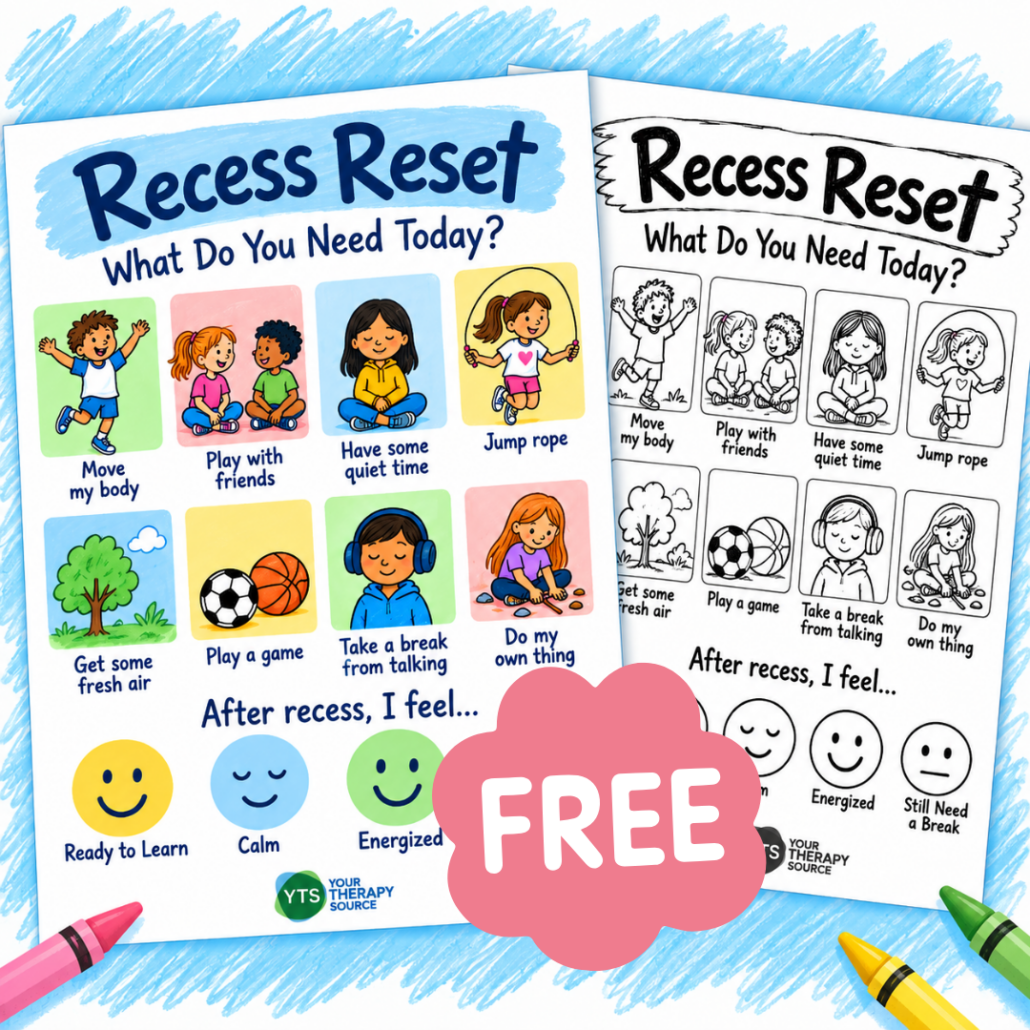
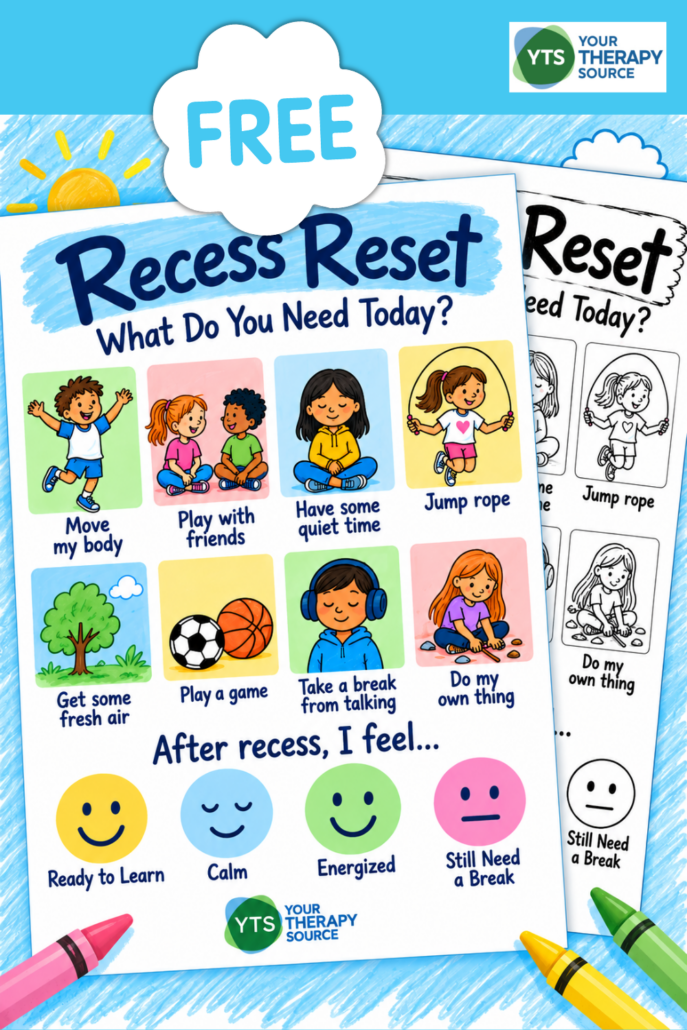
Be sure to download the free Recess Reset printable at the bottom of this blog post. It is available in color and black and white and can help students think about what they need from recess and how they feel afterward.
What the Research Examined
This publication is a policy statement from the American Academy of Pediatrics Council on School Health. It updates the 2013 statement, “The Crucial Role of Recess,” using newer research on learning, adolescent health, social-emotional development, and play.
Here is a quick snapshot of the source:
- A 2026 AAP policy statement published in Pediatrics, drawing on more than 100 cited sources across neuroscience, education, and school health research.
- Topics reviewed include memory and “wakeful rest,” physical activity and learning, peer engagement, recess quality, safety, and access to recess.
- Recommendations apply to all students, kindergarten through 12th grade, reflecting the CDC’s expanded definition of recess.
Key Findings From the Research
Overall, the statement concludes that recess supports the whole child and should not be withheld for academic or punitive reasons. The research reviewed by the AAP connects recess with benefits across social-emotional development, physical health, and cognitive or academic performance.
Research on “wakeful rest” suggests that a pause after learning may help new information stabilize in memory, while competing cognitive demands may interfere with this process. Physical activity, including a single bout of moderate exercise, has also been shown to support attention, information processing, and memory in students.
Peer-reviewed studies cited in the statement indicate that multiple daily breaks, with a minimum of 20 minutes of recess every day, may be optimal for realizing the full benefits of recess. Scheduling recess before lunch is also associated with better meal consumption, improved behavior, and better attention when students return to class.
Not all students have equal access to recess. The AAP notes disparities related to socioeconomic status and marginalized student populations, with some students receiving less recess or being more likely to have recess withheld.
Why These Findings Matter for School-Based Practice
School-based therapists and educators often see firsthand how movement, play, and peer time influence participation and readiness to learn. This policy statement gives professionals a strong, evidence-informed foundation for protecting recess in the school day.
Recess is described as a student’s personal time. Child-directed play at recess provides an important opportunity during the school day for students to practice social skills with peers.
Recess and physical education are not interchangeable. Each provides unique and complementary benefits. Physical education provides structured instruction, while recess provides students with greater choice and opportunities for child-directed activity and play.
Quality matters too. Simply stopping academic work is not enough. Planning, trained supervision, inclusive spaces, and choices for students all influence what recess can offer.
Because supervision quality plays such a large role, teams may want to review current practices for recess supervision when advocating for improvements.
Implications for School Staff
For school staff, the statement suggests that recess is something to plan and protect, not simply a gap in the schedule. When students lack adequate breaks, staff may notice changes in attention, participation, emotional regulation, and peer interactions.
Students who do not get enough movement or downtime may have more difficulty maintaining focus and time on task during instruction. They may also have fewer opportunities to practice cooperation, communication, problem-solving, and navigating peer relationships.
The statement frames recess as one part of a broader, multimodal approach to student well-being that also includes physical education, classroom activity breaks, and a supportive school climate.
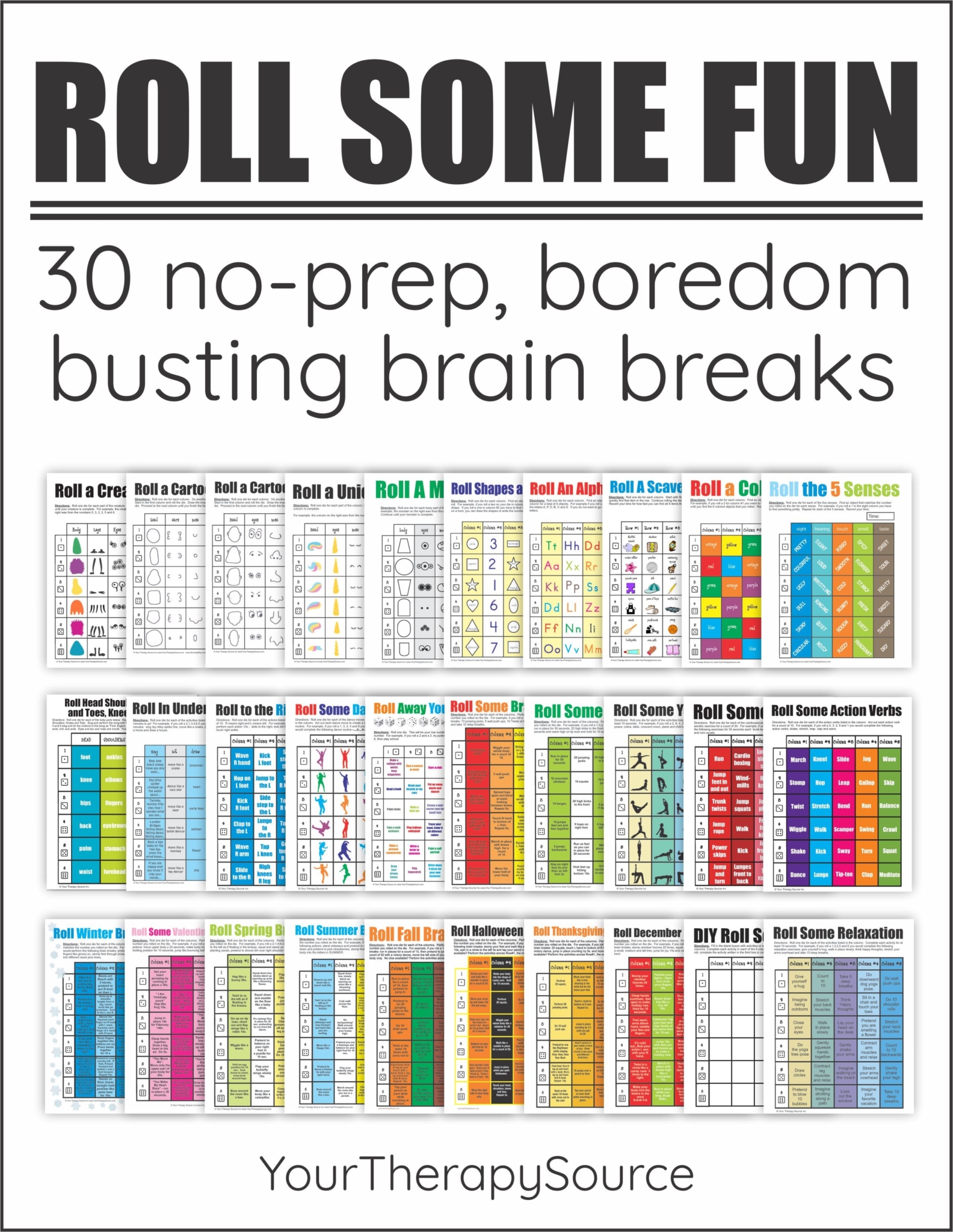
Quiet options count too. Offering choices such as calm social time or a mindful song activity alongside active play may help more students find ways to reset and return to class ready to learn.
How Long Should Recess Be?
One of the biggest questions for parents and school staff is how much recess students actually need. The AAP policy statement cites peer-reviewed research suggesting that multiple breaks, with a minimum of 20 minutes of recess every day, may be optimal for realizing the cognitive, physical, and social benefits of recess.
The idea of multiple breaks is important. Rather than looking only at the total number of recess minutes, it can be helpful to consider how long students are expected to sustain concentrated academic effort without a meaningful break.
It is also worth looking at how much recess students actually receive. A 20-minute block on the schedule may become considerably shorter after lining up, walking outside, getting equipment, and transitioning back to class.
Recess Does Not Have to Look the Same for Every Student
A successful recess does not require every student to run around the playground. One student may want to play soccer, another may jump rope, and another may want to sit and talk with a friend.
Some students may prefer quiet time, walking, fresh air, or simply doing their own thing. Providing choices can help make recess more inclusive while preserving the student-directed nature of the break.
For some students, recess itself can be challenging. Noise, unpredictable games, motor demands, peer interactions, and unstructured time may create barriers to participation.
Teachers, therapists, and other school staff can help reduce those barriers without turning recess into another adult-directed activity.
When and How to Use the Free Recess Reset Printable
The free Recess Reset printable is meant to be a simple student reflection tool, not another task teachers need to manage. It can be used occasionally with an individual student, a small group, or a whole class when it would be helpful to think about what students need from their break.
Before recess, students can look at the choices and consider what they might need that day. They might choose to move their body, play with friends, have some quiet time, jump rope, get fresh air, play a game, take a break from talking, or do their own thing.
After recess, students can quickly check in with themselves. They can consider whether they feel ready to learn, calm, energized, or whether they still feel like they need a break.
There is no right answer and students do not need to use the printable every day. The goal is simply to help students begin noticing what they need from recess and how different choices may affect how they feel afterward.
The printable is available in both color and black and white at the bottom of this post.
10 Practical Strategies or Considerations
- Protect recess time. Advocate for recess as a scheduled, protected block for all grade levels. The AAP recommends that recess not be withheld for academic or punitive reasons.
- Consider multiple short breaks. Studies cited in the statement suggest multiple daily breaks, with at least 20 minutes of recess each day, may be optimal. Even brief classroom movement breaks can help break up long periods of concentrated work.
- Schedule recess before lunch when possible. Research supports recess before lunch to reduce rushed meals and food waste. Teachers have also noted improved behavior and attention afterward.
- Offer a variety of options. Include active play, group games, quiet spaces, and social time so students can choose what helps them recharge. Ideas like these recess games for elementary students can expand what is available on the playground.
- Preserve student choice. Adults can help make recess active, inclusive, and safe without directing every activity. Child-directed play supports creativity, self-regulation, and social problem-solving.
- Support trained supervision. In schools where monitors received training in supervising safe play, recess was shown to support learning, focus, and behavior. Training may also help adults feel more comfortable supporting healthy, active play.
- Plan for inclusion. Recess spaces and routines should consider students with physical, mental, or emotional challenges, as well as students at risk of social isolation. Therapists can help teams problem-solve access and participation.
- Involve students in planning. The statement encourages including students in recess planning, especially adolescents, for whom peer connection can be an important part of school engagement.
- Allow reasonable challenge in play. Play involving balance, speed, or rough-and-tumble activities may provide opportunities for attention, self-regulation, and problem-solving. Clear expectations and trained monitors can help balance healthy challenge with safety.
- Watch the social climate. Monitors should stay alert for isolation, taunting, and bullying. Creating a positive recess environment can contribute to a more supportive overall school climate.
Conclusion
The updated AAP policy statement reaffirms that recess is a necessary break that supports social, emotional, physical, and cognitive development. It calls for daily, quality recess for students from kindergarten through 12th grade, with adequate time, student choice, and opportunities for different types of play and relaxation.
For school-based professionals and parents, these recess recommendations offer practical guidance and a research-informed rationale for protecting play and breaks during the school day. They can also provide useful information when considering whether students are receiving enough opportunities to move, connect with peers, reset, and return to learning.
Sometimes making room for a break is not taking time away from learning. It may help students return ready for what comes next.
Reference
Murray, R., Ramstetter, C., Woolridge, D., Brickman, C. W., & the Council on School Health. (2026). The crucial role of recess in school: Policy statement. Pediatrics, 157(6), e2026077025. https://doi.org/10.1542/peds.2026-077025
Download the free Recess Reset Printable
Enter your email to get access to the free printable.