
Crossing Midline Benefits Free Printable PDF
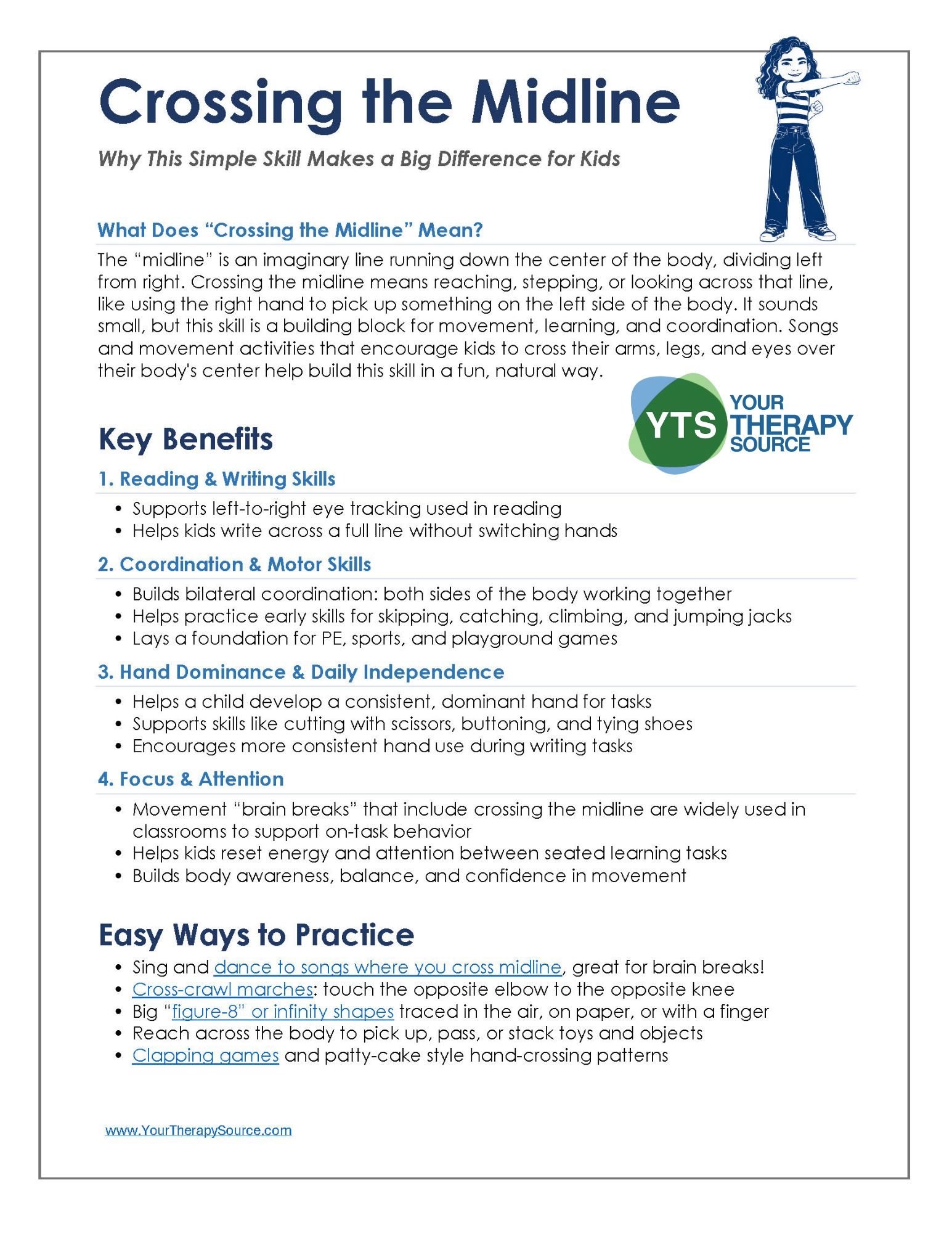
This free printable breaks down exactly why crossing the midline matters and how it connects to handwriting, coordination, and focus. It is a simple, one page reference that explains the skill in plain language for parents, teachers, and therapists. You can download the free Crossing Midline Benefits PDF at the bottom of this post.
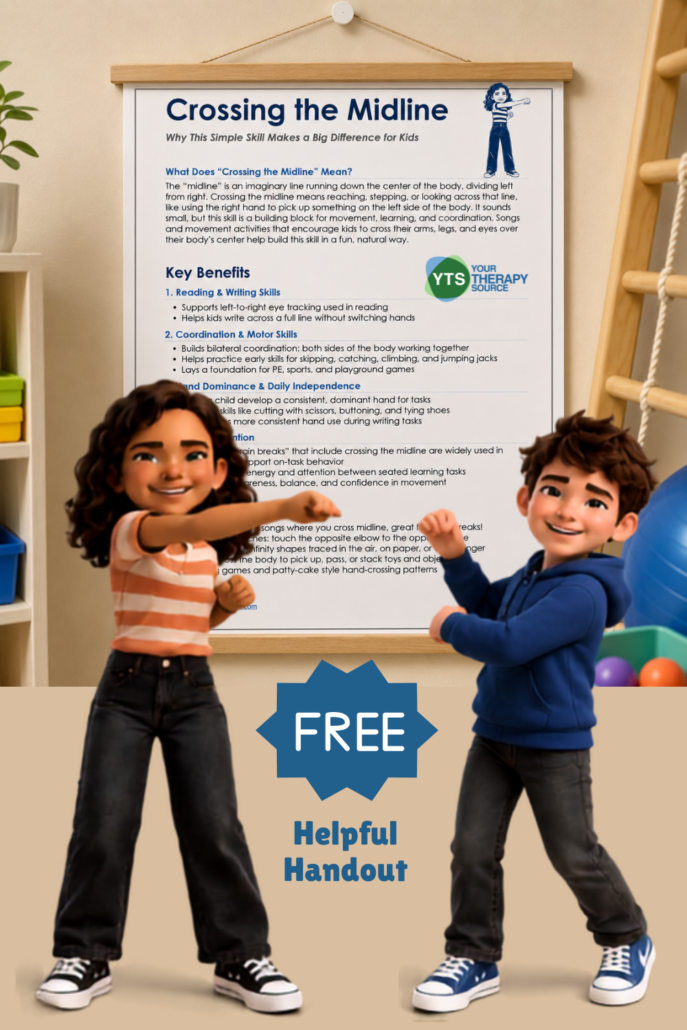
What Is Crossing Midline?
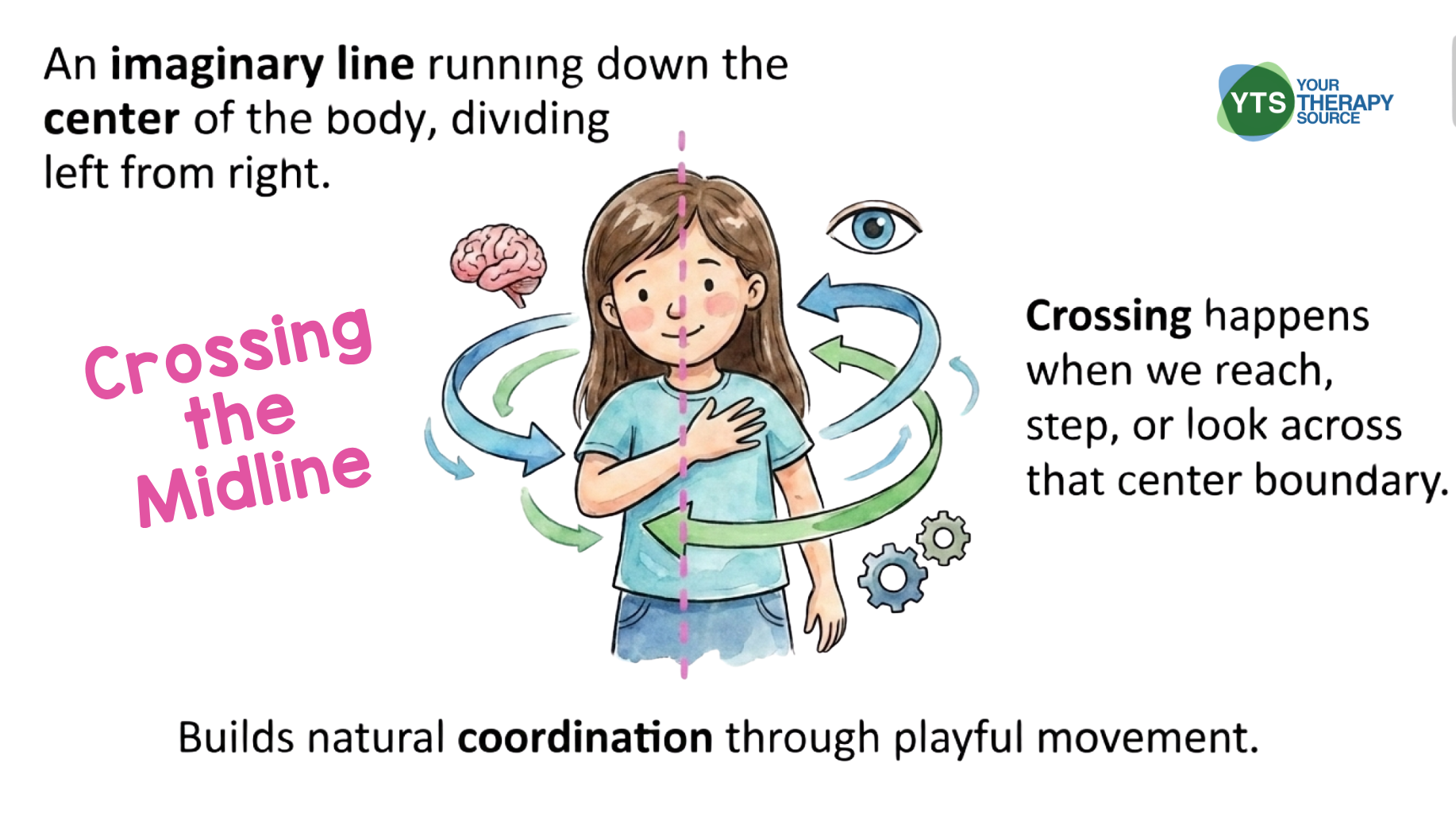
The midline is an imaginary line running down the center of the body, dividing left from right. Crossing the midline means reaching, stepping, or looking across that line, like using the right hand to grab something sitting on the left side of the body. Songs and movement activities that encourage kids to cross their arms, legs, and eyes over the body’s center build this skill in a natural, playful way.
The Research Behind Crossing Midline Benefits
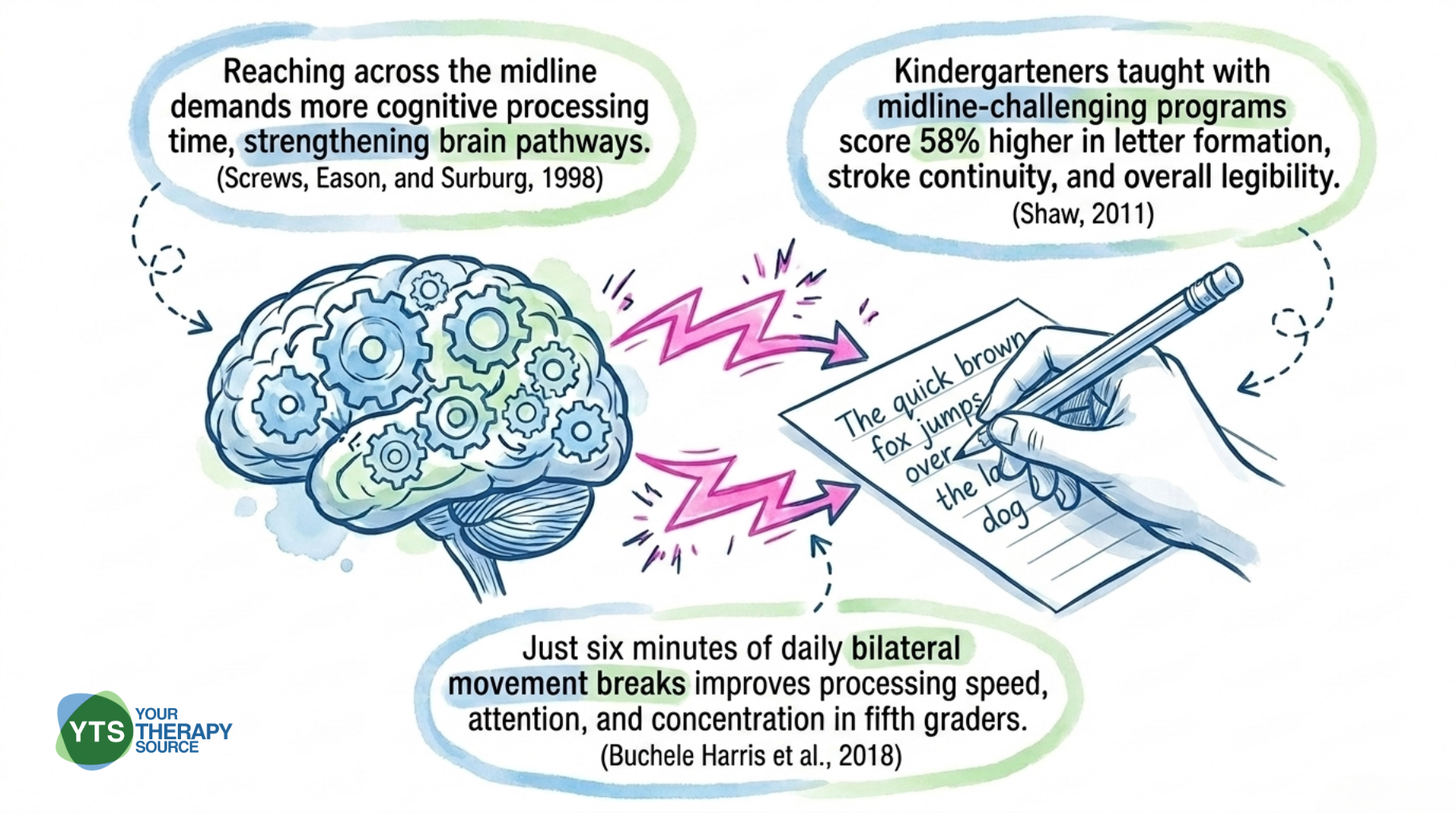
Crossing midline is backed by research, not just a buzzword. Shaw (2011) found that kindergarteners taught with a handwriting program that actively challenged the midline scored nearly 58% higher in letter formation, stroke continuity, and overall legibility compared to peers using a traditional program.
Bilateral movement also supports the brain side of things. Screws, Eason, and Surburg (1998) found that tasks requiring children to reach across midline demand more cognitive processing time than same side tasks, and Buchele Harris and colleagues (2018) found that just six minutes of daily bilateral movement breaks improved processing speed, attention, and concentration in fifth graders.
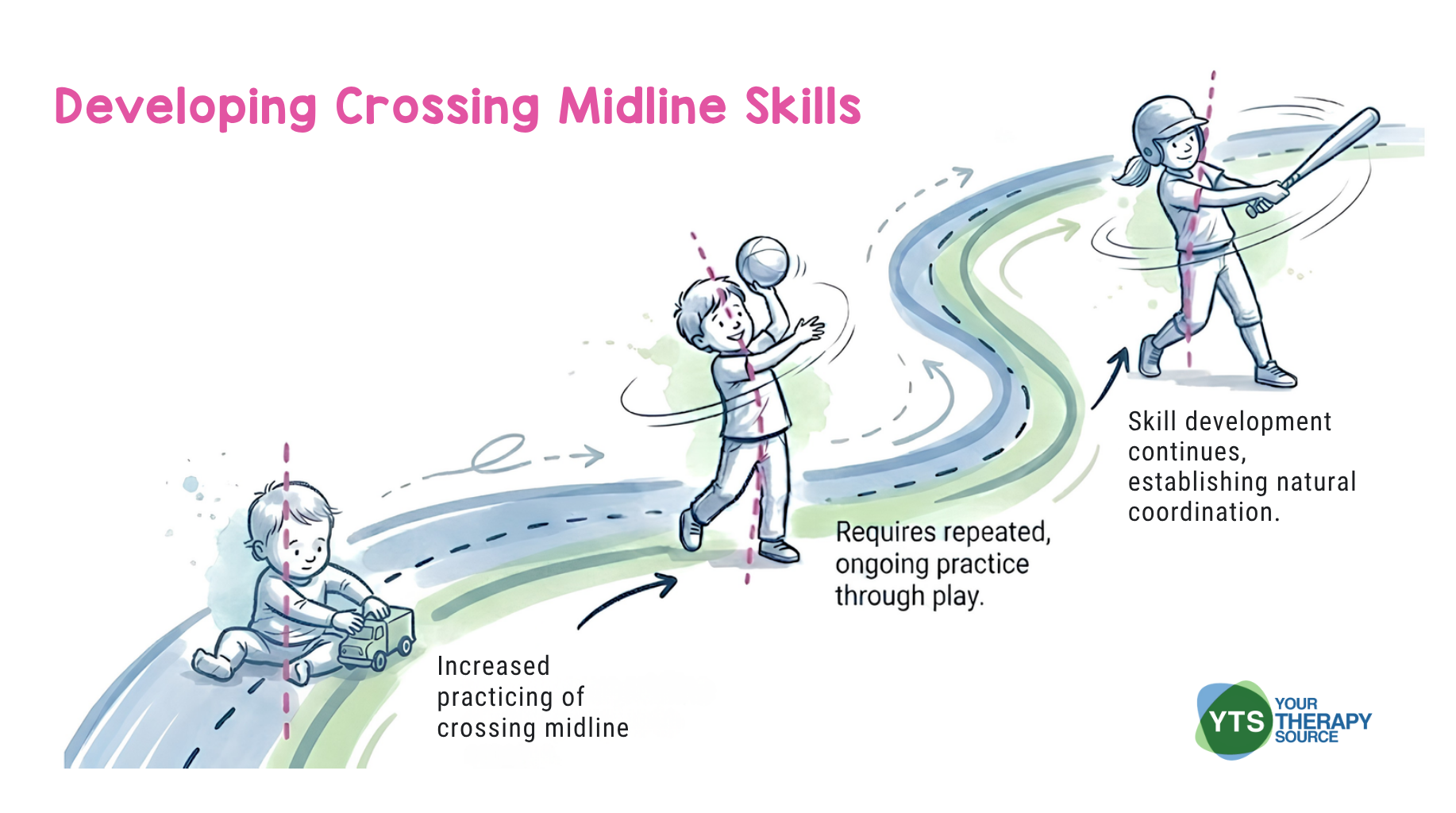
This skill also develops gradually over time. Stilwell (1987), Cermak and colleagues (1980), and Carlier and colleagues (2006) all found that spontaneous midline crossing increases steadily with age from about 2 to 10 years old, which means kids benefit from repeated, ongoing practice.
Key Benefits of Crossing Midline
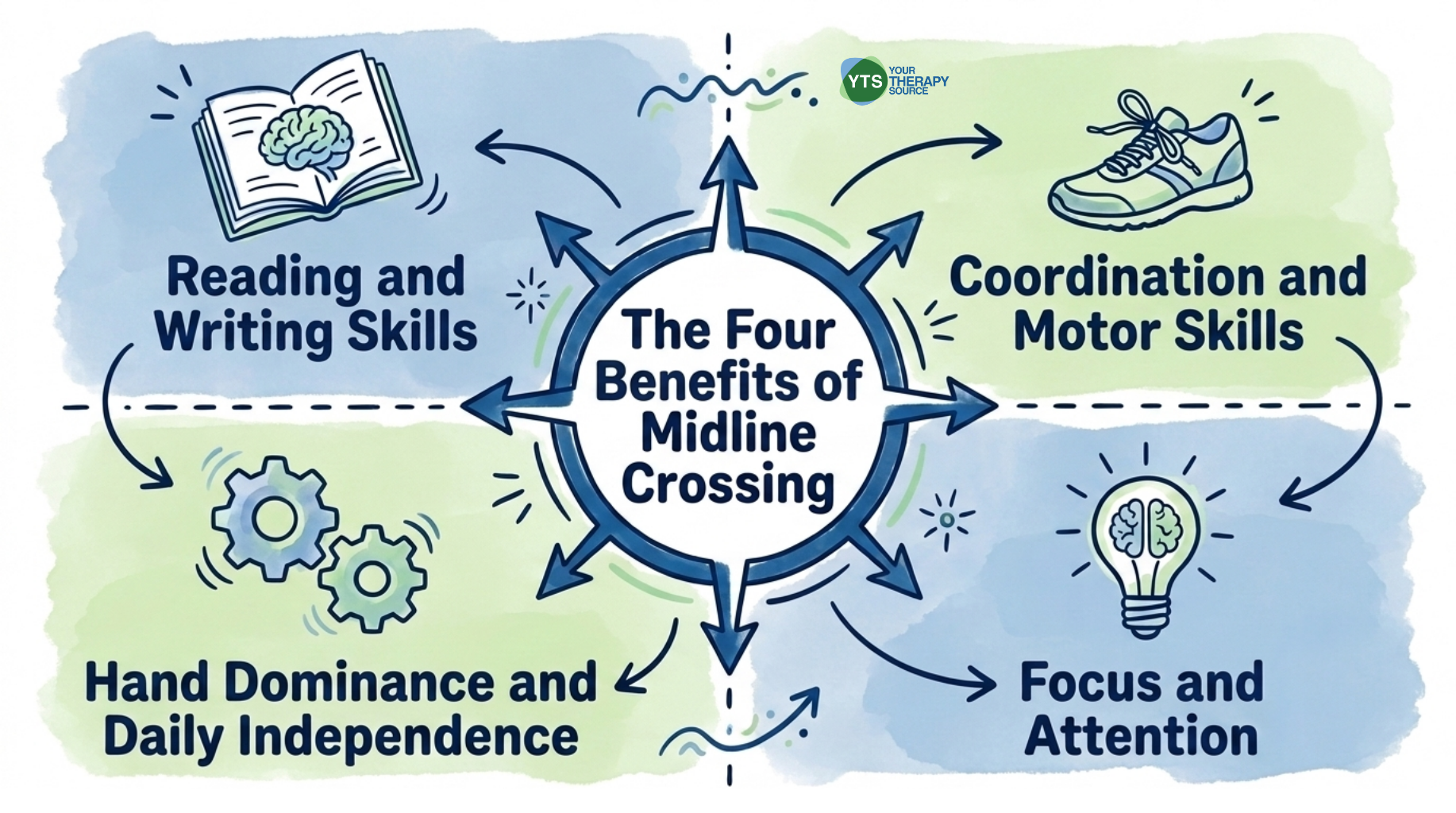
The printable breaks the benefits of crossing midline into four categories, straight from the handout.
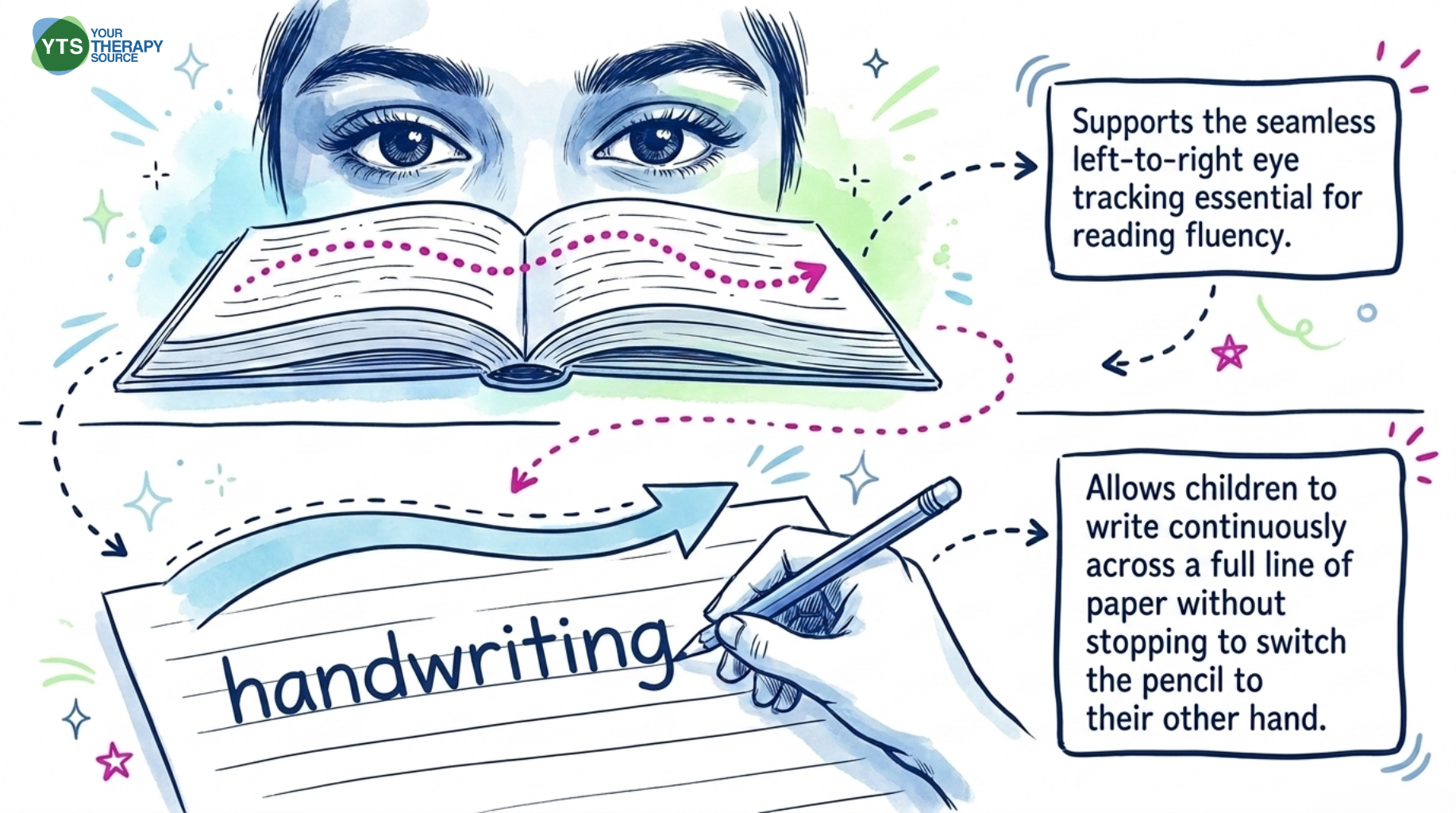
1. Reading and Writing Skills
- Supports left to right eye tracking used in reading
- Helps kids write across a full line without switching hands
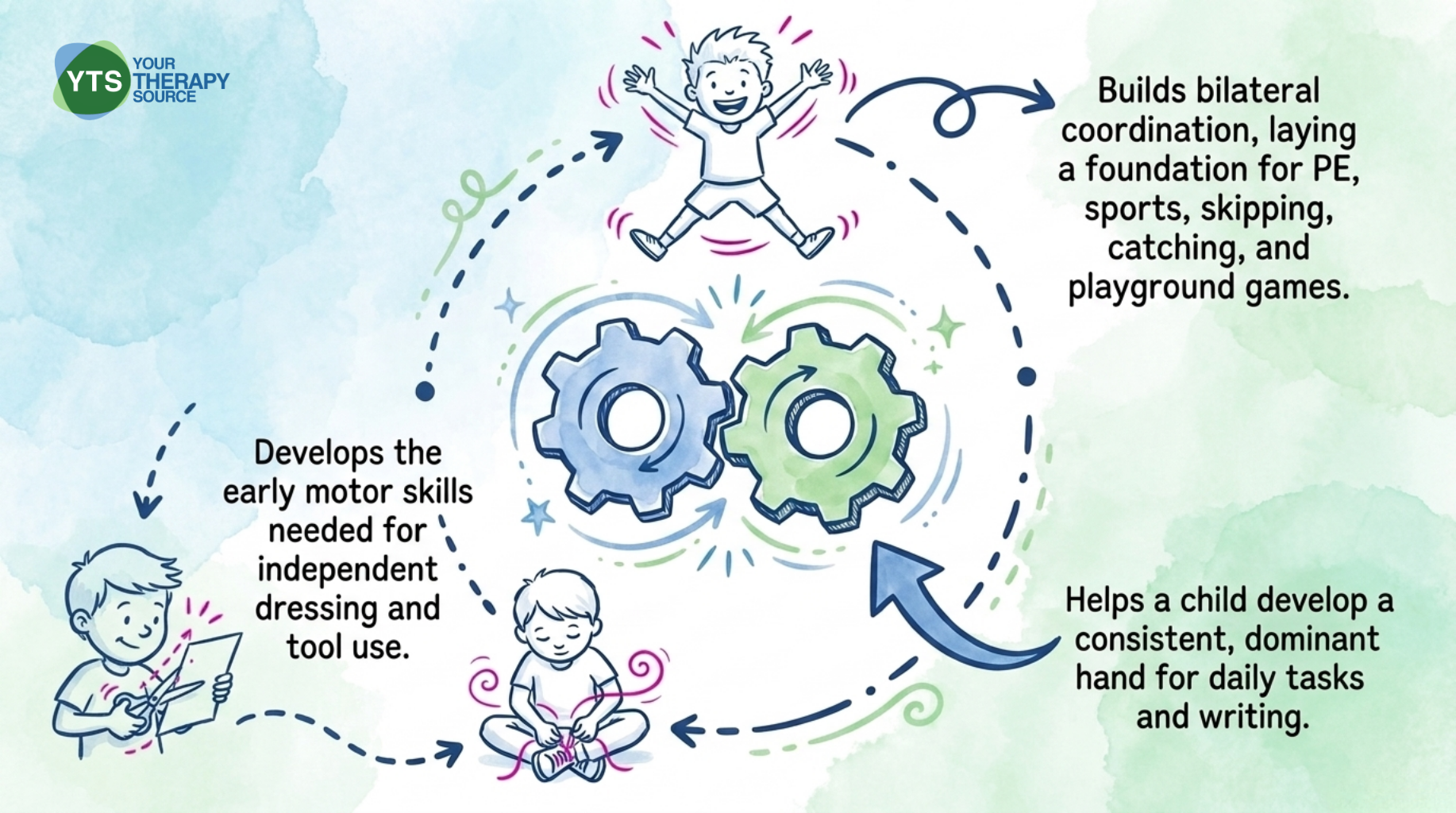
2. Coordination and Motor Skills
- Builds bilateral coordination, both sides of the body working together
- Helps practice early skills for skipping, catching, climbing, and jumping jacks
- Lays a foundation for PE, sports, and playground games
3. Hand Dominance and Daily Independence
- Helps a child develop a consistent, dominant hand for tasks
- Supports skills like cutting with scissors, buttoning, and tying shoes
- Encourages more consistent hand use during writing tasks
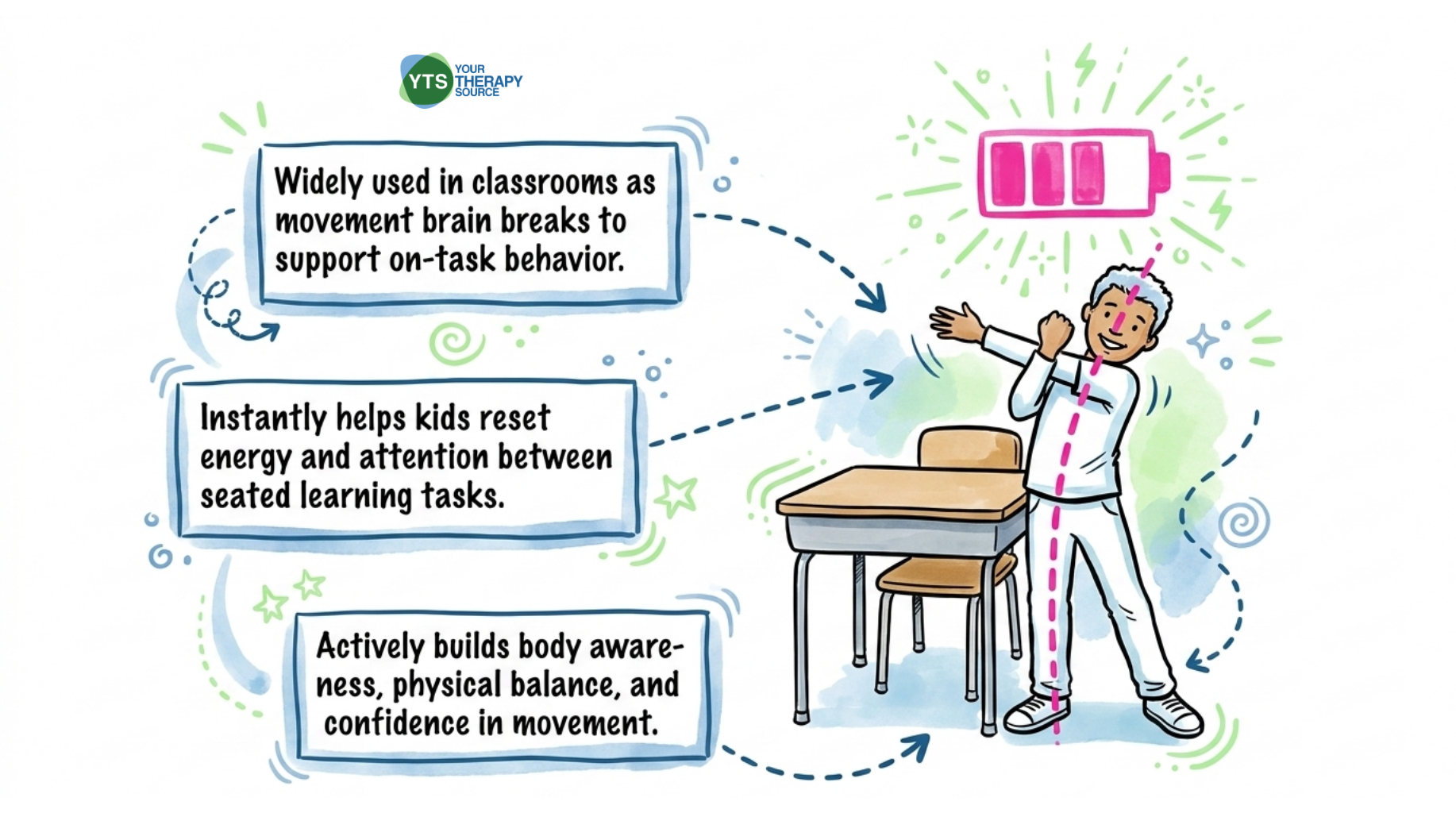
4. Focus and Attention
- Movement brain breaks that include crossing the midline are widely used in classrooms to support on task behavior
- Helps kids reset energy and attention between seated learning tasks
- Builds body awareness, balance, and confidence in movement
Easy Ways to Practice Crossing Midline
The printable also includes five quick, no prep ideas for practicing this skill.
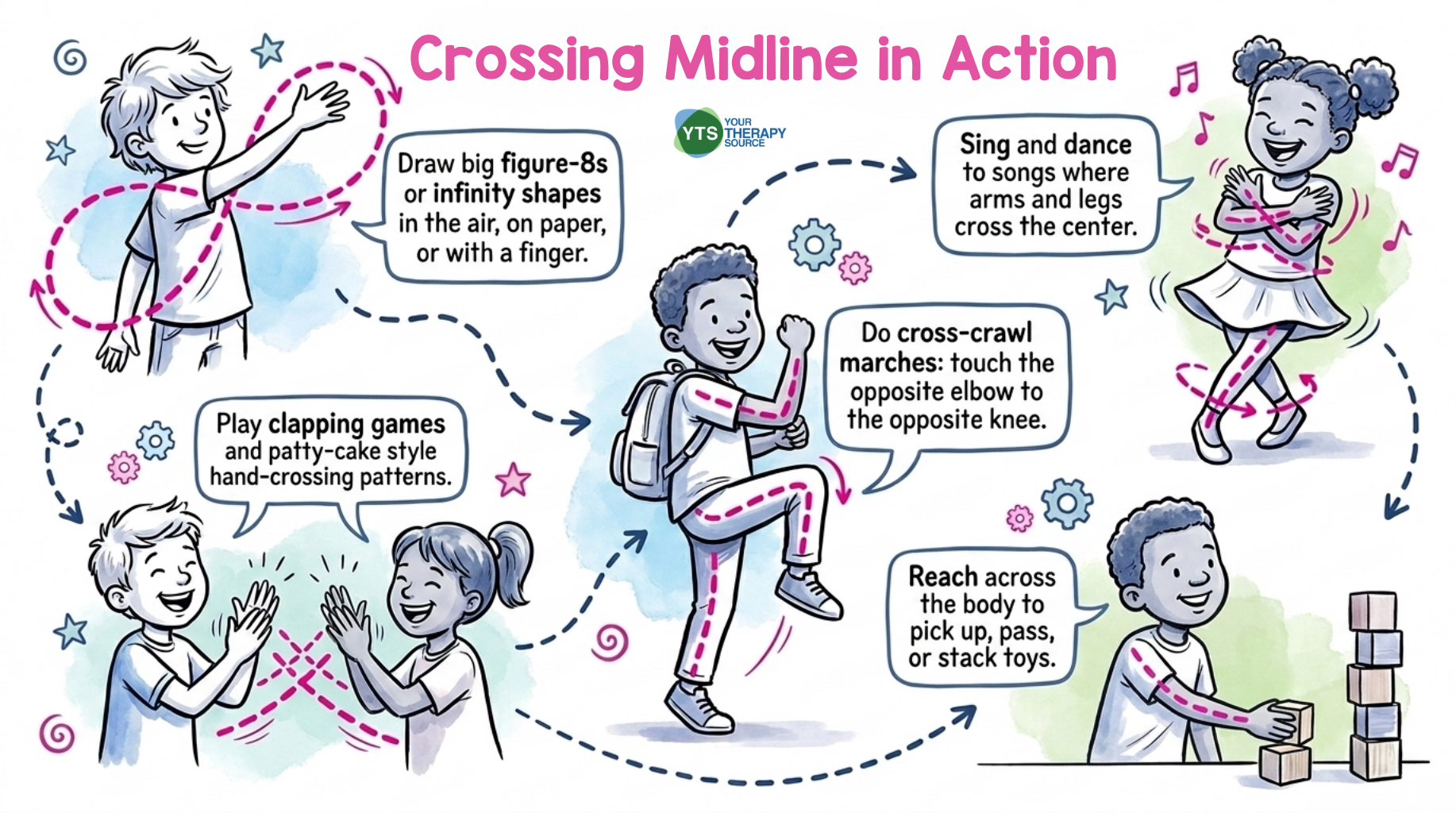
- Sing and dance to songs where you cross midline, great for brain breaks
- Cross-crawl marches: touch the opposite elbow to the opposite knee
- Big figure-8 or infinity shapes traced in the air, on paper, or with a finger
- Reach across the body to pick up, pass, or stack toys and objects
- Clapping games and patty-cake style hand-crossing patterns
Skills Highlighted in This Crossing Midline Printable
This printable touches on several skill areas that show up again and again in OT and PT goals.
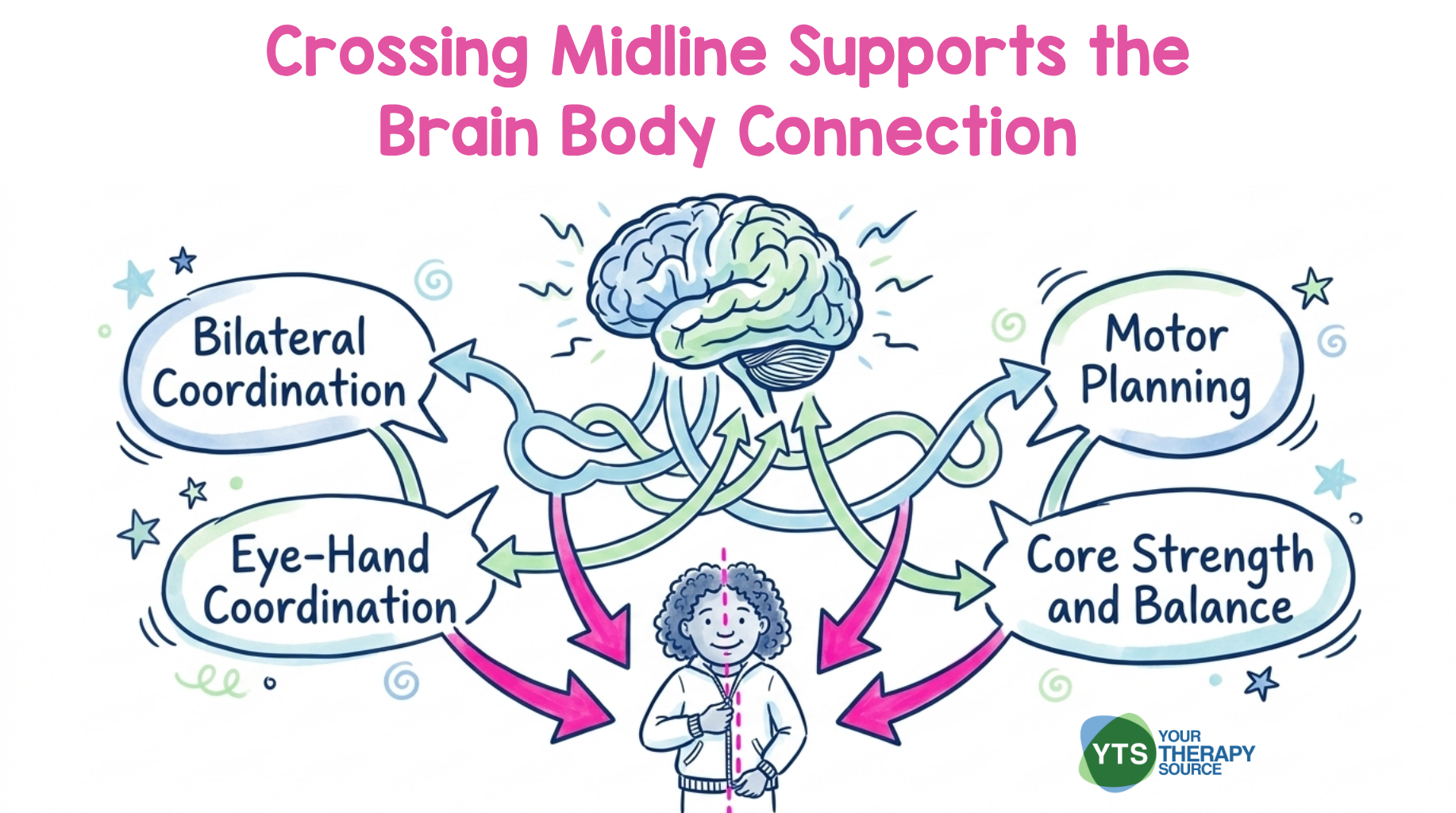
- bilateral coordination
- crossing midline
- eye-hand coordination
- handwriting and pre-writing skills
- focus and attention
- motor planning
- core strength and balance
These skills work together to support handwriting legibility, reading fluency, and the ability to sit and focus through classroom tasks. When kids practice reaching across their body regularly, the two sides of the brain learn to communicate more efficiently. That carries over into daily living tasks like tying shoes, cutting with scissors, and getting dressed.
How to Use This Crossing Midline Printable
This handout fits naturally into several settings.
- Occupational therapy or physical therapy sessions: use it as a quick visual when explaining goals to families
- Classroom use: post it as a reference for brain breaks, indoor recess, or transition times
- Home use: share it with parents as a simple guide for adding movement into homework time
Tips and Variations
For younger children, go through the four key benefit categories one at a time and demonstrate each practice idea before asking them to try it on their own.
For an added challenge, have older students read the research section and talk about why crossing midline matters for their own handwriting or sports skills.
Print a few extra copies and laminate one for a take home folder or parent newsletter so families have an easy reference for practicing at home.
You Might Also Like
- 10 Games to Practice Crossing Midline
- 5 Fun Ways to Practice Crossing Midline
- Crossing Midline Mazes Free PDF
- Rainbow Activity Free Printable Crossing Midline
- Crossing Midline Exercises
- Brain Exercises Symmetrical Flowers Free Printables
Download the Crossing Midline Benefits Printable
This crossing midline benefits printable is a free PDF you can print and share right away in therapy sessions, classrooms, or at home. This low prep handout offers a simple way to explain the value of crossing midline activities with an easy to read, evergreen design. Click below to download the free printable. It will open in a new tab.
References
Buchele Harris, H., Cortina, K. S., Templin, T., Colabianchi, N., & Chen, W. (2018). Impact of coordinated-bilateral physical activities on attention and concentration in school-aged children. BioMed Research International, 2018, Article 2539748.
Carlier, M., Doyen, A.-L., & Lamard, C. (2006). Midline crossing: Developmental trend from 3 to 10 years of age in a preferential card-reaching task. Brain and Cognition, 61(3), 255–261.
Cermak, S. A., Quintero, E. J., & Cohen, P. M. (1980). Developmental age trends in crossing the body midline in normal children. American Journal of Occupational Therapy, 34(5), 313–319.
Chen, J., Wang, X., & Chen, W. (2021). Impact of bilateral coordinated movement on manipulative skill competency in elementary school students. Children, 8(6), 517.
Hill, E. L., & Khanem, F. (2009). The development of hand preference in children: The effect of task demands and links with manual dexterity. Brain and Cognition, 71(2), 99-107.
Kim, H. (2016). An investigation of the factors affecting handwriting articulation of school aged children with cerebral palsy based on the international classification of functioning, disability and health. Journal of Physical Therapy Science, 28(2), 347-350.
Screws, D. P., Eason, B. L., & Surburg, P. R. (1998). Crossing the midline: A study of four-year-old children. Perceptual and Motor Skills, 86(1), 201–203.
Shaw, D. M. (2011). The effect of two handwriting approaches, D’Nealian and Sunform, on kindergarteners’ letter formations. Early Childhood Education Journal, 39(2), 125-132.
Stilwell, J. M. (1987). The development of manual midline crossing in 2- to 6-year-old children. American Journal of Occupational Therapy, 41(12), 783–789.

