Big Reactions to Small Problems: What Might Be Happening Underneath?
Big reactions to small problems can be confusing for teachers, therapists, counselors, and other school staff. A pencil breaks, someone sits in a student’s usual seat, the schedule changes unexpectedly, or a student makes one mistake, and suddenly there may be tears, yelling, shutting down, refusal, or leaving the area.
These reactions can be connected to emotional regulation, sensory processing, executive functioning, transitions, communication, or the cumulative demands of the school day. The immediate problem may look small, but the student’s response may be telling us that they were already managing much more than we could see.
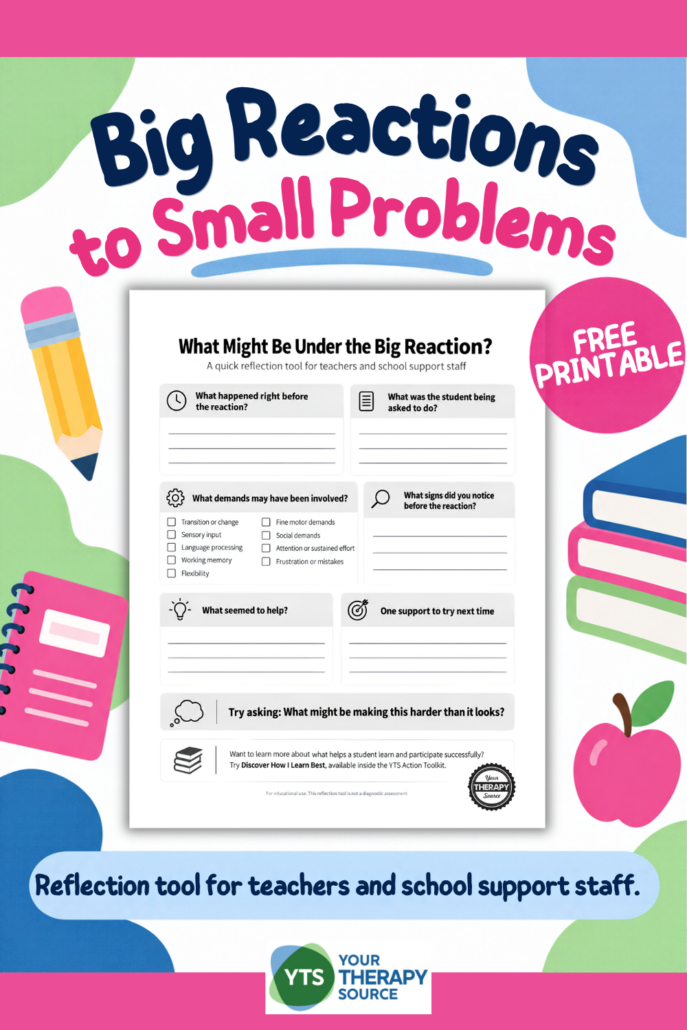
At the bottom of this post, you can download the free What Might Be Under the Big Reaction? PDF. This reflection tool helps school staff look beyond the immediate behavior, identify possible patterns, and consider supports that may help the student be more successful.
Big Reactions to Small Problems May Be the Last Drop
Think about a cup that is already almost full. A student may have had a loud bus ride, uncomfortable clothing, a frustrating math lesson, an overwhelming cafeteria, or a difficult experience at recess.
Then their pencil breaks. The broken pencil may be a small problem on its own, but it may also be the final demand placed on a student who has already been working hard to manage sensory, cognitive, social, and emotional demands.
This is why the intensity of a reaction does not always tell us the size of the immediate problem. Sometimes it tells us how much the student was already managing before that final moment.
Look at What the Situation Is Asking the Student to Do
A task that looks simple from the outside may involve many different skills. Consider a classroom transition where a student needs to stop an activity, shift attention, process a verbal direction, organize materials, remember where to go, move through a noisy classroom, and begin something new.
A writing assignment can also involve multiple demands at once. Fine motor skills, working memory, language, spelling, planning, attention, task initiation, and frustration tolerance may all be involved.
Instead of asking only, “Why won’t the student do this?” try asking, “Which part of this might be difficult right now?” That question can help school staff identify something practical to support.
Students Experience the Same Environment Differently
Students do not all process sensory input, language, transitions, emotions, and cognitive demands in the same way. A change in the schedule may barely affect one student while requiring significant flexibility from another.
Background noise may be easy for one student to ignore but make concentration much harder for someone else. A student with executive functioning challenges may know exactly how to complete an assignment but have difficulty figuring out how to begin.
Recognizing neurodiversity means understanding that students may need different types of support to access the same classroom expectations. The goal is not to make every student respond in the same way, but to better understand what helps each student participate successfully.
Regulation Comes Before Problem Solving
When a student is highly upset, that is usually not the best time for a long conversation about what went wrong. Listening, reasoning, flexible thinking, and problem solving all require cognitive resources that may be harder to access when a student is overwhelmed.
In the moment, consider using fewer words, reducing unnecessary demands, giving appropriate space, and offering familiar regulation supports. Once the student is more regulated, there is more opportunity to talk about what happened and what might help next time. For another resource related to this topic, visit When My Feelings Get Too Big: A Calm Down Song With Free Printable.
Support Does Not Mean Removing Expectations
Understanding what may be contributing to a big reaction does not mean ignoring unsafe behavior or removing every challenge. Students still need boundaries, expectations, and opportunities to develop new skills.
At the same time, adults can consider whether the environment or task can be adjusted. Shorter directions, visual supports, transition warnings, movement opportunities, or breaking a task into smaller steps may help a student access the expectation more successfully.
Support and skill building can happen together. The goal is to help students develop strategies while also making sure the environment is not creating unnecessary barriers.
Look for Patterns in Big Reactions
One difficult moment gives us limited information. When big reactions happen regularly, looking for patterns can provide useful clues about what may be contributing to the student’s difficulty.
Notice when the reactions tend to occur. They may happen during transitions, writing tasks, after lunch, during noisy activities, when directions contain several steps, when plans change unexpectedly, or when the student makes a mistake.
It can also help to notice what happens before the reaction. A student may become quieter, move more, ask repeated questions, avoid getting started, or show other early signs that the demands are becoming harder to manage. For another activity that can help students reflect on emotions and strategies, visit this Emotion Regulation Worksheet.
Ask the Student What Helps
When appropriate, include the student in the conversation. Asking what makes learning easier or harder can provide information that adults may not be able to observe on their own.
You might ask what helps them concentrate, what makes it easier to get started, what makes school feel harder, or what helps when they feel frustrated. Some students may also be able to explain what they wish adults understood about how they learn.
Students may not always know the answer immediately. Developing awareness of what helps them learn, regulate, and participate is a skill that can grow over time. You can find more ideas for building these skills in these Free Emotional Regulation Activities.
Use the Free What Might Be Under the Big Reaction? Printable
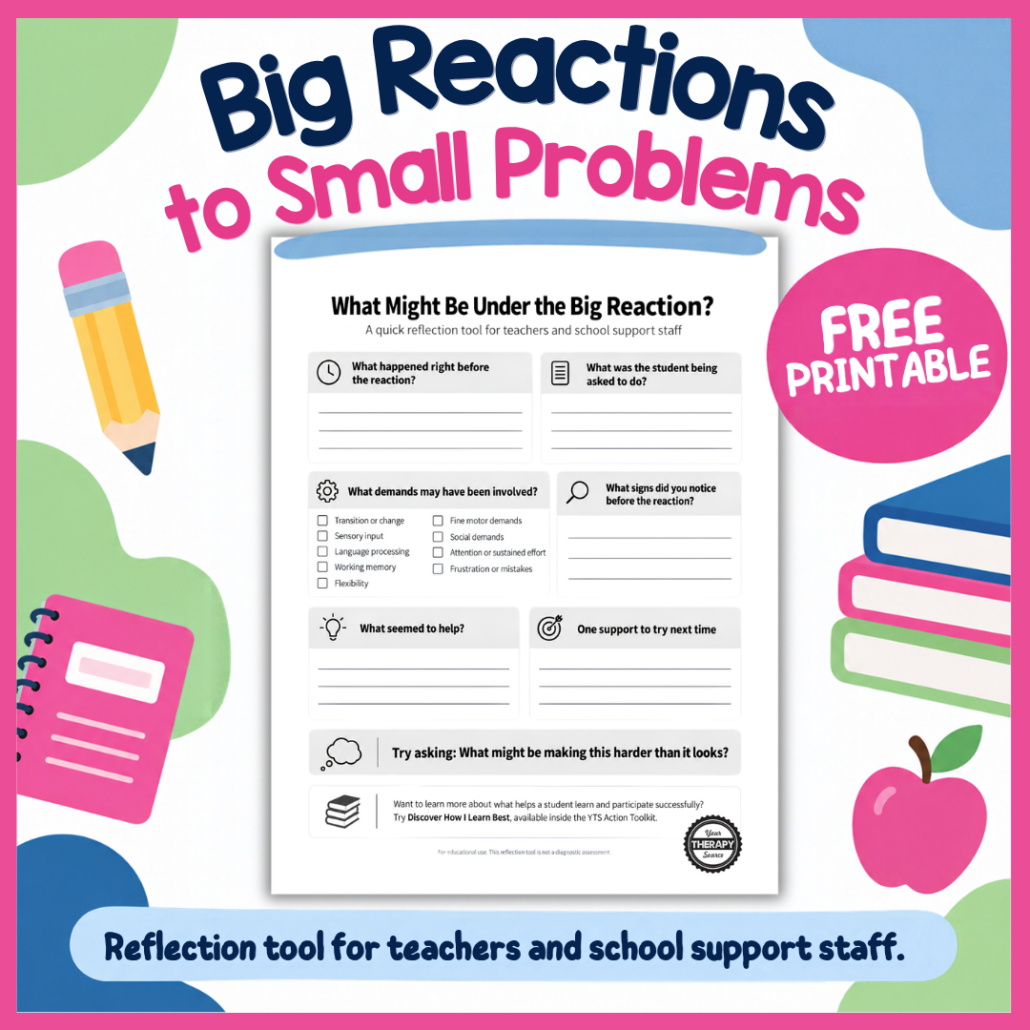
The What Might Be Under the Big Reaction? printable is a quick reflection tool for teachers and school support staff. It provides space to think about what happened before the reaction, what the student was being asked to do, and what demands may have been involved.
The checklist includes areas such as transitions, sensory input, language processing, working memory, flexibility, fine motor demands, social demands, attention, and frustration. There is also space to record early signs, what seemed to help, and one support to try next time.
The purpose of the worksheet is not to diagnose why a student reacted a certain way. It is designed to help adults slow down, notice patterns, and ask a more useful question: What might be making this harder than it looks?
Help Students Discover What Supports Their Learning
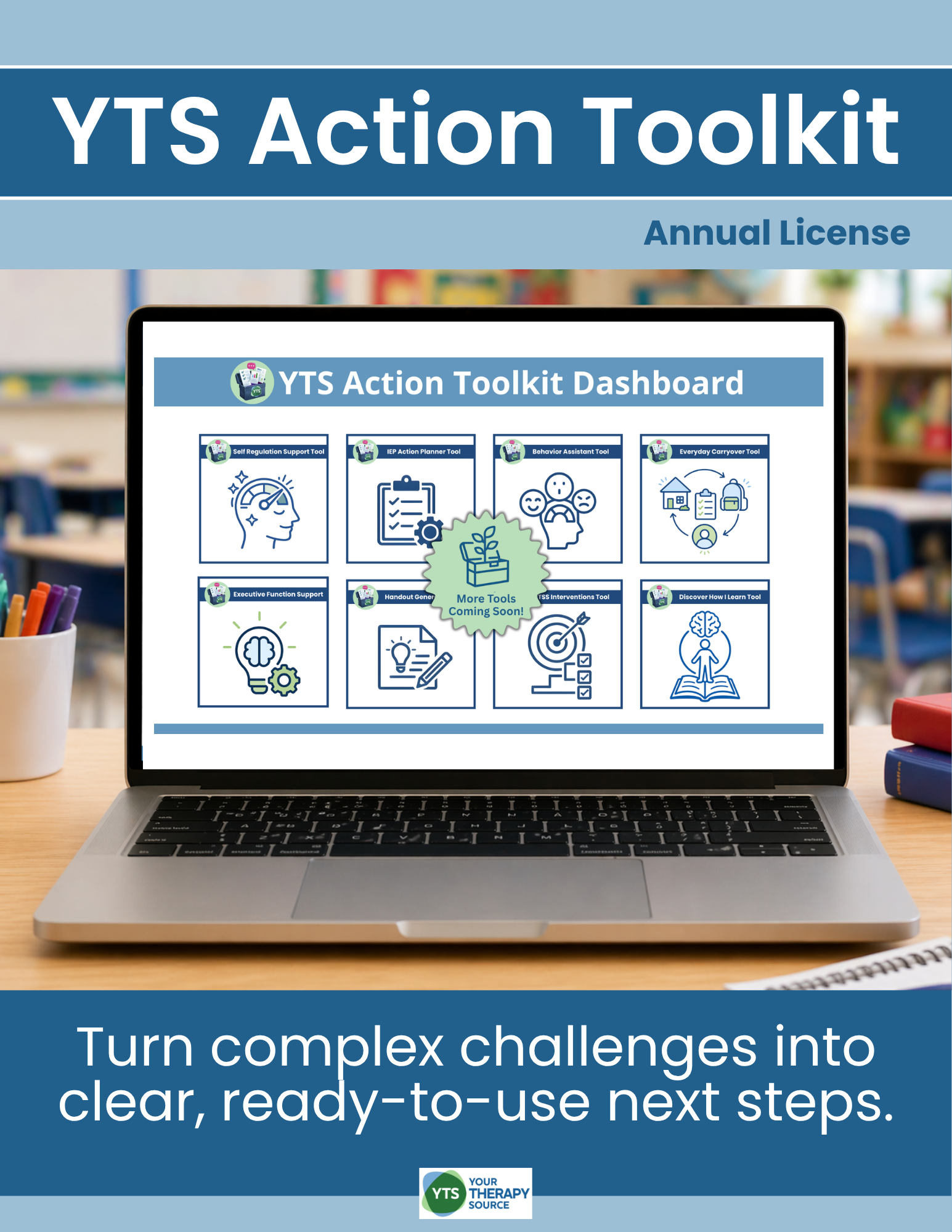
The Discover How I Learn Best tool inside the YTS Action Toolkit can take this process one step further. It helps students explore their own learning experiences and identify supports related to their environment, skills, habits, and strategies.
Instead of focusing only on what is going wrong, the tool helps school teams consider what helps a student learn and participate successfully. This can be especially useful when patterns involve attention, task initiation, transitions, regulation, sensory needs, or classroom participation.
Download the Free PDF
Download the free What Might Be Under the Big Reaction? PDF below. Keep a few copies available in the classroom, therapy room, counseling office, or student support space so they are easy to use when a pattern begins to emerge.
The next time a student has a big reaction to what appears to be a small problem, use the worksheet to look beyond the immediate incident. A little more information about what happened before, what the task required, and what helped can make it easier to identify the support that may help next time.