Physical Activity and Academic Performance – What Does the Research Say?
Physical activity and academic performance are more connected than many educators and families realize. For adolescents in school settings, regular movement does more than support physical health. It appears to strengthen the psychological skills students need to succeed in the classroom, including their ability to regulate their own behavior and their belief in their own abilities.
A 2026 study published in Frontiers in Education examined how physical activity and academic performance relate in secondary school students, focusing specifically on the role of self-regulation and self-efficacy as the pathways linking the two. For school-based professionals, these findings offer a useful lens for understanding why movement matters beyond fitness.
WHAT THE RESEARCH EXAMINED
This study analyzed data from 8,037 secondary school students using the China Education Panel Survey (CEPS), a large, nationally representative dataset from China. Researchers used structural equation modeling and regression analysis to examine whether self-regulation and self-efficacy explained the link between physical activity and academic performance, and whether findings differed by gender or urban-rural location.
Key study details:
- 8,037 secondary school students drawn from diverse geographic regions across China
- Academic performance was based on standardized midterm exam scores in Chinese Language, Mathematics, and English
- Analyses were conducted separately by gender and by urban-rural student groups
KEY FINDINGS FROM THE RESEARCH
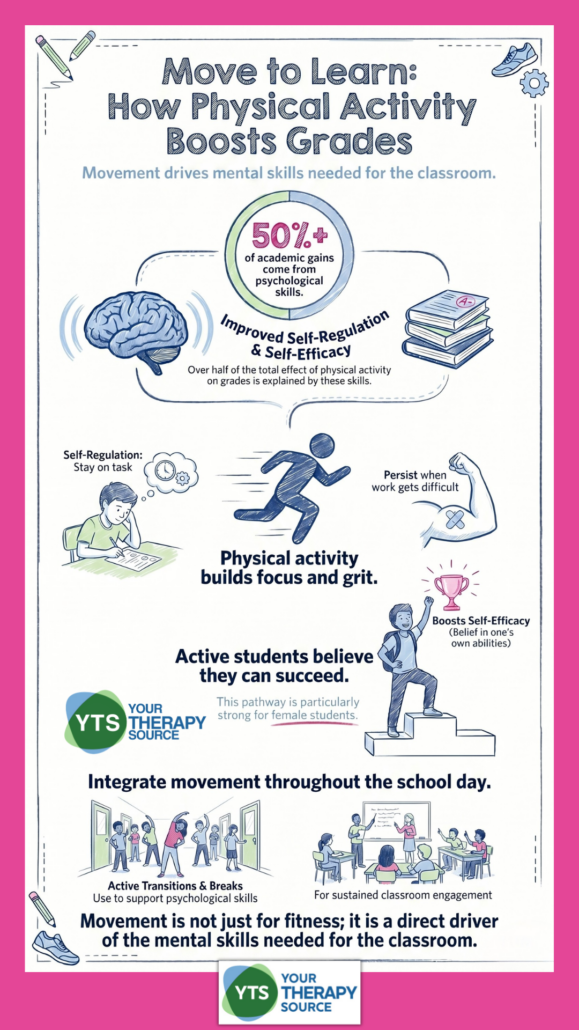
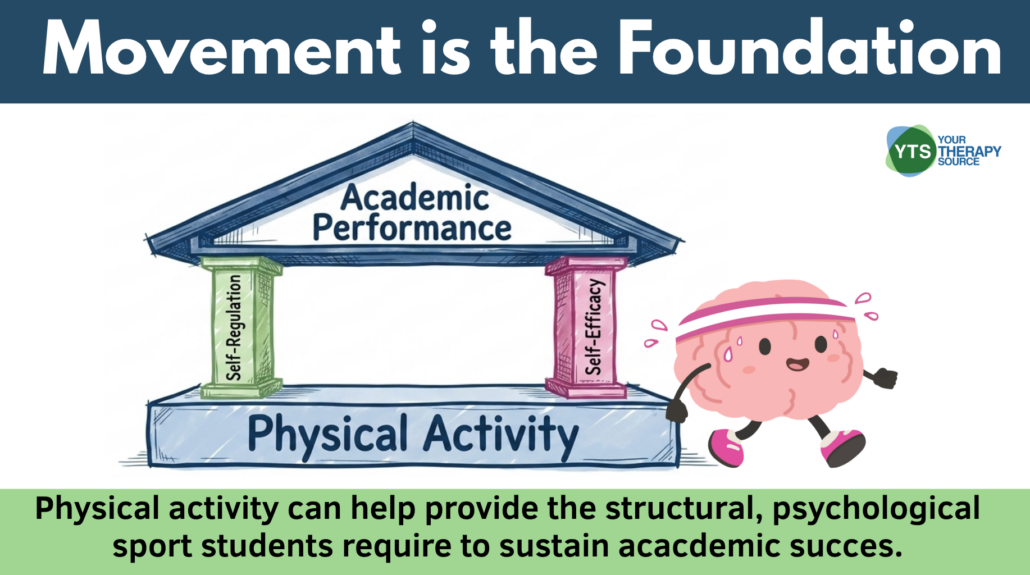
Overall, the study found that physical activity was positively associated with academic performance, and that this relationship was partly explained by students’ self-regulation and self-efficacy skills.
Specific findings include:
- Physical activity was positively correlated with academic performance (r = 0.240), self-efficacy (r = 0.183), and self-regulation (r = 0.240)
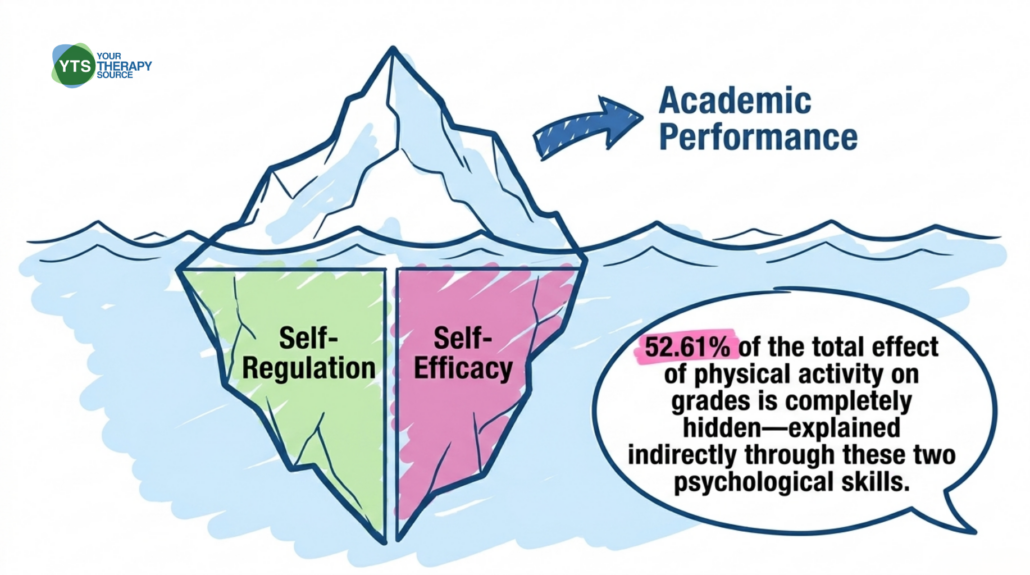
- More than half of the total effect of physical activity on academic performance (52.61%) was explained indirectly through self-regulation and self-efficacy
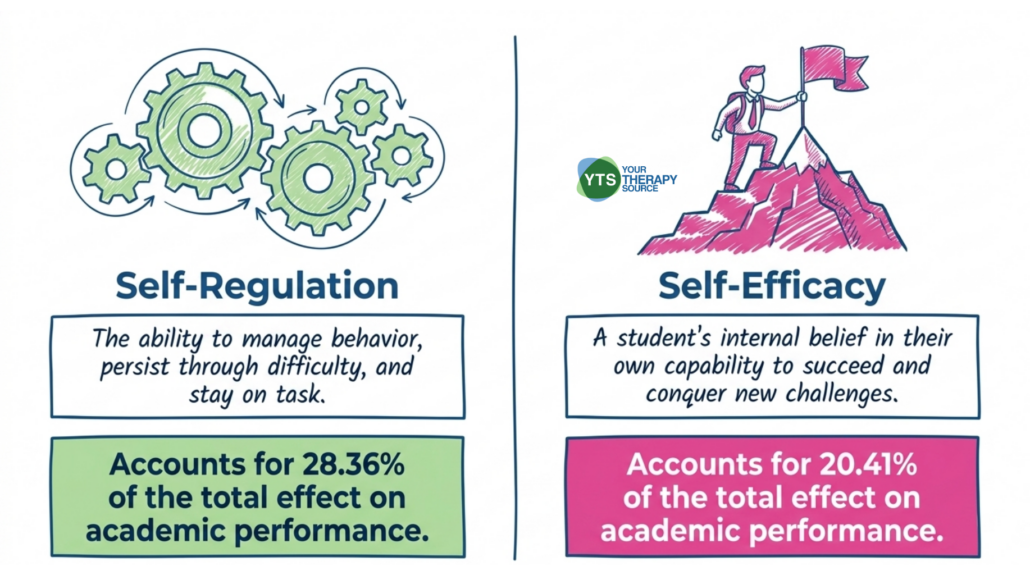
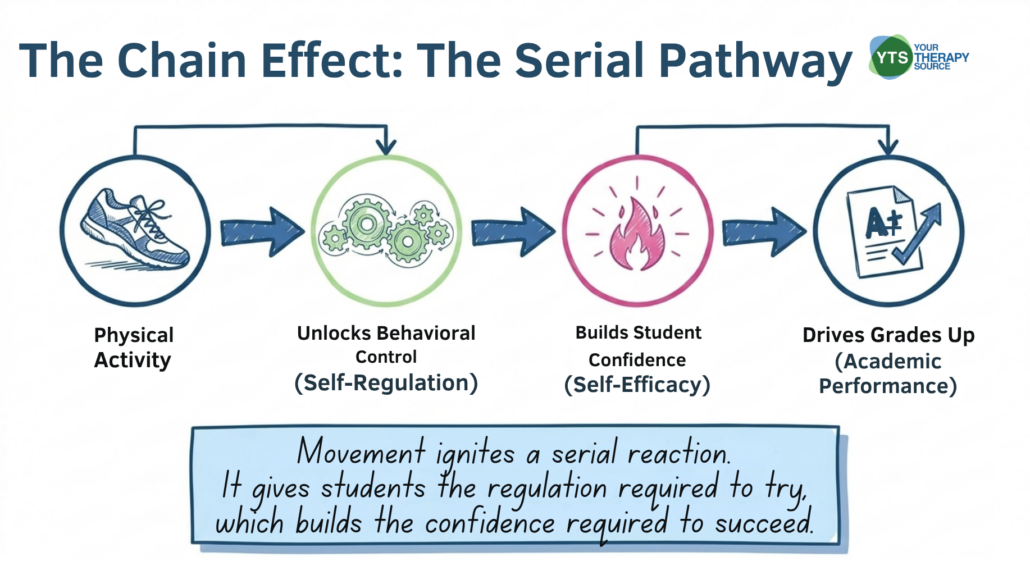
- Three indirect pathways were identified: physical activity to self-regulation to academic performance (28.36% of the total effect), physical activity to self-efficacy to academic performance (20.41%), and a serial pathway where physical activity supported self-regulation, which then supported self-efficacy, which then supported academic performance (3.84%)
- The total indirect effect was larger for male students (63.5% of the total effect) than for female students (51.1%)
- For males, the self-regulation pathway was the stronger contributor (38.0% of the total effect), while for females, the self-efficacy pathway was relatively more prominent (26.7%)
- Rural students showed a stronger overall indirect effect (51.1%) with self-regulation as the primary pathway (33.8%), while urban students showed a more balanced distribution across both pathways
WHY THESE FINDINGS MATTER FOR SCHOOL-BASED PRACTICE
These findings suggest that physical activity may benefit students not only physically, but also through the psychological skills that support learning. For school-based professionals, this is a meaningful connection between the time students spend moving and the skills they bring to academic tasks.
Standout points for school settings:
- Self-regulation, the ability to manage behavior, stay on task, and persist through difficulty, appeared to be a meaningful pathway between physical activity and academic outcomes
- Self-efficacy, meaning students’ belief in their own ability to succeed, also contributed to this relationship, particularly for female students
- These findings suggest that the benefits of physical activity may not be identical for all students, and that gender and context may shape how movement supports learning
Understanding how self-regulation and self-efficacy connect to student performance can help school teams think more broadly about the supports students need across the school day.
IMPLICATIONS FOR SCHOOL STAFF
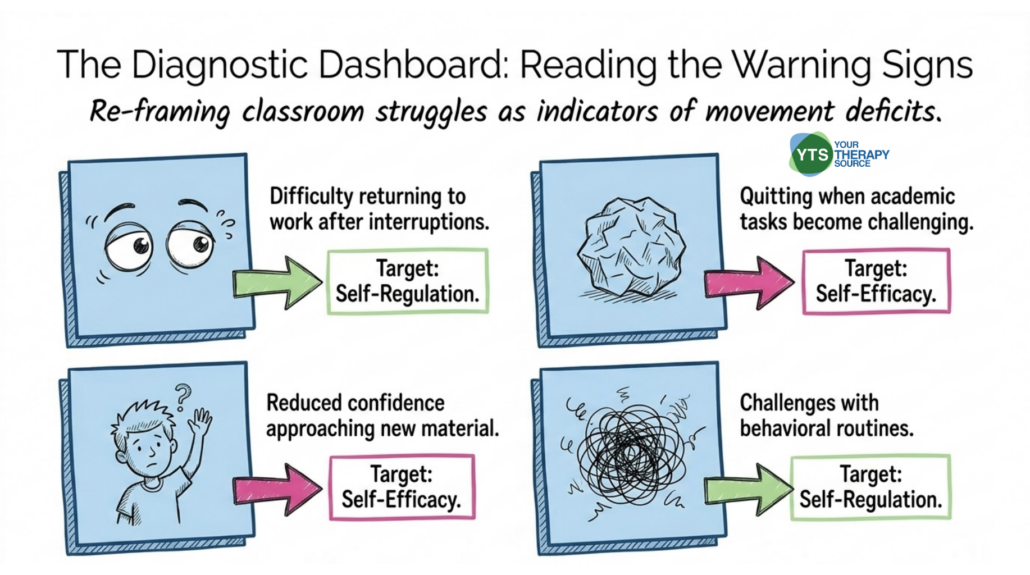
This research points to a connection between physical movement and the skills students rely on in the classroom, particularly their capacity to self-regulate and their confidence in their own abilities. School staff who observe students struggling with persistence, task initiation, or academic confidence may find it useful to consider the broader context of students’ access to physical activity.
Staff may notice the following in students who have limited opportunities for physical activity:
- Difficulty staying on task or returning to work after interruptions
- Lower persistence when tasks become challenging
- Reduced confidence when approaching new or demanding academic content
- Challenges with behavioral regulation in classroom routines
These observations align with what the research describes as the psychological mechanisms that physical activity may support. Approaching student behavior through a multi-modal lens, one that includes movement, self-regulatory skill development, and confidence-building, reflects the kind of integrated thinking that benefits school-based teams. Occupational therapists and physical therapists working in schools are well positioned to help teams understand how movement supports function and learning across the school day.
10 PRACTICAL STRATEGIES FOR PHYSICAL ACTIVITY AND ACADEMIC PERFORMANCE
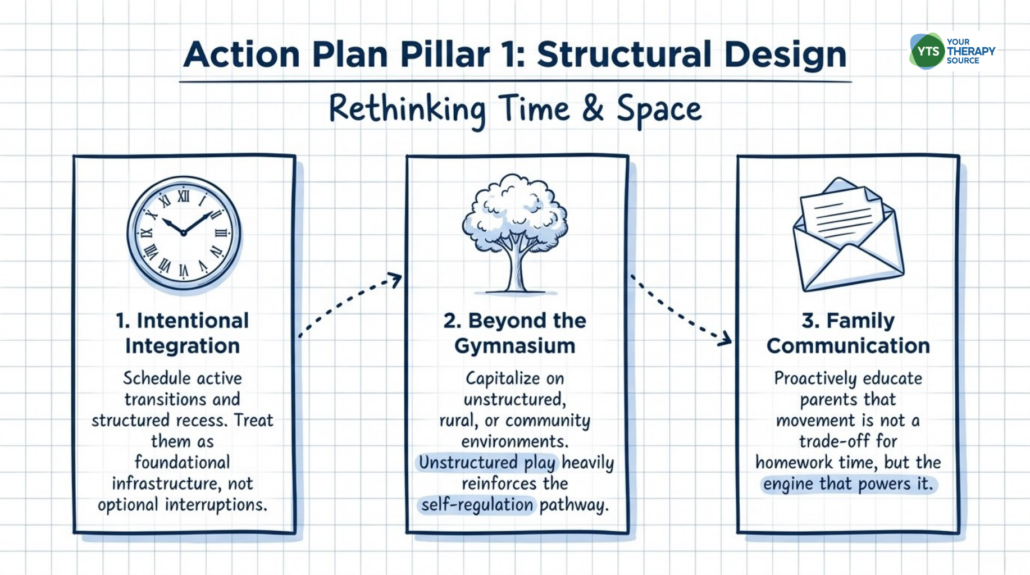
- Build movement into the school day with intention. Regular physical activity breaks, structured recess, and active transitions are not interruptions to learning. Based on the research, they may support the psychological skills students need for sustained academic engagement, including focus, persistence, and self-regulation.
- Consider physical activity when discussing a student’s self-regulation profile. When a student shows difficulty managing behavior, staying on task, or following through on assignments, it may be helpful to consider whether they have regular access to physical activity. The research suggests self-regulation is one pathway through which movement may support academic function.
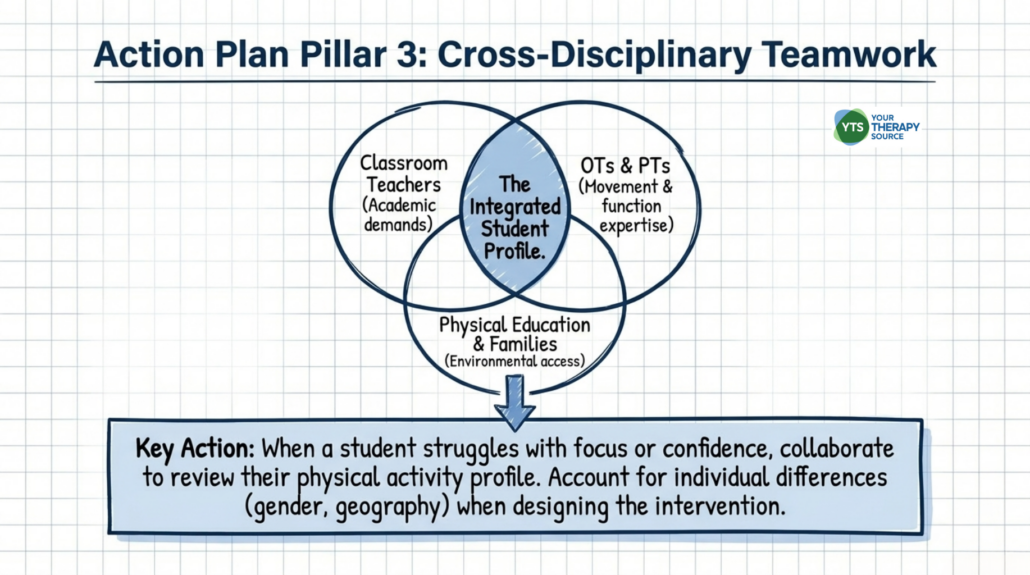
- Recognize that movement benefits may look different for different students. The study found that male students appeared to benefit more strongly through self-regulation pathways, while female students showed a relatively stronger contribution from self-efficacy. Being attentive to individual differences in how students respond to and engage with physical activity supports more responsive practice.
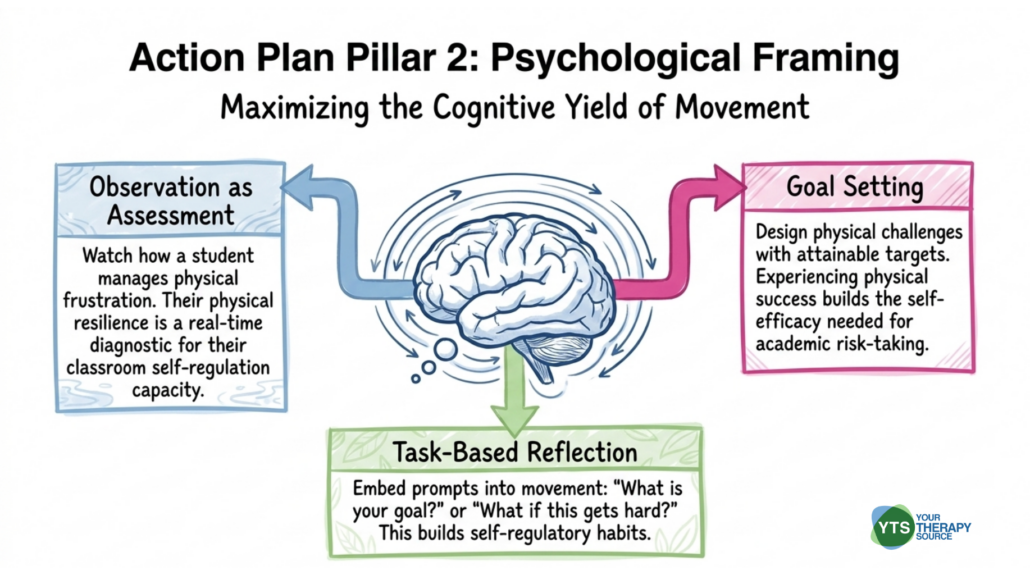
- Support students in setting achievable goals during physical activities. When students experience success in physical challenges, their confidence in their own abilities may grow. Activities designed with attainable yet challenging goals can reinforce self-efficacy, which the research links to academic performance.
- Integrate task-based reflection into physical education and movement activities. Encouraging students to plan, monitor, and reflect on their performance during physical tasks builds the same self-regulatory habits that support classroom learning. Simple prompts like “What is your goal today?” or “What will you do if this gets hard?” can reinforce these skills.
- Think beyond the gymnasium when supporting physical activity access. The research found that students in rural contexts showed particularly strong benefits through self-regulation pathways, which may reflect how movement in less structured environments supports behavioral development. School teams working with students in varied community contexts should consider how and where students access movement opportunities.
- Use physical activity as a context for observing student self-regulation. Watching how a student approaches a physical challenge, including how they manage frustration, respond to difficulty, or re-engage after stopping, can offer useful information about their broader self-regulation capacity. This can inform how teams support students across settings.
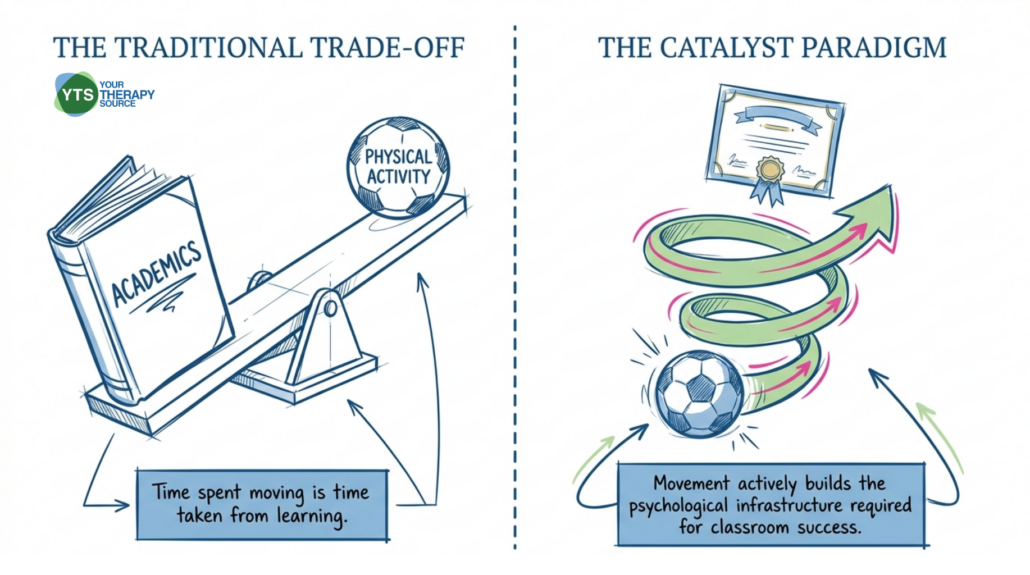
- Communicate with families about the role of physical activity in learning. Families who prioritize academic work above movement opportunities may not be aware of this research. School-based professionals can share that evidence suggests physical activity is not a trade-off against academic success, but may actually support the skills that underpin it.
- Support confidence-building as part of movement experiences. For students who struggle with academic self-confidence, physical activity that emphasizes individual progress over comparison to peers may help build a broader sense of capability. The research suggests self-efficacy developed through physical activity may carry over to academic settings.
- Collaborate across disciplines when planning physical activity supports. Occupational therapists, physical therapists, physical education teachers, and classroom teachers each bring different expertise to understanding how movement affects student learning and behavior. A coordinated approach to embedding movement into the school day is likely to be more effective than siloed efforts.
CONCLUSION ON PHYSICAL ACTIVITY AND ACADEMIC PERFORMANCE
This study found that physical activity was positively associated with academic performance in a large sample of secondary school students, and that much of this relationship was explained by students’ self-regulation and self-efficacy. Rather than working against academic goals, physical activity may actually support the psychological skills students need to succeed in school. These findings held across gender and residential contexts, though the relative strength of each pathway varied by subgroup.
For educators and school-based therapists, this research reinforces the value of keeping movement as a central part of the school day. Understanding the role that self-regulation and self-efficacy play in connecting physical activity to learning outcomes can help school teams make more informed, evidence-aware decisions about how they structure students’ time, environment, and supports across the school day.
REFERENCES
Che, L., Liu, D., & Tie, C. (2026). Physical activity and academic performance in adolescents: chain mediation through self-regulation and self-efficacy with gender and urban-rural differences. Frontiers in Education, 10:1686270. https://doi.org/10.3389/feduc.2025.1686270