Why Does a Student Need Constant Adult Reassurance? Free Printable
Why does a student need constant adult reassurance, even when they seem to understand their schoolwork? Some students repeatedly ask, “Is this right?” or “Can you check my work?” after completing almost every question. Others hesitate to continue working until a teacher, related service provider, or classroom aide confirms they are doing the assignment correctly.
Frequent reassurance-seeking can be related to anxiety, difficulty with self-monitoring, executive functioning challenges, or uncertainty about expectations. The good news is that educators can teach students explicit strategies to check their own work and gradually become more independent while still receiving the support they need.
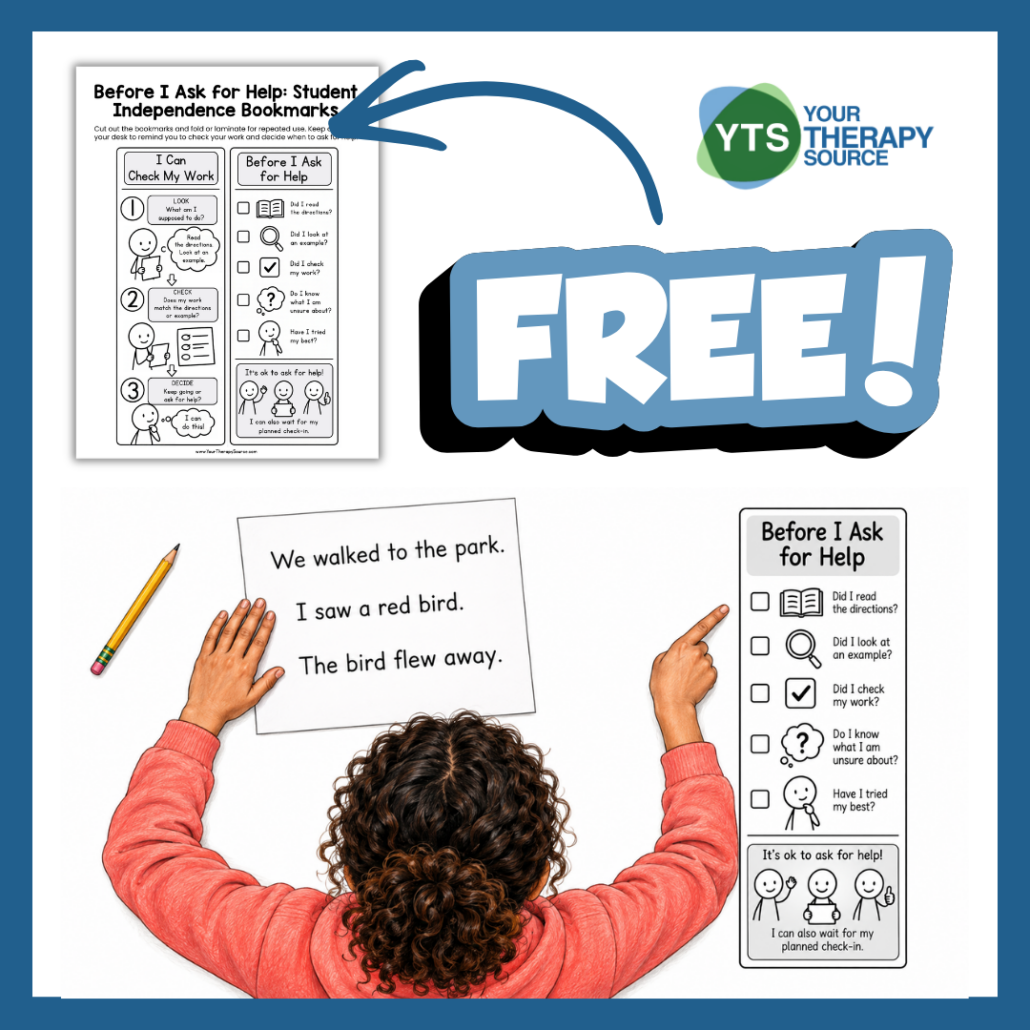
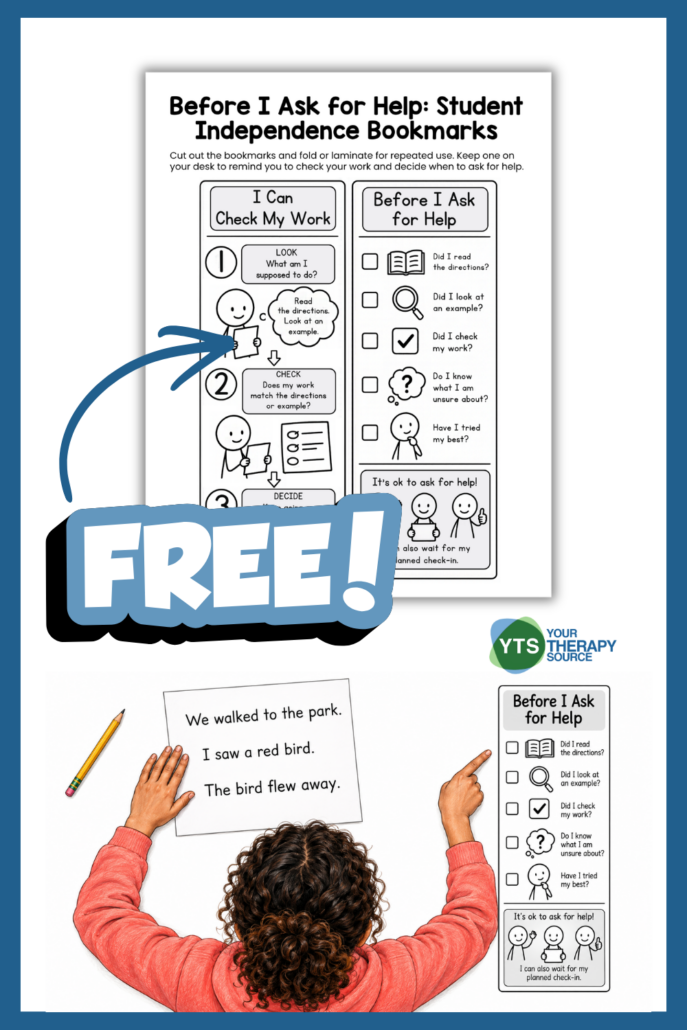
You can download the free Before I Ask for Help: Student Independence Bookmarks PDF at the bottom of this post. These printable bookmarks provide a simple visual reminder to help students review directions, check their work, and decide when to ask for assistance.
Why Do Some Students Need Constant Adult Reassurance?
There are several reasons students may repeatedly seek adult confirmation during classroom assignments. Understanding what contributes to this behavior can help teachers choose appropriate strategies rather than simply encouraging students to stop asking questions.
Some common reasons include:
- Fear of making mistakes: Students may worry about getting an answer wrong and want immediate confirmation before continuing.
- Difficulty with self-monitoring: Students may understand the assignment but struggle to recognize whether their work meets expectations.
- Executive functioning challenges: Working memory, planning, and attention difficulties can make it harder to remember directions and evaluate completed work.
- Unclear expectations: Students may not understand what a finished or correct assignment should look like.
- Learned reliance on adult feedback: Students who regularly receive immediate adult confirmation may become accustomed to waiting for approval before continuing.
- Anxiety or emotional regulation difficulties: Some students may need additional reassurance when tasks feel uncertain, challenging, or overwhelming.
The important thing is to look beyond the repeated questions and consider what skills or supports the student may need. A student who frequently asks for reassurance is not necessarily trying to get attention or avoid work.
Watch the Video
How to Help Students Become More Independent
One helpful approach is to focus on three strategies: making expectations clear, explicitly teaching self-monitoring, and establishing predictable adult check-ins. These strategies give students opportunities to develop independence without removing necessary assistance.
1. Make Expectations Clear and Visible
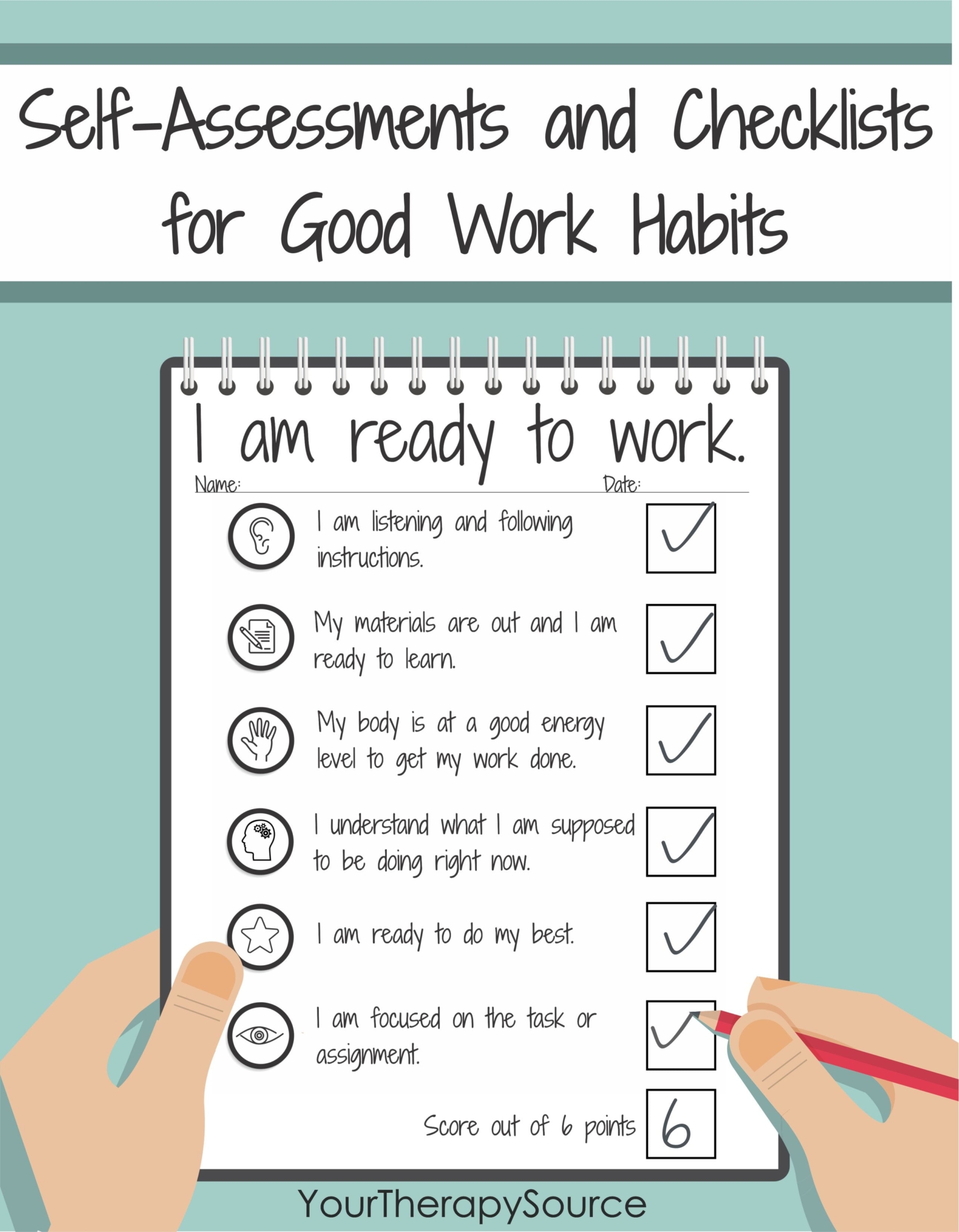
Before students can check their own work, they need to understand what they are supposed to do. Clear directions, visual checklists, and completed examples can make expectations easier to recognize.
For example, a student completing a writing assignment may benefit from a checklist that includes writing three sentences, using capital letters, and adding ending punctuation. Instead of asking the teacher whether every sentence is correct, the student can compare their work to the checklist.
For math assignments, a worked example can provide a reference. For classroom routines, a simple visual sequence can help students recognize which steps they have completed and what comes next.
Before beginning an assignment, ask the student, “What will you look for when you check your work?” This helps determine whether the student understands the expectations before working independently.
2. Explicitly Teach Self-Monitoring Skills
Self-monitoring involves recognizing and evaluating your own performance. Students need to understand the expectations, compare their work to those expectations, notice possible mistakes, and decide what to do next.
These skills do not always develop automatically. Some students benefit from direct instruction, modeling, and repeated opportunities to practice checking their own work.
Start by demonstrating the process. For example, a teacher might complete a math problem and say, “Now I’m going to compare my answer to the example. Did I follow the same steps? Does my answer make sense?”
Next, complete a problem together and practice checking it. Finally, encourage the student to use the same process independently.
When a student asks, “Is this right?” consider responding with a question that encourages self-monitoring, such as “What does your checklist tell you?” or “Can you compare your answer to the example?”
Of course, students still need direct answers and instruction when they are confused. The purpose is to teach a useful skill, not to discourage appropriate help-seeking.
3. Establish Predictable Adult Check-Ins
Some students feel more comfortable working independently when they know exactly when an adult will return to provide feedback. Predictable check-ins can reduce uncertainty while giving students opportunities to practice self-monitoring.
For example, a teacher might say, “Let’s complete the first math problem together. Then try the next two and check them using your example. I’ll come back after those two.”
Once the student becomes comfortable with this routine, the teacher can gradually increase the amount of work completed between check-ins. The student might progress from checking after every problem to checking after two or three problems.
This process is often called fading adult prompts. The amount of assistance is gradually adjusted as the student demonstrates greater independence.
It is important to monitor the student’s accuracy, confidence, and comfort with the routine. If the student becomes confused or distressed, additional instruction or support may be necessary.
Students should always be able to ask for help when they genuinely need assistance.
Teach Students to Look, Check, and Decide
A simple three-step routine can make self-monitoring easier to remember. The free Before I Ask for Help bookmarks introduce students to the following process.
LOOK: What am I supposed to do?
Students begin by reviewing the directions and looking at an example when one is available. This helps them understand the expectations before beginning or continuing an assignment.
CHECK: Does my work match the directions or example?
Students compare their completed work with the expectations. They can use a checklist, worked example, or other visual support to recognize whether they are on track.
DECIDE: Keep going or ask for help?
Students consider whether they understand what to do next. If they are comfortable continuing, they can move forward. If they are confused or need assistance, they can ask for help.
This routine gives students a concrete strategy they can practice across different classroom assignments.
Free Before I Ask for Help Student Independence Bookmarks
The free printable includes two complementary bookmark designs that help students develop self-checking and independent work skills.
The first bookmark, “I Can Check My Work,” introduces the three-step Look, Check, Decide process. Simple illustrations and short questions remind students to review directions, compare their work to an example, and decide what to do next.
The second bookmark, “Before I Ask for Help,” includes five self-reflection questions:
- Did I read the directions?
- Did I look at an example?
- Did I check my work?
- Do I know what I am unsure about?
- Have I tried my best?
The bookmark also reminds students that it is okay to ask for help and that they can wait for a planned adult check-in when appropriate.
These black-and-white bookmarks use simple, age-neutral illustrations, making them suitable for a wide range of students. Teachers can cut them out and fold or laminate them for repeated use.
Students can keep a bookmark on their desks, inside a notebook, or alongside an assignment as a visual reminder.
How to Use the Student Independence Bookmarks in the Classroom
Introduce the bookmarks during a time when students are calm and able to practice a new skill. Explain that the purpose is to help them recognize what they already know and determine when additional help is needed.
Model the Look, Check, Decide routine using an actual classroom assignment. Show students how to review directions, compare their work to an example, and decide whether they are ready to continue.
Next, practice using the bookmark together. Students may initially need verbal prompts to remember the steps, but these prompts can gradually decrease as they become more familiar with the routine.
The bookmarks can be especially useful during independent writing assignments, math practice, homework, and other activities that require students to monitor their progress.
Consider pairing the bookmarks with predictable adult check-ins. Students can practice self-checking between scheduled opportunities for feedback while knowing that help remains available.
What Does Progress Toward Independence Look Like?
Developing independence does not mean students suddenly stop asking questions. Progress often occurs through small changes in how students approach their work.
A student may begin checking directions before raising their hand. Another student may complete several problems independently instead of asking for reassurance after every answer.
Some students may become better at identifying exactly what they need help with. Instead of asking, “Is this right?” they might say, “I checked the example, but I’m not sure how to complete the last step.”
These changes demonstrate growing self-monitoring and problem-solving skills. They also help students become more active participants in their learning.
Remember that independence should not come at the expense of necessary accommodations or emotional support. Students may continue to need frequent check-ins, additional instruction, or individualized assistance.
Create an Individualized Action Plan With the YTS Action Toolkit
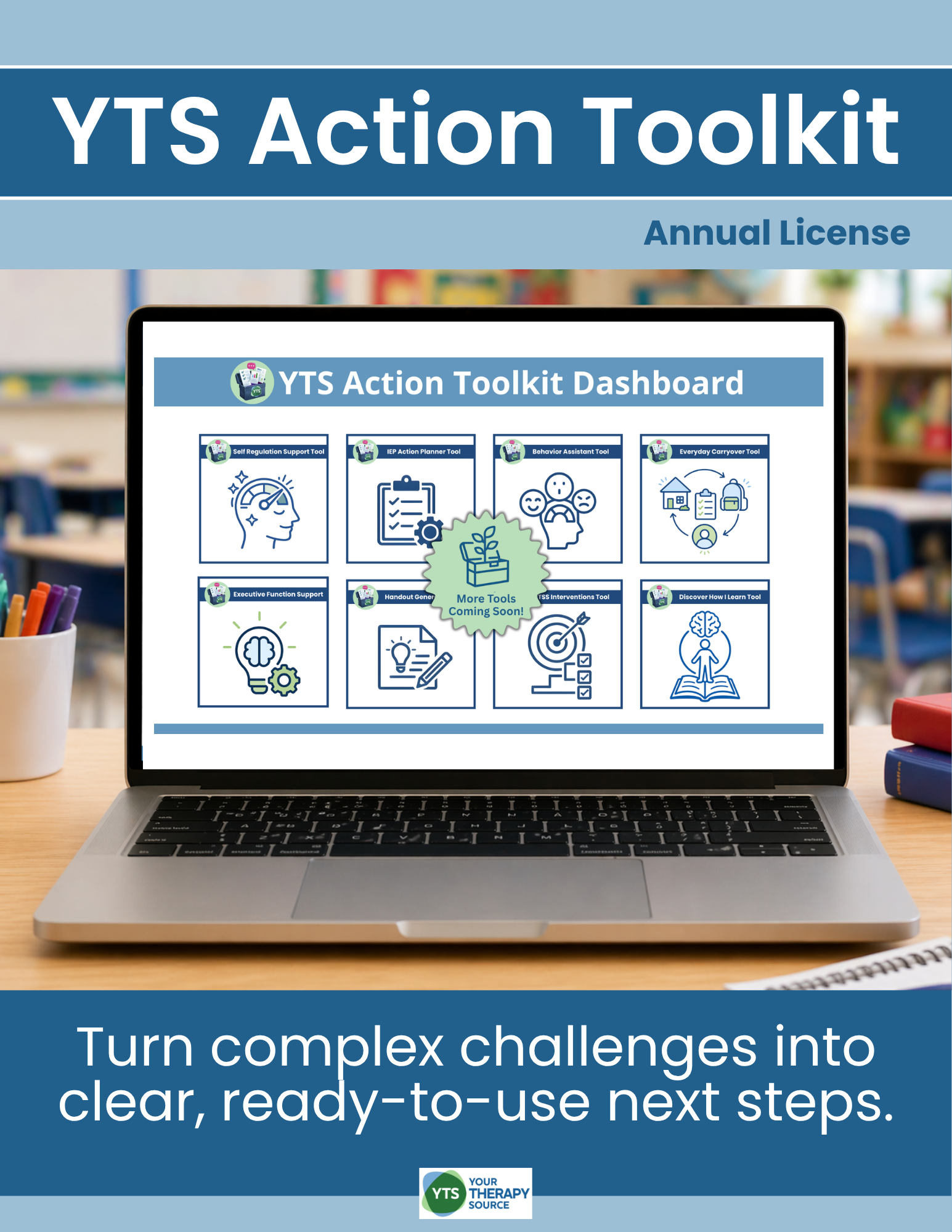
If a student continually seeks adult reassurance and you are unsure what is contributing to the behavior, the YTS Action Toolkit can help you explore possible support strategies.
Inside the toolkit, Discover How I Learn helps students identify their learning strengths, challenges, and the supports that may help them succeed. The tool explores areas such as attention, executive functioning, sensory needs, and self-regulation.
Based on student responses, the tool generates personalized recommendations organized into three areas: Get Ready, Build Skills, and Foster Independence.
Educators and school-based therapists can use these recommendations alongside their observations and professional judgment to develop an individualized action plan.
For a student who frequently needs adult reassurance, that plan might include clearer visual expectations, explicit self-monitoring instruction, and predictable adult check-ins that gradually encourage greater independence.
Learn more about the YTS Action Toolkit and how Discover How I Learn can support individualized student learning strategies.
Download the Free Student Independence Bookmarks PDF
Helping students become more independent begins with teaching the skills they need to recognize their own progress. Making expectations visible, explicitly teaching self-monitoring, and providing predictable adult check-ins can help students develop confidence while maintaining access to support.
The free Before I Ask for Help: Student Independence Bookmarks provide a simple visual tool to reinforce these strategies throughout the school day. Download the free printable PDF below and use the bookmarks to help students practice looking at directions, checking their work, and deciding when to ask for help.