Fast Heartbeat Different Reasons – Interoception Clues Our Body Gives Us
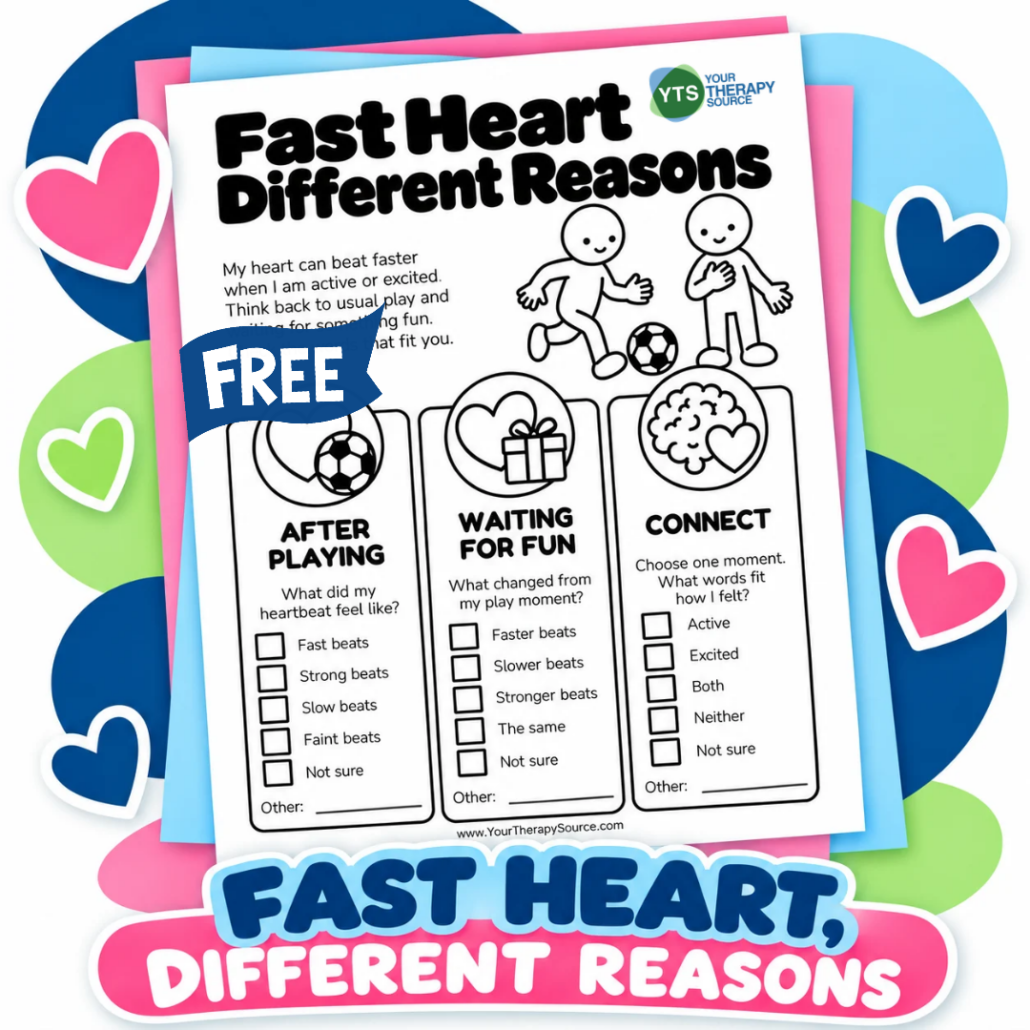
A fast heartbeat can happen for different reasons, and children can learn to notice this body signal without assuming it always means the same thing. A child may feel their heart beating quickly after active play or while waiting for something exciting. This is a simple way to introduce interoception, the ability to notice and interpret signals from inside the body. It is from the complete Be a Body Detective packet. A free two-page lesson on fast heartbeat different reasons is available at the bottom of this article.
Why Does a Heartbeat Feel Faster?
Our heartbeat changes throughout the day depending on what we are doing and experiencing. When children run, jump, or play, the heart beats faster to help deliver oxygen to working muscles.
A heartbeat can also feel faster when someone is excited, nervous, surprised, or looking forward to something fun. This means that noticing a fast heartbeat does not automatically tell us what a child is feeling.
The Same Body Signal Can Have Different Meanings
Imagine a student who finishes playing soccer at recess. They may notice a faster heartbeat, warmer skin, and quicker breathing as they stop moving. Later, the same student might be waiting for their class to announce a special activity. Their heart may feel faster again, even though they are sitting or standing still.
Both situations can produce similar body signals, but the reasons may be different. This is why it is helpful to encourage children to think about what is happening around them when they notice a sensation inside their bodies.
What Does Interoception Have to Do With Heartbeat?
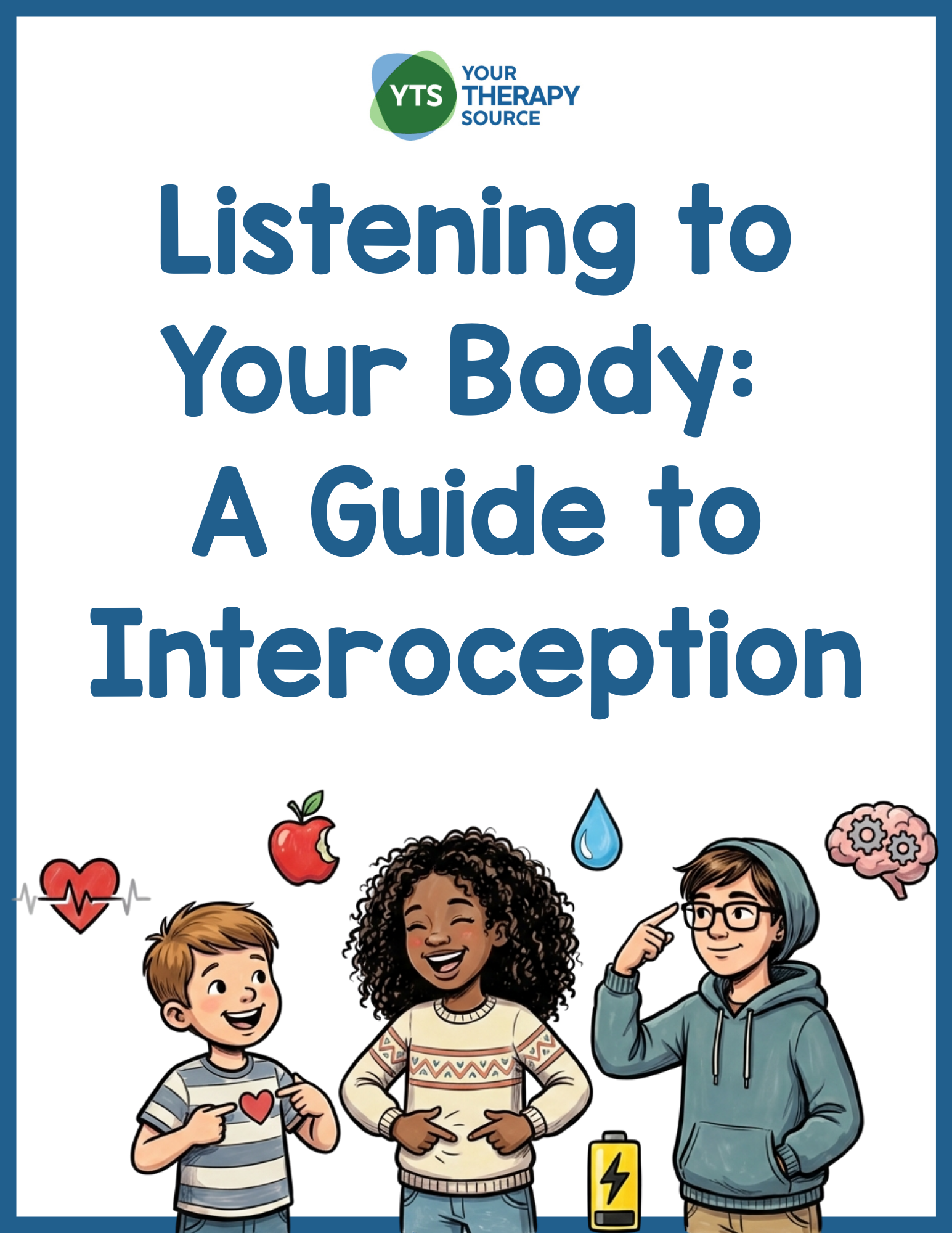
Interoception helps us notice internal body signals such as heartbeat, breathing, thirst, hunger, temperature, and muscle tension. Learning to notice these sensations is one part of developing greater body awareness.
Another important part is learning that body signals can have different meanings depending on the situation. Rather than telling students that a particular sensation always means a specific emotion, we can help them explore possible connections.
For additional examples, explore these 15 interoception activities to build body awareness in kids. These activities encourage children to notice physical sensations during familiar everyday experiences.
How to Teach the Fast Heartbeat Lesson
Before completing the worksheet, introduce the idea that our hearts can beat faster in different situations. The free download includes a simple teaching page that helps adults explain this concept. Start by talking about two familiar experiences, playing an active game and waiting for something exciting. Ask students to think about what their heartbeat might feel like in each situation.
Next, discuss how both experiences could produce a similar body clue even though the activities are different. Encourage students to consider what was happening rather than immediately deciding what the sensation means. There is no need to have students run, exercise, or deliberately increase their heart rates. They can use familiar memories or imagined situations to explore the concept.
Use the Free Fast Heartbeat Interoception Worksheet
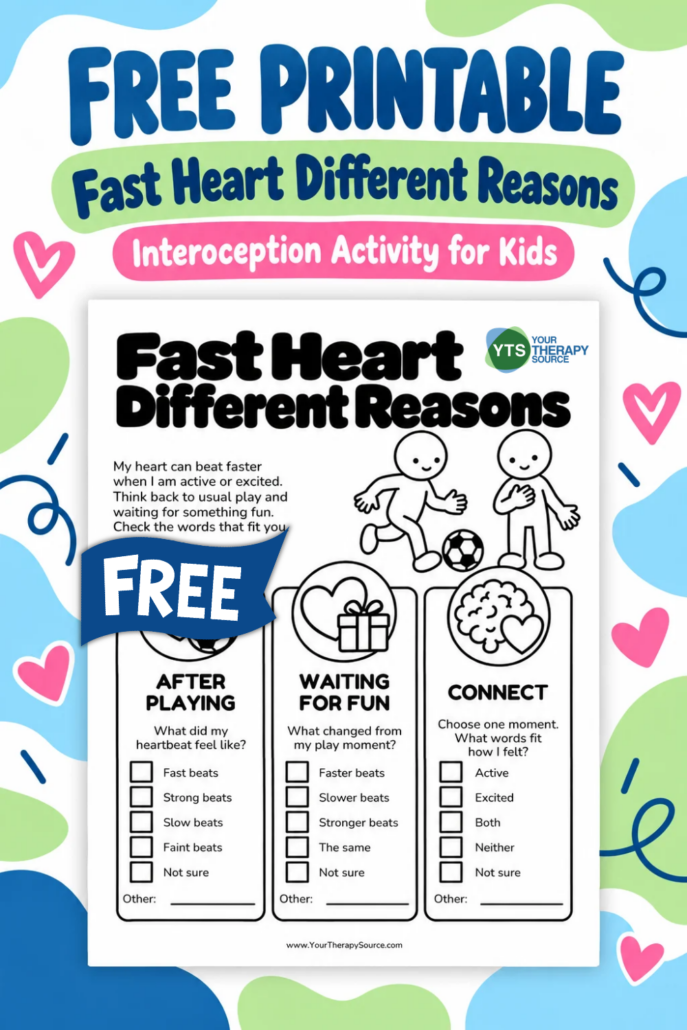
The second page of the free download is a printable worksheet from the Be a Body Detective packet. It uses three simple steps to help students notice, compare, and connect body clues.
First, students think about their heartbeat after playing and identify whether they noticed fast beats, strong beats, slow beats, or another sensation. Next, they consider what might change when they are waiting for something fun. Finally, students choose one of these moments and think about how they felt. They can select active, excited, both, neither, or not sure.
These responses give children an opportunity to compare experiences without requiring a correct answer. The goal is awareness and curiosity rather than identifying one particular emotional state.
Questions to Help Children Explore Body Clues
Adults can support interoception awareness by asking open-ended questions about children’s experiences. Questions such as “What were you doing when you noticed your heartbeat?” and “Have you ever felt something similar at another time?” can encourage reflection.
Another helpful question is, “Could the same body clue happen for a different reason?” This encourages children to consider the situation surrounding a physical sensation instead of making an automatic assumption about its meaning.
What If a Child Does Not Notice Their Heartbeat?
Some children notice their heartbeat very easily, while others may have difficulty identifying the sensation. It is important to remember that everyone experiences internal body signals differently. Students can respond by pointing, speaking, checking boxes, drawing, or writing. They can also choose “not sure,” and adults should avoid pressuring them to identify a sensation they do not notice.
These activities are intended to support learning about body awareness, not to evaluate medical symptoms. Unexpected, persistent, or concerning heartbeat-related symptoms should be addressed by a healthcare professional.
Exploring Body Signals Throughout the School Day
There are many natural opportunities to talk about body signals during the school day. Students might notice changes after recess, before a presentation, while waiting for an exciting event, or during a quiet classroom activity.
Teachers and therapists can use these familiar situations to help students recognize that physical sensations may change throughout the day. Short conversations about these experiences can support awareness without requiring formal body checks throughout the school day.
For more ideas, read Interoception in the Classroom. This resource explores the relationship between internal body awareness, regulation, and classroom participation.
Explore More Interoception Activities
Heartbeat is just one of the many body clues children can explore. Other activities can help students notice changes in their breathing, muscle tension, body temperature, hunger, thirst, and energy levels.
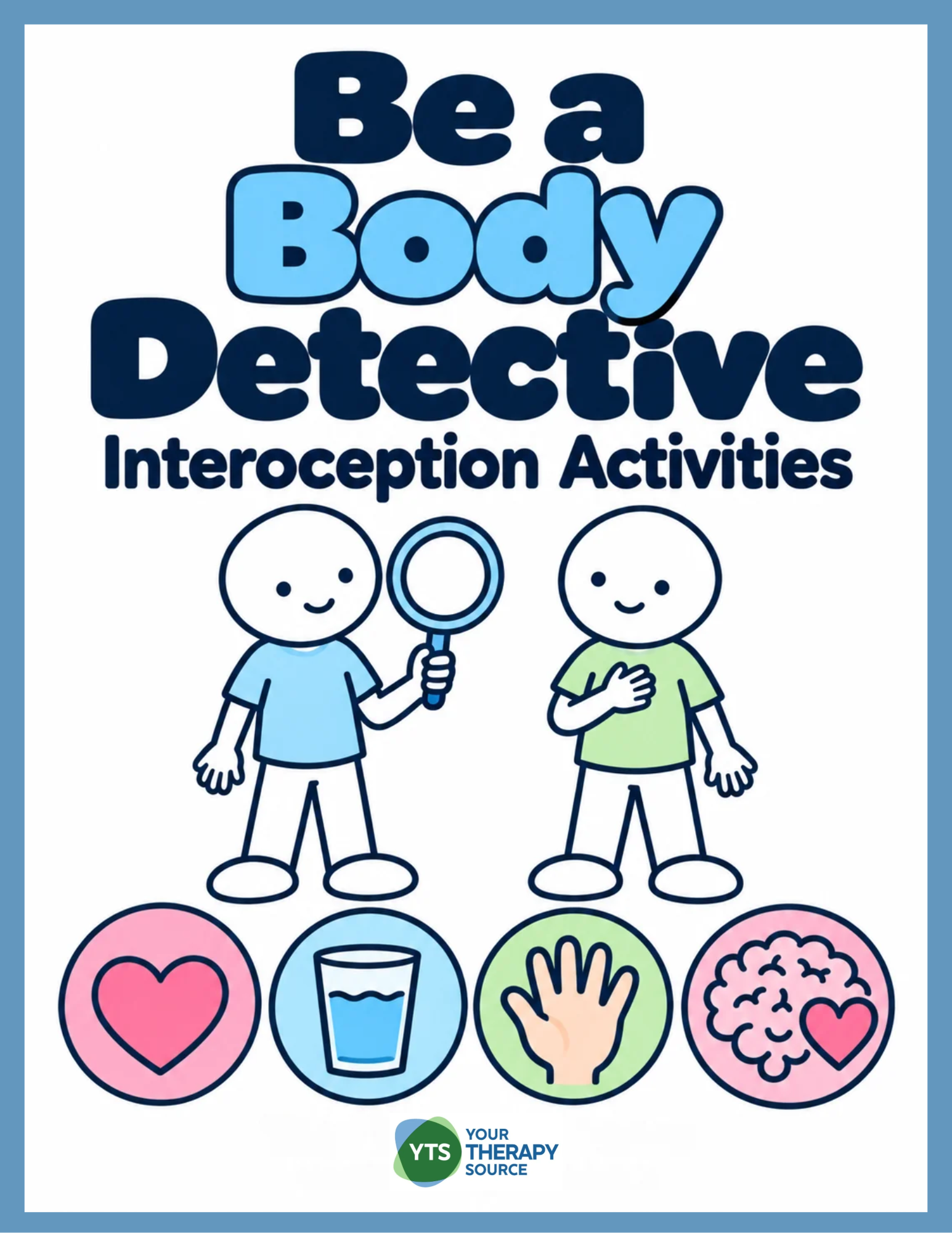
The complete Be a Body Detective: Interoception Activities packet includes 26 printable activities designed to help students explore body signals in different everyday situations. The consistent visual format, simple instructions, and response choices make the activities easy to incorporate into therapy sessions, classrooms, and home routines.
Download the Free Fast Heartbeat Different Reasons Worksheet
Download the free two-page Fast Heartbeat, Different Reasons lesson and worksheet below. The first page provides a simple teaching activity, and the second page allows students to explore how a familiar body signal can occur in two different situations. Use this printable to encourage children to notice their body clues and think about what might be happening in different moments. Remember, the same body signal can have different meanings.