Rhythm and Reading Skills: What Does the Research Say?
Could keeping a steady beat help children learn to read? Activities such as clapping, tapping, and listening to rhythmic patterns may do more than provide a fun classroom activity. Research suggests that rhythmic timing is connected to phonological awareness, language processing, and reading development. Learn more about rhythm and reading skills.
A 2026 systematic review published in BMC Psychology examined whether rhythm-based training could improve language and reading skills in children. The findings offer interesting possibilities for teachers, reading specialists, speech-language pathologists, and school-based therapists who incorporate rhythm into their work with students. Download a PDF at the bottom of the post to get ideas to practice rhythmic timing.
WHAT IS THE CONNECTION BETWEEN RHYTHM AND READING SKILLS?
Rhythm involves recognizing, anticipating, and responding to patterns of sounds over time. Children use rhythmic skills when they clap along to music, repeat a drumbeat, tap to a steady rhythm, or recognize patterns in a familiar song.
Language also has rhythm, even when we are not singing. Spoken words contain syllables, stressed sounds, pauses, and patterns that help listeners understand where words begin and end.
For example, children use phonological awareness when they identify rhyming words, count syllables, or recognize individual sounds in words. These skills are important foundations for reading development, particularly when children begin connecting spoken sounds with written letters.
Researchers suggest that processing rhythmic patterns and processing spoken language may involve overlapping timing mechanisms in the brain. Recognizing and anticipating rhythmic patterns may help children process the sounds and structure of language more efficiently.
WHAT DID THE RESEARCH EXAMINE?
Destro Pastizzaro and colleagues (2026) conducted a systematic review of 21 peer-reviewed studies published between 2009 and 2024. The researchers examined whether rhythm-based training improved language and literacy skills compared with a control group or condition.
The studies included children ages 5 through 12, including typically developing children and children with developmental language disorder, dyslexia, or other reading difficulties. Researchers measured outcomes such as phonological awareness, reading accuracy, reading speed, speech processing, and grammatical skills.
The interventions were divided into three categories:
- Music-Based Rhythmic Training (9 studies): Children participated in clapping, drumming, singing, dancing, or synchronizing actions with musical rhythms.
- Language-Based Rhythmic Training (5 studies): Children practiced reading words, syllables, or sentences while following rhythmic cues.
- Rhythmic Priming (7 studies): Children listened to regular rhythmic patterns before completing language tasks, often without singing or performing any actions.
This distinction is important because the researchers wanted to understand whether rhythm itself could support language processing. They also examined whether benefits occurred when rhythmic activities included music, spoken words, or simply listening to a regular beat.

KEY FINDINGS ABOUT RHYTHM AND READING
1. Rhythmic Training Showed Promising Results
Twenty of the 21 studies reported improvements in at least one language-related outcome. The most frequently reported improvements involved phonological awareness, reading speed, reading accuracy, and grammatical processing.
However, these results do not mean that 20 studies demonstrated improved reading ability. Some studies examined spoken language or grammar rather than reading, and the researchers identified important differences in study quality and design.
2. Rhythm May Support Phonological Awareness
Phonological awareness involves recognizing and manipulating sounds within spoken language. Children use these skills when identifying rhymes, breaking words into syllables, or combining individual sounds to make words.
Several studies found improvements in phonological awareness following rhythm-based activities. These programs often involved clapping, drumming, copying rhythmic patterns, and coordinating sounds with a steady beat.
3. Keeping a Beat May Be Connected to Reading Fluency
Some studies reported improvements in reading speed and accuracy following rhythmic training. One 2024 study included in the review examined a digital rhythm game in which children tapped a tablet screen to match a musical beat.
After six weeks, the children receiving rhythm training demonstrated greater improvements in reading fluency than the no-training control group. Although the results were promising, additional research is needed to determine whether similar benefits occur across different rhythmic activities and groups of students.
4. Children With Dyslexia May Benefit From Rhythm-Based Activities
Several studies included children with developmental dyslexia and examined rhythmic reading interventions. These activities paired reading syllables, words, or sentences with a steady musical beat or other rhythmic cues.
Some children demonstrated improvements in reading speed, accuracy, and phonological awareness. The findings suggest that rhythmic activities may be a useful addition to reading intervention programs, although they should not replace explicit, evidence-based reading instruction.
5. Listening to Rhythms May Also Support Language Processing
One interesting finding involved rhythmic priming, which does not require children to perform actions. In these studies, children listened to regular rhythmic patterns before completing language activities, such as deciding whether a sentence was grammatically correct.
Several experiments found improved grammatical performance after children listened to regular rhythms compared with irregular rhythms. Some benefits occurred after rhythmic sequences lasting just 17 seconds, although this does not demonstrate that short listening activities improve reading fluency.
6. The Regularity of the Rhythm May Be Important
The researchers suggested that regular, predictable rhythmic patterns may help the brain anticipate when sounds will occur. This ability to predict timing may support how children process spoken language and recognize patterns within words and sentences.
Interestingly, some improvements occurred without musical melodies or active participation. These results suggest that rhythmic regularity itself may contribute to language processing, although the underlying mechanisms require further investigation.
WHY RHYTHM MATTERS IN THE CLASSROOM
Rhythm is already part of many classroom routines, songs, and early literacy activities. Students clap syllables, repeat rhymes, sing familiar songs, and listen for patterns in spoken language.
The systematic review suggests that these activities may connect with important language-processing skills. In particular, the research highlights the potential value of practicing steady beats, recognizing rhythmic patterns, and connecting rhythms with spoken words.
For students who struggle with phonological awareness or reading fluency, rhythmic activities may provide an additional way to engage with language. However, the research supports using rhythm as a supplement to established reading instruction rather than as a stand-alone reading intervention.
Additional research has explored the connection between rhythmic movement, attention, and executive functioning. Read more about Embodied Music and Executive Function Skills to learn how structured musical activities may relate to inhibition, cognitive flexibility, and self-regulation.
10 PRACTICAL STRATEGIES TO INCORPORATE RHYTHM INTO THE SCHOOL DAY
The following activities are inspired by the types of rhythmic training described in the systematic review. They provide opportunities to practice listening, rhythmic timing, phonological awareness, and language patterns, but each individual activity has not been independently proven to improve reading outcomes.
1. Start With a Steady Beat
Begin with a simple, predictable beat and ask students to clap along. Start slowly and encourage them to maintain a consistent rhythm before gradually changing the tempo.
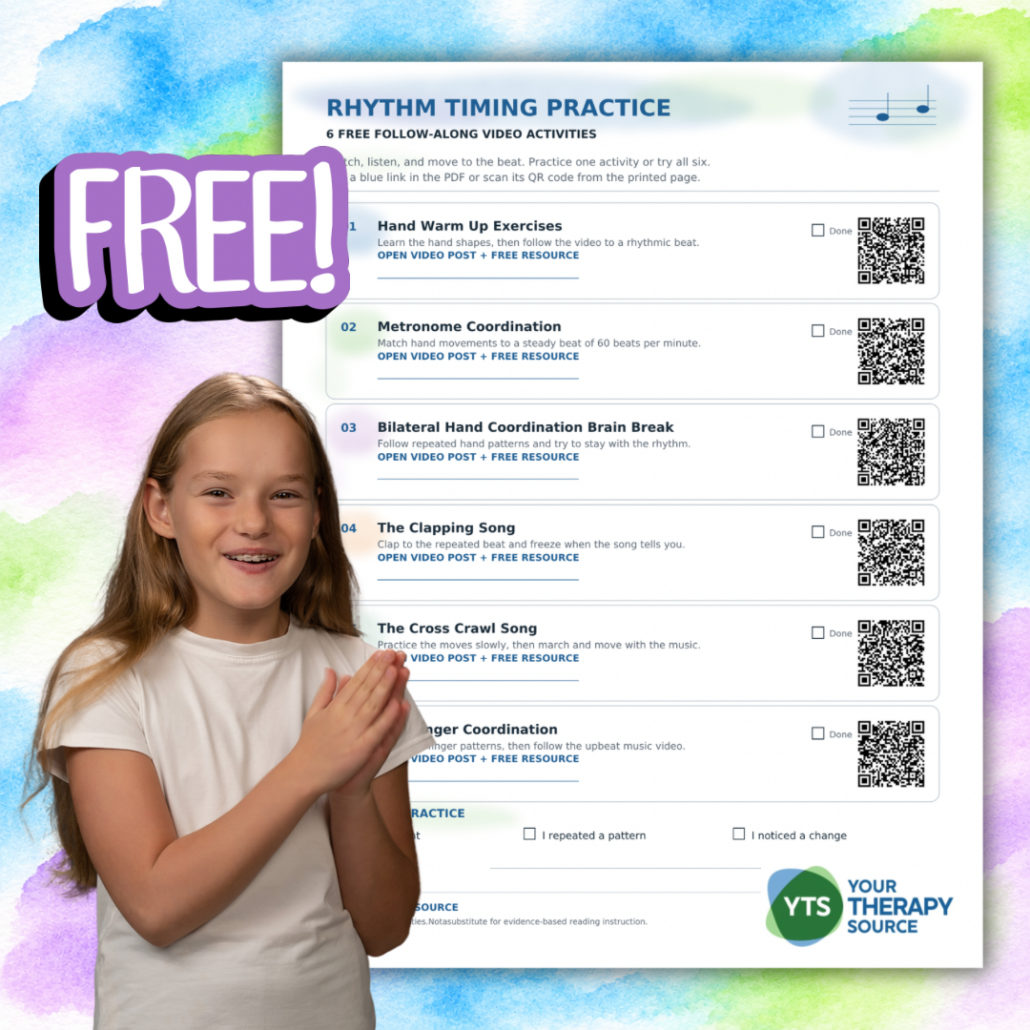
Try The Clapping Song Free Printable, which uses repeated clapping patterns and rhythmic cues. This activity provides an engaging introduction to keeping a beat and responding to changes in music.
2. Practice Keeping Time With a Metronome
Use a metronome or an audio track that provides a clear, steady beat. Ask students to clap, tap, or gently pat their knees each time they hear the beat.
The Metronome Coordination Video Activity offers a structured way to practice synchronizing actions with a consistent rhythm. The video uses a steady beat of 60 beats per minute.
3. Clap the Syllables in Words
Choose familiar words and ask students to clap once for each syllable. Begin with short words before gradually introducing longer words with more syllables.
For example:
- Cat: 1 clap
- Apple: 2 claps
- Banana: 3 claps
- Butterfly: 3 claps
Students can say each word aloud while clapping its syllables. This directly connects rhythmic patterns with phonological awareness practice.
4. Copy and Repeat Rhythmic Patterns
Create a short clapping or tapping pattern and ask students to repeat it. Begin with two or three beats and gradually introduce longer patterns that include pauses.
For a visual example, try the Bilateral Hand Coordination Brain Break Video. Students can watch the repeated hand patterns and practice matching the timing of their movements to the rhythm.
5. Explore Fast and Slow Rhythms
Play or demonstrate rhythmic patterns at different speeds and ask students to identify whether the beat is fast or slow. Encourage them to follow the beat while maintaining consistent timing.
Once students are comfortable, introduce gradual changes in tempo. This provides practice with auditory timing and recognizing changes in rhythmic patterns.
6. Read Words or Syllables to a Beat
Provide a slow, comfortable beat while students practice reading familiar syllables or words. The rhythm should support the reading activity without making students rush or interfere with accurate decoding.
Several studies in the review examined rhythmic reading programs that combined reading activities with regular auditory cues. These structured interventions were more specific than simply playing background music while students read.
7. Follow Rhythmic Movement Songs
Choose a familiar movement song with clear, repeated rhythmic patterns. Encourage students to listen to the music and match their actions to the beat.
The Cross Crawl Exercise Song Free Printable provides a follow-along video that pairs movement with rhythmic musical cues. Students can practice the actions slowly before completing them along with the song.
8. Practice Rhythmic Finger Patterns
Begin with a simple finger tapping pattern and ask students to copy it slowly. Once they understand the sequence, encourage them to follow the pattern while listening to a steady beat.
The Fire Finger Coordination Free Printable includes a video with finger movements performed to music. Students can practice following the rhythmic cues while repeating the finger patterns.
9. Use Rhythm During Short Classroom Breaks
Try a brief rhythmic routine between classroom activities to provide opportunities for listening and timing practice. Students might clap four steady beats, pause, and repeat before transitioning to the next task.
The Hand Warm Up Exercises Free Printables and Video includes hand movements performed to a rhythmic beat. Students can first learn the movements slowly and then attempt to follow the timing of the video.
10. Pair Rhymes With Rhythm
Read a short, familiar rhyme or poem aloud and encourage students to clap along with its natural rhythm. Pause before a rhyming word and ask students to predict or identify the missing word.
The reviewed studies included activities involving speech rhythm, syllable stress, rhyming, and rhythmic patterns. Combining these elements may provide an engaging way to practice listening and phonological awareness alongside direct literacy instruction.
WHAT ARE THE LIMITATIONS OF THE RESEARCH?
Although the results were encouraging, the researchers identified several limitations. The studies varied considerably in participant characteristics, intervention duration, comparison groups, and outcome measures.
Some studies compared rhythmic training with no intervention, which makes it difficult to determine whether the rhythm itself produced the improvements. Other studies found that rhythmic training and traditional phonological awareness instruction produced comparable results rather than one approach being clearly superior.
Only three studies included follow-up assessments, and the follow-up periods differed. The researchers also could not complete a reliable quantitative meta-analysis because the studies were too different to combine meaningfully.
Additional research is needed to determine which rhythmic activities are most effective, how frequently children should practice, and whether the improvements continue over time. More studies are also needed to identify whether particular reading skills benefit more than others.
CONCLUSION
Rhythm and reading skills appear to share important connections involving auditory timing, phonological awareness, and language processing. This 2026 systematic review suggests that rhythm-based training may support language and literacy development in children, including some students with dyslexia or developmental language disorders.
For educators and school-based therapists, clapping, tapping, listening to rhythmic patterns, and incorporating rhythm into language activities may offer engaging ways to support learning. These activities are simple to incorporate into the school day and may complement direct, evidence-based reading instruction.
REFERENCE
Destro Pastizzaro, C., Toffoli, L., Stefanelli, G., Mento, G., & Tarantino, V. (2026). The efficacy of rhythmic training for enhancing language and reading skills in children: A systematic review. BMC Psychology, 14, Article 1444. https://doi.org/10.1186/s40359-026-04969-6
FREE RHYTHM TIMING PRACTICE PRINTABLE
Want to put the research into practice? Download the FREE Rhythm Timing Practice printable featuring six follow-along video activities from Your Therapy Source that help students practice keeping a steady beat, repeating rhythmic patterns, and moving to music.
Each activity includes a QR code, clickable link, and simple instructions so students can easily follow along. The printable can be used during classroom lessons, therapy sessions, movement breaks, or home practice. Download the FREE Rhythm Timing Practice PDF at the bottom of this post!