What to Do When the Whole Class Is Dysregulated
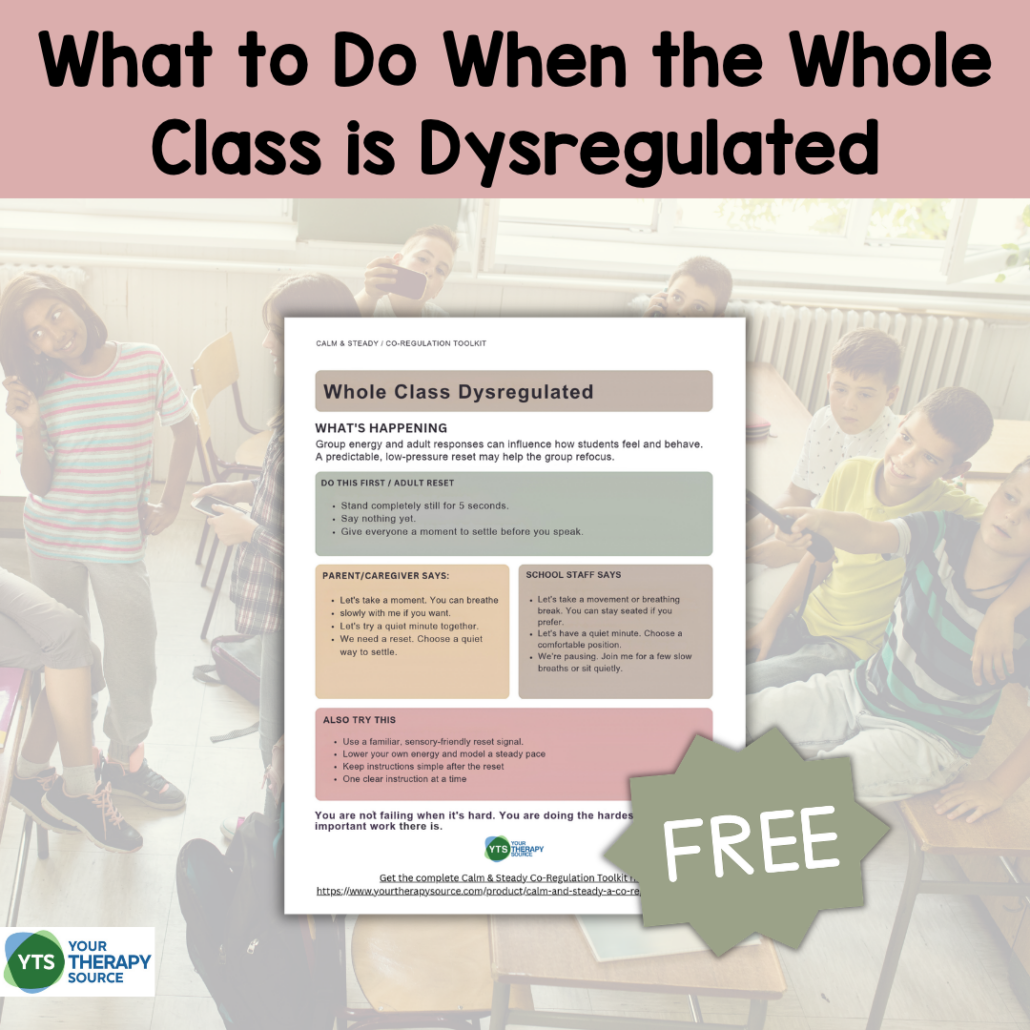
Have you ever looked around the classroom and realized that almost everyone is having difficulty focusing, following directions, or managing their emotions? Knowing what to do when the whole class is dysregulated can be challenging, especially when you are feeling overwhelmed yourself.
Changes in routines, indoor recess, upcoming holidays, special events, and unexpected transitions can all contribute to changes in classroom energy. Sometimes, the entire group may benefit from a brief, low-pressure reset rather than additional instructions or reminders.
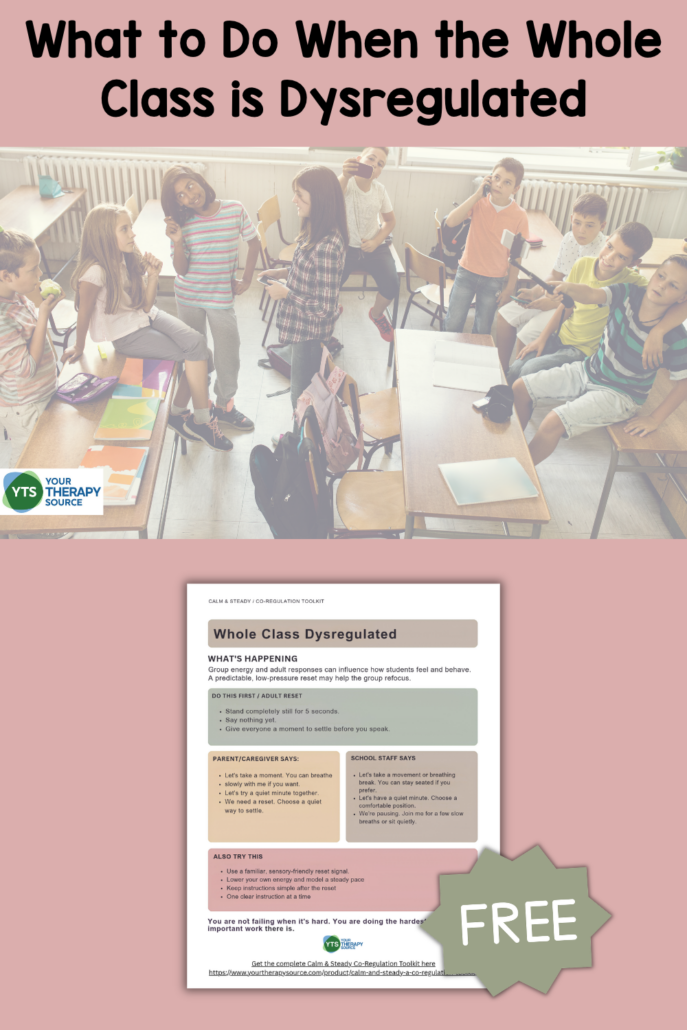
You can download a free co-regulation reference sheet for school staff at the bottom of this post. It includes adult reset strategies, suggested scripts, and practical actions to support group regulation.
SIGNS THAT THE WHOLE CLASS MAY NEED A RESET
Classroom dysregulation can look different depending on the students, environment, and circumstances. You may notice several students experiencing difficulty at the same time.
Some signs that the group may benefit from a reset include:
- Increased noise levels.
- Frequent interruptions or talking over others.
- Difficulty following familiar directions.
- Increased restlessness.
- More frequent disagreements between students.
- Difficulty transitioning between activities.
- Increased frustration over minor challenges.
- Reduced engagement in classroom activities.
- Unusual withdrawal or quietness among some students.
Remember that movement, talking, and excitement are not necessarily signs of dysregulation. Consider whether students are having difficulty managing their emotions, participating in activities, or responding to the current environmental demands.
WHY DOES THE WHOLE CLASS BECOME DYSREGULATED?
Students respond to their environments, experiences, and interactions with others. When several students are experiencing heightened emotions or energy levels, the overall classroom atmosphere can change.
Possible contributing factors include:
- Unexpected schedule changes.
- Increased sensory stimulation.
- Extended periods of sitting.
- Difficult academic tasks.
- Social conflicts.
- Hunger or fatigue.
- Excitement about an upcoming event.
- Limited opportunities for movement.
- Rushed or unpredictable transitions.
Sometimes, there is no single explanation. Several small challenges may accumulate throughout the day, making it more difficult for students and adults to manage additional demands.
START WITH AN ADULT RESET
When the classroom becomes increasingly noisy or unsettled, it is understandable for school staff to feel frustrated or overwhelmed. Adults are managing their own emotions while trying to meet the needs of an entire group of students. When safety permits, consider giving yourself a few seconds before introducing another direction or activity. Try these simple adult reset strategies:
- Remain still for a few seconds.
- Relax your shoulders.
- Allow yourself a moment without speaking.
- Notice your own energy level and tone of voice.
- Consider what might help the group right now.
- Ask for additional support if needed.
Research-informed recommendations emphasize the importance of recognizing our own emotions, considering alternative interpretations of student behavior, and adjusting how we express our emotions during challenging interactions.
This is not about blaming teachers for classroom dysregulation or suggesting that a calm adult will always result in a calm classroom. Adult emotional regulation is one part of the support, not the entire solution.
WHAT TO SAY WHEN THE WHOLE CLASS IS DYSREGULATED
When students are overwhelmed, lengthy explanations and repeated directions may be difficult to process. Short, supportive statements can provide a predictable opportunity for the group to reset.
Here are some suggested scripts for school staff:
- “Let’s take a movement or breathing break. You can stay seated if you prefer.”
- “Let’s have a quiet minute. Choose a comfortable position.”
- “We’re pausing. Join me for a few slow breaths or sit quietly.”
- “There is a lot happening right now. Let’s try a reset.”
- “Let’s give ourselves a moment before we move on.”
- “We’ll start again with one step at a time.”
- “We can take a moment to get ready for our next activity.”
Not every student will benefit from the same regulation strategy. Offering simple choices can help students access support without requiring everyone to participate in exactly the same way.
SOMETIMES THE WHOLE CLASS NEEDS LESS, NOT MORE
When the entire classroom becomes overwhelmed, our first instinct may be to introduce another activity, provide additional directions, or offer a new regulation strategy. However, sometimes students and adults may benefit from temporarily reducing demands, sensory input, and mental workload. Consider these two resources to support classroom regulation:
- Quiet Thinking Time and Wakeful Rest Free Printables and Video: Introduce a brief period of quiet without requiring students to complete a task. Start with 30 seconds and gradually increase to 60 or 90 seconds as students become familiar with the routine. The free printables and accompanying video can help establish a predictable routine.
- How to Quiet a Busy Mind: Explore additional strategies to help students manage a busy mind and create opportunities to slow down.
These strategies are not about expecting students to sit perfectly still or creating a completely silent classroom. They are about recognizing when everyone might benefit from fewer demands and a little more space. Sometimes the most helpful classroom reset is not adding another activity but temporarily removing an expectation.
10 CLASSROOM RESET STRATEGIES TO TRY
Having a few familiar classroom reset strategies available can reduce the pressure on school staff to come up with new ideas during challenging moments. Consider the needs of your students and choose an activity that fits the situation.
- Quiet minute: Offer a brief period without talking, instructions, or academic demands. Try these free Quiet Thinking Time printables and video.
- Gentle movement break: Invite students to stretch, reach, or move in their own space. These free calming movement activities provide ideas for incorporating movement into the school day.
- Seated movement: Provide simple movements that students can complete while remaining at their desks. Try these seated exercises and movement activities.
- Reduce environmental stimulation: Lower unnecessary noise or adjust lighting when appropriate. Consider whether students need less sensory input rather than another activity.
- Guided mindfulness: Offer students an opportunity to slow down and redirect their attention. Try this 3-Minute Mindfulness Meditation for Students.
- Use a familiar reset signal: Introduce a predictable, sensory-friendly signal that indicates a change in activity. Practice using the signal when students are already regulated.
- Offer regulation choices: Allow students to choose between quiet sitting, gentle movement, or breathing exercises. These free deep breathing visuals provide another option.
- Increase predictability: Review the visual schedule and help students understand what is happening now and what will happen next. Explore these ideas for using visual supports in the classroom.
- Offer a low-demand activity: Provide an opportunity for quiet coloring or drawing without specific performance expectations. Try these free quiet calming music and coloring pages for the classroom if music is helpful for your students.
- Simplify expectations: Provide one clear direction at a time. Consider whether the current activity can be modified, shortened, or revisited later.
The goal is not necessarily to create a completely silent classroom. It is to help students access a level of regulation that supports participation, learning, and well-being.
PRACTICE CLASSROOM RESETS BEFORE YOU NEED THEM
Introducing a new regulation strategy when the entire classroom is already overwhelmed may add another demand for students and staff. Instead, consider practicing classroom resets during relatively calm periods so students become familiar with the routines. You could incorporate a brief classroom reset:
- After lunch or recess.
- Before beginning a challenging academic task.
- Following an assembly or special event.
- Between two demanding classroom activities.
- After an unexpected schedule change.
- Before transitioning to another classroom.
Establishing familiar reset routines may help students know what to expect and reduce the amount of verbal instruction needed during more challenging moments. It can also give school staff a predictable set of strategies to access when they need them.
WHAT IF THE CLASSROOM RESET DOES NOT WORK?
Even familiar regulation strategies may not be effective every time. Students have different needs, and a strategy that is helpful one day may be less helpful the next.
Consider whether the group needs a different type of activity, additional time, fewer demands, environmental modifications, or support from another staff member. Some students may need individualized regulation support rather than a whole-class approach.
If classroom dysregulation occurs frequently, it may be helpful for the educational team to examine patterns in the schedule, environment, academic demands, transitions, and available supports. A classroom reset is a tool, not a test of your effectiveness as an educator.
REMEMBER THAT ADULTS NEED SUPPORT, TOO
Managing the emotional and behavioral needs of an entire classroom can be exhausting. There will be days when even your most familiar strategies do not produce the results you hoped for.
School staff deserve access to adequate resources, supportive colleagues, realistic expectations, and opportunities to regulate their own emotions. Taking care of the adults who support students is an important part of creating a supportive school environment. Read more about preventing teacher burnout for additional information about supporting educator well-being.
BE PREPARED WITH CO-REGULATION STRATEGIES AND SCRIPTS
What can you do when a student is experiencing intense emotions, shutting down, struggling with transitions, or becoming overwhelmed? Having practical strategies and supportive scripts readily available may reduce some of the mental effort required during challenging moments.
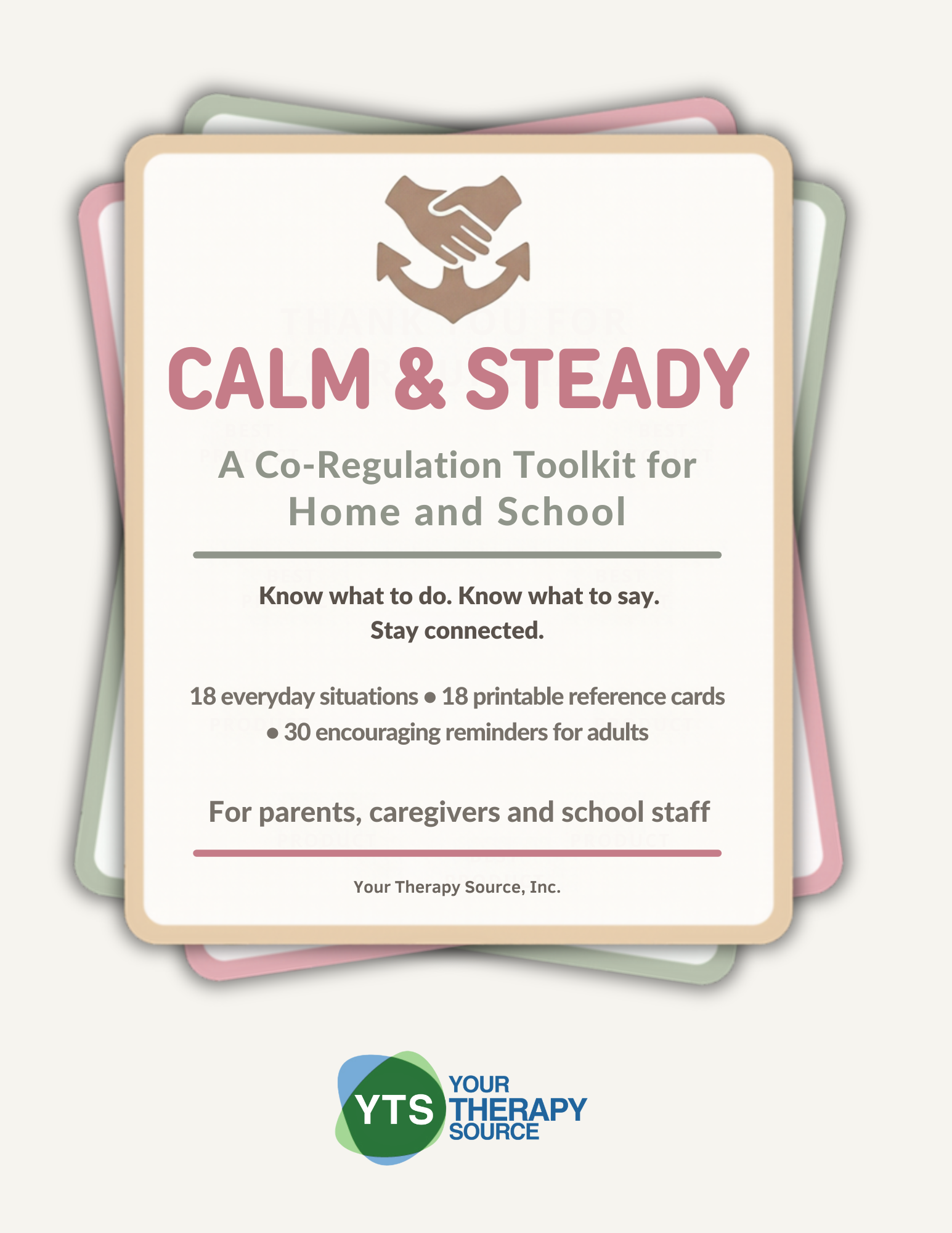
The Calm and Steady: A Co-Regulation Toolkit provides practical support for school staff, parents, and caregivers. The complete toolkit includes:
- Explanations of what may be happening during emotional dysregulation.
- Adult reset strategies.
- Suggested scripts for school staff, parents, and caregivers.
- Practical co-regulation actions.
- Printable quick-reference cards.
- Encouraging reminders for adults.
Keep these resources on your desk, in your therapy room, or on your digital device so you can easily access them when needed. Share them with your educational team to encourage consistent, supportive responses throughout the school day.
DOWNLOAD YOUR FREE WHOLE CLASS DYSREGULATED REFERENCE SHEET
The free Whole Class Dysregulated printable is a sample page from the complete Calm and Steady: A Co-Regulation Toolkit. This one-page reference sheet includes:
- An explanation of what may be happening when the group becomes dysregulated.
- Three simple adult reset strategies.
- Suggested scripts for school staff and caregivers.
- Additional strategies to support group regulation.
- An encouraging reminder for adults.
Print a copy for your classroom, therapy room, or staff room. Share it with your educational team so everyone has access to practical strategies when the whole classroom needs a reset. Enter your email address below to download your free printable.