, ,

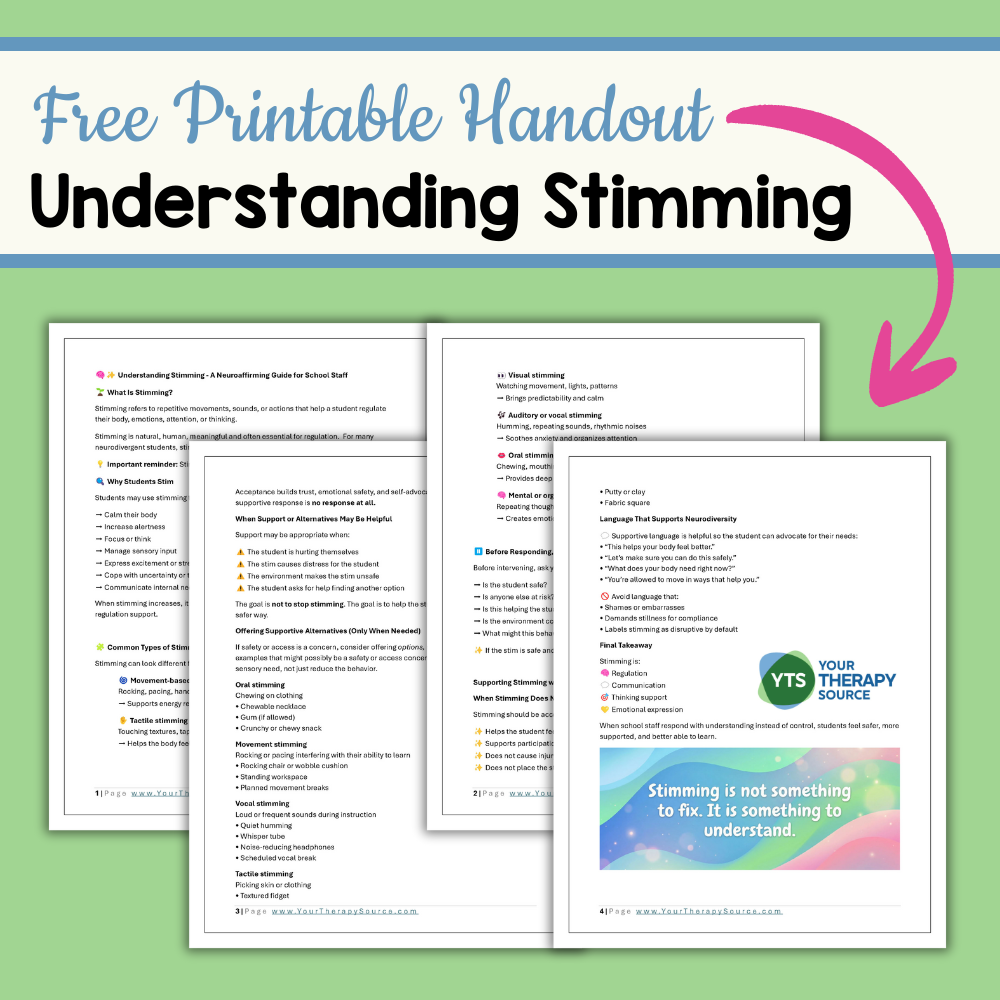
Sharing Information on Stimming Behaviors – Free Handout

Stimming behaviors are a natural and meaningful way many children regulate their bodies, emotions, attention, and thinking. While stimming is often misunderstood in school and community settings, a neuroaffirming perspective helps shift the focus from stopping behaviors to understanding what students need to feel safe, supported, and ready to learn. To support educators, therapists, and […]

, ,

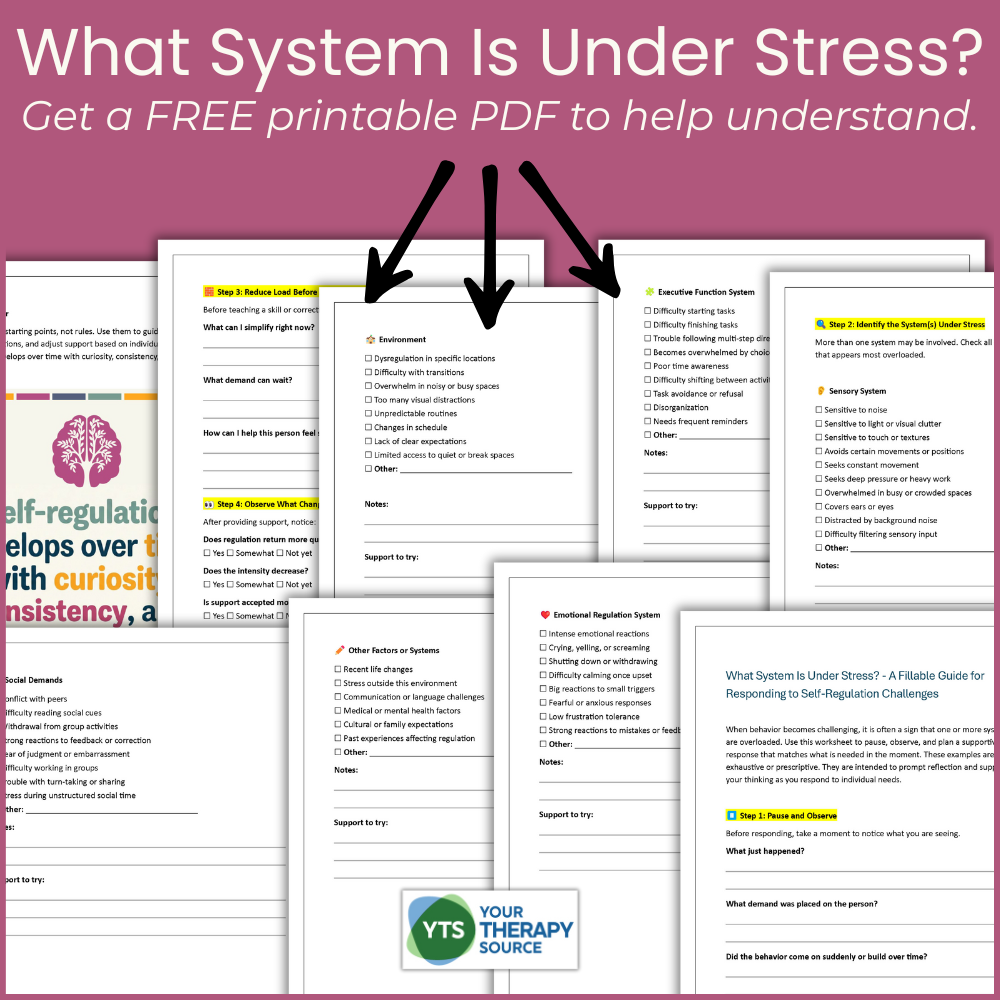
What System Is Under Stress? A Simple Way to Understand Challenging Behavior

When behavior feels challenging, overwhelming, or confusing, it is tempting to focus on stopping it as quickly as possible. However, behavior is rarely the problem itself. More often, it is a signal that something beneath the surface is not working as smoothly as it could. Understanding what system is under stress is often the key […]

,

Task Initiation Strategies: How to Help Students Start Their Work

When students struggle to begin assignments, the issue is often more than reluctance. It can reflect difficulty with task initiation, an executive function skill that allows learners to start a task efficiently and independently. For some students, beginning work is the hardest part of learning. By understanding the barriers to task initiation and using research-based […]

,

Student Effort – Free Self Assessment

Helping students reflect on their own effort is one of the most valuable ways to build independence, persistence, and self-awareness. When children pause to think about how hard they tried instead of only focusing on the outcome, they begin to develop a growth mindset and stronger self-regulation skills. To make this process easier, we’ve created […]