, , , ,

Exercise Participation: Juvenile Idiopathic Arthritis
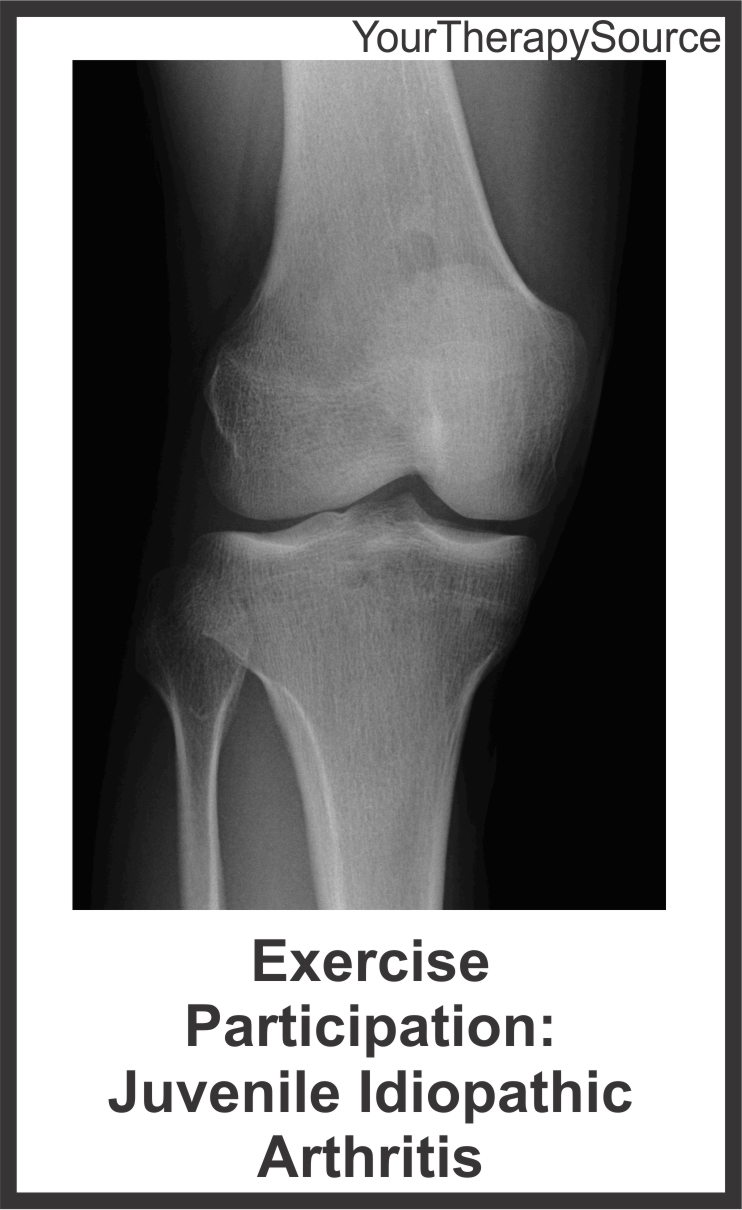
To continue on with yesterday’s topic, promoting participation in recreational activities for children with disabilities, today’s topic will discuss specific recommendations for children with juvenile idiopathic arthritis (JIA). Research has shown that children with JIA can participate in exercise regimens without exacerbating the disease. In addition, research has shown that exercise for at least 6 […]

, , , , , ,

Free Lesson Plan Form for Therapy Sessions

Therapists can follow in the footsteps of teachers and create lesson plans for therapy sessions. This can be especially useful for group sessions or push in therapy. When the lesson plan is written, provide a copy to the teacher or parent to inform them of your goals for the session. It is a great way […]

, , ,

Goal Directed OT Programs Effective for Unilateral Cerebral Palsy

A systematic review of the efficacy of nonsurgical upper limb therapies for children with unilateral cerebral palsy was published in Pediatrics.  There were 42 randomized control or comparison trials that met the inclusion criteria.  The results indicated the following: moderate to strong effects were in favor of intramuscular injections of botulinum toxin A and occupational […]

, ,

Playing with Food = Better Learning

Researchers at the University of Iowa studied 16 month old children’s exposure to 14 non solid objects such as applesauce, pudding and juice.  The researchers presented the items and created fictional names.  One minute later the children were asked to identify the same non-solid objects in different sizes or shapes.  The toddlers willingly interacted with the non […]

, , ,

Importance of Block Play in Preschoolers

Child Development published research on the importance of block play in over one hundred preschoolers.  The children in the study who were better at copying block patterns were also better at early math skills.  Copying block pattern consisted of knowing whether a block went above or below with the blocks properly aligned. The results also indicated that children from […]

, ,

Vocational Interventions for Young Adults with Autism

Pediatrics published a systemic review on vocational interventions for young adults (ages 13-30 years of age) with autism spectrum disorder (ASD).  Only 5 studies were included and all were of poor quality.  The main focus of the research articles utilized on-the-job supports as the vocational/employment intervention.  The results of the short term studies indicated the […]

, , , , ,

Neuromechanical Adaptations Following Trampoline Use

Have you ever heard of “trampoline aftereffect”?  It is that sensation that you have after jumping on a trampoline.  You get off the trampoline and your legs feel a little woozy or jelly like.  Pediatric therapy sessions that include motor skill development or sensory processing skills may include trampoline activities.  Did you know that after […]