, , , ,

Why Do Children Need Opportunities to Use New Motor Skills They Learn?

During therapy sessions, we frequently break down activities into smaller parts or chunks to make it easier for children to learn new motor or life skills.  As the child progresses with those individual parts of the skill, the child then practices the entire activity as a whole. Sometimes this is done in an isolated environment […]

, ,

5 Best Answers to a Child’s Questions to Encourage Executive Functioning Skills

Today’s post is by a guest blogger, Paige Hays, OTR.  She is an occupational therapist who provides in-home, pediatric occupational therapy services in the south metro area of the Twin Cities, MN through Paige Hays, Therapy Services, LLC. She is a mother of 2 girls, avid DIYer, and a highly skilled and experienced OT. She specializes in […]

, , , ,

Physical Activity, Affect and Executive Functioning in Boys with ADHD

The Journal of Attention Disorders published research on two studies to investigate the role of physical activity on the affect and executive functioning of children with symptoms of ADHD. One study explored the association between physical activity and affect in the daily lives of children with varying degrees of hyperactivity.  The second study randomly assigned children […]

, , ,

ADHD, Motor Activity and Executive Functions

Research in Developmental Disabilities published a study on the motor activity of boys (age 8–12 years) with (n = 19) and without (n = 18) ADHD during different executive function tasks.  Motor activity was objectively measured during two working memory tasks, a choice reaction time task (less demand on executive functions) and a reaction time […]

, , ,

Proprioceptive Training Improves Working Memory

A pilot study published in Perceptual and Motor Skills examined whether regular classroom instruction, yoga or proprioceptive training improved working memory in individuals 18-59 years old.  The experimental group participated in proprioceptive activities along with one other factor ie locomotion or navigation.  Some of the tasks were climbing trees, walking on a balance beam, carrying […]

, , , , ,

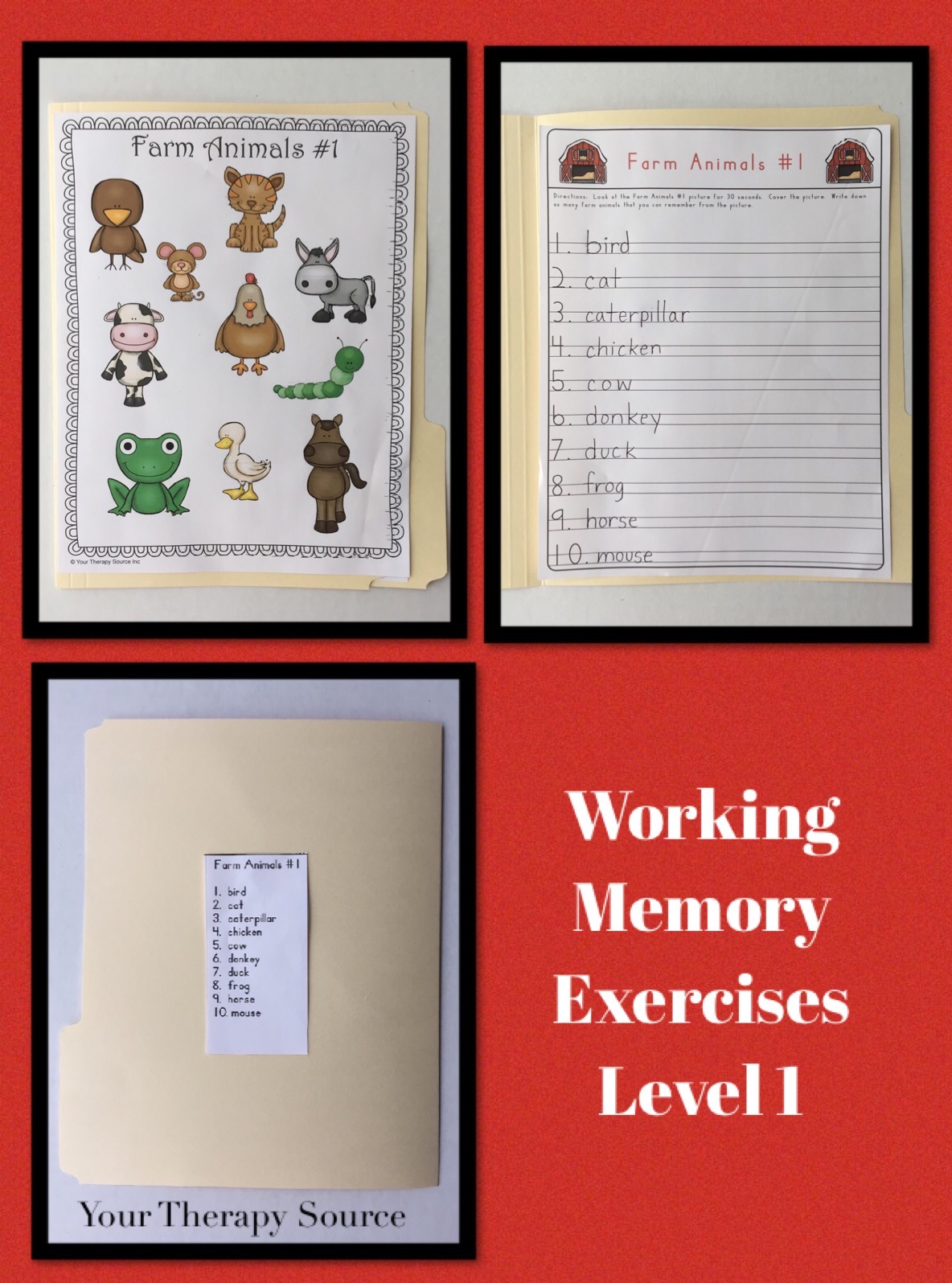
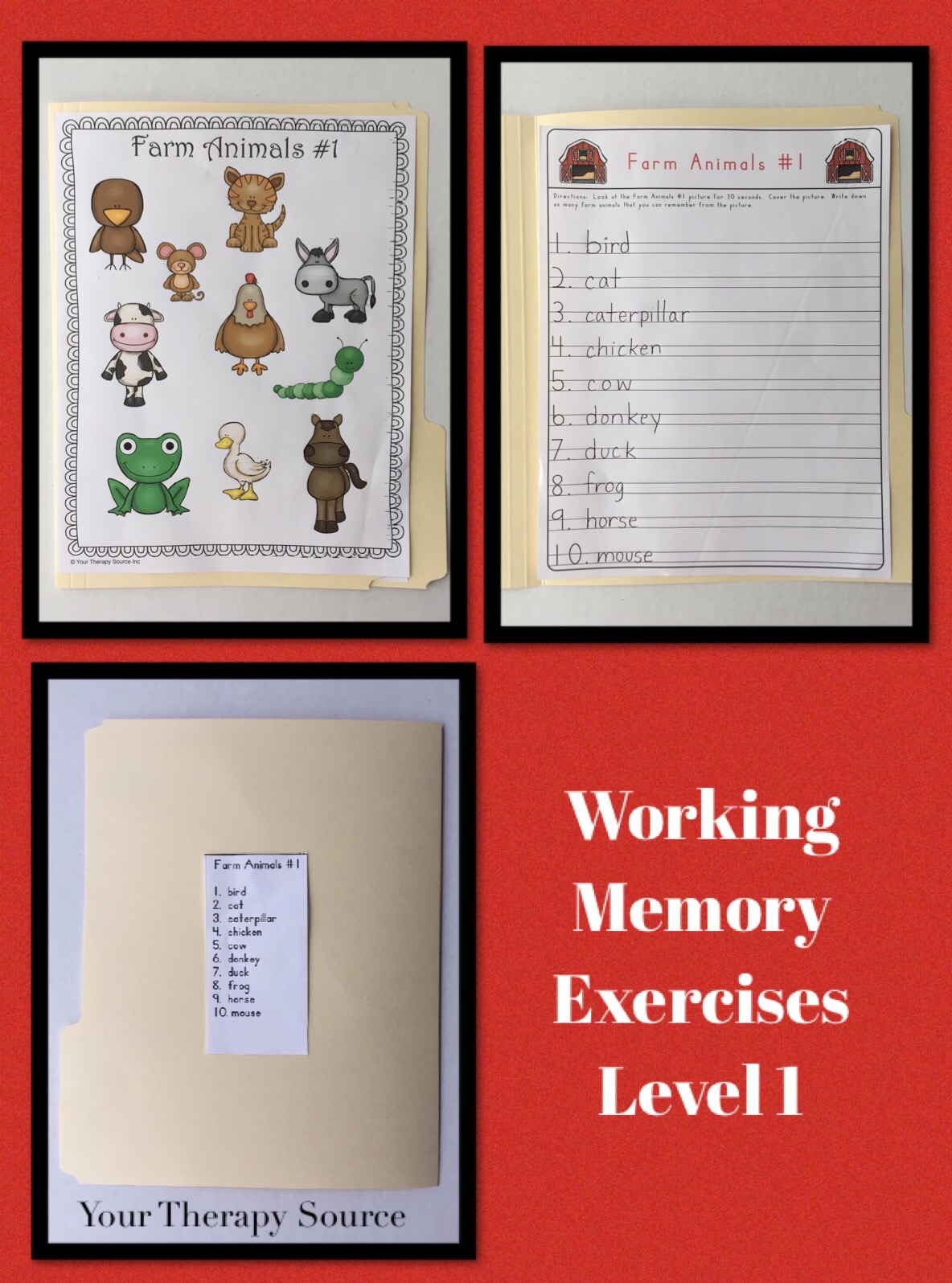
Working Memory Exercises – Farm Animal Freebie

Here is a freebie to practice working memory skills.  This freebie is one of the Level 1 exercises. Working Memory Exercises encourage: visual memory skills working memory skills handwriting practice executive function skills You can download the activity at https://www.yourtherapysource.com/workingmemoryfreebie.html You can find out more information about the Working Memory Exercises Level 1 and Level 2 […]

, , , ,

Executive Function in Adolescents Born Extremely Premature and Extremely Low Birth Weight

Pediatrics published research on 228 adolescents who were extremely preterm (EP; <28 weeks) birth and extremely low birth weight (ELBW; <1000 g).   Each participant was assessed with multiple executive function (EF) tasks, and parent- and self-ratings of behavioral EF. The Rey Complex Figure and Behavior Rating Inventory of Executive Function parent report were also administered […]

, , , , , ,

Physical Activity and Executive Control in Children

Pediatrics published research on 221 children (7-9 years old) who were randomly assigned to either a 9 month after school physical activity program or a wait list group. Following the intervention various measurements were recorded: changes in maximal oxygen consumption, electrical activity in the brain and behavioral measures (accuracy, reaction time) of executive control. The […]

, ,

Executive Function

The Center on the Developing Child at Harvard University has published a paper entitled Building the Brain’s “Air Traffic Control” System: How Early Experiences Shape the Development of Executive Function. This paper provides an overview on executive function and how it develops in children. Executive functions include working memory, inhibitory control and cognitive or mental […]